
This article contains affiliate links. If you make a purchase through these links, we may earn a small commission at no extra cost to you. This helps support our work in creating free travel guides.
China spans five climate zones, so "what to wear in China" has no single answer — it depends on the season and the region. A July trip to tropical Sanya and a January trip to Harbin call for almost completely different suitcases. Beyond weather, a few dress-code situations are worth knowing: temples and other religious sites expect covered shoulders and knees, and some upscale restaurants have standards. The good news is China is relaxed about everyday clothing — there's no strict national dress code for tourists, and you'll see locals in everything from streetwear to office wear to gym clothes. This guide breaks down what to pack by season, plus the specific places where you'll want to cover up.
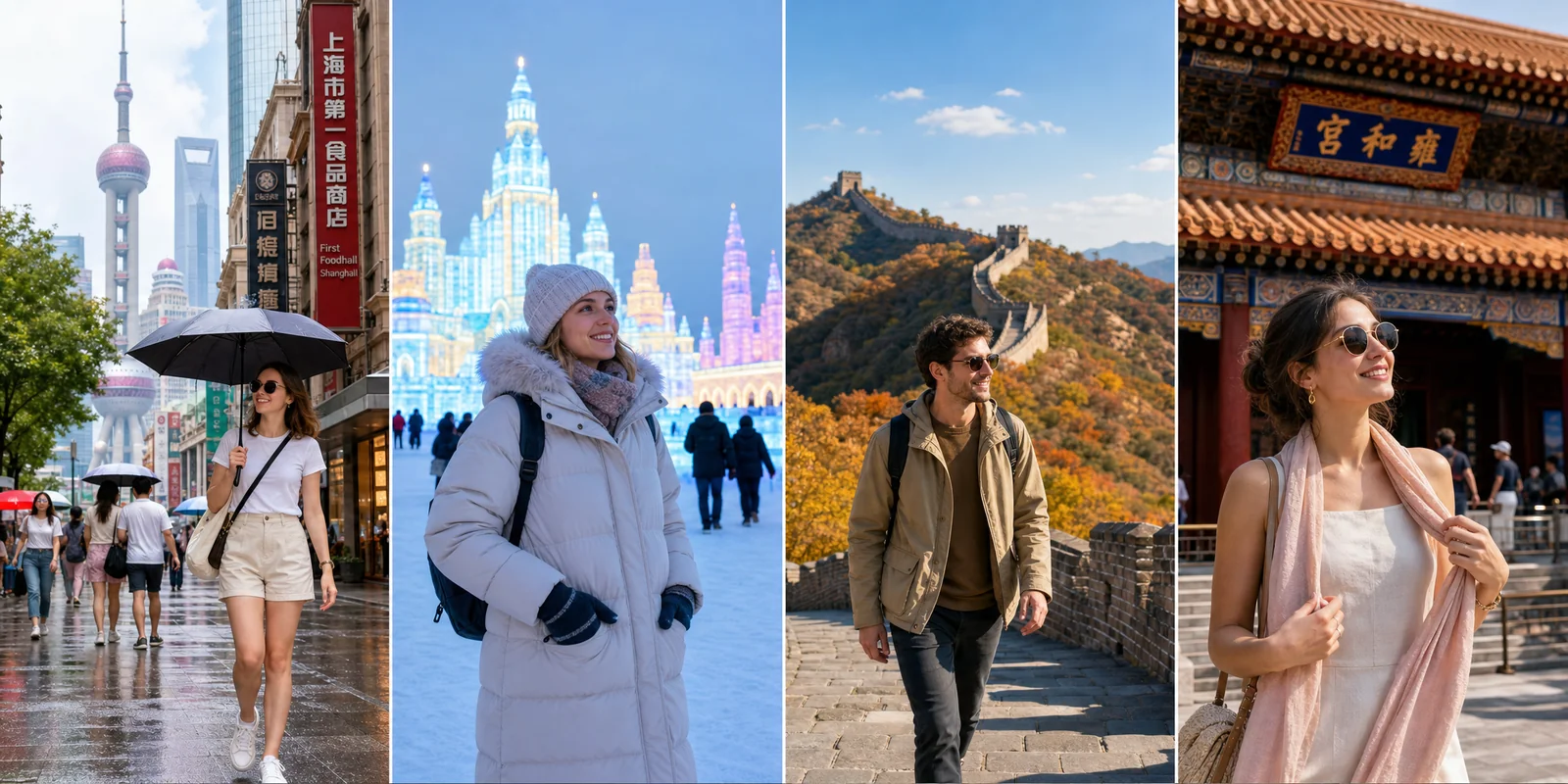
Start with where you're going, not just when
Before you pack a single item, look at your actual route. China is roughly the size of the United States or Europe, and the climate varies just as much. Packing for "China" in general leads to bringing the wrong things.
A rough mental map:
- North (Beijing, Xi'an, Datong, Inner Mongolia): Four distinct seasons. Hot dry summers, cold dry winters, short pleasant springs and autumns.
- Northeast (Harbin, Changbaishan): Genuinely brutal winters, often -20°C (-4°F) or colder. Pleasant summers.
- East (Shanghai, Hangzhou, Suzhou, Nanjing): Hot, humid summers and damp, raw winters that feel colder than the thermometer suggests because indoor heating is inconsistent.
- South (Guangzhou, Shenzhen, Hong Kong, Guilin): Subtropical. Long hot humid summers, mild short winters where a light jacket is usually enough.
- Southwest (Chengdu, Chongqing, Yunnan): Mild and often overcast. Yunnan is famous for spring-like weather year-round, but altitude means big day-to-night temperature swings.
- Tibetan Plateau (Lhasa, Shangri-La) and high-altitude areas: Strong sun, thin air, and cold nights even in summer. Layering is non-negotiable.
For a detailed breakdown by region and month, our Weather by Region guide is the companion piece to this one. If you're still deciding when to come, Best Time to Visit China covers the trade-offs.
Summer (June–August): humidity is the real challenge
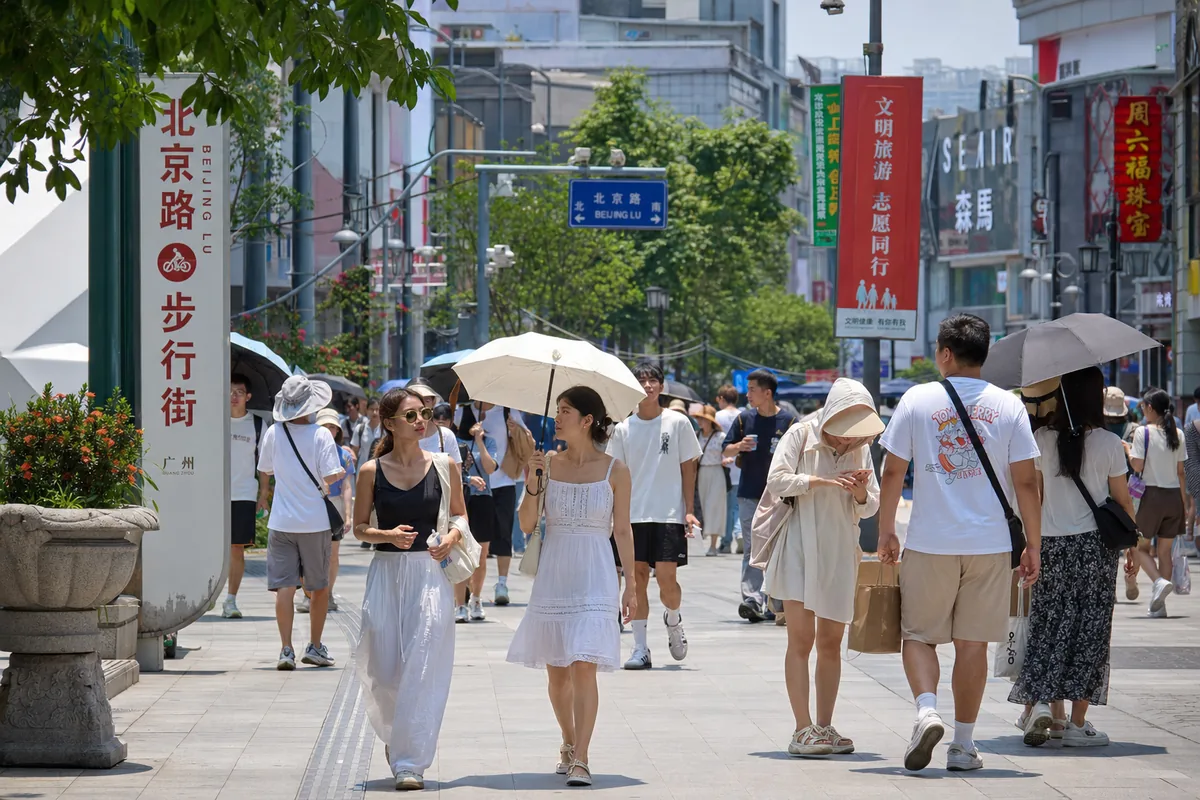
Summer in most of populated China is hot and, crucially, humid. Cities like Shanghai, Wuhan, Chongqing, Nanjing, and Guangzhou regularly hit 35°C+ (95°F+) with high humidity, which makes it feel much hotter. Even Beijing and Xi'an get genuinely hot. The clothing goal in summer is staying cool and dealing with sweat — not modesty, which is rarely an issue in daily city life.
What to wear in China in summer:
- Breathable fabrics: Cotton, linen, and moisture-wicking synthetics. Avoid heavy denim and thick fabrics that trap heat.
- Light colors reflect heat better than dark ones.
- Loose-fitting clothes let air circulate. Tight clothing sticks to you in the humidity.
- T-shirts, shorts, sundresses, light skirts are all completely normal for tourists in cities.
- A light layer for air conditioning. This catches people off guard — malls, trains, restaurants, and metros are aggressively air-conditioned, sometimes to the point of being cold. A thin cardigan or packable jacket is worth carrying.
- Rain gear. Summer is the rainy season across much of southern and central China. A compact umbrella or packable rain shell earns its place.
- Sun protection. A hat and sunglasses, plus sunscreen. You'll notice many local women carry sun umbrellas (parasols) — it's a practical habit, not a fashion statement, and nobody will think it odd if you do the same.
Summer at altitude and on the coast
If your summer trip includes Yunnan, Tibet, or other high-altitude regions, ignore the "summer = hot" assumption. Lhasa can be warm in midday sun and cold after dark. Bring a fleece or light down jacket even in July. For beach destinations like Sanya, standard tropical beachwear applies — but bring a cover-up for walking around town and restaurants.
Winter (December–February): the north–south divide matters
Winter is where packing decisions get serious, because the experience splits sharply by region.
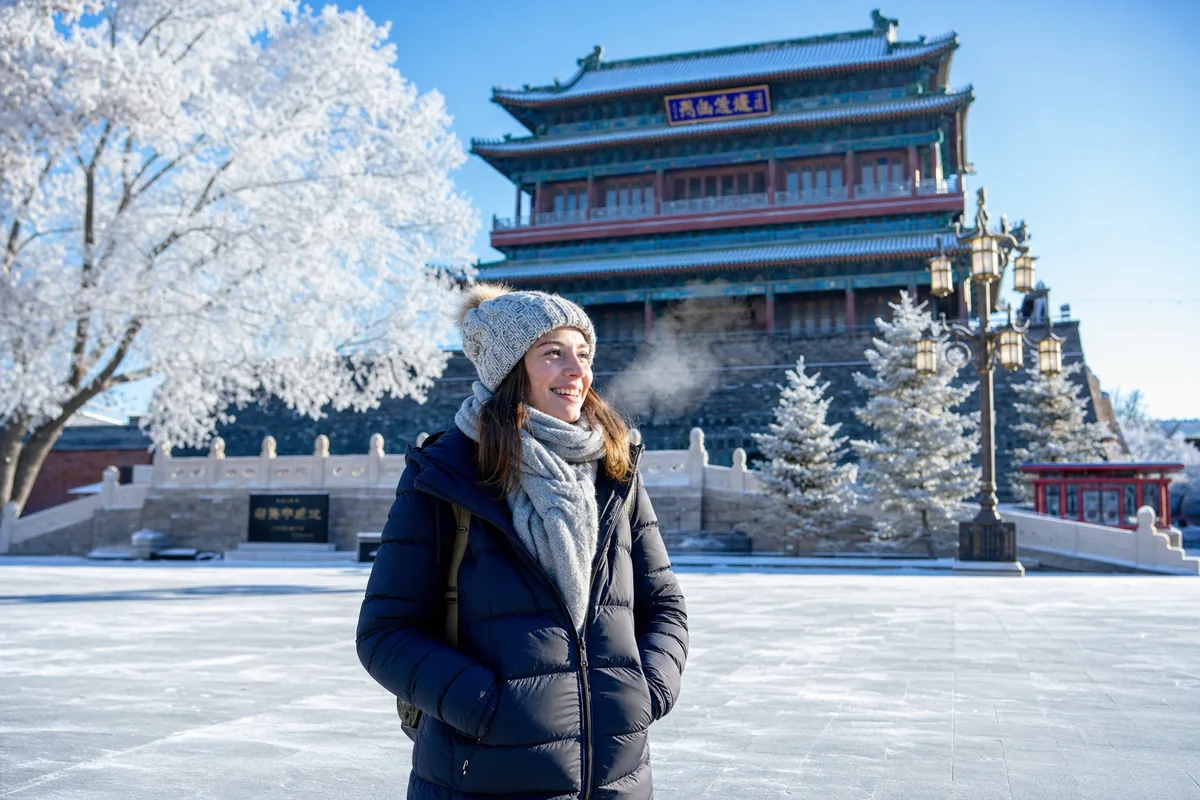
Northern and northeastern China (Beijing, Xi'an, Datong, Harbin, Changbaishan) gets properly cold. Beijing in January sits around -5°C to 5°C (23°F to 41°F). Harbin during its famous ice festival can drop below -25°C (-13°F). The cold here is dry, which is actually more bearable than damp cold — but it's still cold, and wind makes it worse.
Southern and central China (Shanghai, Hangzhou, Wuhan, Chengdu, Chongqing) rarely sees snow but feels miserable in a different way. Temperatures hover around 0–10°C (32–50°F), it's damp, and — here's the part visitors don't expect — many buildings south of the Qinling–Huaihe line have no central heating. This is a real historical dividing line for state-provided winter heat. You can be colder indoors in Shanghai than in well-heated Beijing.
What to wear in China in winter:
- Layering system: thermal base layer (merino wool or synthetic), an insulating mid-layer (fleece or sweater), and a warm outer layer.
- A proper down jacket for the north. This is the single most important item for Beijing and anywhere further north. Locals essentially live in down jackets all winter.
- Thermal underwear (long johns). Standard winter wear in northern China for locals of all ages. Don't skip these for Harbin or a Great Wall day trip.
- Hat, gloves, scarf for the north — exposed skin loses heat fast in wind.
- Warm, insulated waterproof footwear for snow and ice, especially in the northeast.
- For the south: you still need warm layers, but the focus shifts to a good sweater and a windproof, water-resistant coat rather than extreme insulation. The indoor cold is the surprise factor.
For a deeper look at cold-weather travel logistics, see our Winter Travel in China guide. If Harbin's ice festival is on your list, the Harbin Winter Guide goes into specifics on surviving the extreme cold.
Spring and autumn (March–May, September–November): the easy seasons
Spring and autumn are the most comfortable times to visit much of China, and the easiest to pack for — with one catch: temperatures swing a lot between day and night, and between regions. These are the seasons where a layering approach pays off most.
Daytime in spring and autumn across central and northern China is often pleasant, 15–25°C (59–77°F), but mornings and evenings can be chilly. The standard kit:
- Long-sleeve shirts and light sweaters as your base.
- A medium jacket — a light puffer, a trench, or a denim jacket — that you can carry when the afternoon warms up.
- A scarf doubles as warmth and a temple/shoulder cover (more on that below).
- Comfortable walking shoes — these seasons are peak sightseeing weather, so you'll be on your feet.
- A compact umbrella. Spring in particular brings rain to many regions.
Autumn (especially late September through November) is widely considered the best all-round season for clear skies and comfortable temperatures across most of China. Spring is lovely too but wetter and, in the north, occasionally dusty.
Temple and religious site dress code
This is the one place where a real dress code applies, and it catches casually dressed tourists off guard — especially in summer. China has thousands of active Buddhist and Taoist temples, mosques, and a smaller number of churches, and many are working places of worship, not just tourist sites.
The general expectation at temples and religious sites:
- Cover your shoulders. No tank tops, spaghetti straps, or bare shoulders.
- Cover your knees. Avoid short shorts and very short skirts. Knee-length or longer is the safe standard.
- Keep it modest overall. Skip overly revealing or see-through clothing.
- Remove hats inside main halls as a sign of respect (sunglasses too).
Enforcement varies. Big tourist temples in major cities are often relaxed and won't turn you away, but more traditional or remote temples — and especially mosques and active monasteries in places like Tibet or Xinjiang — take it seriously. At some sites you may be asked to wear a provided wrap or be denied entry if you're too exposed.
For Tibetan monasteries specifically, conservative dress is expected and you should also be prepared for high altitude and cold. Our Lhasa & Tibet Guide covers both. For a broader list of sites where this matters, see Religious Sites.
Shoes for a China trip
If there's one category people regret getting wrong, it's footwear. China travel involves a lot of walking — sprawling sites like the Forbidden City, the Great Wall, terraced rice fields, ancient town cobblestones, and long stretches inside enormous train stations and airports.
- Comfortable, broken-in walking shoes are the priority for almost everyone. Sneakers or walking shoes you've already worn beat brand-new ones.
- The Great Wall means uneven steps and steep grades — proper shoes with grip, not sandals.
- Sandals or breathable shoes make sense for hot, humid southern summers, but pack a closed pair too.
- Waterproof or quick-dry shoes help in rainy-season travel and southern humidity.
- Winter in the north: insulated, grippy boots for snow and ice. Smooth-soled shoes are dangerous on icy Harbin sidewalks.
- One slightly nicer pair if you plan upscale dinners or a show — but China is generally casual, and you rarely need formal shoes for sightseeing.
A note on everyday dress and culture
Outside of temples, China imposes very few clothing expectations on tourists. Big cities like Shanghai and Beijing are cosmopolitan and fashion-conscious, and you'll fit in wearing whatever you'd wear in any major world city. There's no need to dress conservatively day-to-day just because you're in China.
A few small things worth knowing:
- Smart-casual works almost everywhere. Truly formal dress codes are rare outside high-end restaurants, clubs, and business settings.
- Rural and remote areas are more conservative than big cities, so slightly more modest dress draws less attention there.
- Practicality over fashion when sightseeing. Locals dress well, but on hot summer days at packed attractions, comfort wins.
For more on social norms beyond clothing, our Cultural Etiquette & Taboos guide is a useful companion.
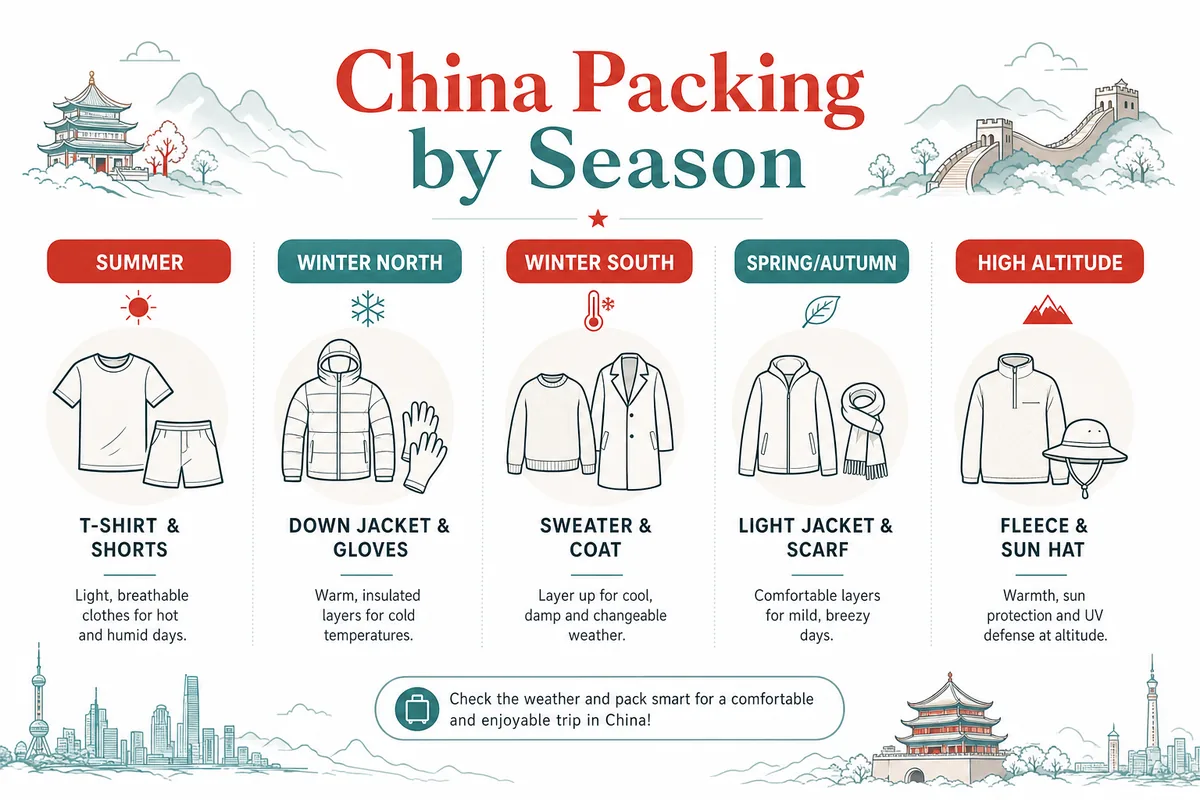
Quick packing checklist by season
| Season | Core items | Don't forget |
|---|---|---|
| Summer (Jun–Aug) | Breathable T-shirts, shorts, light dresses, sandals + closed shoes | Light AC layer, umbrella, sun protection, scarf for temples |
| Winter — North (Dec–Feb) | Down jacket, thermal base layers, sweater, insulated boots | Hat, gloves, scarf, long johns |
| Winter — South (Dec–Feb) | Warm sweater, windproof coat, warm sleepwear | Layers for unheated indoor spaces |
| Spring/Autumn (Mar–May, Sep–Nov) | Long sleeves, light sweater, medium jacket, walking shoes | Scarf, compact umbrella, packable layer |
| High altitude (any season) | Layers, fleece/down jacket, sun hat | Warm layer for cold nights, strong sunscreen |
The bottom line
What to wear in China comes down to two questions: what's the weather where you're actually going, and will you visit temples? For weather, pack in layers and check your specific cities and dates rather than packing for "China" as a whole — the difference between Harbin and Sanya in the same month is enormous. For temples, just throw a lightweight scarf or wrap in your day bag and you're covered for the whole trip. Everywhere else, China is relaxed and casual, so dress comfortably and prioritize good walking shoes over anything fashionable. Before you finalize your bag, run through our full What to Pack overview and the Essential Items Checklist to catch anything else.
Last updated: June 2026
Read in other languages
Last train times for 10 Chinese metro systems
Every line and station, checked by hand — the same data behind our offline route planner.
Get the WaysChina App
Offline guides, currency converter, essential phrases, and more — all in your pocket.

Related Articles
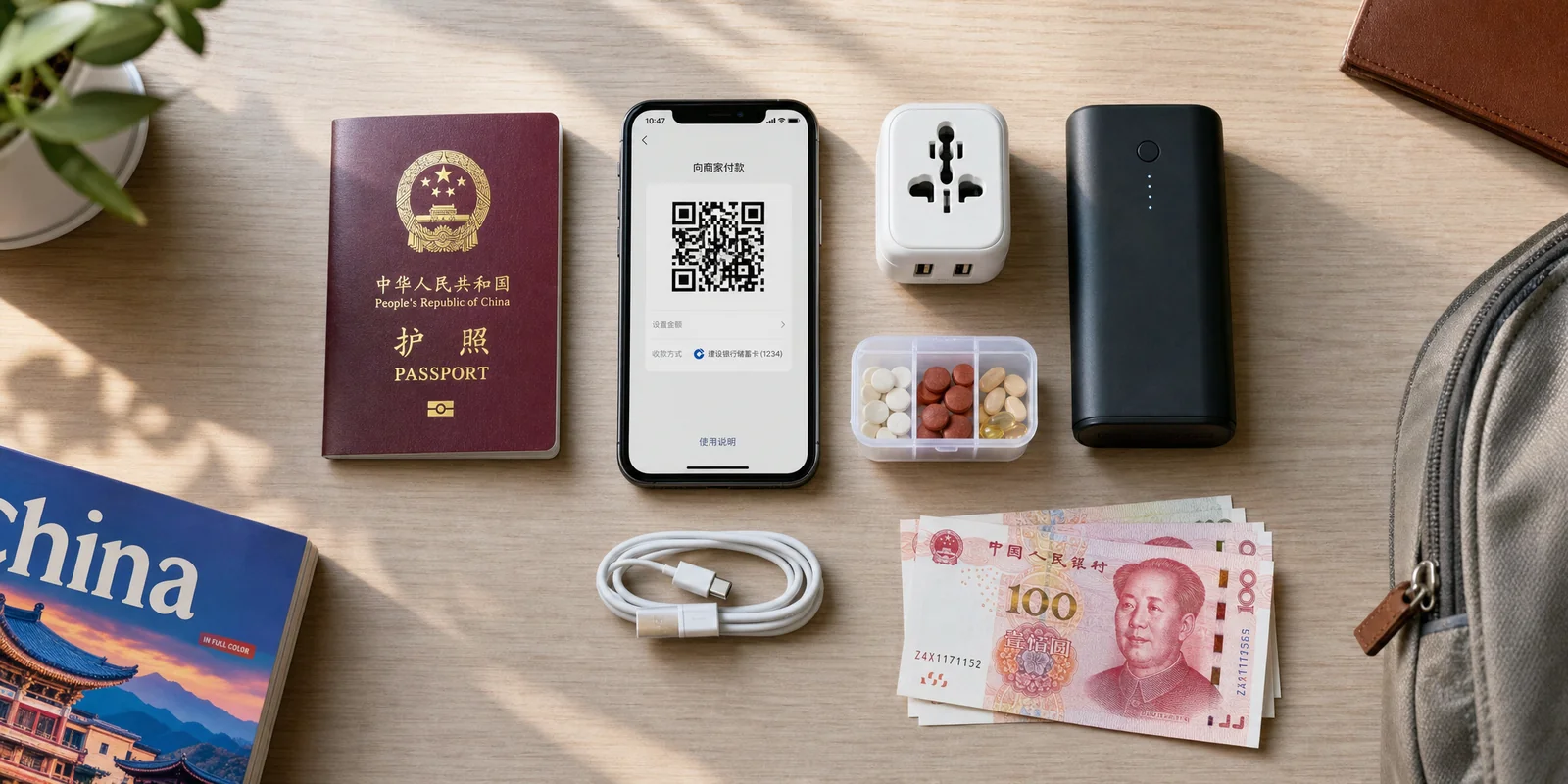
Essential Items Checklist for China
A practical, category-by-category packing checklist for China — documents, payments, phone setup, plugs, medication,...
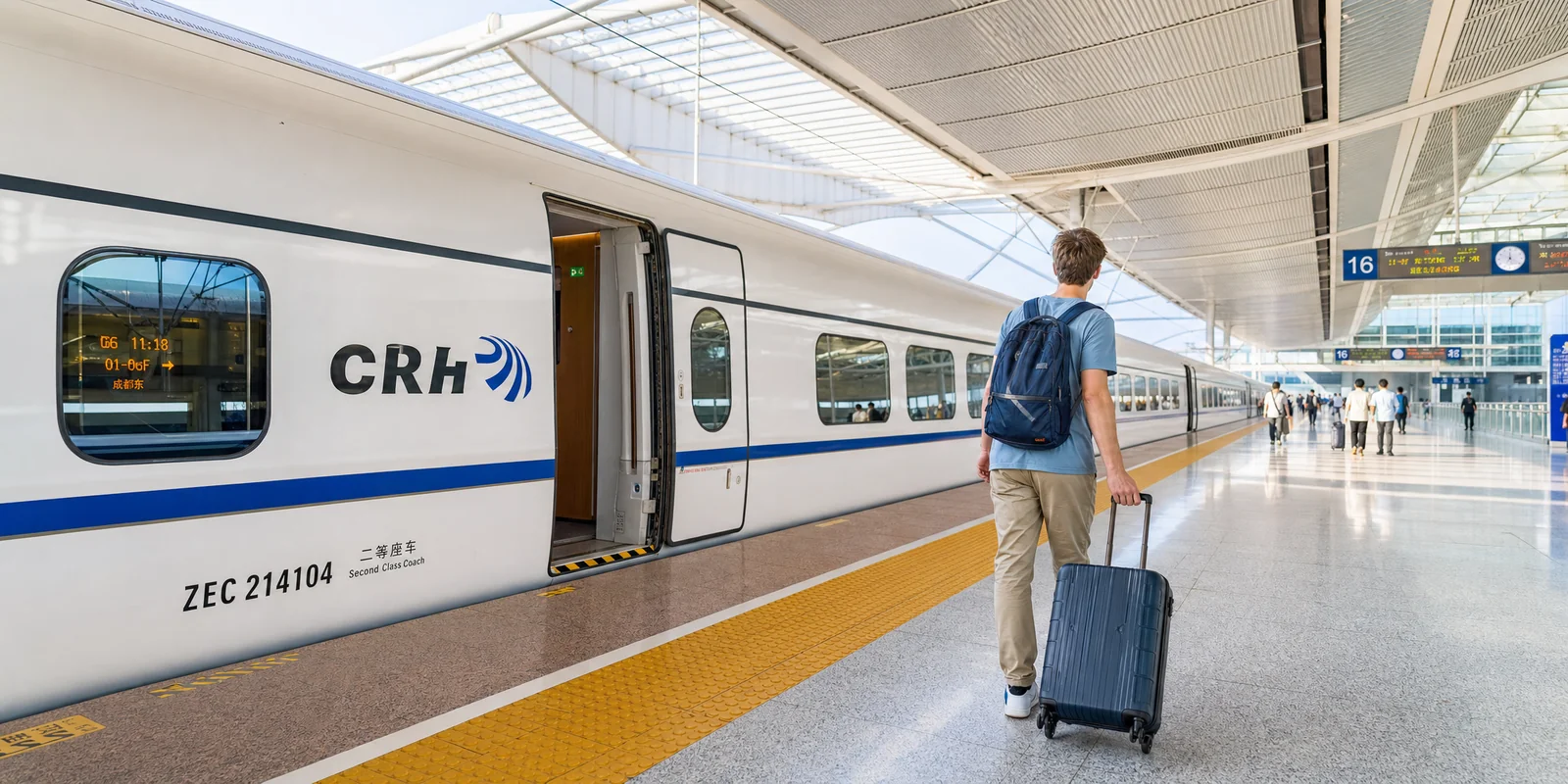
Luggage Rules in China
What you can carry on China's high-speed trains, domestic flights, and metro systems, plus prohibited items, weight...
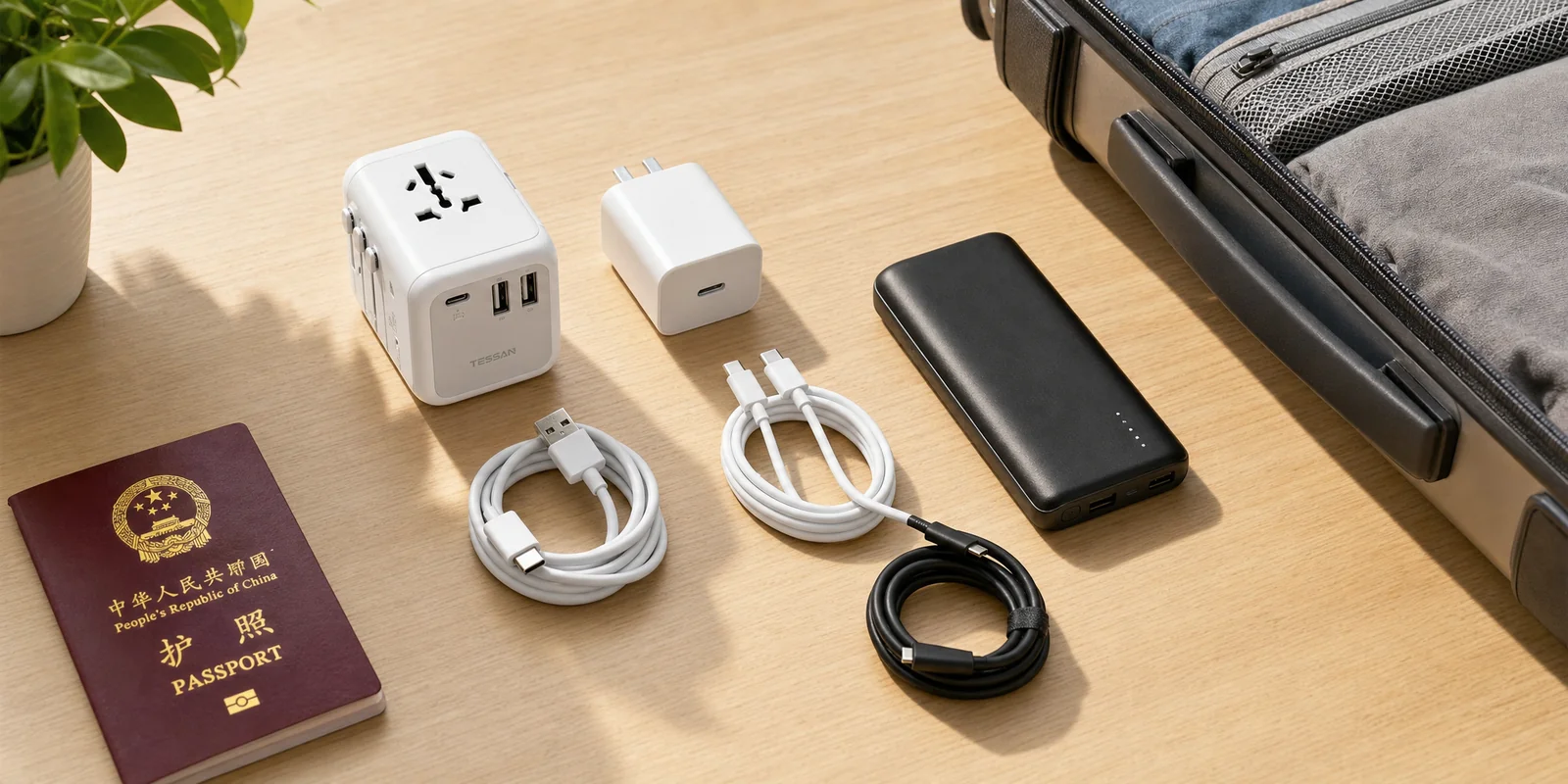
Tech & Adapters: What Electronics to Pack for China
Mainland China runs on 220V, 50Hz with Type A and Type I sockets. Here's exactly what adapters, chargers, and power...
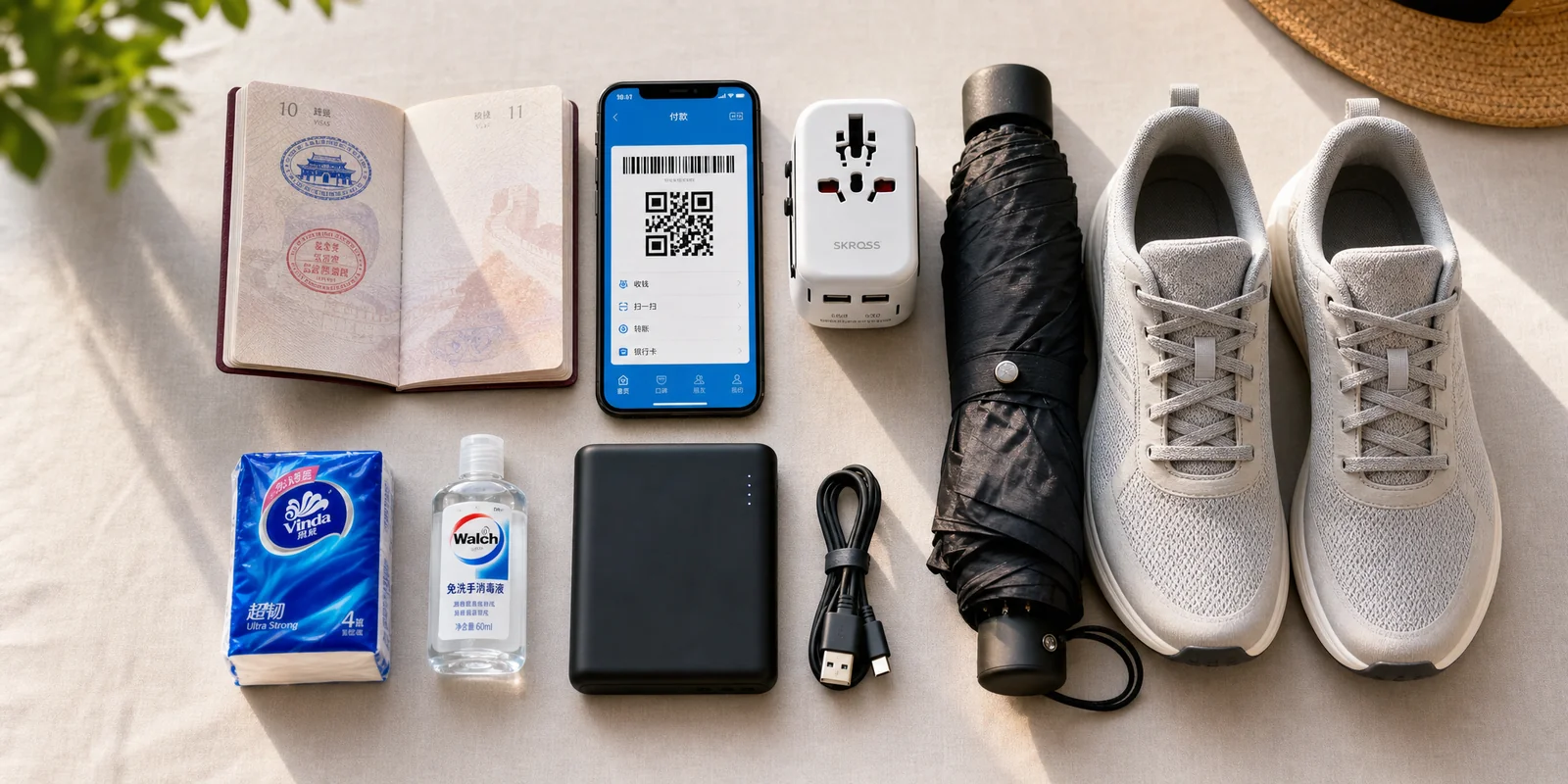
What to Pack for China: A Complete Packing Guide
What to pack for a China trip comes down to a few essentials most travelers overlook: a working VPN, mobile payments...