
This article contains affiliate links. If you make a purchase through these links, we may earn a small commission at no extra cost to you. This helps support our work in creating free travel guides.
China's luggage rules vary a lot depending on how you're getting around. High-speed trains have no checked baggage at all, so you carry everything yourself. Domestic flights work like flights anywhere, with weight allowances that differ between full-service and budget airlines. And every metro system runs airport-style security scans at the entrance, which catches a few things travelers don't expect. None of this is complicated once you know the limits, but the rules change enough between transport modes that it's worth a quick read before you pack.
This guide covers weight and size limits for trains, planes, and metros, the items you can't bring through security, and how to store bags when you don't want to drag them around all day.
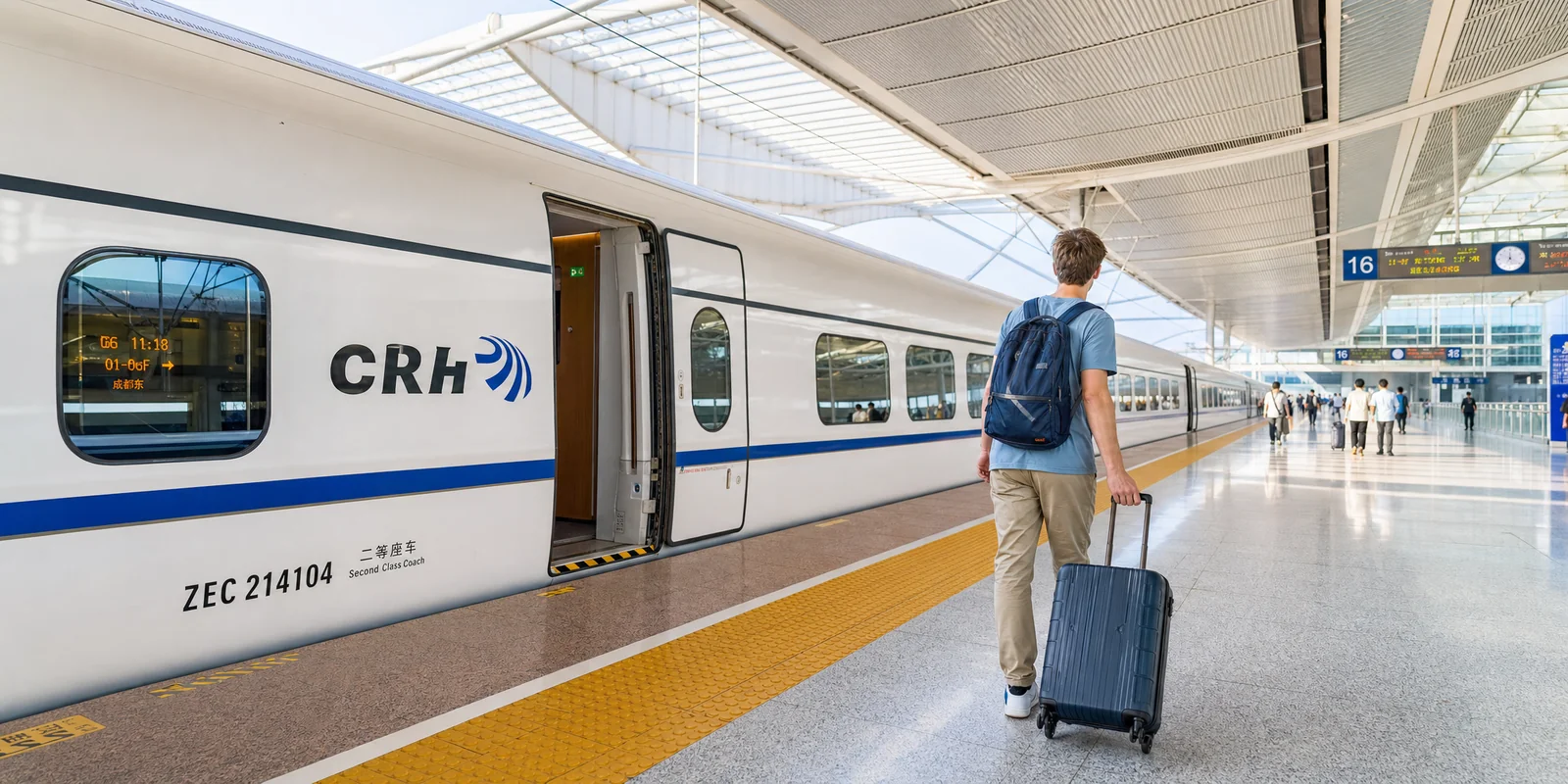
High-Speed Train Luggage Rules
Here's the most important thing to understand about Chinese trains: there is no checked baggage. Whatever you bring, you carry onto the train and stow yourself. This applies to high-speed trains (高铁, gāotiě) and regular trains alike. There are no porters waiting at the platform, no baggage drop, no conveyor belt.
Weight and size limits
The official free allowance set by China Railway is straightforward:
- Adults: up to 20kg (44 lbs)
- Children (traveling on a discounted child ticket): up to 10kg
- Diplomats: up to 35kg
The size rule is what trips people up. Each item's total dimensions (length + width + height added together) should not exceed 130cm. Long thin items like ski poles or fishing rods can go up to 200cm. A standard large checked-size suitcase usually sits right around or just over that 130cm combined limit, so a single big bag is generally fine, but two oversized cases per person can be a problem.
Where luggage goes on the train
Storage on high-speed trains is decent but fills up fast on busy routes:
- Overhead racks above the seats fit backpacks and cabin-sized bags.
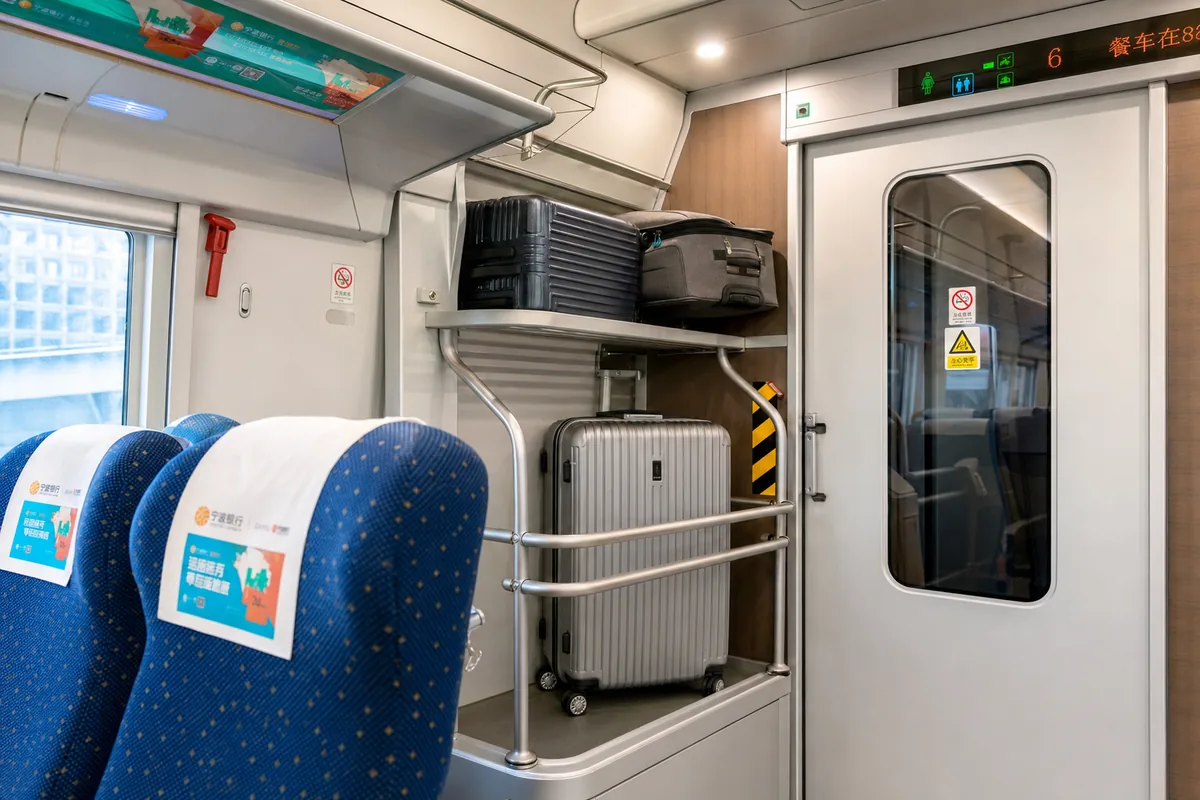
- Large luggage racks at the end of each carriage (near the doors) hold full-size suitcases.
- The space behind the last row of seats in each carriage.
Board early if you have a big bag. On packed routes during holidays, the large racks are full within minutes, and you may end up wedging a suitcase between seats or in the vestibule.
Domestic Flight Luggage Rules
Flying domestically in China is similar to flying elsewhere, with one important split: full-service airlines include free checked baggage, while budget carriers generally don't.
Carry-on allowance
Most Chinese airlines allow economy passengers one carry-on item up to 5kg (11 lbs), with maximum dimensions of roughly 20 × 40 × 55cm. Business and first-class passengers usually get two pieces. The 5kg limit is genuinely low compared to many international carriers, and staff at the gate do sometimes weigh cabin bags, so don't count on stuffing a heavy bag into the overhead bin.
Checked baggage allowance
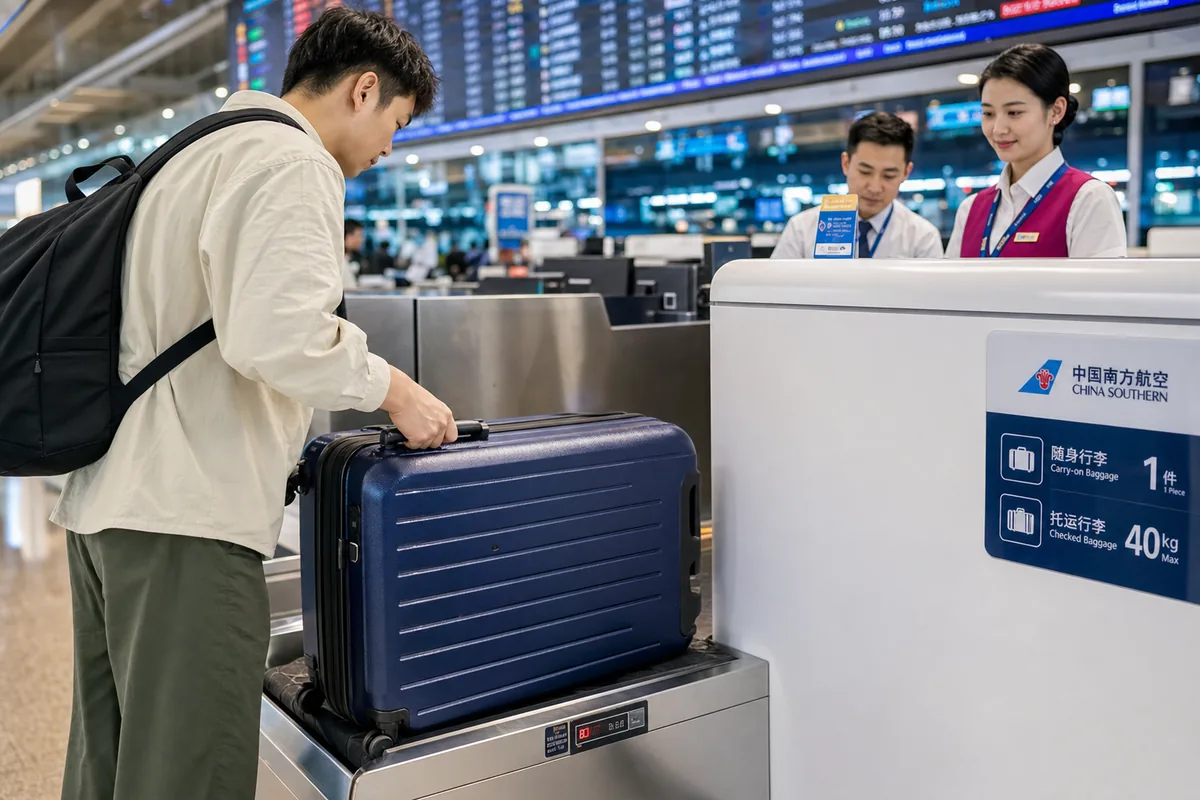
On full-service airlines such as Air China, China Eastern, and China Southern, the standard free checked allowance is:
| Cabin class | Free checked allowance |
|---|---|
| Economy | 20kg |
| Business | 30kg |
| First | 40kg |
Budget airlines are a different story. Carriers like Spring Airlines (春秋航空) and China United often sell tickets with no free checked baggage at all — you add it as a paid extra when booking. If you buy a cheap fare and show up with a suitcase, you'll pay at the airport, where it costs noticeably more than pre-booking online. Always read the baggage terms before grabbing the lowest fare.
Power banks and lithium batteries
This is the rule that catches the most travelers off guard. Power banks and spare lithium batteries are banned from checked luggage — they must go in your carry-on. Capacity limits apply:
- Up to 100Wh: allowed in carry-on, no approval needed.
- 100–160Wh: allowed with airline approval (usually a maximum of two).
- Over 160Wh: prohibited entirely.
China's aviation regulator has also tightened rules on power banks: they must carry a valid CCC certification mark (the China Compulsory Certification logo) to be brought on domestic flights, and uncertified or recalled units are refused at security. Because these rules have changed recently and continue to evolve, check the latest requirements with your airline before flying. For a deeper look at packing electronics, see our tech and adapters guide.
Metro Luggage Rules
You can bring luggage on the metro in every Chinese city, and plenty of travelers do exactly that to and from the airport. The rules are looser than for trains and flights, but two things are universal.
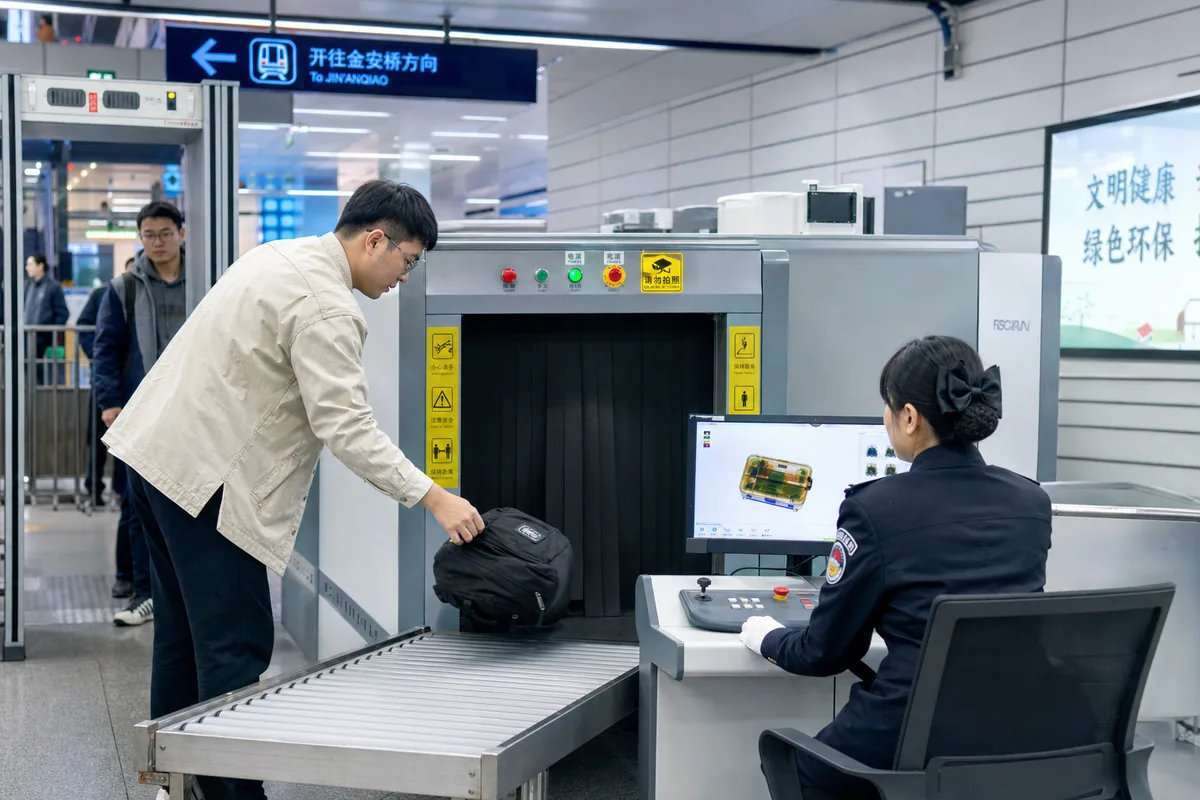
First, security screening at every station. Just like train stations, metro entrances have X-ray scanners and bag checks. This adds a minute or two to each entry and is where prohibited items get stopped.
Second, size and weight caps. These vary slightly by city, but Beijing is typical: items are free to carry if they weigh under 30kg, with total dimensions under 1.8m and no single side longer than 1.8m. That comfortably covers normal suitcases. Oversized items like large furniture or bicycles (unfolded) are generally not allowed.
Hauling a big suitcase through the metro at rush hour is doable but unpleasant — crowds are heavy and not every station has elevators or working escalators. If you're moving between a hotel and the airport with heavy bags, weigh the metro savings against a taxi or ride-hail. Our metro systems guide covers navigation and ticketing in more detail.
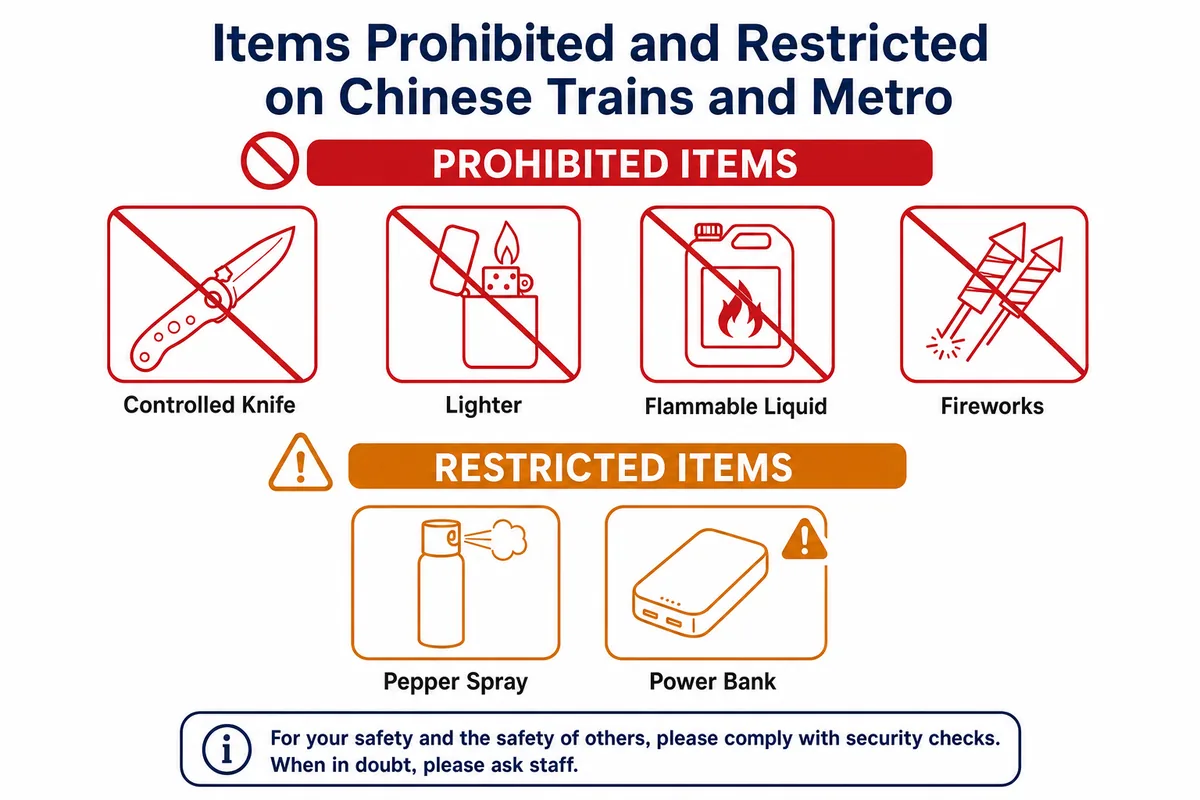
Prohibited Items
Because trains and metros both screen every passenger, the prohibited items list matters more in China than in countries where you only face security at airports. The lists overlap heavily across all three transport modes.
Banned everywhere (trains, metro, flights)
- Guns, ammunition, and imitation firearms
- Knives classified as controlled (长刀, including many large kitchen and utility knives), daggers, and swords
- Explosives, fireworks, and firecrackers
- Flammable and corrosive liquids: gasoline, paint thinner, strong acids
- Compressed gas canisters and certain aerosols
- Toxic and radioactive materials
Restricted (limited quantities)
- Lighters and matches: on high-speed trains, lighters are limited (commonly up to two) and only small quantities of safety matches are allowed. On flights, lighters cannot go in checked bags and are restricted in carry-on.
- Alcohol: sealed, commercially packaged alcohol is allowed within limits on trains; loose or homemade alcohol is not. On flights, normal duty-free and packaged rules apply.
- Liquids on flights: standard 100ml-per-container carry-on limit applies, with containers in a clear bag.
- Self-defense items: pepper spray and stun devices are prohibited.
According to the official screening rules published by China Railway (12306.cn), the prohibited and restricted lists are enforced at the station entrance, and confiscated items are not returned. For flight-specific rules, the Civil Aviation Administration of China (CAAC) publishes the dangerous-goods guidance that all domestic airlines follow.
Luggage Storage
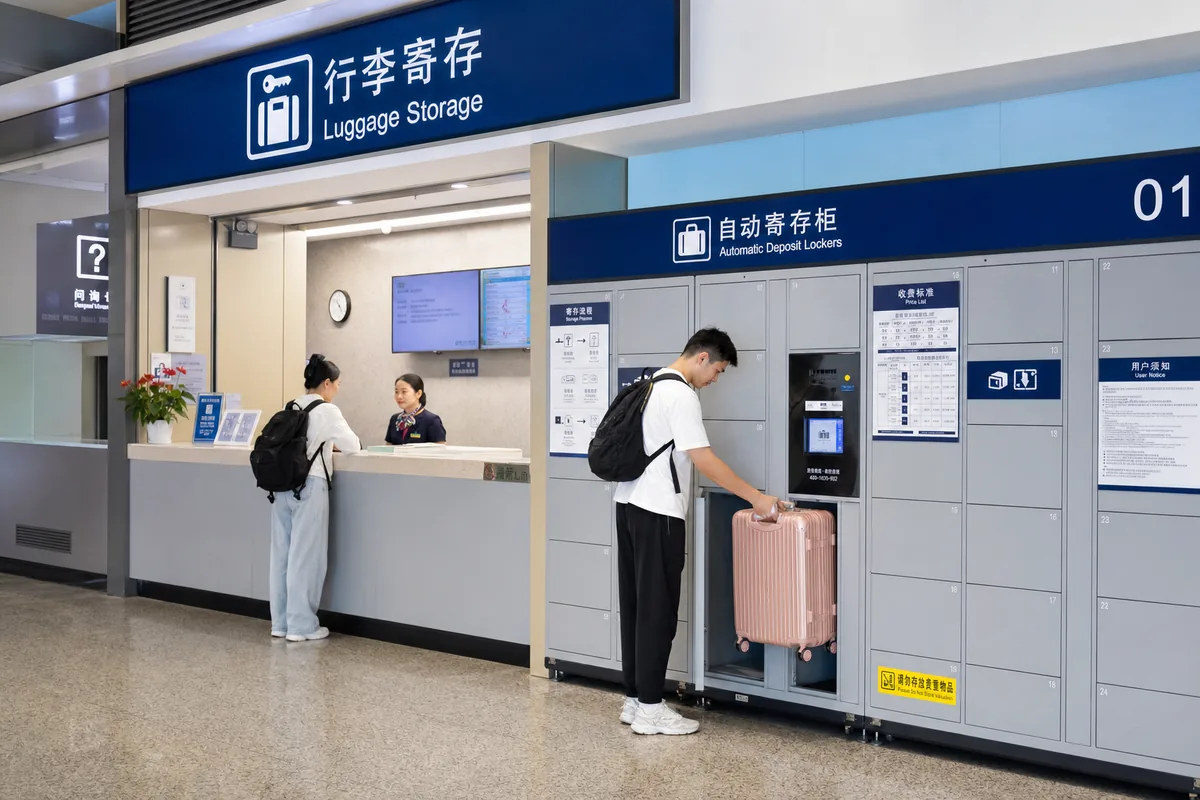
You'll often have hours to kill between checkout and a late train, or want to explore a city before catching a flight. China has solid options for storing bags so you're not dragging them around.
- Train station left-luggage counters (行李寄存, xíngli jìcún): most major stations have a staffed storage counter or self-service lockers. Expect roughly 10–30 RMB per item per day, depending on size and city. Bring your passport; staff sometimes log ID.
- Airport storage: larger airports have storage counters in the terminal, usually priced per item per day.
- Hotels: almost every hotel will hold your bags for free on your check-in or checkout day, and many will store them even if you stayed the night before or arrive early. Just ask at reception.
- Attraction lockers: big museums, parks, and stations often have coin or QR-code lockers.
- App-based storage networks: some shops and cafés partner with luggage-storage platforms; useful in dense city centers, bookable on your phone.
Storage counters at stations can have queues during holidays, so don't leave it to the last 20 minutes before your train.
Choosing Luggage for a China Trip
Given that you carry your own bags on trains, navigate metro stairs, and face that low 5kg flight carry-on limit, the practical advice is to pack lighter than you think you need. A single hard-shell suitcase that stays under the 130cm combined train limit, plus a backpack as your flight carry-on, covers most trips comfortably. Four-wheel spinner cases handle smooth station floors well, though cobblestone old towns favor sturdy wheels. If you're shopping for a case before the trip, a mid-size hard-shell spinner like these well-reviewed options on Amazon balances capacity against the size limits you'll be working within.
For a full breakdown of what to bring, see our what to pack guide.
Quick Comparison
| High-speed train | Domestic flight | Metro | |
|---|---|---|---|
| Checked baggage | None (carry yourself) | 20kg+ free (full-service) | N/A |
| Free allowance | 20kg / 130cm combined | 5kg carry-on + checked | Under 30kg / 1.8m |
| Security screening | Yes, at entrance | Yes, standard | Yes, at entrance |
| Power banks | Allowed | Carry-on only, CCC mark | Allowed |
Frequently Asked Questions
Can I bring two large suitcases on a high-speed train?
Technically the combined free allowance is 20kg, but weight is rarely checked. The bigger issue is space — two full-size cases per person are hard to stow, especially on crowded routes. You can do it, but board early to claim rack space.
Do I need to weigh my carry-on for domestic flights?
The official limit is 5kg for economy, and gate staff occasionally weigh cabin bags, particularly on budget airlines. Keep heavy items like cameras and electronics distributed, and don't assume you can sneak an overweight bag aboard.
Are scissors and nail clippers allowed?
Small grooming scissors and nail clippers are generally fine through train and metro security. Larger scissors and any blade over the controlled-knife threshold will be confiscated. On flights, follow standard carry-on blade rules.
Can I lock my suitcase on the train?
Yes, and it's worth it since luggage racks are shared and not watched. Use a TSA-style lock and keep valuables, passport, and electronics on you rather than in a bag left at the carriage end.
The Bottom Line
The rules come down to a few essentials: on trains you carry everything yourself with a 20kg / 130cm guideline that's loosely enforced; on flights, full-service airlines include free checked baggage while budget carriers don't, and power banks must stay in your carry-on with a CCC mark; on the metro, normal suitcases are fine but expect security screening every time. Keep knives and multi-tools out of your daypack entirely, check the latest power bank and dangerous-goods rules before you fly, and use station or hotel storage when you've got time to kill between stops. Pack a bit lighter than feels natural and the whole trip gets easier.
Next, line up your transport details with our high-speed train complete guide and domestic flights guide.
Last updated: June 2026
Read in other languages
Last train times for 10 Chinese metro systems
Every line and station, checked by hand — the same data behind our offline route planner.
Get the WaysChina App
Offline guides, currency converter, essential phrases, and more — all in your pocket.

Related Articles

Clothing by Season
What to wear in China depends heavily on when and where you go. This season-by-season packing guide covers summer...
Essential Items Checklist for China
A practical, category-by-category packing checklist for China — documents, payments, phone setup, plugs, medication,...
Tech & Adapters: What Electronics to Pack for China
Mainland China runs on 220V, 50Hz with Type A and Type I sockets. Here's exactly what adapters, chargers, and power...
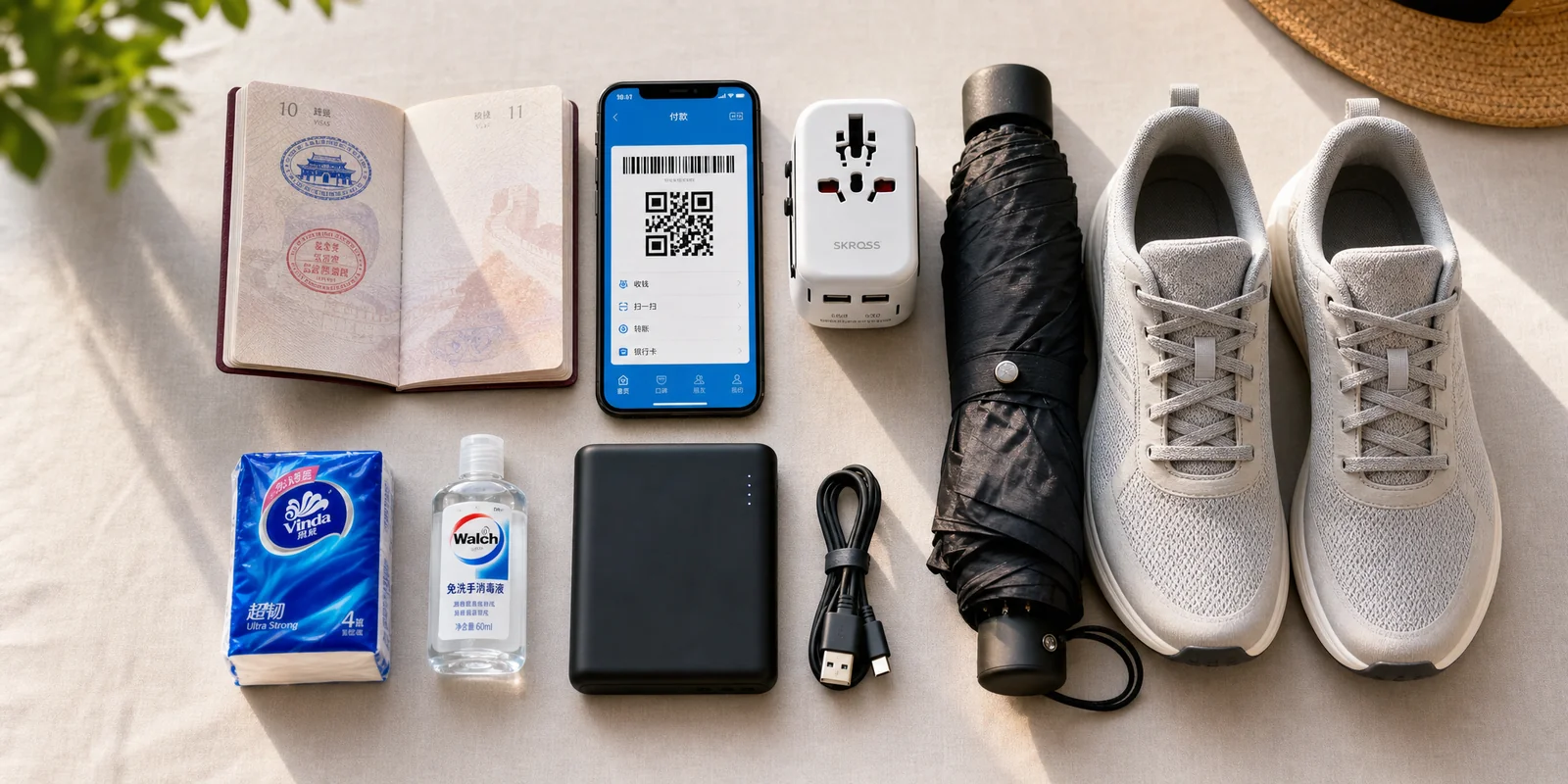
What to Pack for China: A Complete Packing Guide
What to pack for a China trip comes down to a few essentials most travelers overlook: a working VPN, mobile payments...