
This article contains affiliate links. If you make a purchase through these links, we may earn a small commission at no extra cost to you. This helps support our work in creating free travel guides.
Changbaishan (长白山, Chángbáishān, "Long White Mountain") sits on the border between China's Jilin Province and North Korea. It's a dormant volcano crowned by Heaven Lake (天池, Tiānchí), a deep crater lake that splits the China–North Korea boundary line right down the middle. People come for the lake, but the mountain offers a lot more: a 68-meter waterfall, a forest sunk into a collapsed gorge, hot springs hot enough to cook eggs, and one of China's better-known ski resorts in winter.
The honest catch with Changbaishan: the headline attraction, Heaven Lake, is fully exposed to the weather, and clouds roll in fast. Plenty of visitors make the climb and see nothing but fog. This guide covers how to maximize your odds, how to get here from Harbin and other northeastern cities, and how to fill two to three days regardless of what the summit does.
When to Visit
Changbaishan has two clear seasons worth planning around, and the weather is the single biggest factor in whether you enjoy the trip.
Summer (June–August) is the peak season and the best window for seeing Heaven Lake. Even then, the summit is clear maybe half the days, and mornings tend to be clearer than afternoons. Temperatures at the base are pleasant (around 20–25°C), but the summit is windy and 10–15°C cooler, so bring a layer even in July.
Winter (December–February) turns the mountain into a ski destination. The lake is frozen and usually inaccessible, but the snow is dry and reliable, the hot springs are at their best against the cold, and the forest under snow is genuinely beautiful. Base-area temperatures regularly hit -20°C, so this is serious cold-weather travel.
Spring and autumn are short and unpredictable. Many facilities and access roads close or run reduced services in the shoulder months (roughly late October to early December, and April to mid-May), so check before booking.
Getting to Changbaishan
Changbaishan is remote, and getting here takes more effort than most Chinese destinations. There are three realistic routes: fly, take the train, or come by long-distance bus from a nearby city.
By Air
Changbaishan Airport (长白山机场, code NBS) is the fastest option and sits about 15 km from the West Gate scenic area. It has seasonal direct flights from Beijing, Shanghai, Shenyang, Dalian, and a few other cities, with the most frequent schedules in summer and winter peak season. Flights can be limited and pricey, so book early.
By Train
High-speed rail now reaches the area via Changbaishan Station (formerly Baihe). The line connects to Shenyang and onward to the wider national network. From the station, it's a short bus or taxi ride to the Erdao Baihe town cluster where most hotels are. Check current schedules and book tickets on the official railway platform.
By Bus or Car
Long-distance buses run from regional hubs, and many visitors arrive on organized tours or private transfers, especially in winter. Roads are good but the distances are long.
Connecting From Major Cities
| From | Best option | Approx. time |
|---|---|---|
| Harbin | Train to Shenyang then onward, or flight; some direct seasonal buses/tours | Flight ~1.5h; overland a full day |
| Shenyang | High-speed train or flight | Train ~3–4h; flight ~1h |
| Dalian | Flight (seasonal direct) or via Shenyang | Flight ~1.5h direct |
Coming from Harbin is common because many travelers combine Changbaishan with Harbin's winter ice festival. There's no fast direct rail line, so most people fly or route through Shenyang. If you're planning the wider region, the Northeast China route from Harbin to Changbaishan to Dalian ties the three together logically.
Understanding the Gates
Changbaishan has three main scenic gates, and which one you use changes your whole experience. You can't easily do all three in one trip, so pick based on what you want to see.
- North Gate (北坡, Běipō): The most developed and popular. Access to Heaven Lake is by shuttle up a winding road to a viewing platform. This is also the gate for Changbai Waterfall, the underground forest, and the hot springs. If you only pick one, most first-timers choose North.
- West Gate (西坡, Xīpō): Reached via a long boardwalk staircase (over 1,400 steps) to a different Heaven Lake viewpoint. Famous for summer alpine wildflower meadows on the slopes. Closer to the airport.
- South Gate (南坡, Nánpō): The least developed, closest to the border, and often has limited opening seasons. Quieter, for travelers who want fewer crowds.
Each gate charges its own entrance fee plus a mandatory shuttle/transfer fee inside. Bring your passport and expect to pay both. Buy tickets at the gate or through official channels.
Heaven Lake (Tianchi)
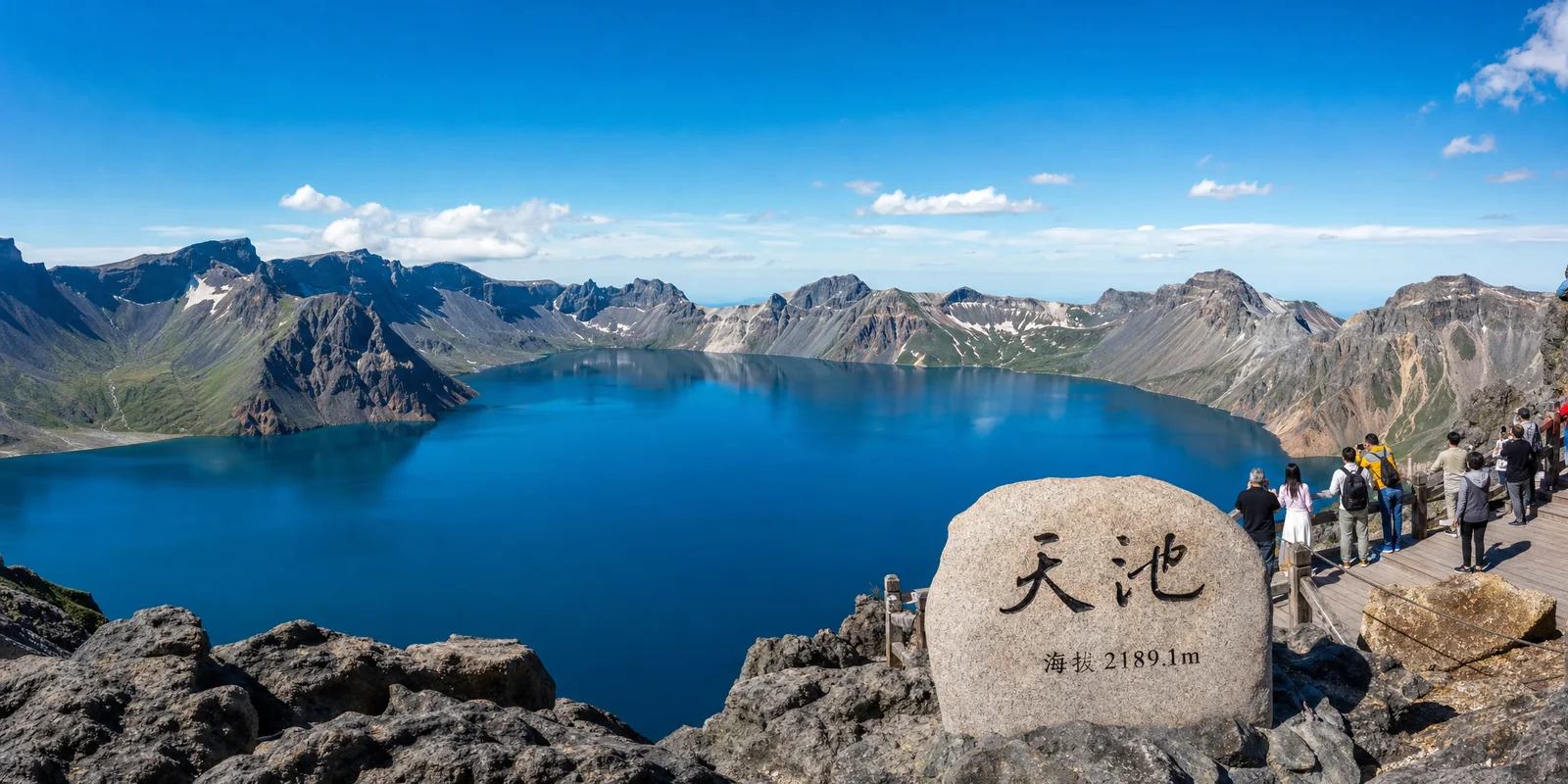
This is the reason most people come. Heaven Lake fills the volcano's crater at about 2,190 meters, ringed by sixteen peaks. The water sits an intense blue when the sun hits it, and the rim drops away steeply on all sides. The China–North Korea border runs through the middle of the lake, so part of what you're looking at is technically North Korea.
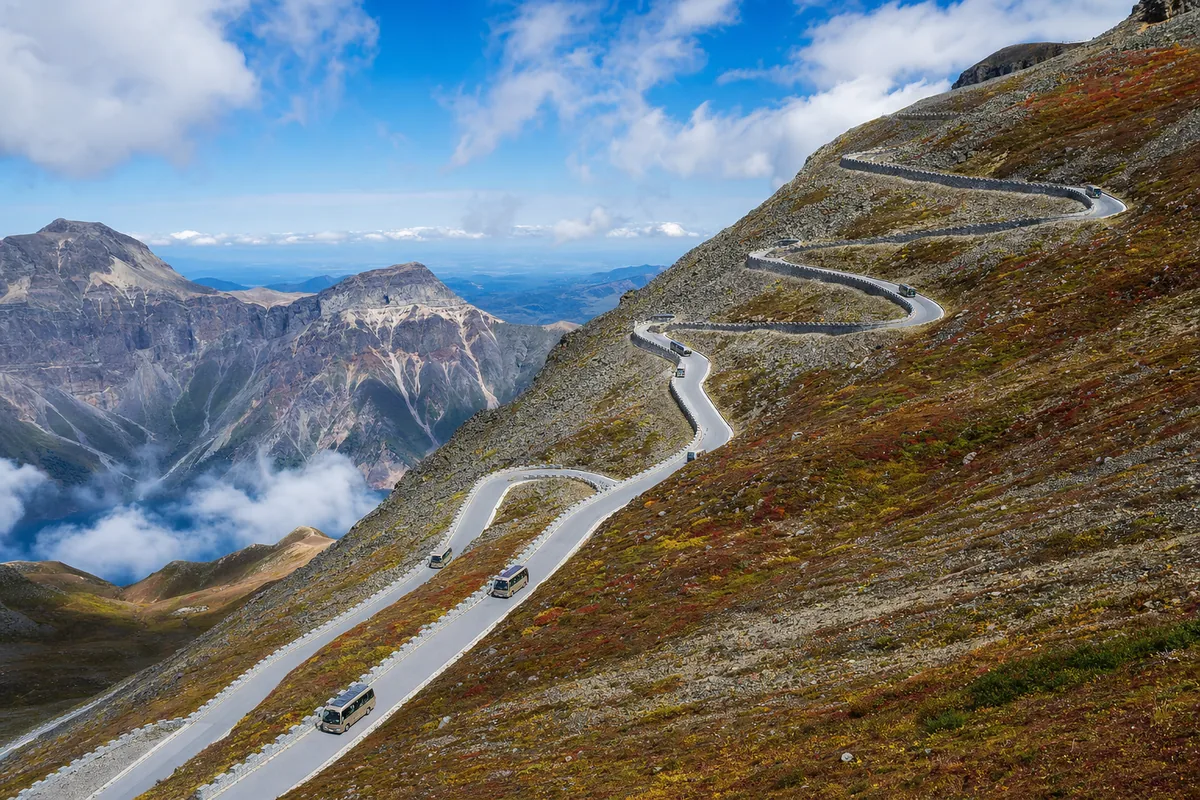
From the North Gate, shuttles take you up the switchback road to a summit viewing area. You don't hike to the rim here — you walk a short distance from the drop-off to the viewpoints. From the West Gate, you climb the long staircase to the rim. Either way, you're looking down at the lake, not standing at the shore (shore access is restricted).
The frustrating reality: weather decides everything. On a clear morning the view is one of the best in China. On a foggy one you'll stand at the platform and see grey. Go early, check the mountain forecast the night before, and manage expectations.
Guided summit tours and combined-gate experiences can simplify logistics if you're short on time or don't speak Chinese. You can compare options and book ahead through platforms like Klook, which often bundle transport, tickets, and the internal shuttle.
Changbai Waterfall
From the North Gate, a walking trail leads up the valley to Changbai Waterfall, where water draining from Heaven Lake plunges about 68 meters down the rock face. It's the visible outflow of the lake — the source of the Songhua River system. The trail follows a stream past steaming vents where geothermal heat meets the cold mountain air, and in winter the whole gorge ices over dramatically while the falls keep running.
The walk is moderate and paved/stepped most of the way. You can't climb to the very base of the falls (it's roped off for safety), but the viewpoints along the trail get you close enough to feel the spray and hear it.
Hot Springs and the Egg-Cooking Field
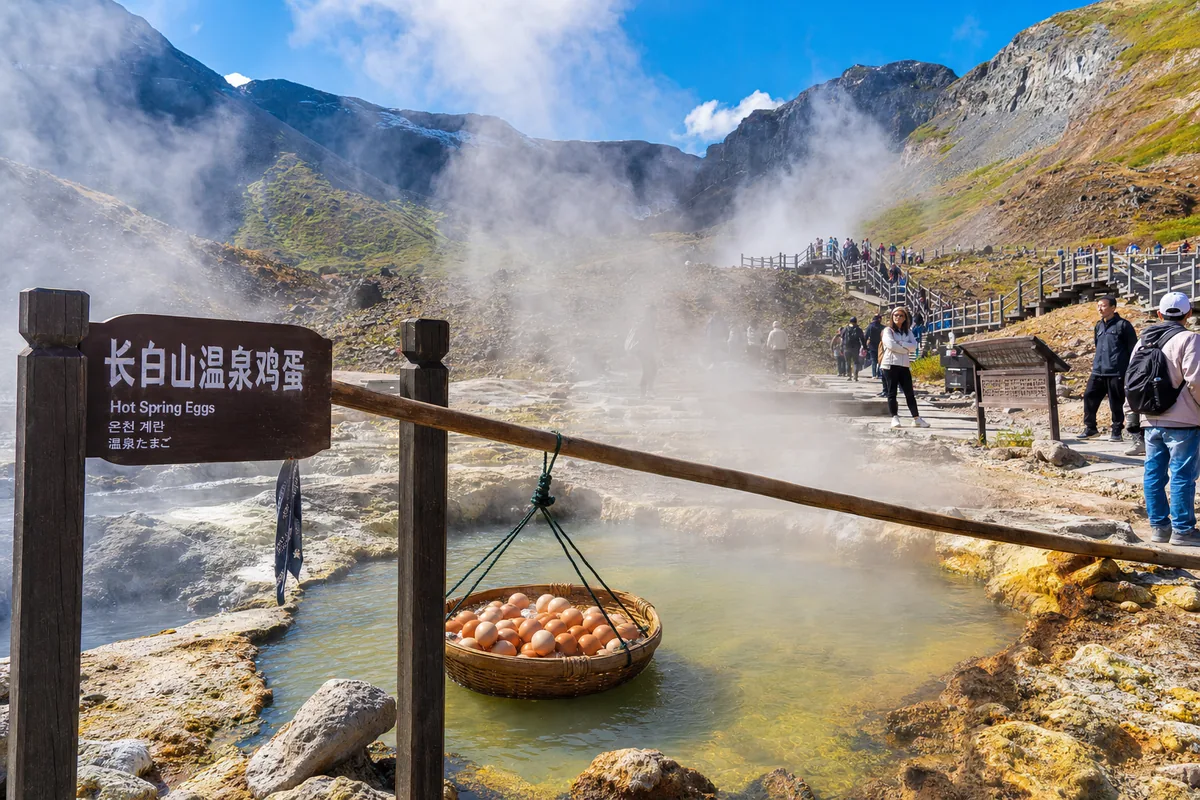
Along the waterfall trail, geothermal springs bubble up at temperatures hot enough to cook food. Vendors sell eggs (and sometimes corn) cooked directly in the mineral spring water — slightly sulfurous, soft-textured, a fun cheap snack and a classic Changbaishan thing to do. The water here can exceed 80°C, so the steam vents are fenced; don't reach in.
For actual bathing, the resort areas near the North Gate and the main hotel cluster have developed hot spring spas with indoor and outdoor pools. These are at their best in winter — sitting in a steaming outdoor pool while it snows is the signature Changbaishan experience for a lot of visitors. Day passes are available, and several hotels include spring access.
Underground Forest
The Underground Forest (地下森林, Dìxià Sēnlín), near the North Gate, is a forest growing inside a collapsed volcanic gorge — the ground dropped along fault lines, leaving a sunken canyon where tall trees grow below the surrounding land level. A boardwalk loop takes you along the rim and down into the cool, mossy, quiet gorge. It's a flat, easy walk (roughly an hour at a relaxed pace) and a good option when the summit is fogged in and you need a plan B at lower elevation.
Ski Resort (Winter)
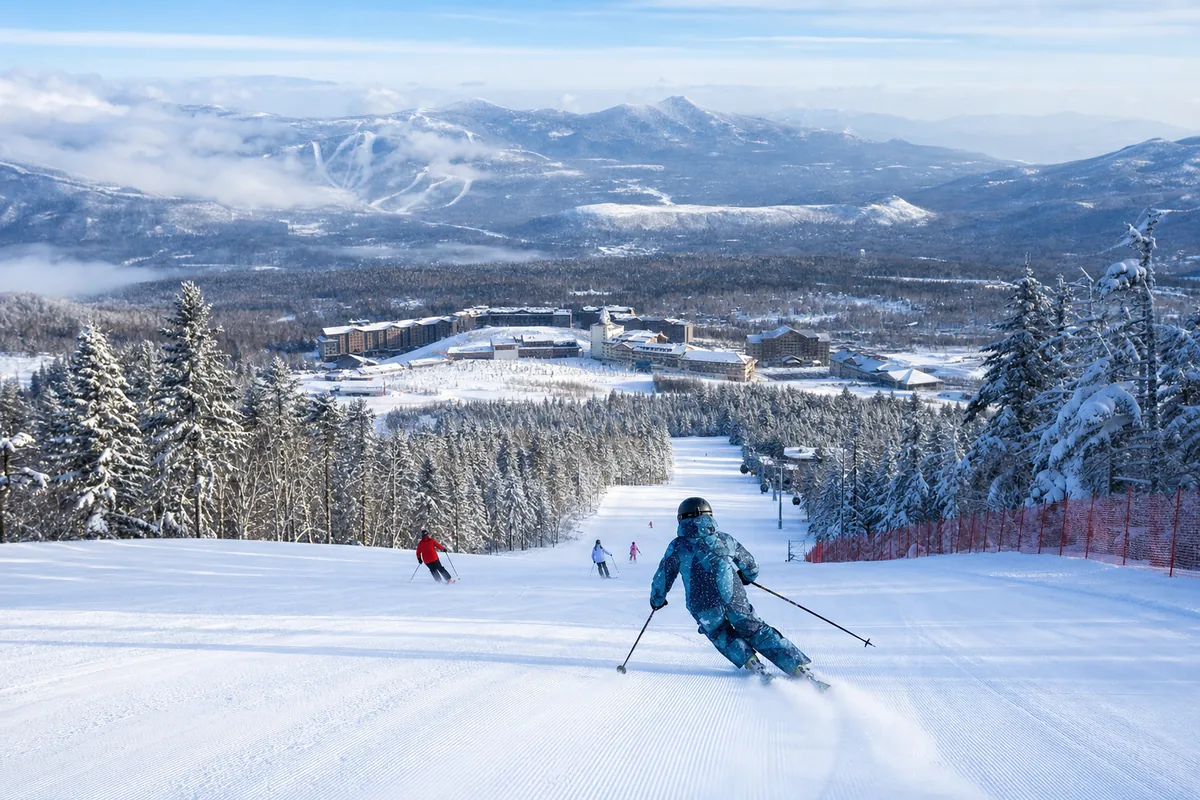
Changbaishan is one of China's notable ski areas. The main resort cluster sits near the mountain base and offers groomed runs for beginners through advanced, ski schools with some English-speaking instructors, equipment rental, and a long season thanks to reliable natural and machine-made snow. The destination has been developed with international-standard resort facilities, and it pairs naturally with the hot springs for an après-ski soak.
If you're traveling specifically for skiing, the winter package model — flight or train in, resort hotel, lift passes, spa — is the easy way to do it. For broader cold-weather planning across the region, our winter travel in China guide covers gear, timing, and what -20°C actually means for your day.
Where to Stay
Accommodation clusters in a few areas, and your choice depends on season and which gate you're using.
- Erdao Baihe town (二道白河): The main service town near the North Gate and the railway station. Widest range of hotels, guesthouses, restaurants, and convenience — best base for North Gate access and the most flexible budget options.
- North Gate resort area: Higher-end resorts with hot spring spas, closer to the slopes and the gate. Best for winter ski-and-spa trips; pricier.
- Songjianghe / West Gate side: Convenient if you're flying into Changbaishan Airport and focusing on the West Gate.
Book ahead in both peak seasons — summer weekends and the winter holiday window fill up and prices climb. You can compare resort and town options and lock in dates on Booking.com.
Food
Changbaishan food leans into the mountain's wild ingredients. Look for wild mushrooms (the region is famous for them), mountain vegetables and ferns, freshwater fish, and Korean-influenced dishes thanks to the area's large Korean-Chinese (朝鲜族, Cháoxiǎnzú) population — cold noodles, barbecue, and kimchi show up everywhere. Ginseng is the regional specialty and turns up in soups and as a souvenir. After a cold day, a Korean-style barbecue or a hot pot is the standard move. And of course, a hot spring egg on the waterfall trail.
Suggested Itineraries
Two Days (Summer)
- Day 1: Arrive, settle in Erdao Baihe. Afternoon at the Underground Forest or hot spring spa to acclimatize.
- Day 2: Early start for the North Gate — summit shuttle to Heaven Lake first thing, then walk the waterfall trail, hot spring egg-cooking field. Backup summit attempt the next morning if weather failed.
Three Days (Recommended)
- Day 1: Arrive, rest, evening hot spring soak.
- Day 2: North Gate full day — Heaven Lake summit, Changbai Waterfall, egg field, underground forest.
- Day 3: Backup Heaven Lake morning if needed, or visit the West Gate for the alpine meadows and a different lake viewpoint. Depart.
Three Days (Winter)
- Day 1: Arrive, gear up, evening at the resort.
- Day 2: Full ski day, hot spring soak in the evening.
- Day 3: Morning at the iced-over waterfall and snowbound forest, then depart. (Heaven Lake summit access is usually closed in deep winter.)
For organizing day-by-day plans and metro routes in the cities you connect through — Harbin, Shenyang, Dalian — the WaysChina app has offline metro maps and a built-in trip planner.
Practical Notes
- Passport: Carry it at all times — needed for tickets, transport, and hotels in this border zone.
- Cash and pay: Mobile payment (Alipay/WeChat Pay) works in town and at most vendors; carry some cash as backup for small mountain stalls.
- Altitude: The summit is over 2,000m but you won't be exerting much; just expect cold and wind.
- Connectivity: Signal is patchy on the upper mountain. Download offline maps and any tickets in advance.
- Crowds: Summer weekends and the National Day holiday in early October are extremely busy — avoid if you can.
Changbaishan's official tourism information is published by the regional protection and development authority; for current ticket prices, gate opening status, and shuttle arrangements, check the area's official channels before you go, and confirm train schedules on the national railway booking site.
The Bottom Line
Changbaishan rewards travelers who plan around the weather and give themselves room to fail and retry on Heaven Lake. Come in summer for the lake, the waterfall, and the alpine meadows; come in winter for skiing and hot springs in the snow. Either way, give it two to three days, base yourself in Erdao Baihe or a North Gate resort, carry your passport, and go up the mountain early. Combine it with Harbin and Dalian and you have a complete Northeast China trip. Book transport and peak-season hotels well ahead — this is a remote destination where last-minute logistics get expensive fast.
Related Reading
- Harbin Winter Guide — pair Changbaishan with the ice and snow festival.
- Dalian Coastal City Guide — the coastal end of the Northeast route.
- Winter Travel in China — cold-weather planning and packing.
- How to Book Train Tickets — for reaching Changbaishan by rail.
Last updated: June 2026
Read in other languages
Last train times for 10 Chinese metro systems
Every line and station, checked by hand — the same data behind our offline route planner.
Get the WaysChina App
Offline guides, currency converter, essential phrases, and more — all in your pocket.

Related Articles
Dalian Coastal City Guide
Dalian is northeast China's best beach city — fresh seafood, Russian and Japanese colonial architecture, and cool...
Harbin Winter Guide
Everything you need for a winter trip to Harbin: the Ice and Snow World, Russian-influenced Central Street, real...