
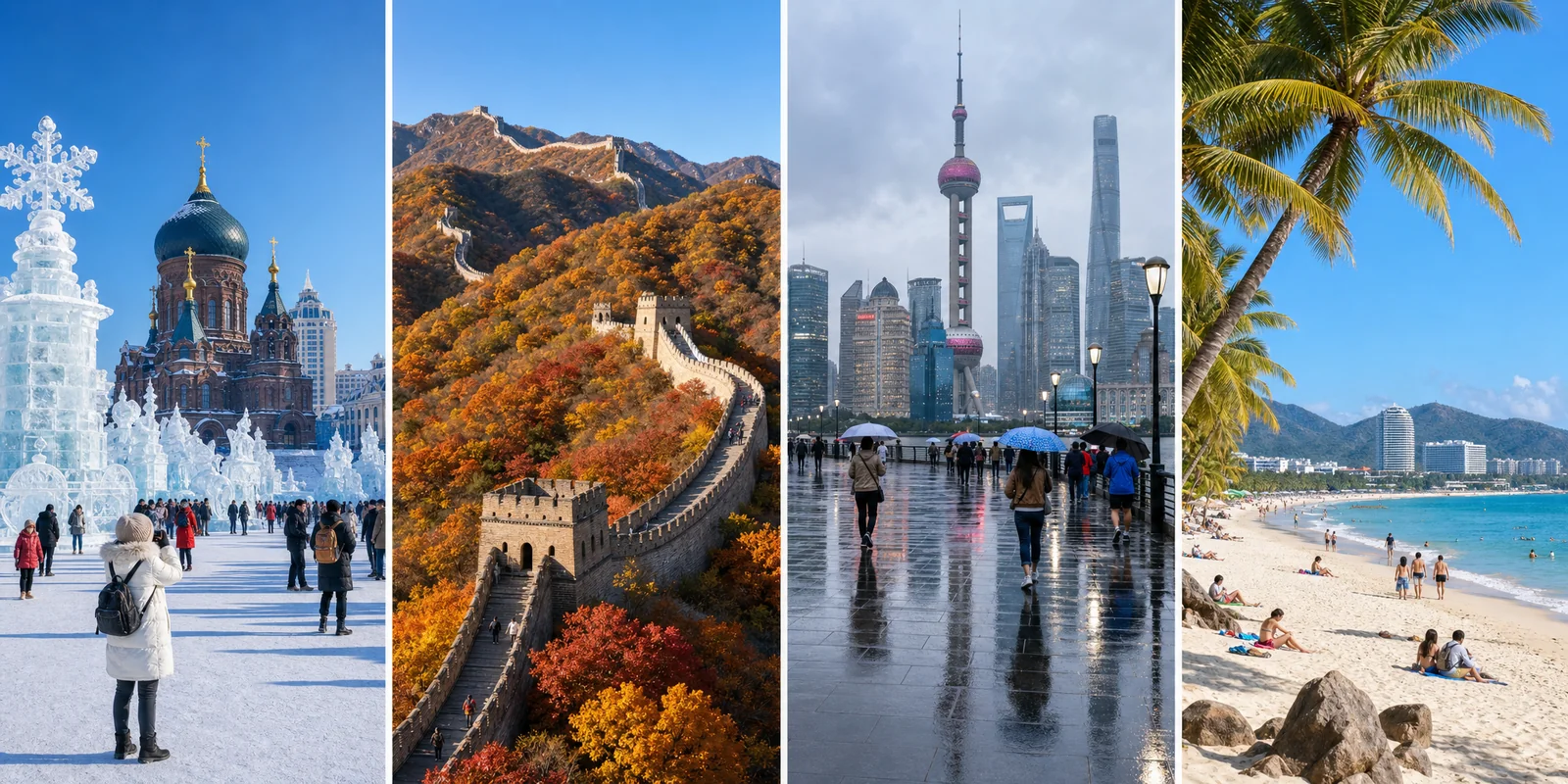
China is the size of a continent, and its weather behaves like one. On the same day in January, you can be skiing in Harbin at minus 20°C and swimming on a beach in Sanya at 25°C. A trip that crosses regions means packing for several climates at once, which trips up a lot of first-time visitors.
This guide breaks China down by climate zone and major travel region, with month-by-month notes for the cities most travelers actually visit. Use it to figure out what to pack, when to go, and which regions to pair (or avoid pairing) on the same trip.
China's Climate Zones at a Glance
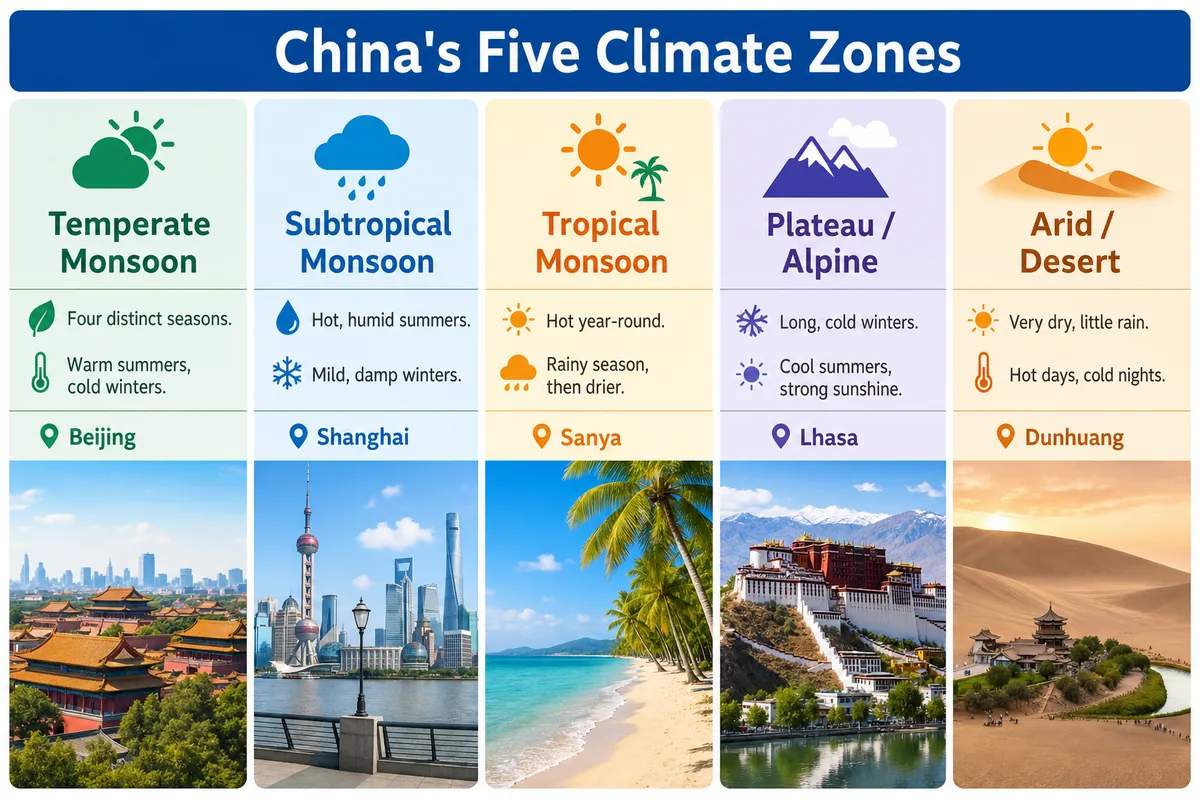
Geographers usually split China into five broad climate zones. You don't need to memorize the terminology, but knowing roughly where a city sits explains a lot about its weather.
- Temperate monsoon (north and northeast) — Beijing, Harbin, Xi'an. Cold, dry winters and hot, wet summers. Big swings between seasons.
- Subtropical monsoon (center and east) — Shanghai, Chengdu, Wuhan, Guilin. Mild-to-cold damp winters, hot humid summers, lots of rain.
- Tropical monsoon (far south) — Sanya, parts of Yunnan and Guangdong. Warm year-round, distinct wet and dry seasons.
- Plateau / alpine (Tibet and Qinghai) — Lhasa, Xining. Thin air, intense sun, cold nights, dramatic day-night temperature swings even in summer.
- Arid / desert (northwest) — Dunhuang, Turpan, parts of Gansu and Xinjiang. Very dry, scorching summer days, cold winters, huge daily temperature ranges.
The single most important pattern to understand is the monsoon. From roughly May to September, warm wet air moves up from the south and east, bringing the bulk of the year's rain to most of the country. The rain front generally arrives in the far south first (around May) and pushes north through summer. By autumn it retreats, and most of China turns dry and clear.
North China: Beijing, Tianjin, Xi'an, Datong
North China has four sharply defined seasons and very dry winters. This is the classic "continental" climate — what you wear in July bears no resemblance to what you wear in January.
Beijing weather by month
| Season | Months | What to expect |
|---|---|---|
| Winter | Dec–Feb | Cold and dry, -10°C to 5°C. Little snow but biting wind. Skies often clear. |
| Spring | Mar–May | Warming fast, 10–25°C. Occasional dust or sand from the north; windy. |
| Summer | Jun–Aug | Hot and humid, 28–35°C, with the year's heaviest rain in July–August. |
| Autumn | Sep–Oct | The best season. Mild, dry, clear, 10–22°C. Crowds aside, ideal for the Great Wall. |
Autumn (especially late September through October) is widely considered the best time to visit Beijing — comfortable temperatures and the clearest skies of the year. Winter is cold but very doable with proper layers, and crowds at major sites thin out dramatically.
Xi'an and the northwest fringe
Xi'an's weather tracks closely with Beijing's — cold dry winters, hot wet summers — but summers feel hotter and stickier, often pushing past 35°C in July. Datong, higher and further north, runs several degrees colder year-round and stays cool even in summer evenings.
East China: Shanghai, Hangzhou, Suzhou, Nanjing
This is China's humid heartland. Shanghai weather year round is defined by moisture — winters are damp and chilly rather than freezing, and summers are hot, sticky, and rainy.
Shanghai weather by month
| Season | Months | What to expect |
|---|---|---|
| Winter | Dec–Feb | Damp cold, 1–10°C. Rarely snows but feels colder than the thermometer says. Buildings often poorly heated. |
| Spring | Mar–May | Pleasant and increasingly humid, 10–22°C. Some rain. A good window before the heat. |
| Plum rain | mid-Jun–early Jul | The "plum rain" (梅雨, méiyǔ) season — weeks of grey drizzle and high humidity. |
| Summer | Jul–Aug | Hot, humid, 30–38°C. Typhoon season can bring heavy storms, especially Aug–Sep. |
| Autumn | Sep–Nov | The best stretch — drier, clear, 15–28°C cooling into pleasant late autumn. |
Hangzhou, Suzhou, Nanjing
These cities sit close enough to Shanghai to share its climate, with one note: Nanjing is famous for brutal summer heat — it's traditionally called one of China's "furnaces." Inland and slightly more continental, it bakes in July and August.
South China: Guangzhou, Shenzhen, Guilin, Xiamen, Hong Kong
South China weather is warm, wet, and humid for most of the year, with no real winter to speak of. The defining feature here is the long, intense rainy season and typhoon exposure.
- Winter (Dec–Feb): Mild, 10–20°C. A light jacket covers it. Brief cold snaps possible but no snow.
- Spring (Mar–Apr): Warm and increasingly humid, with rising rain. Often grey and misty.
- Rainy season (May–Aug): The heaviest rain of the year, hot and very humid, 28–34°C. China monsoon season is at its strongest here.
- Typhoon season (Jul–Sep): The coast — Guangdong, Fujian, Hong Kong — can get hit by typhoons that shut down flights and trains for a day or two.
- Autumn (Oct–Nov): The best time to visit. Drier, sunny, still warm, low humidity.
Guilin and Yangshuo follow the same pattern but the limestone karst scenery looks dramatic in mist, so the wetter months aren't a write-off — just expect to get rained on.

Southwest China: Chengdu, Chongqing, Yunnan, Tibet
The southwest is the most climatically varied region in the country, because altitude does most of the work here.
Sichuan Basin: Chengdu and Chongqing
The basin is famously grey, humid, and overcast — locals joke the sun is a rare guest. Winters are damp and chilly (3–10°C), summers hot and muggy. Chongqing is another of China's "furnaces," hitting 38°C+ in summer. Don't come for blue skies; come for the food and the pandas.
Yunnan: spring all year
Kunming is nicknamed the "Spring City" (春城, Chūnchéng) for good reason — mild and pleasant most of the year, roughly 10–25°C. Dali and Lijiang sit higher and get colder at night, especially in winter. Yunnan has a clear dry season (Oct–May) and wet season (Jun–Sep); the dry season is the better time to visit.
Tibet and the plateau: Lhasa, Xining
High-altitude weather is its own category. Lhasa sits at about 3,650m. The sun is intense (you can burn quickly), days can feel warm, but nights are cold year-round. Even in summer, expect big temperature swings between midday and night.
Northwest China: Dunhuang, Xining, Zhangye, Lanzhou
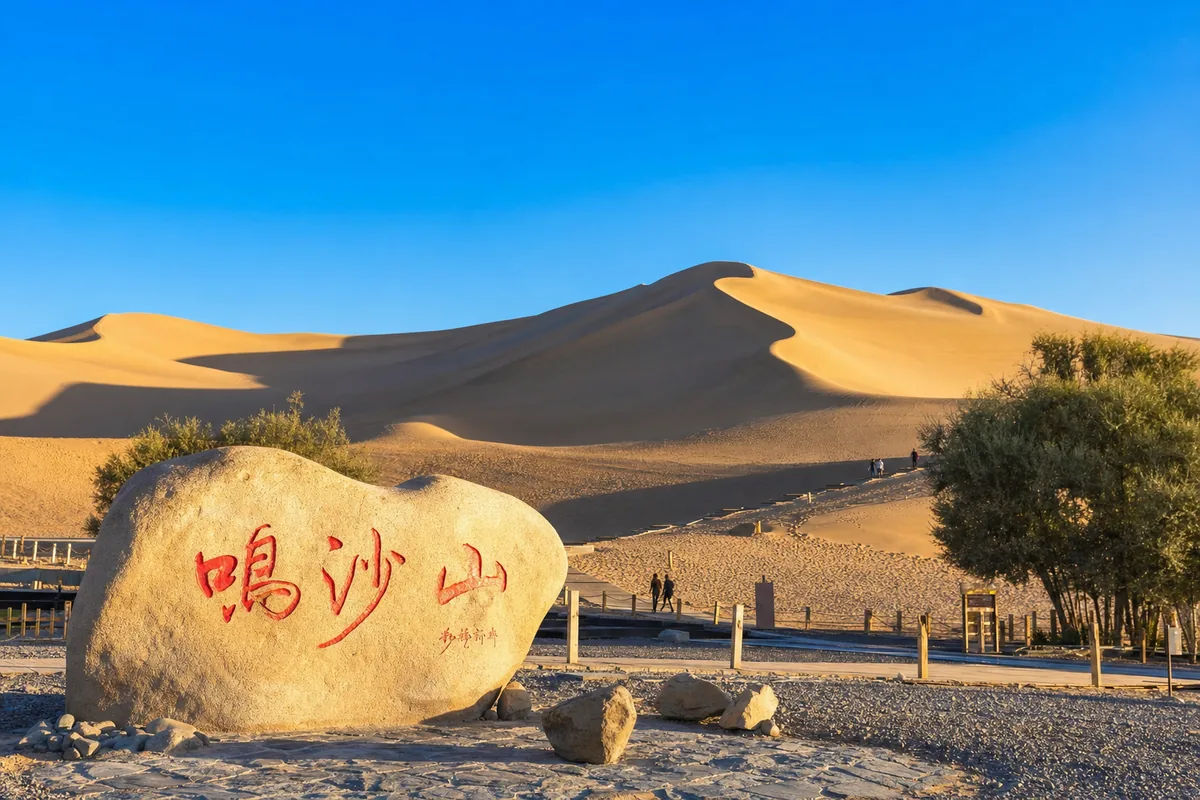
The northwest is dry desert and semi-desert country. Defining traits: very low humidity, scorching summer days, cold winters, and enormous day-to-night temperature swings.
- Summer (Jun–Aug): Hot and very dry, often 30–38°C in the daytime, but nights cool sharply. The Silk Road sites are best visited in late spring or autumn to dodge the worst heat.
- Winter (Nov–Mar): Cold and dry, frequently below freezing. Tourist infrastructure quiets down; some sites have reduced hours.
- Spring/autumn (Apr–May, Sep–Oct): The sweet spots — warm days, cool nights, clear skies, good light for desert and Danxia landscapes.
Because the air is so dry, summer heat in the northwest feels more bearable than the same temperature in humid Shanghai or Chongqing — but it dehydrates you fast, and sunburn is a constant risk.
Northeast China: Harbin, Dalian, Changbaishan
The northeast (Dōngběi, 东北) is China's deep freeze. Winters are long, dry, and severely cold, which is exactly why people go — Harbin's ice festival runs through the coldest months.
- Winter (Nov–Mar): Brutally cold, -20°C to -30°C in Harbin. Bright, dry, and the main draw for ice and snow tourism.
- Summer (Jun–Aug): Pleasantly cool, 20–28°C — the region becomes a summer escape from the southern heat. Dalian's coast is especially popular.
- Spring/autumn: Short transition seasons. Autumn brings excellent foliage around Changbaishan.
Quick Reference: When to Visit Each Region
| Region | Best months | Avoid / be careful |
|---|---|---|
| North (Beijing, Xi'an) | Sep–Oct, Apr–May | Jul–Aug rain; deep winter cold |
| East (Shanghai, Hangzhou) | Oct–Nov, Mar–Apr | Jun plum rain; Jul–Aug heat & typhoons |
| South (Guangzhou, Guilin) | Oct–Nov | May–Aug rain; Jul–Sep typhoons |
| Southwest basin (Chengdu) | Mar–Jun, Sep–Nov | Mid-summer mugginess; grey winter |
| Yunnan | Oct–Apr (dry season) | Jun–Sep rain |
| Tibet / plateau | Apr–Oct | Winter cold; year-round altitude/UV |
| Northwest (Dunhuang) | May, Sep–Oct | Midsummer heat; winter closures |
| Northeast (Harbin) | Dec–Feb (for snow), Jun–Aug (for cool) | Nothing — depends what you want |
Packing Logic for a Multi-Region Trip
The classic mistake is packing for one climate when your route crosses several. A common Beijing–Xi'an–Shanghai loop in autumn is fairly consistent. But a trip that pairs, say, Beijing in winter with Sanya, or Chengdu with Tibet, means packing genuine cold-weather gear and warm-weather clothing in the same bag.
A few rules that hold across China:
- Layers beat single heavy items. Indoor heating in the north is strong; outdoors is freezing. You'll constantly add and remove layers.
- Always carry a compact umbrella in summer. Monsoon and afternoon storms are sudden and heavy across most of the country.
- Sun protection matters more than people expect — not just in Tibet and the northwest, but anywhere at altitude or on the water.
- Southern winters need real warm clothes because of the lack of indoor heating, even when the temperature reads above freezing.
For a season-by-season breakdown of exactly what to bring, see our Clothing by Season guide and the broader What to Pack overview.
For up-to-date forecasts and seasonal records before you finalize plans, the China Meteorological Administration publishes official weather data and warnings, including typhoon tracking in summer.
The Bottom Line
There's no single "best time" to visit China — it depends entirely on where you're going. Autumn (September–November) is the safest bet for most popular routes: dry, clear, and comfortable nearly everywhere except the far south's typhoon tail. Spring is a close second. Summer means heat, rain, and crowds but unlocks the cool northeast and high plateau. Winter is harsh in the north but rewarding for ice festivals and quieter sights.
Before you book, match your route to the seasons above, then pack in layers for the regions you'll actually pass through. If you're still deciding when to go, our Best Time to Visit China guide pulls weather, crowds, and prices together to help you choose.
Last updated: June 2026
Read in other languages
Last train times for 10 Chinese metro systems
Every line and station, checked by hand — the same data behind our offline route planner.
Get the WaysChina App
Offline guides, currency converter, essential phrases, and more — all in your pocket.

Related Articles
Autumn Travel in China
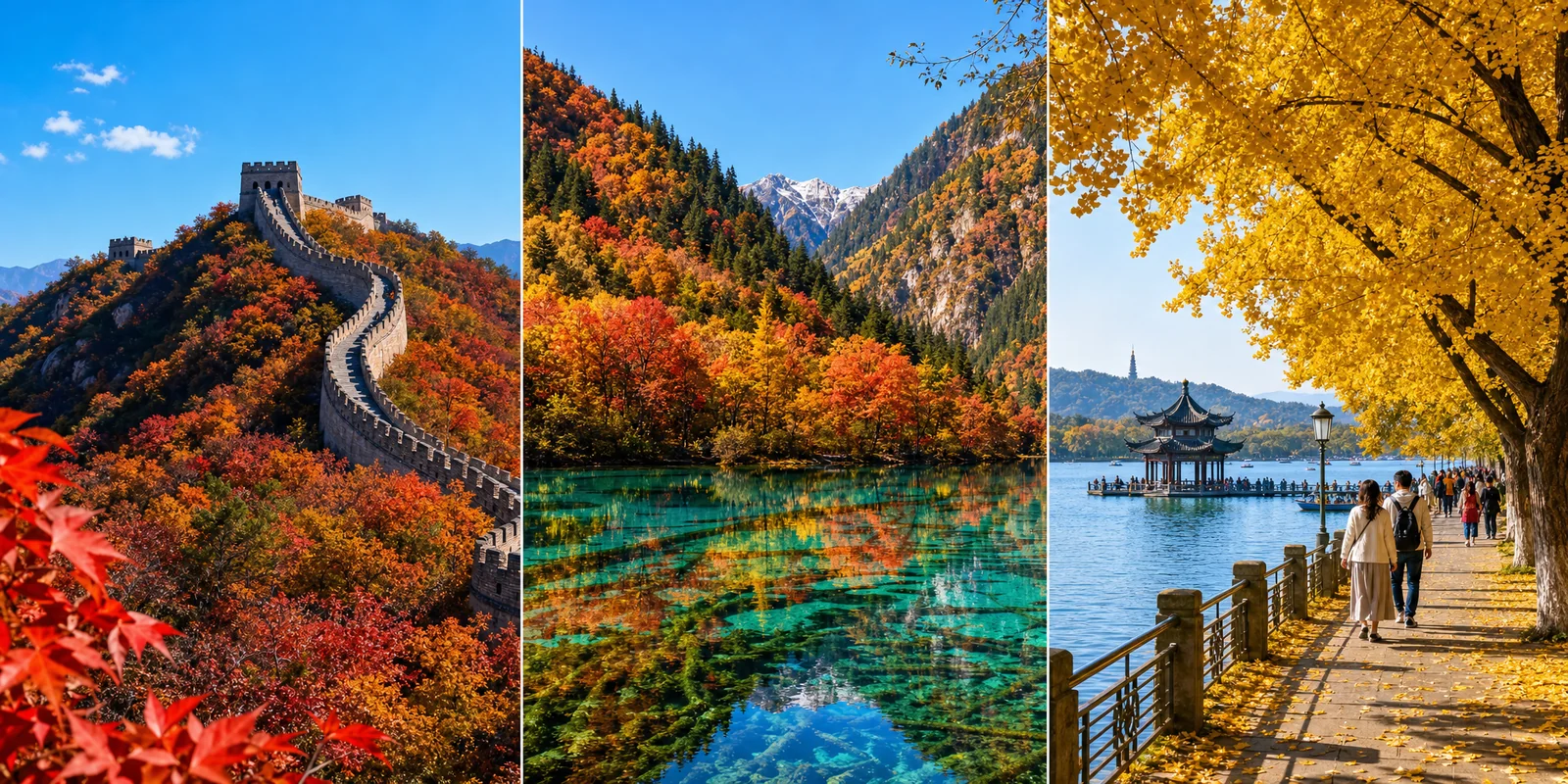
Autumn is arguably the best season to visit China: comfortable weather, clear skies, golden foliage, and the...
Best Time to Visit China
China spans subtropical beaches to subarctic forests, so the best time to visit depends entirely on where you're...
Chinese New Year Travel Guide
Traveling to China during Chinese New Year means festive cities, closed shops, and the world's largest annual...
Festival Calendar: China's Holidays & Festivals Explained
China's festival calendar mixes lunar holidays with fixed public holidays. Here's when each one falls, what closes,...