
This article contains affiliate links. If you make a purchase through these links, we may earn a small commission at no extra cost to you. This helps support our work in creating free travel guides.
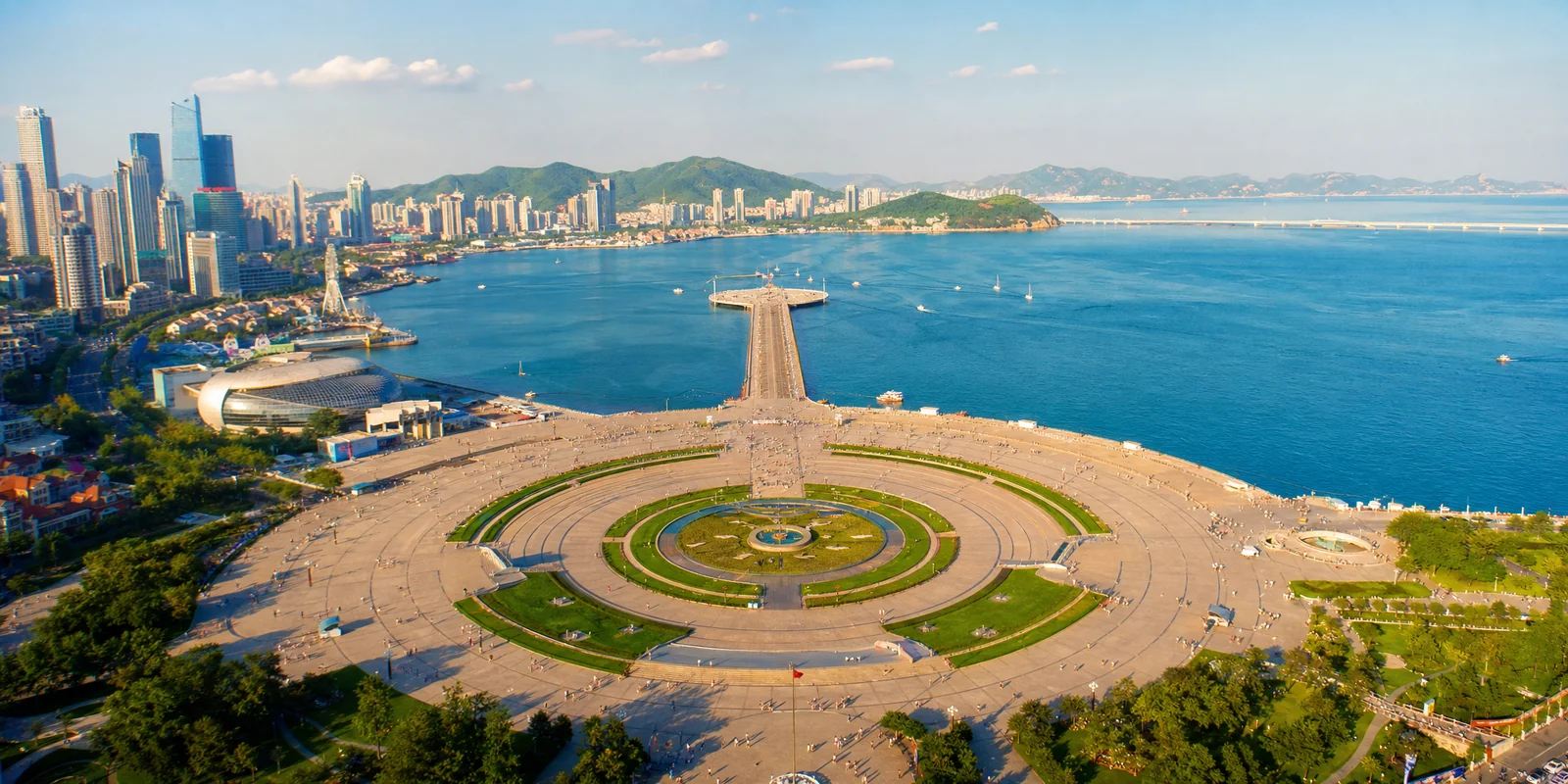
Dalian sits at the tip of the Liaodong Peninsula, where the Yellow Sea wraps around three sides of the city. It's the rare Chinese metropolis that's mostly known for its coastline rather than its skyline — clean beaches, sea breezes that keep summers around 22-28°C while the rest of the country bakes, and a downtown dotted with century-old European buildings left over from Russian and Japanese rule. Most travelers come here for two or three days as part of a wider northeast China trip, and that's about right: enough time for the squares, the beaches, a Russian Street stroll, and at least one serious seafood meal. This guide covers when to go, how to get around, what to eat, where to stay, and the attractions actually worth your time.
Overview: Why Dalian?
Dalian (大连, Dàlián) is a port city of about 6 million people, and it doesn't feel like the inland megacities. The pace is slower, the air is cleaner, and the layout is unusually green — wide boulevards, hillside parks, and a coastal road that loops most of the southern shore. Because it was developed as a port by Russia in the late 1800s and then taken over by Japan, the older districts have a distinctly un-Chinese look: domed buildings, tram lines, and circular plazas radiating streets like spokes.
The big draw is the combination you don't get elsewhere in the northeast: a real beach holiday plus walkable history plus excellent, affordable seafood. It's also a genuine summer escape. While Beijing and Shanghai hit 35°C and high humidity in July and August, Dalian stays noticeably cooler, which is exactly why domestic tourists flood in during those months.
Best time to visit
Aim for summer (June-August) for beaches and swimming, or autumn (September-November) for clear skies, comfortable temperatures, and far smaller crowds. Autumn is arguably the sweet spot — the water is still warm enough to wade into in early September, and you won't be fighting for space at the squares. Winters are cold and windy (often below freezing with biting sea wind), and spring can be foggy. If you're combining Dalian with Harbin's ice festival, you'll be here in the off-season, so treat it as a city-and-food stop rather than a beach one.
Getting to Dalian
Dalian is well connected by both air and rail. Dalian Zhoushuizi International Airport (DLC) sits just 10 km from downtown — a 20-30 minute taxi ride, or take Metro Line 2 straight into the center. There are direct domestic flights from most major Chinese cities and some international routes from Japan and South Korea.
By high-speed train, Dalian connects to the rest of the northeast efficiently. The line runs down from Harbin through Shenyang and into Dalian, so it slots neatly into a regional itinerary.
| Route | Mode | Approx. time |
|---|---|---|
| Beijing → Dalian | High-speed train | ~4.5-5.5 hrs |
| Beijing → Dalian | Flight | ~1.5 hrs |
| Shenyang → Dalian | High-speed train | ~2 hrs |
| Harbin → Dalian | High-speed train | ~4.5-5 hrs |
You can book high-speed rail tickets through the official 12306 platform, or use an English-language service like an online booking platform if the Chinese-only interface is a hurdle. For the Harbin-to-Dalian leg specifically, Trip Com Train handles English bookings and passport-based seat reservations without the headaches.
Getting around the city
Dalian's public transport is easy and cheap. The Metro covers the main routes including the airport line, and the city's famous old trams (running since the 1900s) still trundle through downtown — Route 201 is a fun, dirt-cheap way to roll past the colonial-era buildings. Buses are extensive but signage is mostly in Chinese.
For door-to-door trips, Didi (China's Uber) is the easiest option — you can set destinations in English and pay through the app. Taxis are plentiful and metered. Note that some of the best coastal scenery is along the Binhai Road (滨海路) coastal drive, which winds along cliffs on the southern shore; many visitors hire a Didi or join a half-day tour to cover it, since it's spread out and not well served by public transit.
Top Attractions
Xinghai Square
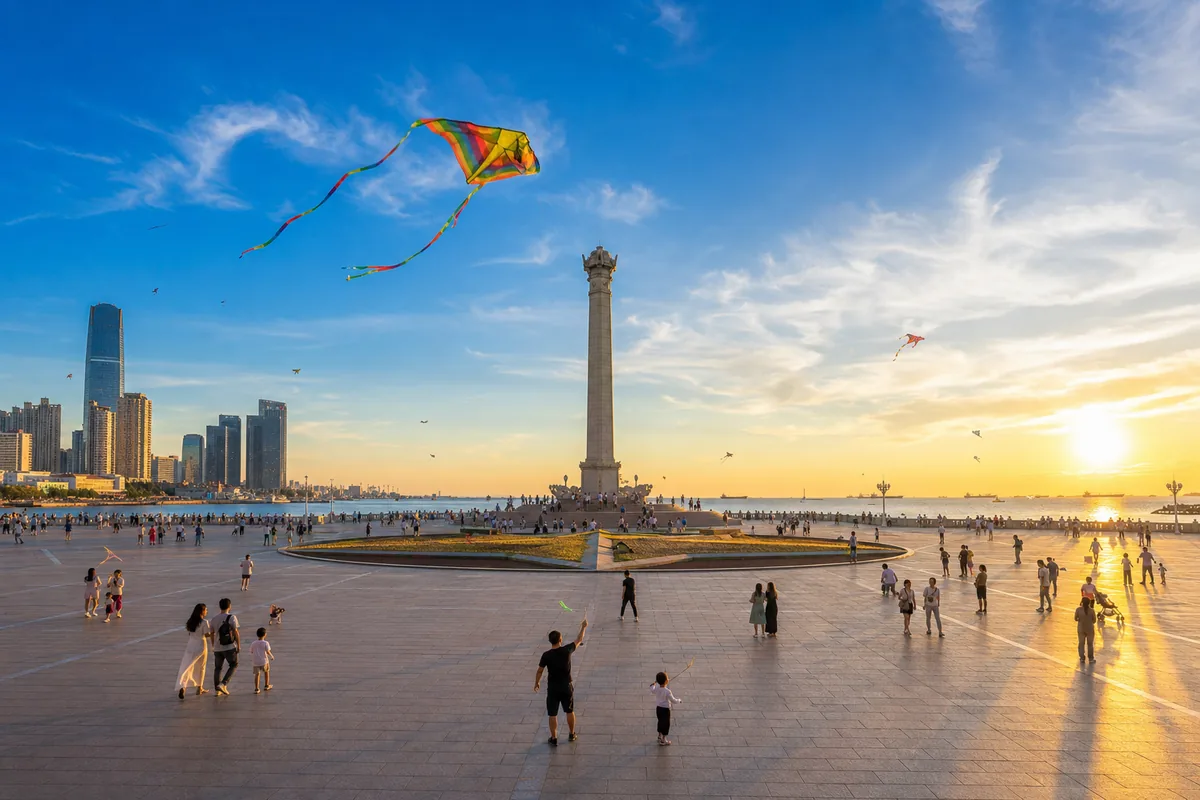
Xinghai Square (星海广场, Xīnghǎi Guǎngchǎng) is the centerpiece of modern Dalian and, at around 1.1 million square meters, one of the largest city squares in Asia. It was built on reclaimed land and opens onto Xinghai Bay. The scale is the point — a vast circular plaza ringed by a giant column, a star-shaped centerpiece, and a long causeway leading out toward the sea. There's a set of bronze footprints (over 1,000 of them, cast from real Dalian residents) running down the central axis toward the water.
Come at sunset when locals fly kites, families stroll, and the light catches the bay. It's free and open around the clock. The surrounding area has cafés and the Dalian Modern Museum if you want more. Budget an hour or two; it's more of a relaxed wander than a tick-the-box sight.
Tiger Beach (Laohutan)
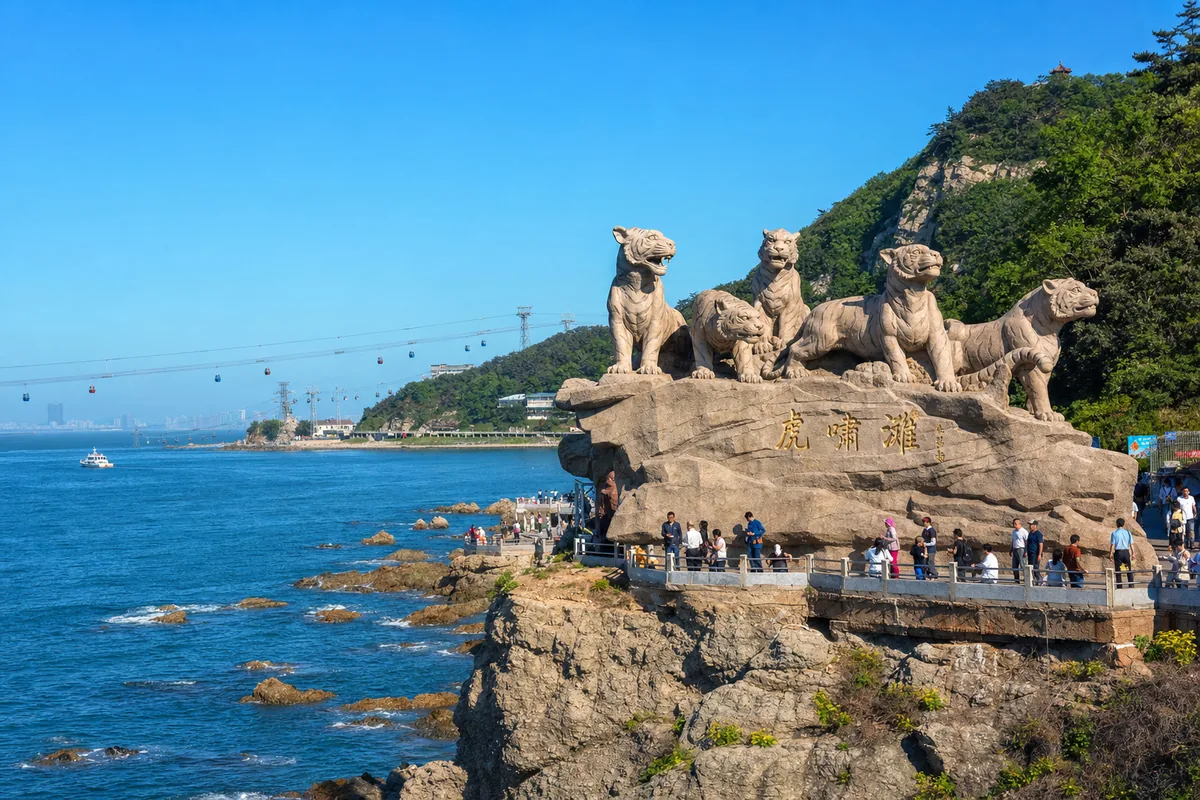
Tiger Beach (老虎滩, Lǎohǔtān) is the city's main coastal attraction — a stretch of rocky shore on the southeastern coast combined with a large ocean park. The Laohutan Ocean Park includes a polar aquarium, a coral hall, and a bird-singing woods, plus a cable car running over the bay with good views back toward the cliffs. The signature photo is the huge sculpture of six tigers carved from stone above the shore.
It's family-friendly and easy to spend half a day here, especially with kids. Entry to the park complex is ticketed (the aquariums are the main paid draws), while walking the coastal promenade itself is pleasant on its own. If you'd rather skip the queue, you can book park and aquarium tickets in advance through Klook, which often bundles the separate attractions.
Russian Street
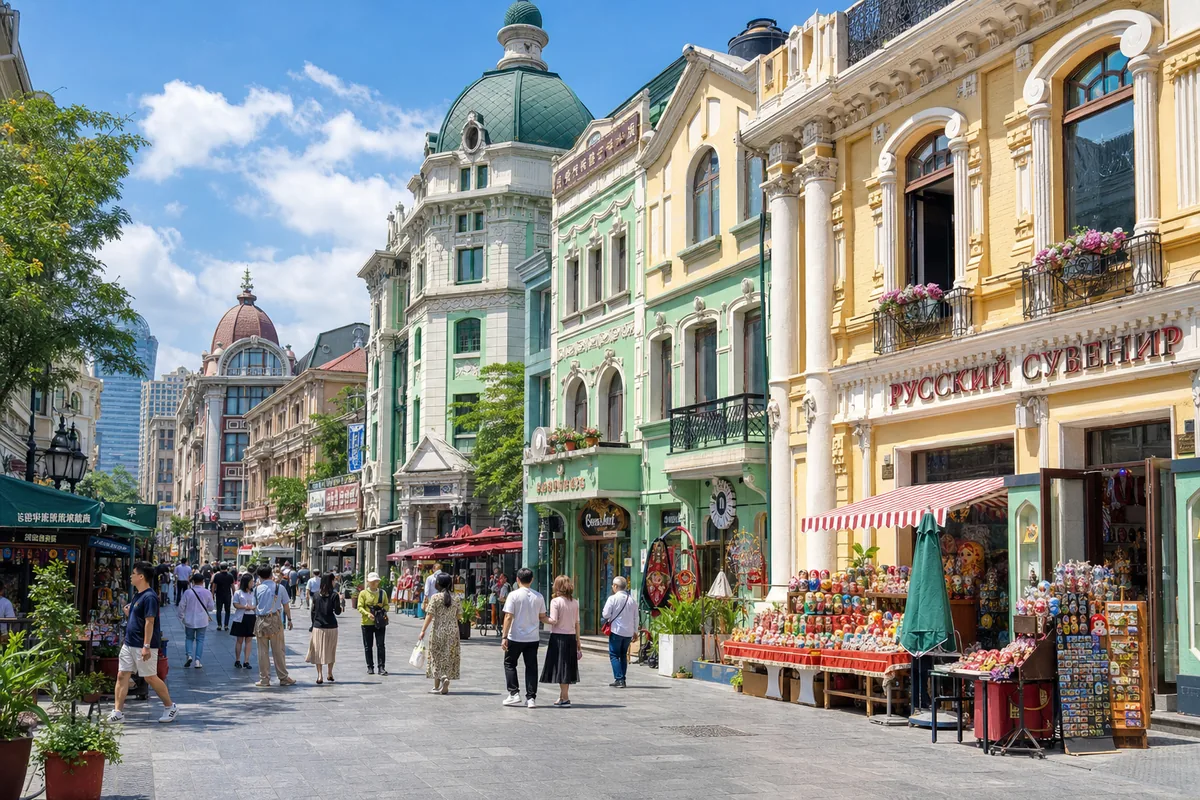
Russian Street (俄罗斯风情街, Éluósī Fēngqíngjiē) is a short pedestrian strip near the old port lined with restored Russian-era buildings, painted in pastel yellows, greens, and reds. This was the heart of the original Russian settlement, and a few genuinely historic structures remain among the rebuilt facades. Today it's a tourist street selling Russian souvenirs — matryoshka dolls, amber, chocolate, vodka, military-surplus knickknacks — and the vendors lean hard into the theme.
Be honest with your expectations: it's touristy and somewhat commercialized, more a photo-and-stroll stop than a deep historical site. But it's genuinely atmospheric for half an hour, the architecture is real, and it's free to walk. Pair it with the nearby Dalian Art Gallery building, one of the standout colonial structures, just up the road.
Bangchuidao
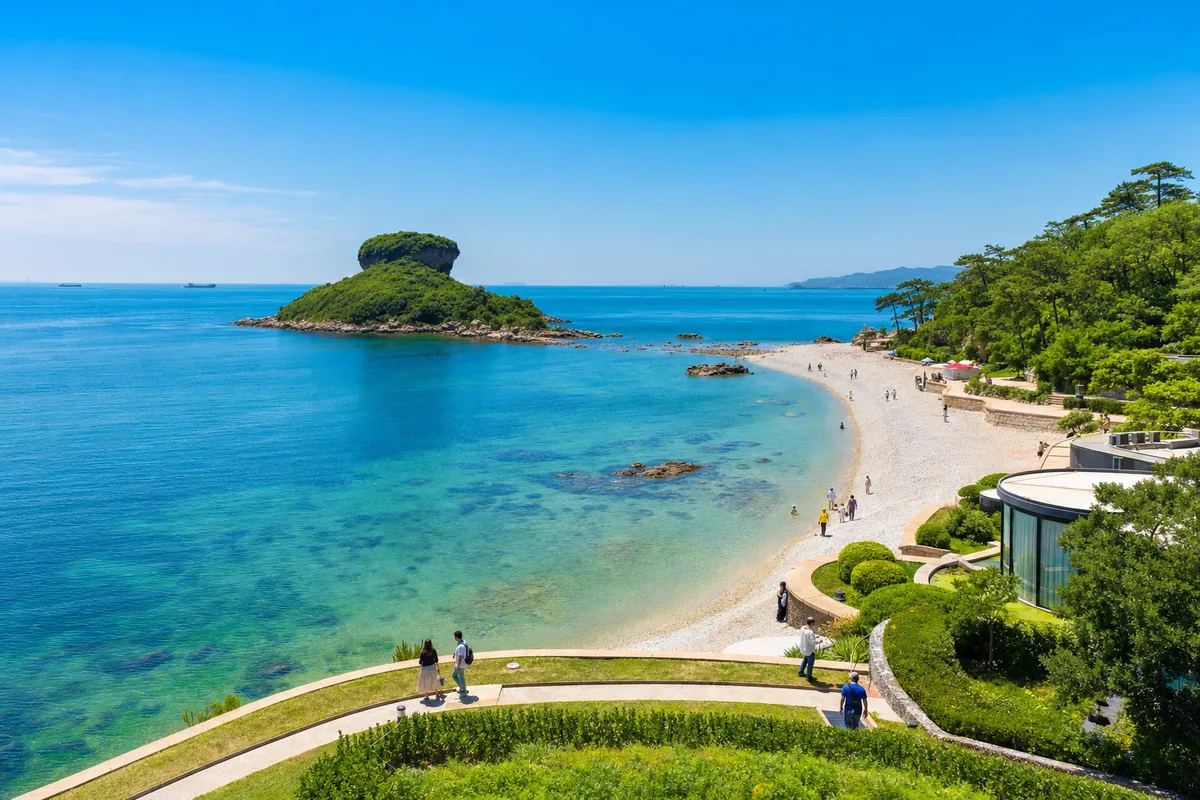
Bangchuidao (棒棰岛, Bàngchuídǎo) is a scenic resort area on the eastern coast, named for the small island offshore shaped like a Chinese laundry mallet (bangchui). This is the quieter, more upscale side of Dalian's coastline — a state guesthouse area with manicured gardens, a clean pebble-and-sand beach, and views out to the green island. The water here is among the clearest in the city.
It's a calmer alternative to busy Tiger Beach, popular for a relaxed swim or a coastal walk. There's a modest entrance fee. Because it's somewhat out of the way on the eastern headland, it pairs well with the Binhai Road coastal drive — you can string Bangchuidao, the cliffs, and several beaches together in one loop.
Beaches
Dalian's coastline has a string of beaches, each with a slightly different character. The water is cool (it's the Yellow Sea, not the tropics), but on a hot summer day it's swimmable and refreshing.
- Fujiazhuang Beach (付家庄) — One of the best for actual swimming, with cleaner water and a more natural feel. Popular with locals.
- Xinghai Beach — Right by Xinghai Square, convenient but busier and more urban.
- Golden Pebble Beach (金石滩, Jīnshítān) — About 50 km east of downtown (reachable by light rail), this is a larger resort area with unusual coastal rock formations, a longer sandy stretch, and various theme parks. Worth a half-day if you have time and want a fuller beach-resort feel.
- Bangchuidao Beach — Clear water, quieter, scenic (see above).
Dalian Seafood
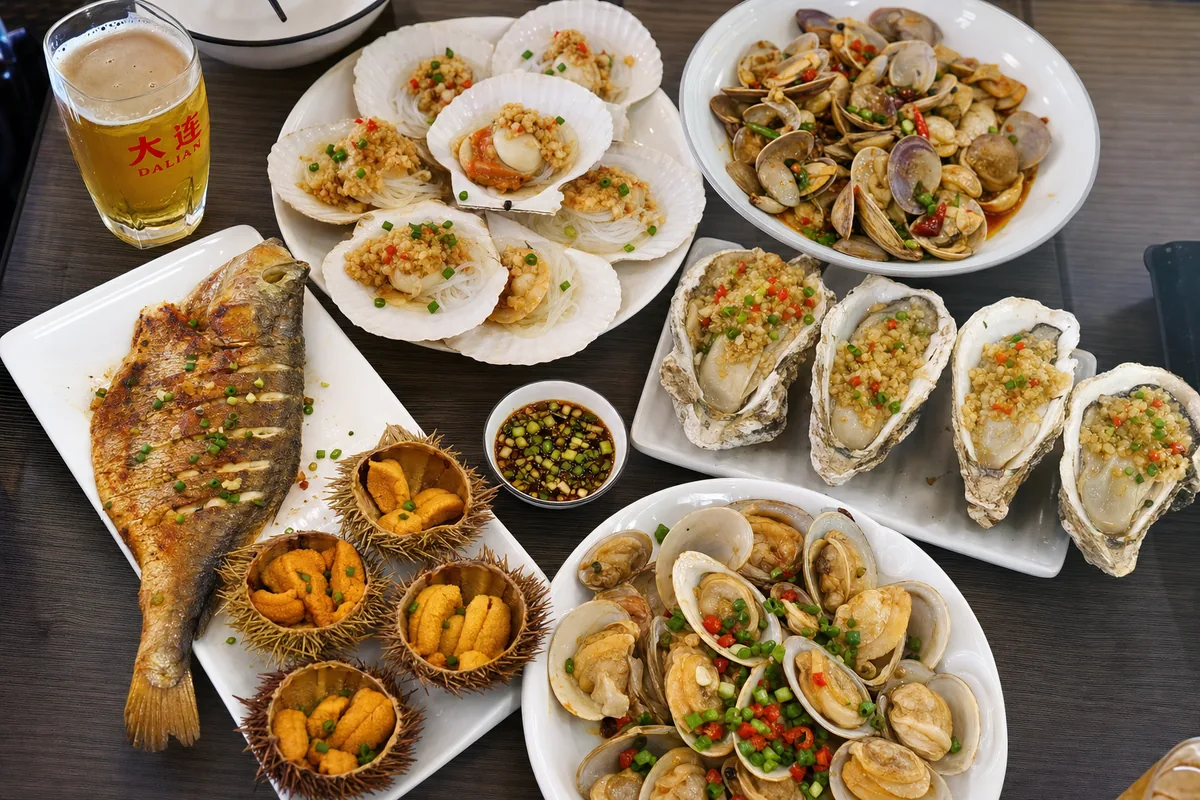
Seafood is the reason food-lovers come to Dalian. The cold, clean waters of the Yellow Sea produce some of China's best shellfish, and locals take it seriously. This isn't heavily sauced cooking — the style is about freshness and minimal interference, often just steamed, boiled, or grilled with a little garlic.
What to look for:
- Sea urchin (海胆, hǎidǎn) — A Dalian specialty, often steamed with egg or eaten raw in season.
- Sea cucumber (海参, hǎishēn) — Prized and pricey; Dalian's are considered top quality.
- Abalone, scallops, razor clams, and oysters — Cheap and abundant compared to most of the world.
- Flower clams and various shellfish — Stir-fried or boiled, a staple of any seafood spread.
- Grilled and steamed fish — Whatever's fresh that day.
For the experience, head to a seafood restaurant where you pick your catch from tanks and tell them how to cook it. The Heishijiao Seafood Market (黑石礁) area is a good hunting ground — buy fresh seafood and have nearby restaurants cook it for a fee. For something more casual, the night markets and barbecue (烧烤, shāokǎo) joints serve grilled seafood with cold Dalian beer, which is exactly how locals spend a summer evening.
Where to Stay
Dalian's neighborhoods each suit different priorities:
| Area | Good for | Notes |
|---|---|---|
| Zhongshan Square area | History, walkability | Surrounded by colonial architecture, central, good transit |
| Xinghai Square / Bay | Sea views, modern hotels | Open, scenic, slightly removed from old downtown |
| Friendship Square / downtown | Shopping, dining, convenience | Busy commercial core, all budgets |
| Bangchuidao / east coast | Resort relaxation | Quieter, pricier, less central |
For a first visit, staying near Zhongshan Square or Friendship Square puts you within walking distance of the historic core and on easy transit lines to the beaches. If you're here mainly for a coastal break, a sea-view hotel around Xinghai Bay is worth the splurge — you can compare Booking Com Hotel options to find rooms overlooking the water. Budget travelers will find plenty of clean, well-located hostels and business hotels downtown.
Suggested Itineraries
2 Days (the essentials)
- Day 1: Morning at Zhongshan Square and the colonial architecture, then Russian Street. Afternoon at Xinghai Square and the bay. Seafood dinner.
- Day 2: Tiger Beach / Laohutan Ocean Park in the morning, then the Binhai Road coastal drive in the afternoon, ending at Bangchuidao or Fujiazhuang for the late light.
3 Days (add a beach day)
Keep the two days above and add a full day at Golden Pebble Beach — the rock formations, the resort beach, and the seaside walking. It's a relaxed contrast to the city days and good if you're traveling with kids.
Combining with Other Cities
Dalian works best as the coastal anchor of a northeast loop:
- Shenyang — ~2 hours by high-speed train. The old Manchu capital, with the Shenyang Imperial Palace (a smaller cousin of Beijing's Forbidden City).
- Harbin — ~4.5-5 hours by high-speed train. Famous for its winter ice festival and Russian-influenced architecture; a natural pairing with Dalian's own colonial history.
A common route runs Harbin → Changbaishan → Dalian, ending the trip at the coast. For the full breakdown of that journey, see our Harbin winter guide and the Changbaishan nature guide.
Practical Tips
- Payments: Like the rest of China, Dalian runs on mobile payment. Set up Alipay or WeChat Pay with a foreign card before you arrive — see our guide on using Alipay with foreign cards.
- Weather: Even in summer, pack a light layer for sea breezes in the evening. Autumn evenings get cool fast.
- Crowds: Summer weekends and Golden Week are the busiest. Weekdays in autumn are blissfully quiet.
For more on timing your trip, our summer travel in China guide covers what to expect during peak coastal season.
The Bottom Line
Dalian is the northeast's best beach city, and two or three days is enough to enjoy the core of it: the vast openness of Xinghai Square, the colonial streets around Zhongshan Square, a coastal drive along Binhai Road, and a proper seafood feast where you pick your own catch. Go in late summer for swimming or autumn for clear, uncrowded days. Book a sea-view hotel if a coastal break is your priority, and confirm seafood prices before you order. Slot it onto the end of a Harbin–Changbaishan northeast loop, or treat it as a standalone summer escape from the inland heat. Either way, set up mobile payments before you arrive and you'll find Dalian one of the easiest, most relaxed cities to travel in China.
Last updated: June 2026
Read in other languages
Last train times for 10 Chinese metro systems
Every line and station, checked by hand — the same data behind our offline route planner.
Get the WaysChina App
Offline guides, currency converter, essential phrases, and more — all in your pocket.

Related Articles

Changbaishan Nature Guide
Everything you need to plan a trip to Changbaishan: how to reach Heaven Lake, when to come, where to stay, and what...

Harbin Winter Guide
Everything you need for a winter trip to Harbin: the Ice and Snow World, Russian-influenced Central Street, real...