
This article contains affiliate links. If you make a purchase through these links, we may earn a small commission at no extra cost to you. This helps support our work in creating free travel guides.
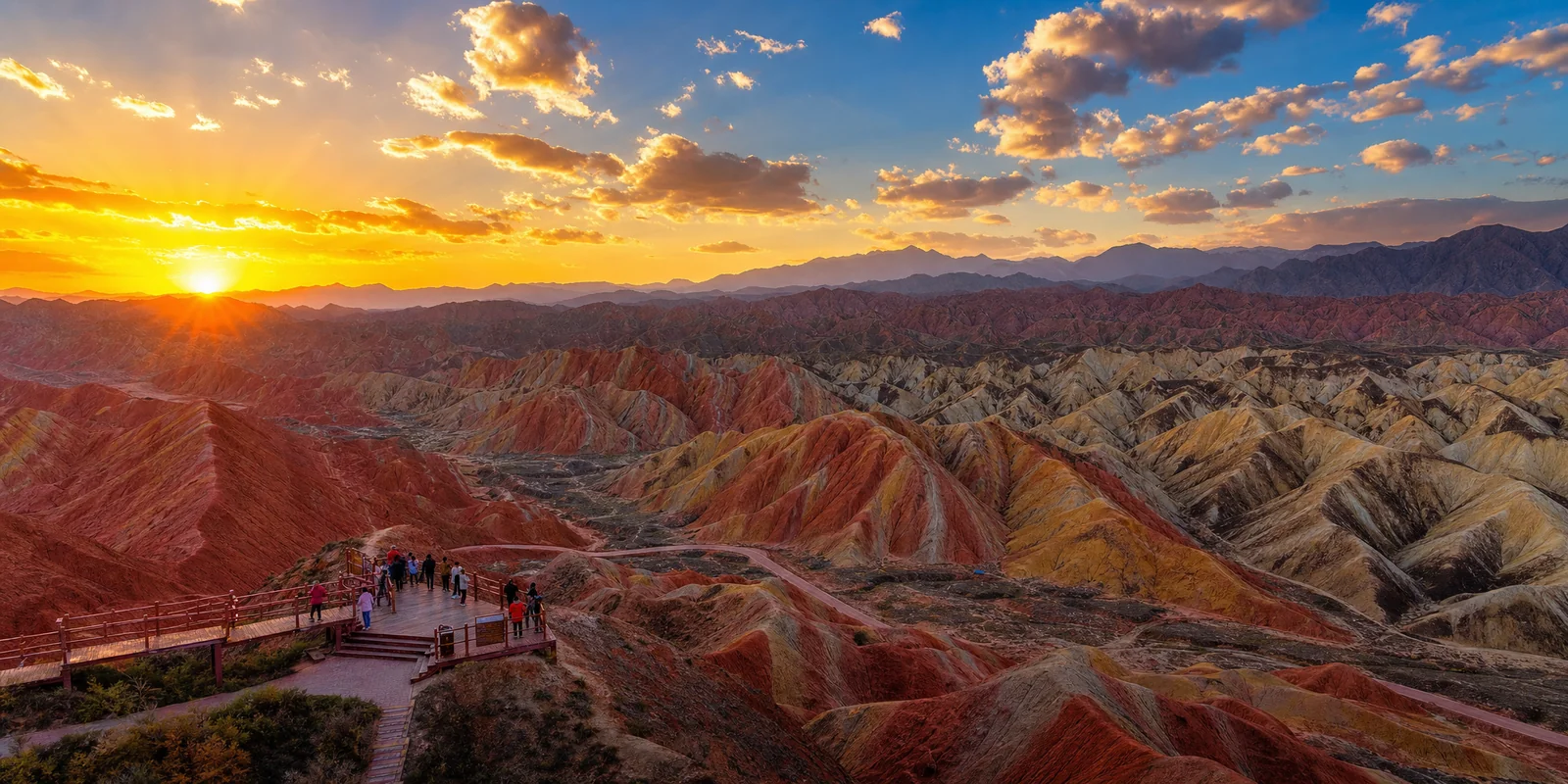
The striped sandstone hills outside Zhangye — usually called the Rainbow Mountains — are the reason most travelers come to this corner of Gansu province. The colors are real, not enhanced: layers of red, orange, yellow, and cream-colored rock tilted at an angle and stripped bare by erosion. They're best in the hour after sunrise and the hour before sunset, when low light makes the bands glow. Zhangye itself is a modest city, but it sits in a logical spot on the Silk Road between Lanzhou and Dunhuang, and it has a couple of genuinely impressive old temples to fill out a day or two. This guide covers how to get there, where to stay, what to see, and how much time you actually need.
Zhangye at a Glance
Zhangye (张掖, Zhāngyè) is a small prefecture-level city in the Hexi Corridor, the narrow band of habitable land between the Qilian Mountains and the Gobi Desert that funneled caravans, monks, and armies along the ancient Silk Road. The city's name roughly means "to extend the arm" — a reference to extending Chinese control westward during the Han dynasty. Today it's a clean, unhurried provincial town. Most foreign visitors treat it as a one- or two-night stop rather than a destination in itself.
The headline attraction sits about 35–40km west of the city: the Zhangye Danxia National Geopark, home to the Rainbow Mountains. In town and nearby you'll also find the Giant Buddha Temple and, a bit further out, the cliff-carved Mati Temple. Two full days is comfortable; one long day is enough if you're moving fast.
When to Go
Summer (June–August) and autumn (September–November) are the best windows. The geopark is open year-round, but the colors and overall experience change a lot with the weather:
- Summer: Long days, warm and dry, the most reliable season for clear light. It's also the busiest, especially during the July–August school holidays and any national holiday week.
- Autumn: Cooler, crisp air, fewer crowds after the September peak. Excellent light. Bring layers — mornings and evenings get cold.
- Spring: Workable but windy and dusty; sandstorms blowing off the Gobi can flatten the colors and visibility.
- Winter: Cold and quiet. The rock still looks good with a dusting of snow, but daylight is short and some facilities run reduced hours.
One thing worth understanding: the colors look most saturated either right after rain or in the slanting light of early morning and late afternoon. Harsh midday sun washes them out. If you can only visit once, aim for sunset.
How to Get to Zhangye
From Lanzhou
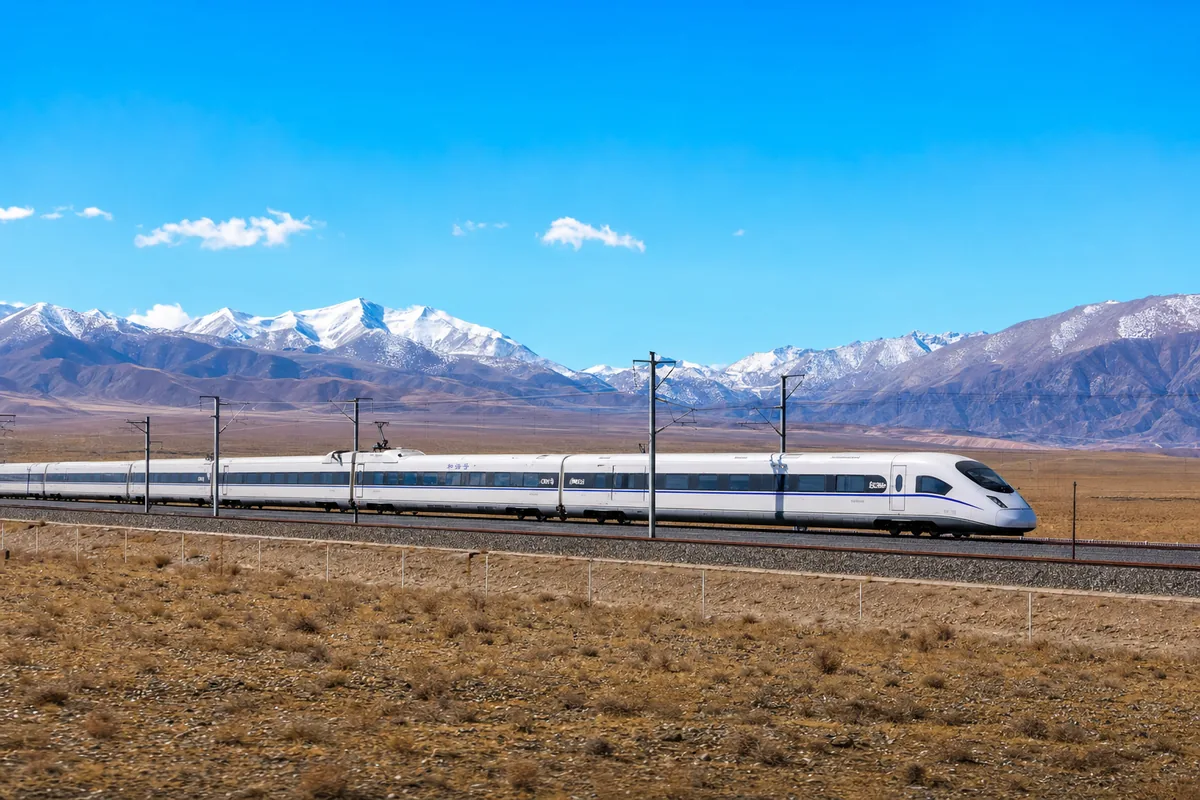
Lanzhou is the usual gateway. High-speed trains (高铁, gāotiě) run from Lanzhou West Station to Zhangye West Station in roughly 2.5–3 hours. This is the easiest and most comfortable option, and the line continues west toward Jiayuguan and Dunhuang, so it slots neatly into a Silk Road itinerary. Slower conventional trains also run overnight if you want to save a hotel night, but the high-speed train is worth the small extra cost.
You can compare schedules and book seats in advance — foreign passport holders can buy tickets through Trip Com Train, which handles the booking in English and lets you collect or use a QR code at the station. For the official source and the cheapest face-value fares, the national railway site is 12306.cn, though its foreigner registration flow is clunky.
From Dunhuang
Coming from the west, Dunhuang connects to Zhangye by train as well. The high-speed line via Liuyuan/Jiayuguan takes roughly 4–5 hours depending on the service. Many travelers do the Silk Road in one direction — Lanzhou → Zhangye → Jiayuguan → Dunhuang — rather than backtracking.
By air
Zhangye has a small airport (Ganzhou Airport) with limited domestic flights, mostly connecting through Lanzhou or Xi'an. For most itineraries the train is faster door-to-door and far more flexible.
Getting Around Locally
The attractions are spread out, and that's the main logistical challenge here. The geopark, Mati Temple, and the Giant Buddha Temple are in three different directions. Your realistic options:
- Hire a car with driver for the day: By far the most efficient if you're visiting more than one site. Hotels and guesthouses can usually arrange this, and rates are reasonable. Confirm the price and route before you set off.
- Didi / taxi: Fine for single trips. Getting a return ride from remote spots like Mati Temple can mean a wait, so ask your driver to stay or schedule a pickup.
- Tourist shuttle buses: Seasonal buses run from Zhangye to the geopark in peak months. Convenient but tied to fixed timetables — not ideal if you want the sunset slot.
The Rainbow Mountains: Zhangye Danxia National Geopark
This is the main event. The geopark protects a large area of layered, multicolored sandstone and conglomerate that formed over tens of millions of years, then tilted and eroded into ridges and waves. The stripes you see are mineral-rich rock layers — iron oxides give the reds and yellows — exposed across the hillsides.
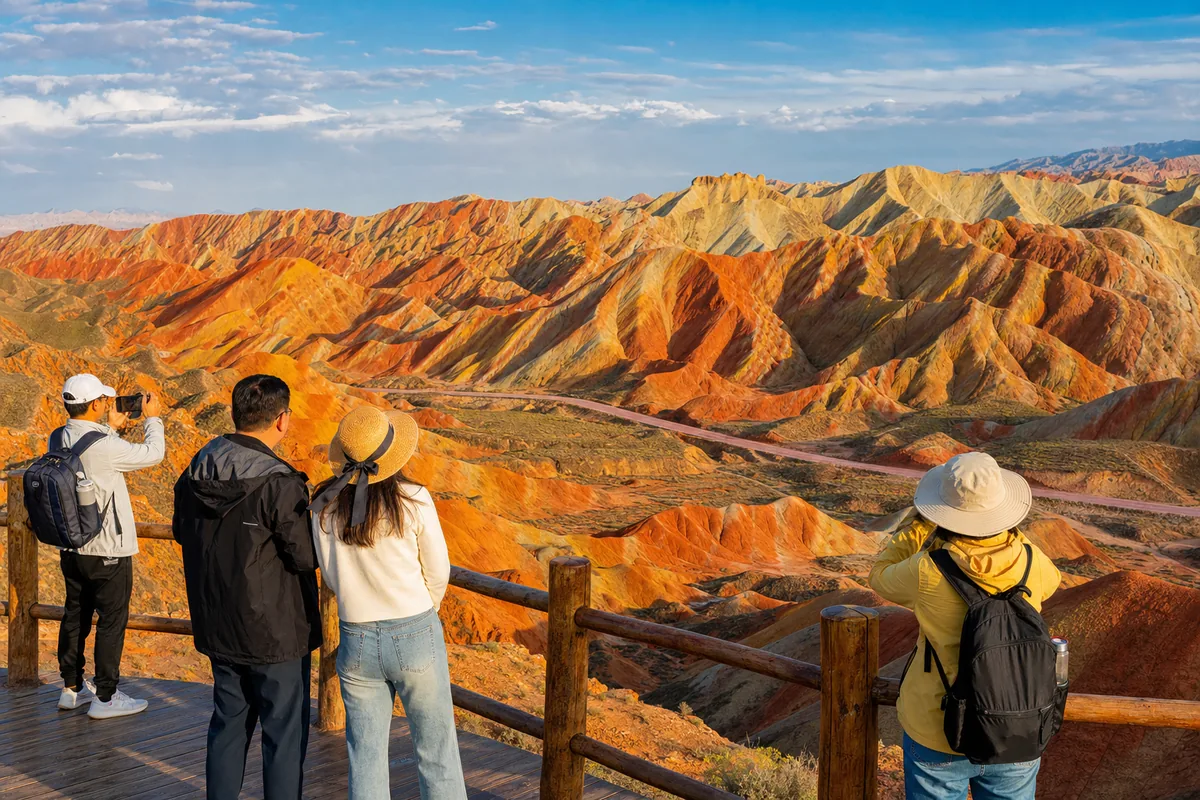
Inside the gate, a network of shuttle buses carries you between four numbered viewing platforms; you don't (and can't) walk the whole thing on foot. Each platform has boardwalks and viewpoints, and they're genuinely different from one another. Platform 4 is the one most people rate for the widest, most colorful panorama; the others catch the light differently and are worth the stops. Budget around 3–4 hours to do it properly without rushing.
The light is everything. Plan your day around either sunrise or sunset rather than the middle of the day. Sunset is the more popular and practical choice — arrive at least 90 minutes before, ride out to the far platforms, and work your way back as the colors deepen. Photographers should bring a zoom lens; the most striking compositions are tight crops of the ridge bands, not wide shots.
A few practical notes:
- Wear sturdy shoes and bring sun protection — the platforms are exposed, with little shade.
- Wind kicks up dust; a light scarf or buff is useful.
- Stay on the boardwalks. Walking on the formations is prohibited and damages them.
- Food options inside are limited and basic. Carry water and a snack.
If you'd rather not sort out transport, gate tickets, and timing yourself, a guided sunrise or sunset tour bundles the logistics. You can browse and book options through Klook, which lists Zhangye Danxia tours with hotel pickup and English-speaking guides.
Mati Temple (Horse Hoof Temple)
About 60km south of Zhangye, tucked into the foothills of the Qilian Mountains, Mati Temple (马蹄寺, Mǎtí Sì) is a Buddhist complex carved directly into a sandstone cliff face. The name — "Horse Hoof" — comes from a legend that a celestial horse left a hoofprint in the rock here. The grottoes date back more than 1,500 years and were cut into multiple levels, connected by narrow internal staircases and ledges that you climb through inside the cliff itself.
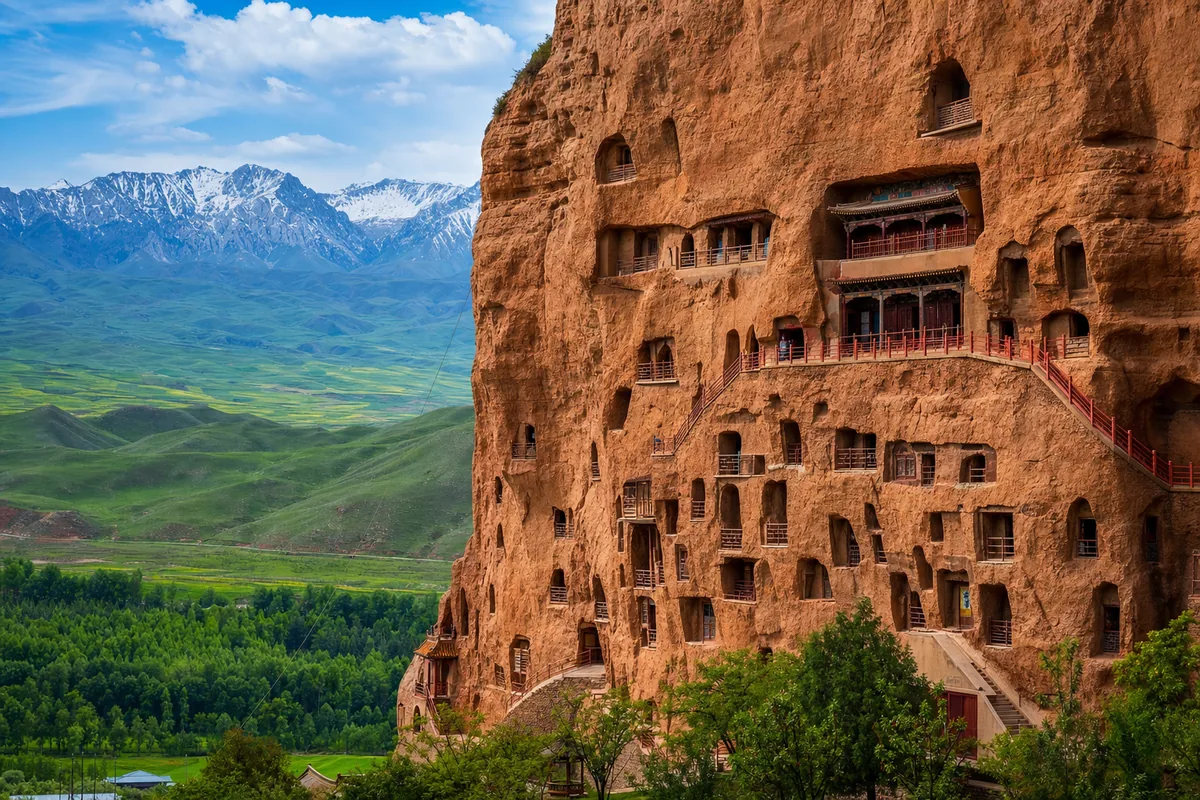
The setting is the draw as much as the carvings: the temple looks out over green grassland and snow-dusted peaks, and the area is part of a Yugur (a Turkic-speaking ethnic minority) region. It's quieter and far less visited than the geopark. The climb through the cliff passages is steep and tight in places — not ideal for anyone uncomfortable with heights or narrow stairs. Allow half a day including the drive.
Giant Buddha Temple
Right in the center of Zhangye, the Giant Buddha Temple (大佛寺, Dàfó Sì) is the easiest sight to fit in and a strong one. It houses China's largest indoor reclining Buddha — a wooden statue roughly 35 meters long, depicting the Buddha entering nirvana. The temple dates to the Western Xia dynasty, nearly a thousand years ago, and the hall around the statue is dim, cool, and quietly atmospheric.
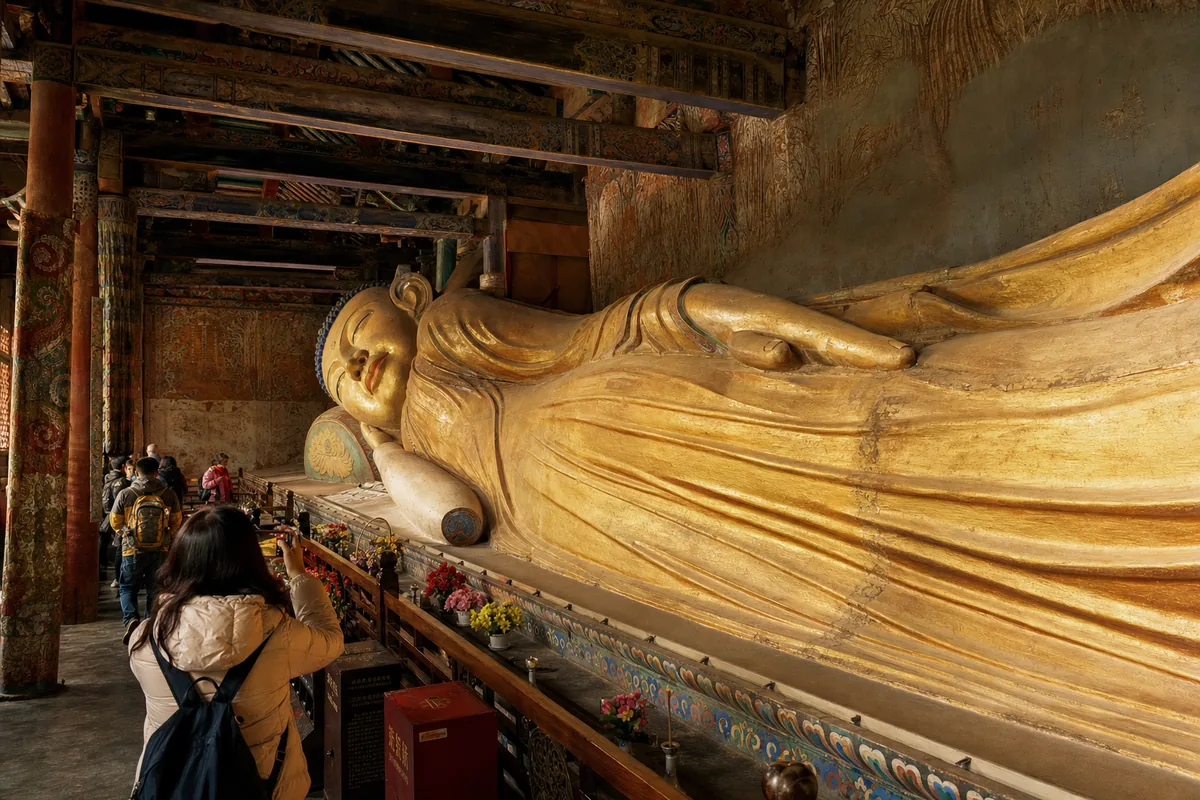
Photography of the statue itself is usually restricted, so just go in and look. The surrounding grounds include a wooden pagoda and small museum halls. An hour to ninety minutes is plenty. Because it's downtown, it pairs well with a half-day in the city when you're not chasing geopark light.
What to Eat
Zhangye's food is solid northwestern fare — wheat-based, hearty, often featuring lamb and beef. A few things worth trying:
- Lamb skewers and hand-pulled noodles: Standard across the northwest, reliably good here.
- Niang pi zi (酿皮子): Cold wheat-starch noodles in a spicy, vinegary sauce — a local snack-stall staple.
- Sou ban (搓鱼面): Hand-rolled noodles shaped like little fish, often stir-fried with vegetables and meat.
- Lamb hotpot and clay-pot dishes: Especially good in cooler months.
The night market and food streets in the city center are the easiest places to graze. If you don't read Chinese, pointing works fine, and most stalls are used to visitors. Our guide to ordering food with zero Chinese covers the basics.
Where to Stay
Stay in central Zhangye. It puts you near the Giant Buddha Temple, the night market, and transport, and keeps you within an easy drive of the geopark. There's no real reason to stay out by the park unless you're chasing a sunrise shot and want to be first through the gate — in which case a couple of basic guesthouses near the entrance exist.
The city has a decent range of business hotels and a few comfortable mid-range options, plus budget guesthouses near the center. Prices are reasonable outside holiday weeks. You can compare and book Zhangye hotels on Booking.com, which lists most of the central properties with English reviews.
Suggested Itineraries
One full day (the rushed version)
- Morning: Giant Buddha Temple in the city center (1.5 hrs).
- Afternoon/evening: Drive out to the Danxia Geopark, time your visit for sunset, ride the shuttle loop. Back to the city for a late dinner at the night market.
Two days (recommended)
- Day 1: Arrive, settle in, visit the Giant Buddha Temple and the city center. Head to the geopark for sunset.
- Day 2: Day trip south to Mati Temple and the surrounding grassland scenery. Return for an evening train onward, or one more night.
Connecting to the Silk Road
Zhangye is most rewarding as one bead on a longer string. The classic route runs west from Xi'an through the Hexi Corridor, hitting Lanzhou, Zhangye, Jiayuguan (the western end of the Great Wall), and finishing at Dunhuang with its Buddhist caves and desert dunes. The high-speed line links most of these, so distances that once took caravans weeks now take hours.
If that sounds like your kind of trip, see our Silk Road route from Xi'an to Dunhuang for the full itinerary, and the Dunhuang and Silk Road guide for the next major stop west. Coming from the east, the Lanzhou complete guide covers your likely gateway city.
Final Tips
Zhangye rewards a little planning. Pin your visit to good light — sunset at the geopark is the single most important decision you'll make. Sort out transport in advance, since the sights are scattered and public options are thin. Carry your passport, water, and sun protection. And don't undersell the temples: the reclining Buddha and the cliff grottoes at Mati are worth more than a quick photo stop. Two days lets you see all three core sites without rushing and slots cleanly into a Silk Road run between Lanzhou and Dunhuang. Check the latest geopark ticket prices, shuttle arrangements, and train schedules close to your travel dates, as these change seasonally.
Related Reading
- Dunhuang & Silk Road Guide
- Lanzhou Complete Guide
- Silk Road Route: Xi'an to Dunhuang
- Xi'an Complete Guide
- Summer Travel in China
Last updated: June 2026
Read in other languages
Last train times for 10 Chinese metro systems
Every line and station, checked by hand — the same data behind our offline route planner.
Get the WaysChina App
Offline guides, currency converter, essential phrases, and more — all in your pocket.

Related Articles
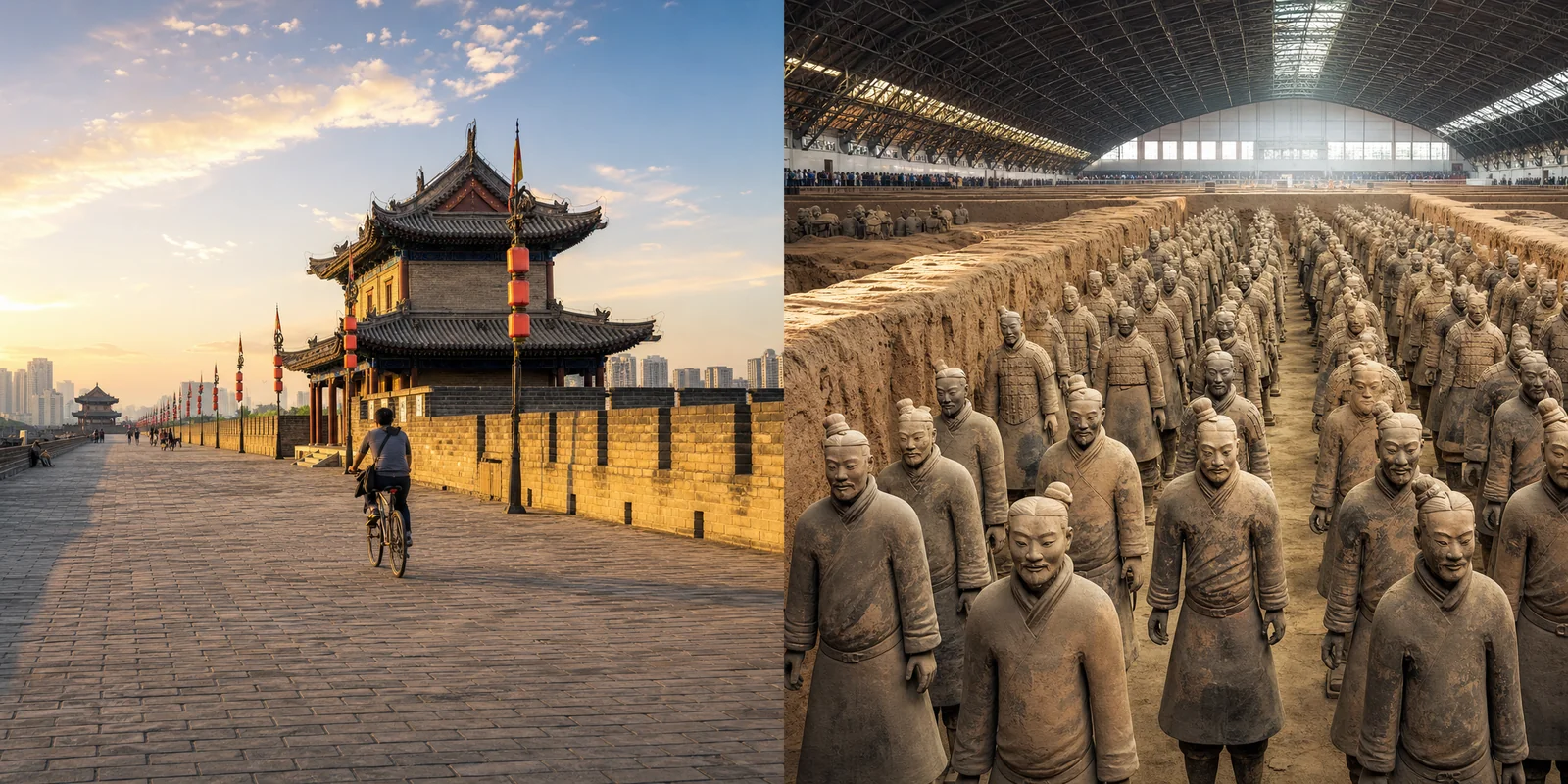
2-Day Xi'an Itinerary: Terracotta Warriors, City Wall & More
A practical 2-day Xi'an itinerary with real timings and transport: the Terracotta Warriors and Huaqing Palace on Day...
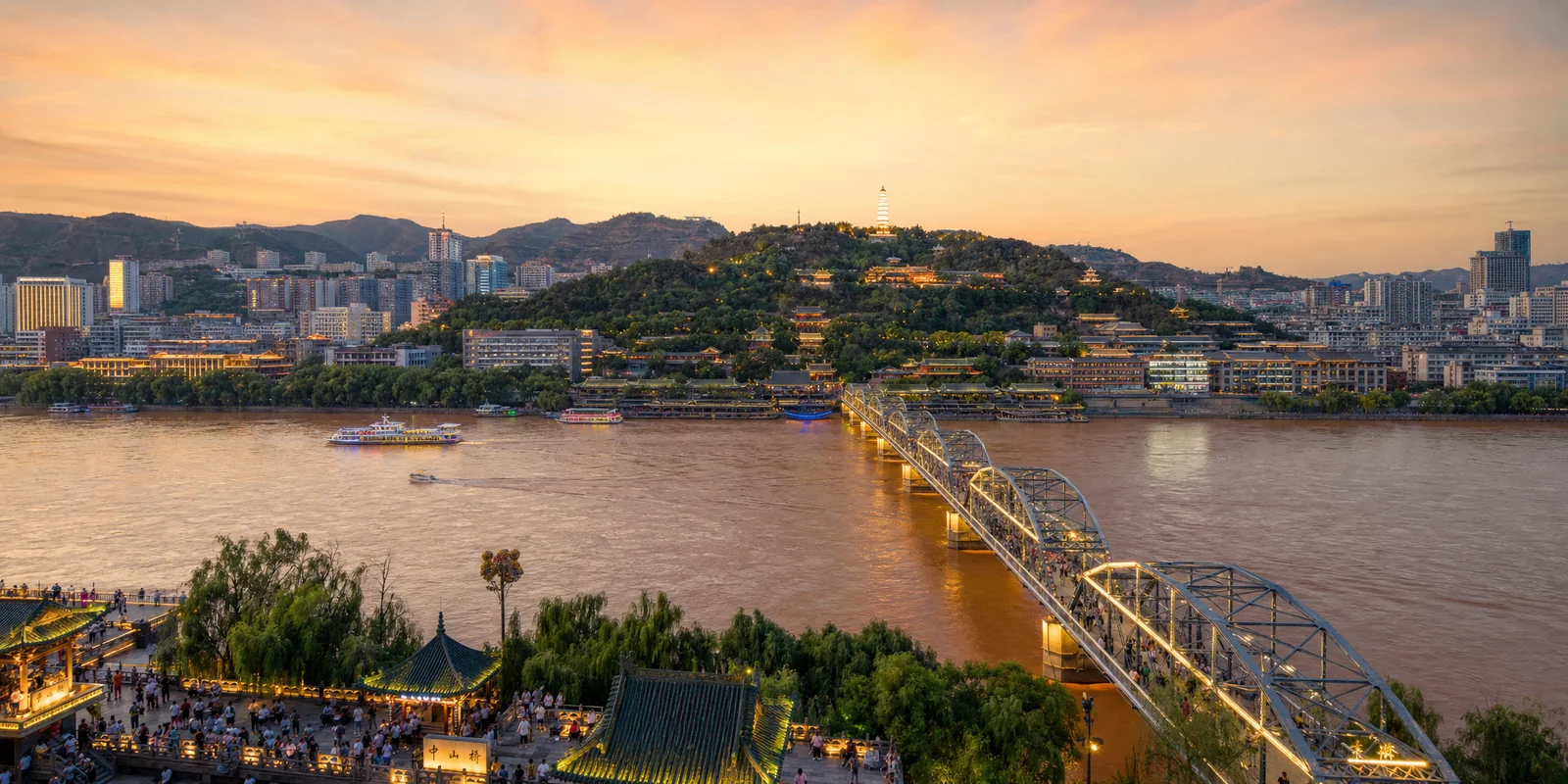
Lanzhou Complete Guide
Everything you need for visiting Lanzhou: the famous beef noodles, the Yellow River waterfront, the Gansu Provincial...
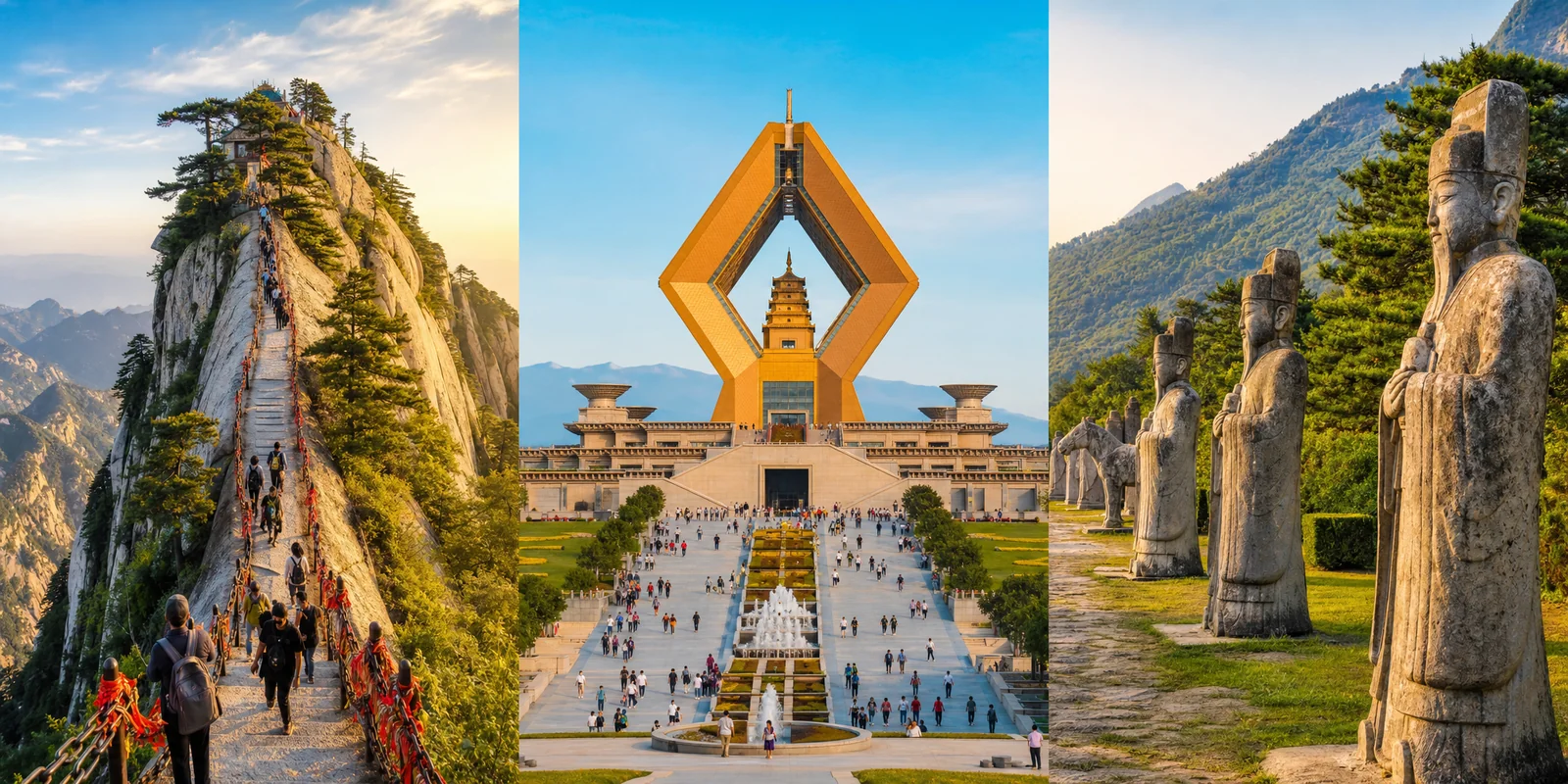
Xi'an Day Trips
Four of the best day trips from Xi'an — Mount Huashan, Famen Temple, Qianling Mausoleum, and Hanyangling Museum —...
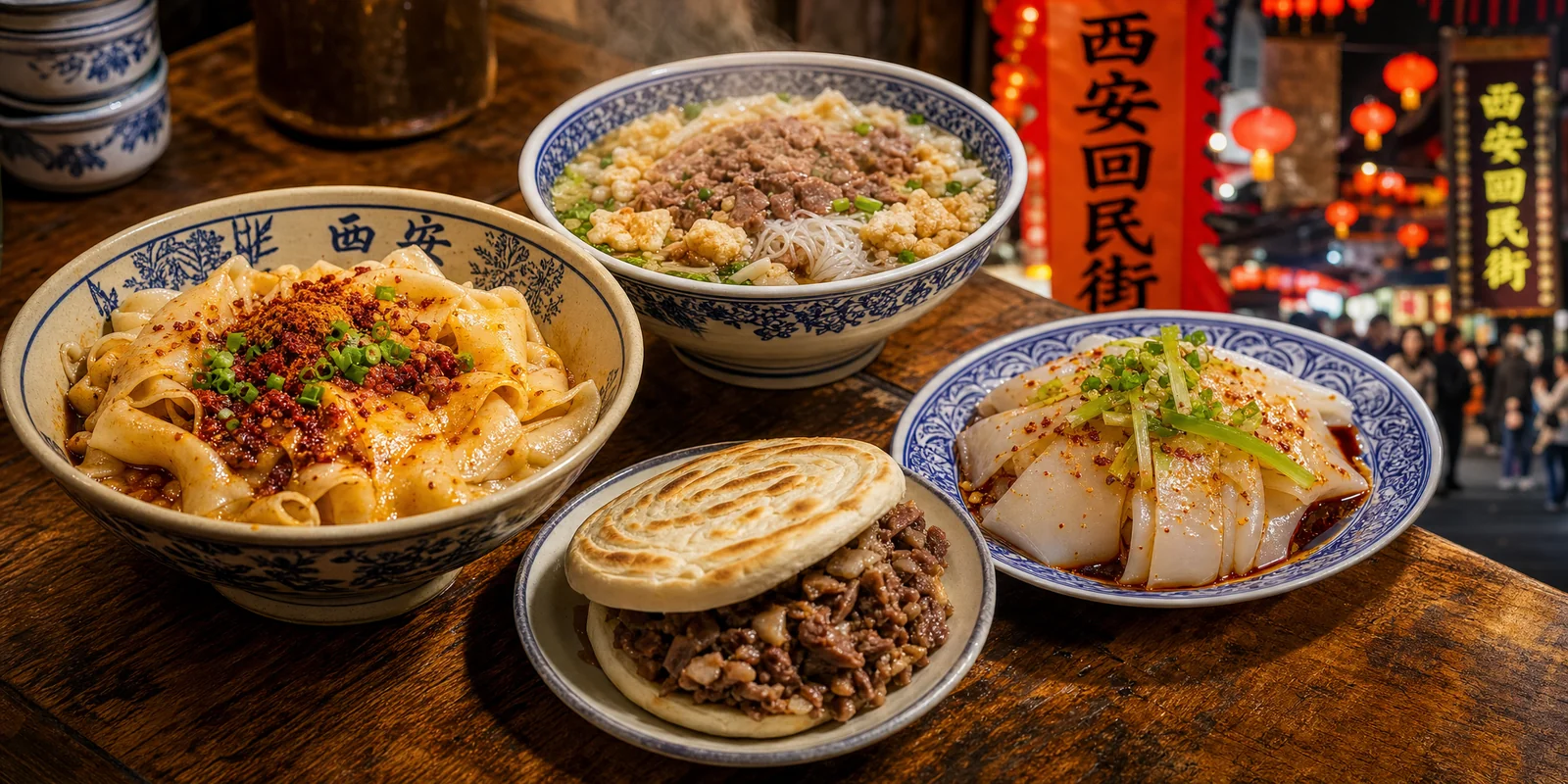
Xi'an Food Guide
What to eat in Xi'an and where to find it — from biangbiang noodles and roujiamo to lamb soup in the Muslim Quarter,...