
This article contains affiliate links. If you make a purchase through these links, we may earn a small commission at no extra cost to you. This helps support our work in creating free travel guides.
Most travelers pass through Lanzhou (兰州, Lánzhōu) on the way to somewhere else — Dunhuang, Zhangye, or the wider Silk Road. That's fair: Gansu's capital isn't packed with famous sights, and one or two days covers it comfortably. But the city earns its stop. This is the home of China's most famous bowl of noodles, the only provincial capital the Yellow River cuts straight through, and a museum holding one of the country's most recognizable bronzes. This guide covers what to see, where to eat, how to get around, and how Lanzhou fits into a longer northwest trip.
Lanzhou at a Glance
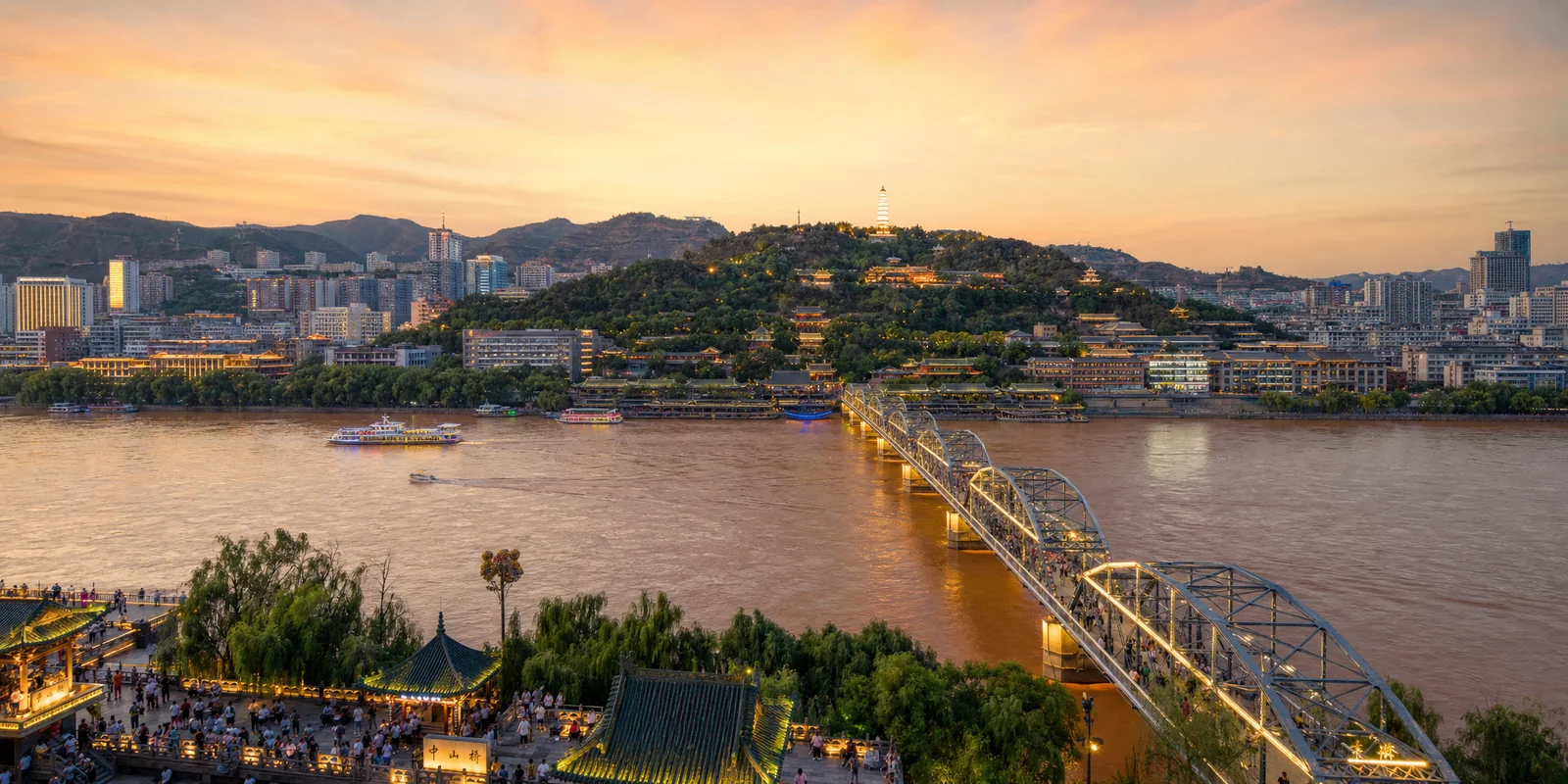
Lanzhou sits in a long, narrow valley squeezed between mountains, with the Yellow River (黄河, Huáng Hé) running west to east through the middle. The whole city stretches along the river rather than spreading out, which actually makes orientation easy — most of what you'll want to see is within a few kilometers of the water.
It's a real working city of around four million people, not a polished tourist town. The air can be hazy, the riverfront is functional more than manicured, and signage in English is limited. None of that is a problem if you know what you came for. As a historical Silk Road hub, Lanzhou was where caravans crossed the Yellow River heading west into the Hexi Corridor, and that crossroads role still defines it today as a transport gateway to the rest of Gansu.
You'll want one full day for the city itself, two if you want a relaxed pace or plan to use Lanzhou as a base for a day trip. The best months are June through November — summer is warm and lively along the river, autumn brings clear skies and mild temperatures. Winters are cold, dry, and grey.
Things to Do in Lanzhou
The core sights cluster along or near the Yellow River, and you can link most of them on foot or with a couple of short taxi rides. Here's what's worth your time.
Zhongshan Bridge (中山桥)
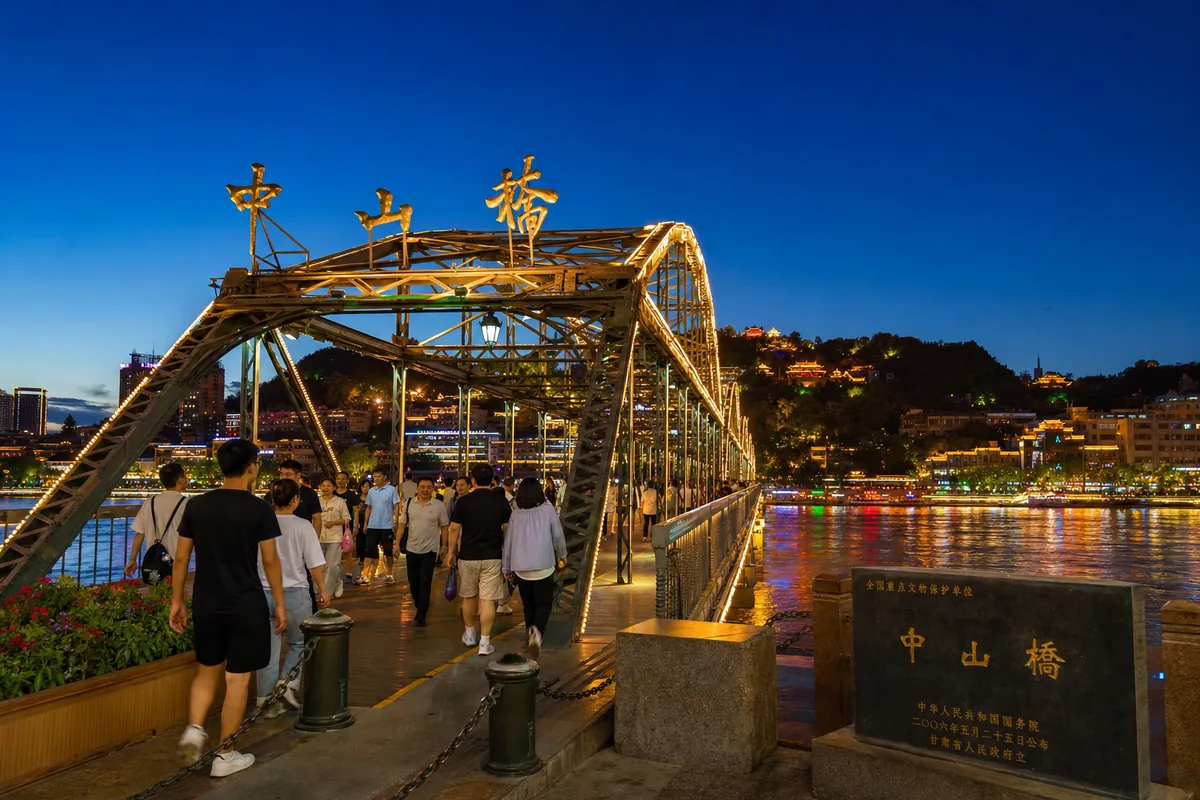
This is Lanzhou's signature landmark — the "First Bridge of the Yellow River." Built in the early 1900s with German engineering and steel shipped overland across half of China, it was the first permanent bridge over the Yellow River anywhere. Before it existed, crossings here relied on sheepskin rafts and seasonal pontoon bridges.
The bridge is now pedestrian-only and best seen at dusk, when it lights up and locals gather along the banks. Cross it on foot, then follow the riverside promenade. From the middle of the span you can watch the muddy river churn past and see White Pagoda Hill rising on the north bank. It costs nothing to visit and it's open around the clock.
White Pagoda Hill (白塔山)
Directly across Zhongshan Bridge on the north bank, this hillside park climbs up to a white Buddhist pagoda dating from the Yuan dynasty. The walk up takes 20–40 minutes through tiered pavilions and temple buildings, or you can take a cable car if your legs are done for the day. The reason to climb is the view: from the top you see the river bending through the city, the bridge below, and the dense valley sprawl pressed between the hills. Go late afternoon for the best light. Entry to the park is free; the cable car costs extra.
Gansu Provincial Museum (甘肃省博物馆)
If you do one indoor thing in Lanzhou, make it this. The Gansu Museum holds the Galloping Horse Treading on a Flying Swallow (马踏飞燕, mǎ tà fēiyàn) — a small bronze sculpture of a horse balanced on one hoof atop a flying bird, unearthed in Gansu and now used as the official emblem of Chinese tourism. You've probably seen the image without knowing where it came from. Seeing the real thing, smaller and more delicate than expected, is the highlight.
The museum also has strong Silk Road and Neolithic painted-pottery collections, which give useful context if you're heading west afterward. Admission is free, but you'll need to book a timed entry slot in advance through the museum's official channels (passport required for entry), and it's closed on Mondays. Plan for one to two hours.
Yellow River Mother Sculpture (黄河母亲)
A few kilometers west along the south bank sits this large granite sculpture: a reclining mother figure with a small child resting against her, symbolizing the Yellow River as the cradle of Chinese civilization. It's one of the most photographed monuments in the city and a quick stop — five or ten minutes — but it anchors the riverside walk and there's no charge to see it. Pair it with a stroll along the waterfront promenade, which is where Lanzhou locals come to relax in the evenings.
The Yellow River Scenic Belt and Sheepskin Rafts
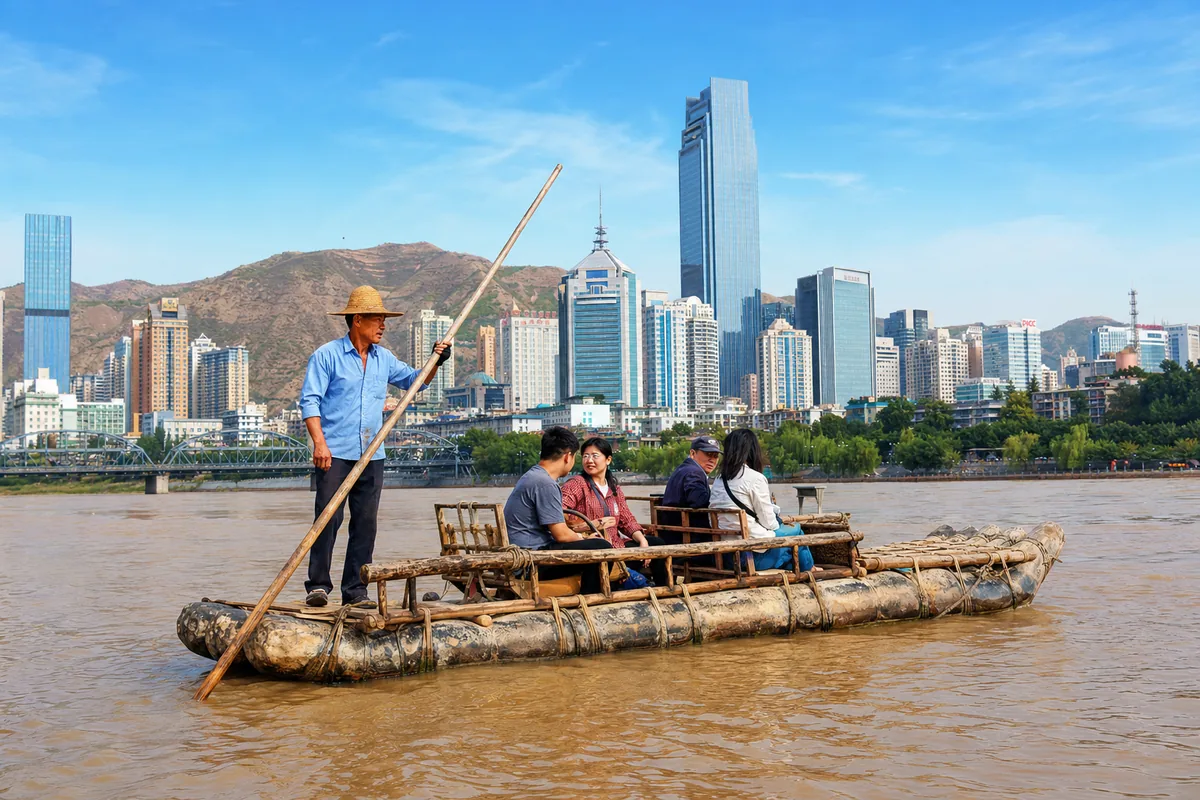
The whole south-bank promenade — sometimes called the Yellow River Scenic Belt — links most of these sights into one walkable stretch. The most distinctive local experience here is riding a sheepskin raft (羊皮筏子, yángpí fázi), the traditional craft made from inflated whole goat or sheep hides lashed to a wooden frame. People crossed the river on these for centuries; today they run short tourist rides near the bridge.
If you'd rather lock in a river cruise, raft ride, or a guided half-day along the waterfront in advance, you can book Yellow River experiences through Klook and skip the on-site negotiating.
Lanzhou Beef Noodles — and What Else to Eat
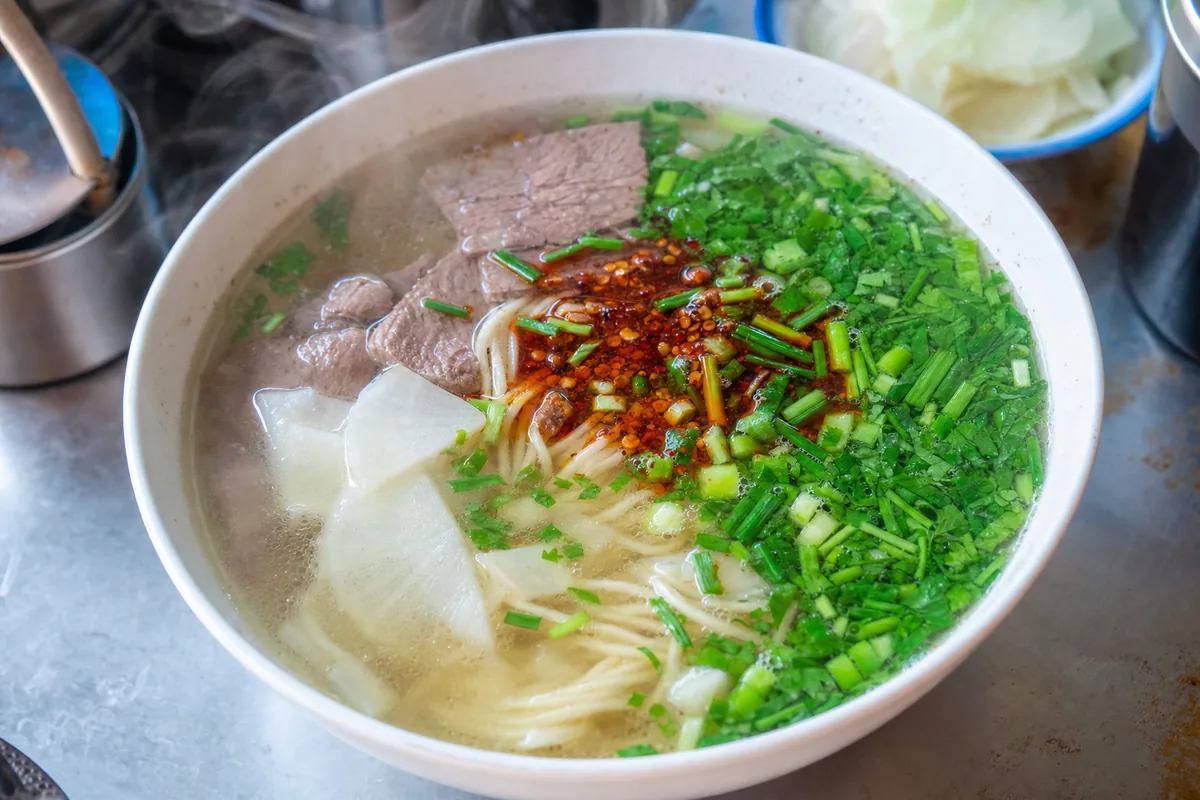
Lanzhou beef noodles (兰州牛肉面, Lánzhōu niúròumiàn) are the reason a lot of food-minded travelers detour here at all. This is hand-pulled noodle soup served in a clear beef-bone broth, topped with thin slices of beef, chili oil, garlic greens, and white radish. The standard is summed up locally as one clear (broth), two white (radish), three red (chili oil), four green (cilantro/garlic shoots), five yellow (noodles).
A few things foreign visitors usually don't know:
- It's a breakfast food. Locals eat it in the morning. The best shops sell out and many close by early afternoon. Don't show up at 8pm expecting the good stuff.
- You choose your noodle width. The puller will ask. Common options run from hair-thin (细, xì) up through wide flat ribbons (大宽, dàkuān). If you can't communicate it, just point at what the person ahead of you got, or say "细" for a safe middle-thin choice.
- One size, cheap. A bowl typically costs around ¥10–15. Add a plate of cold beef or an egg for a few yuan more.
- It's never called "Lanzhou ramen." The "Lanzhou Lamian" chains you see abroad are a loose export version. The real thing here is a different experience.
Famous local chains include Maggie (马子禄) and Wushashan, but honestly almost any busy neighborhood shop with a crowd of locals will serve a solid bowl. Look for a queue in the morning.
Beyond noodles, Lanzhou's other essentials lean on its Hui Muslim food culture:
- Hand-grabbed lamb (手抓羊肉, shǒuzhuā yángròu) — boiled lamb on the bone, eaten with salt and garlic.
- Niang pi / liang pi (酿皮) — cold wheat-starch noodles in a tangy chili-vinegar sauce, a cheap snack-stall staple.
- Grilled lamb skewers (烤羊肉串) — everywhere at night, cumin-heavy and excellent.
- Lanzhou's local melons and fruit — Gansu grows famously sweet honeydew and other melons; in summer they're sold off carts everywhere.
- Sanpao tea (三泡台) — a sweet eight-treasure tea with rock sugar, dried fruit, and chrysanthemum, served in a lidded bowl. Order it after a heavy meal.
For a halal-heavy city like this, see our broader guide to halal food in China if you have dietary requirements, and the how to order food with zero Chinese guide if pointing-and-hoping makes you nervous.
Getting to and Around Lanzhou
Getting there
Lanzhou is one of the northwest's main transport hubs, so reaching it is easy from most directions.
- High-speed rail: Xi'an to Lanzhou takes roughly 3–3.5 hours on the high-speed train (高铁, gāotiě). Xining is about 1–1.5 hours away, Zhangye around 2.5–3 hours, and Lanzhou connects onward toward the rest of the country.
- Air: Lanzhou Zhongchuan Airport (兰州中川机场, LHW) sits about 70km north of the city — unusually far, so budget time. It's linked to the city by an airport rail line and buses; the train into central Lanzhou takes around 45–60 minutes.
- By rail westward: Lanzhou is the launch point for the classic Silk Road run into the Hexi Corridor, with trains continuing to Zhangye, Jiayuguan, and Dunhuang.
You can compare and book train times for the Xi'an–Lanzhou leg and onward routes on Trip.com, which handles foreign passports and English-language booking more smoothly than the domestic system. For the how-to, see our guide to booking train tickets.
Getting around the city
Within Lanzhou, you've got a few good options:
- Metro: Lanzhou's metro runs along the valley and conveniently parallels the river, connecting the main areas. It's cheap and easy.
- Taxis and ride-hailing: Plentiful and inexpensive. Didi (滴滴) works well here — see our Didi guide for setup. Hailing on the street works too, but having the destination written in Chinese helps.
- Walking: The riverside sights are genuinely walkable once you're at the waterfront.
For mapping out metro routes and stitching the riverside sights into a sensible order, the WaysChina app has offline metro maps and a trip planner that works without a connection — handy when your eSIM is being temperamental in the valley.
Where to Stay
For a short visit, stay near the Yellow River on the south bank, ideally within walking distance of Zhongshan Bridge. That puts you close to the riverfront, the evening atmosphere, and most of the sights. The area around the railway station is cheaper and convenient for early departures but less pleasant to walk around.
Lanzhou covers the full range — international-brand business hotels, mid-range domestic chains (which are clean, reliable, and well-priced), and budget guesthouses. Because the city is a Silk Road waypoint rather than a destination, rooms are generally cheaper than in Xi'an or coastal cities.
You can compare riverside and city-center hotels on Booking.com, and our hotel booking and registration guide explains the mandatory police registration that every foreign guest goes through at check-in.
Suggested Itinerary
One day covers the essentials; two lets you slow down or add a day trip.
Day 1 — the city: Start the morning with a bowl of beef noodles at a busy local shop (go early). Mid-morning, head to the Gansu Provincial Museum for your booked slot. After lunch, walk the Yellow River promenade westward to the Yellow River Mother Sculpture, then work back east toward Zhongshan Bridge. Cross the bridge and climb White Pagoda Hill in the late afternoon for the valley view. Come down for dinner — lamb skewers and sanpao tea — and see the bridge lit up after dark.
Day 2 — slow down or branch out: Spend a relaxed morning on a sheepskin raft ride and more riverside walking, or use Lanzhou as a base to start moving west. Many travelers treat Lanzhou as the first night of a Silk Road run.
Day Trips and Onward Connections
Lanzhou's real strength is its position. Here's how it connects to the region:
| Destination | How | Time | Why go |
|---|---|---|---|
| Xi'an | High-speed rail | ~3–3.5 hrs | Terracotta Army, Silk Road's eastern start |
| Xining | High-speed rail | ~1–1.5 hrs | Qinghai Lake, gateway to the Tibetan plateau |
| Zhangye | High-speed rail | ~2.5–3 hrs | Rainbow Danxia landforms |
| Dunhuang | Train / flight | Train overnight; flight ~2 hrs | Mogao Caves, Singing Sand Dunes |
The natural way to use all of this is to string it together. Lanzhou is the eastern anchor of the classic Silk Road route from Xi'an to Dunhuang — a trip that takes you from the Terracotta Army through the Hexi Corridor to the desert caves of Dunhuang, with Lanzhou and its noodles as the first proper stop in Gansu.
Practical Notes
- Altitude and air: Lanzhou sits at moderate elevation (~1,500m) and the valley traps haze, so air quality varies. Nothing serious for a short visit.
- Language: English is limited outside top hotels. Have a translation app and key destinations saved in Chinese.
- Payments: QR-code mobile payment is universal, including at noodle shops and rafts. Set up Alipay or WeChat Pay before you arrive.
- Pace: Don't over-plan Lanzhou. It's a one-to-two-day city, and trying to fill it like Beijing will leave you padding the schedule.
For up-to-date details on the Gansu Provincial Museum's free-reservation system and opening hours, check the official Gansu Provincial Museum website before you go, since timed-entry rules change with the seasons.
The Bottom Line
Lanzhou rewards travelers who arrive with the right expectations. It's not a city of grand sights — it's a place to eat the best beef noodles in China, walk the Yellow River at dusk, see one of the country's most famous bronzes, and set yourself up for the Silk Road heading west. Give it a day, maybe two, eat well, and use its rail connections to keep moving. Book your museum slot and any westbound trains ahead of time, stay near the river, and you'll have a smooth, genuinely worthwhile stop in Gansu.
Related Reading
- Dunhuang & Silk Road Guide — your likely next stop west.
- Zhangye Danxia Guide — the rainbow mountains a few hours away.
- Xi'an Complete Guide — the eastern start of the Silk Road.
- Silk Road Route: Xi'an to Dunhuang — the full itinerary Lanzhou fits into.
- Halal Food in China — useful for Lanzhou's Hui Muslim food scene.
Last updated: June 2026
Read in other languages
Last train times for 10 Chinese metro systems
Every line and station, checked by hand — the same data behind our offline route planner.
Get the WaysChina App
Offline guides, currency converter, essential phrases, and more — all in your pocket.

Related Articles
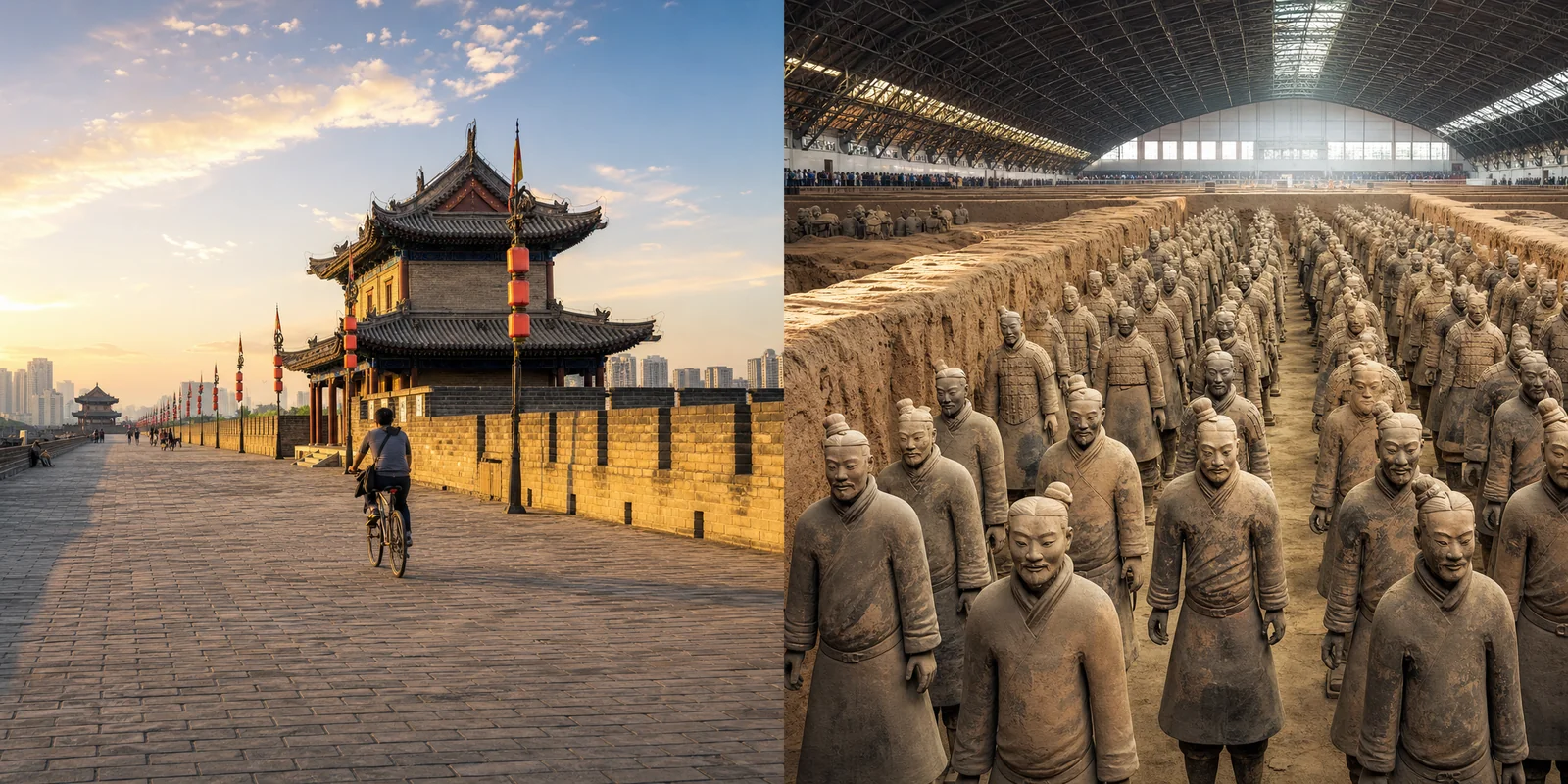
2-Day Xi'an Itinerary: Terracotta Warriors, City Wall & More
A practical 2-day Xi'an itinerary with real timings and transport: the Terracotta Warriors and Huaqing Palace on Day...
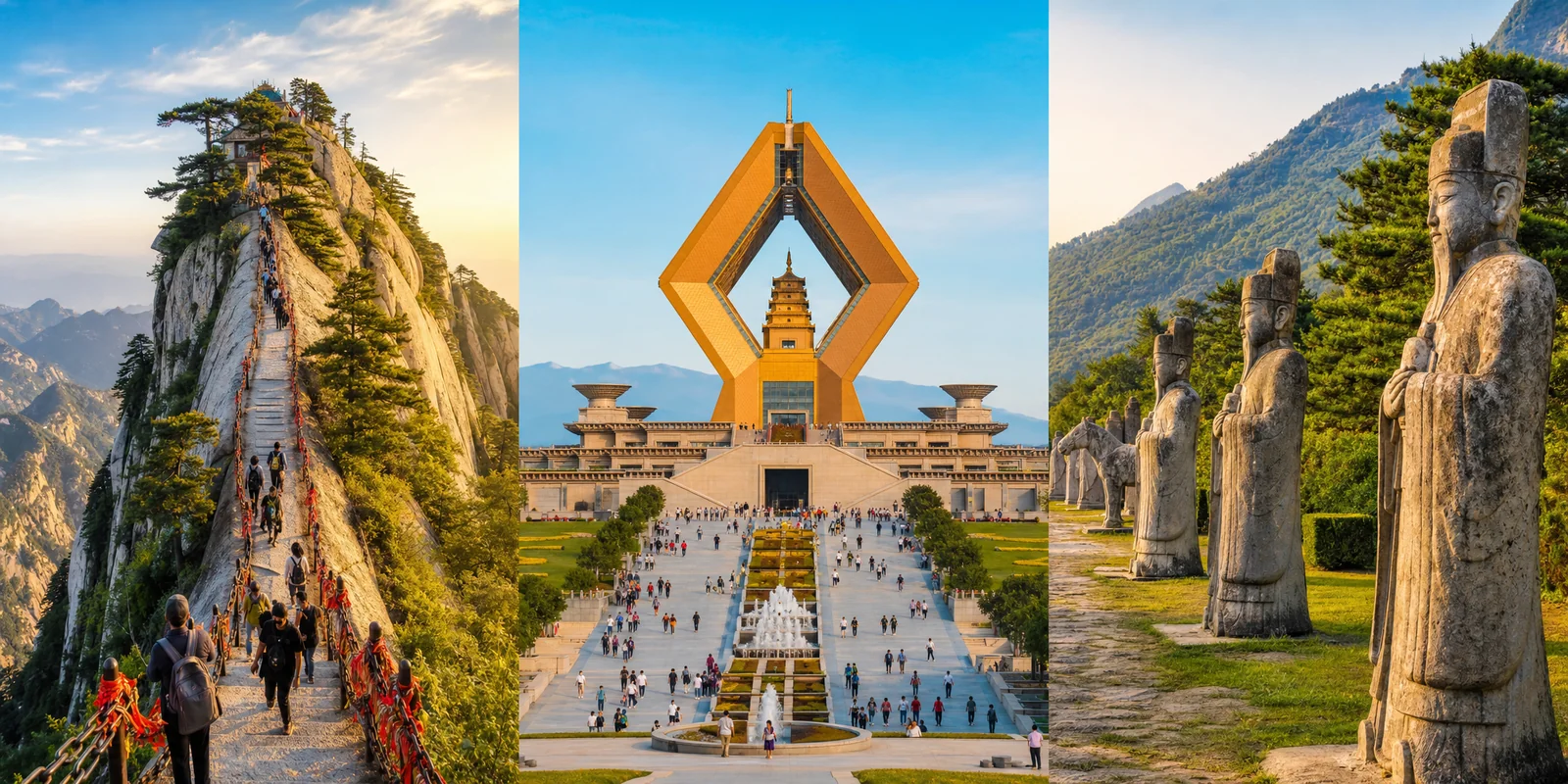
Xi'an Day Trips
Four of the best day trips from Xi'an — Mount Huashan, Famen Temple, Qianling Mausoleum, and Hanyangling Museum —...
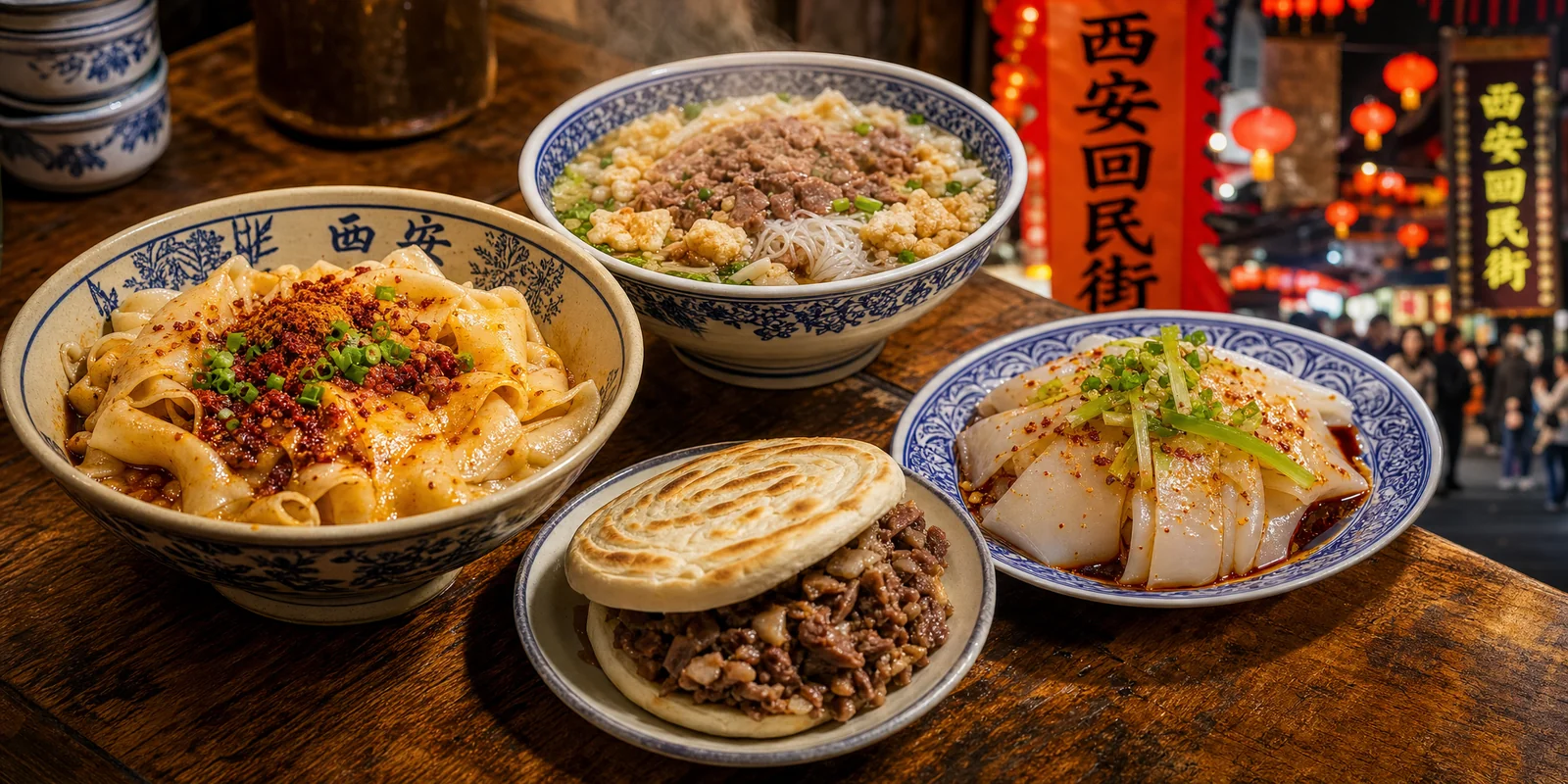
Xi'an Food Guide
What to eat in Xi'an and where to find it — from biangbiang noodles and roujiamo to lamb soup in the Muslim Quarter,...
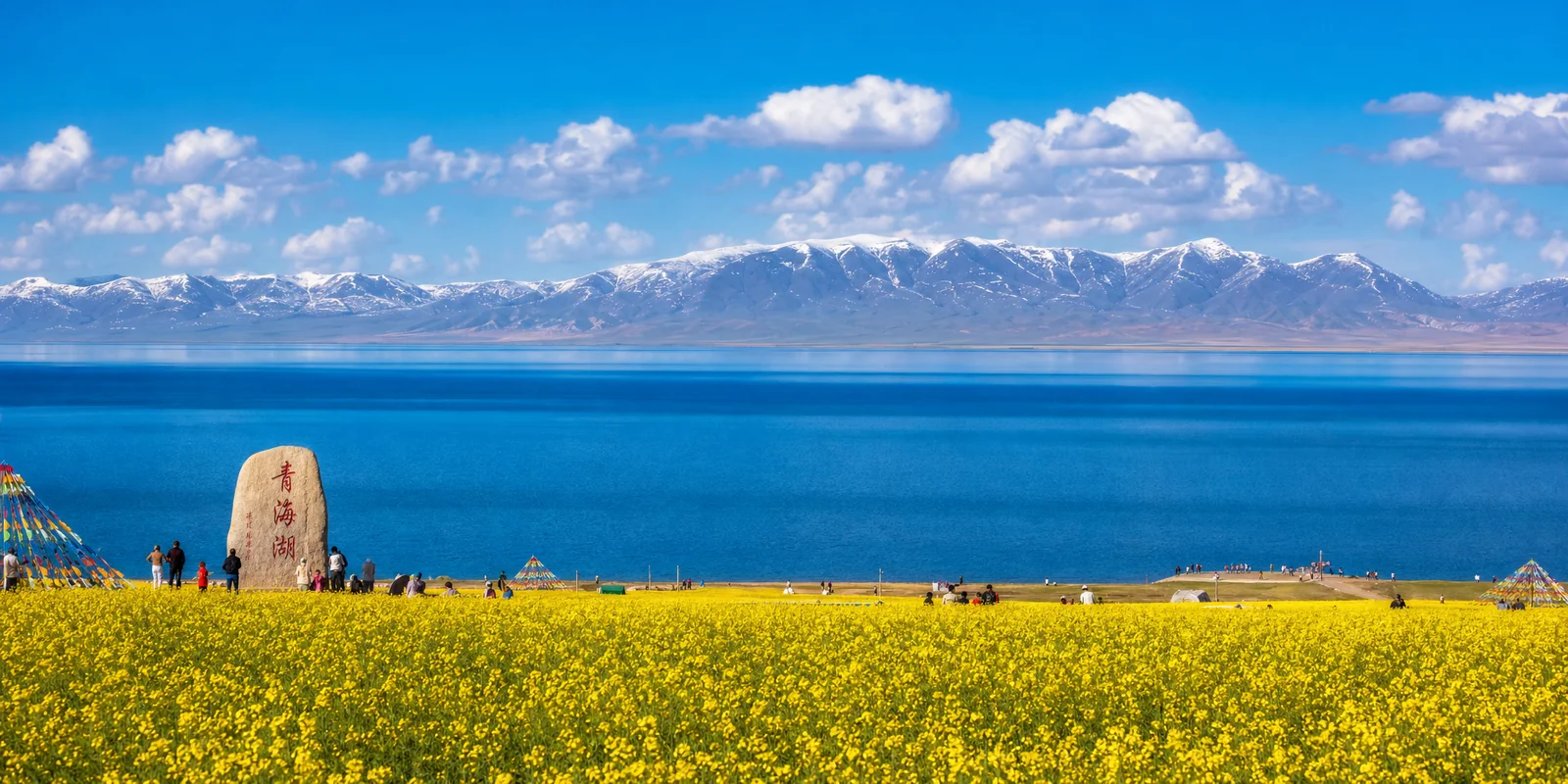
Xining & Qinghai Lake Guide
Xining is the gateway to Qinghai Lake, Chaka Salt Lake, and the Ta'er Monastery. Here's how to plan 2-3 days at...