
This article contains affiliate links. If you make a purchase through these links, we may earn a small commission at no extra cost to you. This helps support our work in creating free travel guides.
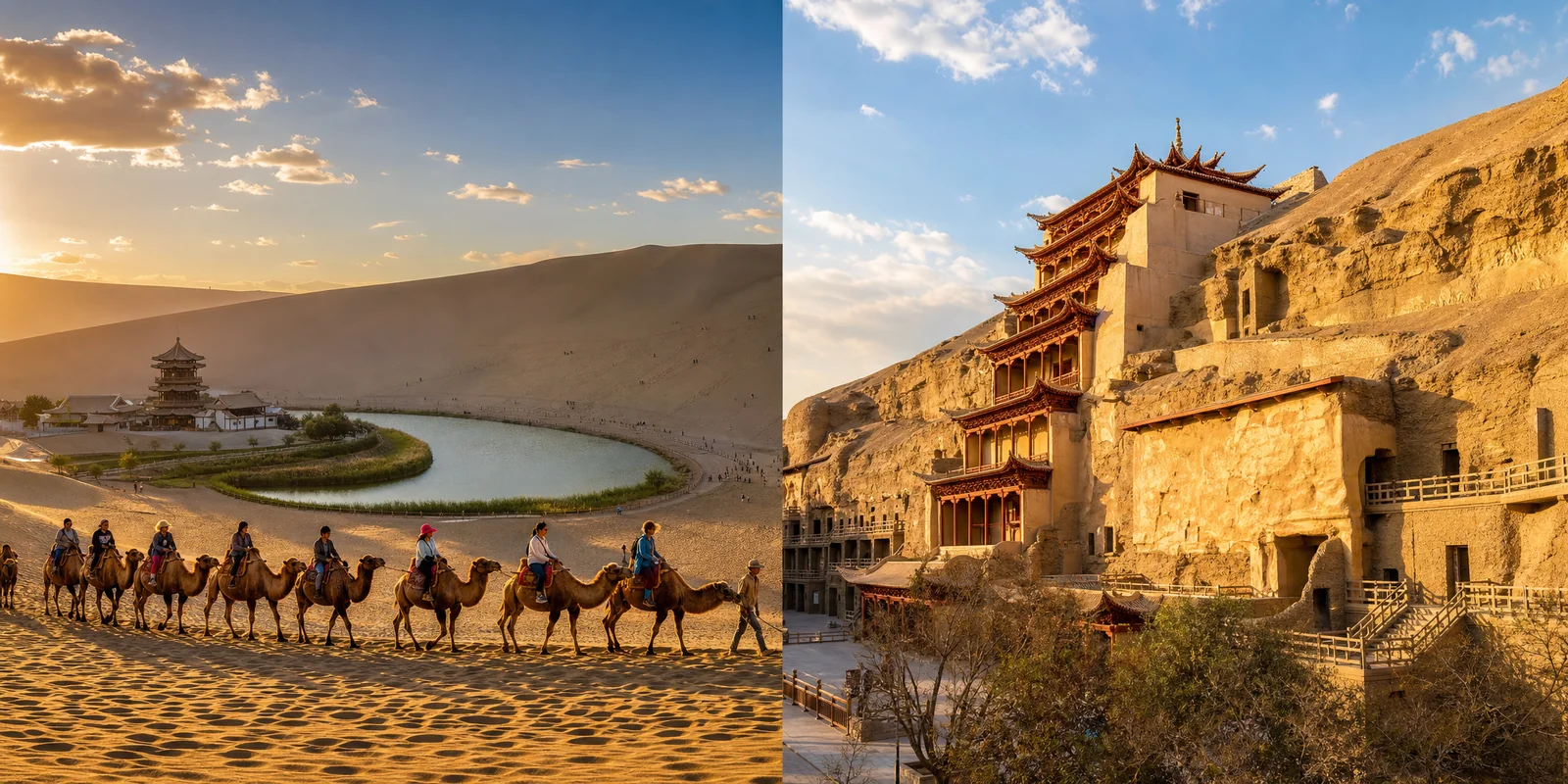
Dunhuang sits at the western edge of the Hexi Corridor, where the green of farmland gives way to the Gobi and the Taklamakan beyond. For roughly a thousand years it was a key stop on the Silk Road — the place where caravans rested before or after crossing the desert, and where Buddhist art, trade, and four cultures piled up layer on layer. Today people come for two main things: the Mogao Caves, one of the greatest collections of Buddhist art on earth, and the desert landscape just south of town, where you can climb sand dunes and look down on a spring shaped like a crescent moon. This guide covers how to book the caves (you genuinely can't just show up), how to reach Dunhuang, where to stay, and how to fit it all into two or three days.
Dunhuang at a Glance
Dunhuang (敦煌, Dūnhuáng) is a small city in western Gansu Province. The urban core is compact and walkable, and almost everything a traveler wants is within a 40-minute drive: the Mogao Caves to the southeast, the Mingsha dunes and Crescent Moon Spring just south, and the desert passes of Yumen and Yangguan an hour or two west. Most people spend two to three days here, which is enough to see the highlights without rushing.
The best times to visit are spring (March–May) and autumn (September–November). Summer days routinely top 35°C and the sand gets uncomfortably hot by midday, though summer evenings at the dunes are popular. Winter is cold and quiet, with some attractions on reduced hours. The desert climate means big day-to-night temperature swings year-round, so bring layers no matter when you go.
How to Get to Dunhuang
Dunhuang is remote, which is part of its appeal but also means you need to plan the journey. There are three realistic ways in.
By Air
Dunhuang Airport (DNH) is about 13 km east of the city and has direct flights to Xi'an, Lanzhou, Beijing, Shanghai, Chengdu, and a handful of other cities, though many routes are seasonal and reduce in winter. Flying is the fastest option — under two hours from Xi'an versus a long overnight train. If you're short on time, this is usually the way to go. You can compare schedules and fares for domestic legs on Trip.com, which handles Chinese carriers and accepts foreign cards.
By Train
This is where many travelers get tripped up. There are two stations and they are not the same:
- Dunhuang Railway Station serves a slower branch line with conventional trains, including sleeper services from Lanzhou and Xi'an.
- Liuyuan South Station (柳园南站) is on the main high-speed Lanxin line, about 130 km north of Dunhuang — roughly a 2-hour drive. High-speed trains from Xi'an, Lanzhou, and Zhangye stop here, not in Dunhuang itself.
So a "high-speed train to Dunhuang" actually drops you at Liuyuan, after which you take a shuttle bus or arrange a transfer for the final stretch into town. Factor that two-hour leg into your timing. Conventional trains arriving at Dunhuang Station are slower overall but save you the Liuyuan transfer.
Dunhuang from Xi'an and the Silk Road Route
Many travelers reach Dunhuang as the final stop on a Silk Road journey that starts in Xi'an — the historical eastern terminus of the route. The classic overland path runs Xi'an → Lanzhou → Zhangye → Jiayuguan → Dunhuang, with high-speed rail connecting the first stops and a final hop to Liuyuan. Done properly this is a week or more, and it's one of the most rewarding rail journeys in China. If you're planning the full corridor, see our Silk Road Route: Xi'an to Dunhuang itinerary for stop-by-stop pacing.
| From | Mode | Approx. time | Notes |
|---|---|---|---|
| Xi'an | Direct flight | ~2 hr | Fastest; seasonal frequency |
| Xi'an | High-speed rail to Liuyuan + transfer | ~8–9 hr + 2 hr drive | Scenic; usually requires a change |
| Lanzhou | Flight / HSR to Liuyuan | ~1.5 hr / ~6 hr + transfer | Gansu's capital and rail hub |
| Zhangye | HSR to Liuyuan + transfer | ~3–4 hr + 2 hr drive | Combine with Zhangye Danxia |
If you want to break the journey, Zhangye Danxia's striped rainbow mountains make an excellent midway stop, and Lanzhou is the natural gateway to the whole region.
The Mogao Caves: Book Before You Go
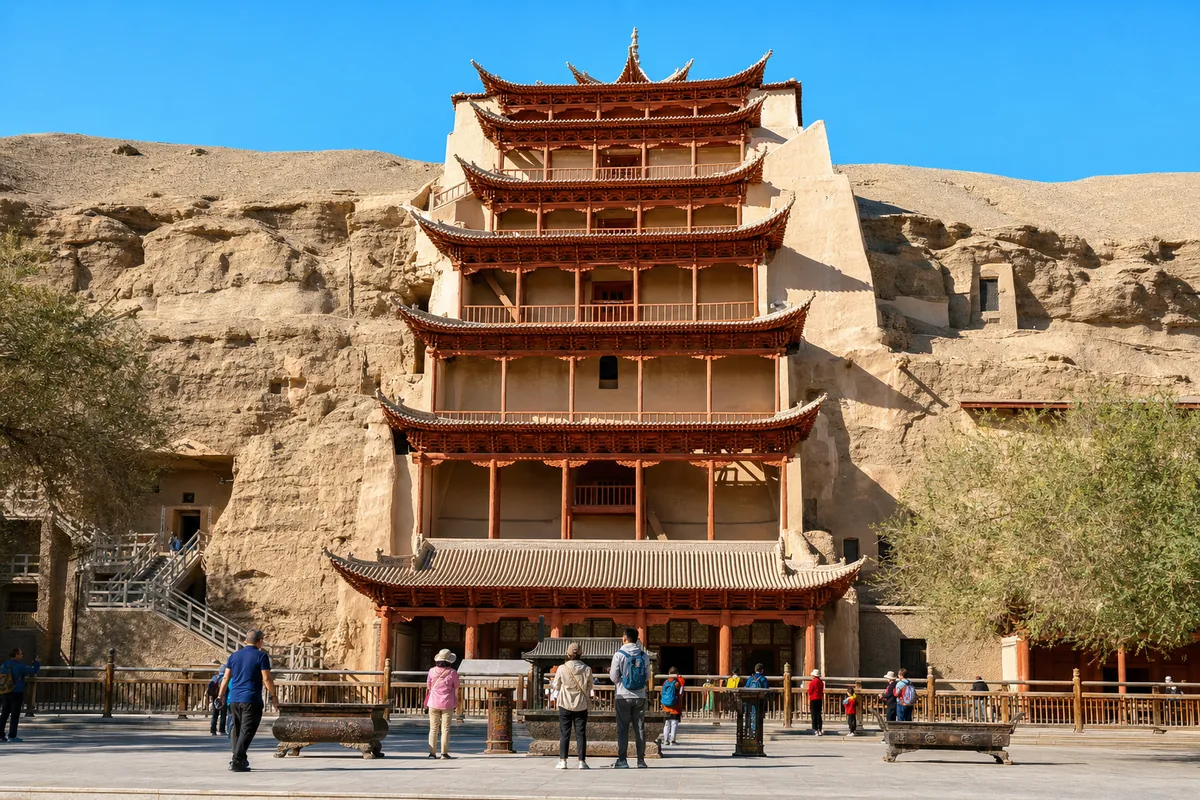
The Mogao Caves (莫高窟, Mògāo Kū), also called the Mogao Grottoes or the Caves of the Thousand Buddhas, are the reason most people make the trip. Carved into a cliff face over roughly a thousand years starting in the 4th century, the complex holds 492 surviving decorated caves filled with murals and painted sculpture — a continuous record of Buddhist art and Silk Road life spanning ten dynasties. It's a UNESCO World Heritage Site, and standing inside a 1,500-year-old cave looking up at intact murals is genuinely unlike anything else in China.
Why You Must Reserve Tickets in Advance
To protect the fragile murals from humidity and crowds, the site strictly caps daily visitors and sells tickets only by advance reservation. You cannot reliably buy a ticket at the gate. In peak season (summer and the Golden Week holidays) the regular tickets sell out days ahead. This is the single most important thing to plan for your Dunhuang trip.
How the Booking System Works
Tickets are sold through the official Mogao Caves reservation platform, generally opening for sale about a month in advance. There are two main ticket types:
- Full-price (A) ticket: Includes two films at the Digital Exhibition Center (a wide-screen film on Silk Road history and a dome film showing cave interiors) plus a guided visit to about 8 caves with a small group. This is the standard experience and the one to aim for.
- Emergency (B) ticket: Released on the day when full tickets are gone — skips the films and includes fewer caves (typically 4). It's a fallback, not a plan.
You can book on the official platform of the Mogao Caves (Dunhuang Academy). The site requires your passport number and a Chinese-payment method; if the official channel is hard to navigate without a Chinese phone number, booking a guided Mogao Caves tour through a platform like Klook bundles the reservation, transport, and an English-speaking guide, which many international visitors find easier.
Visiting Practicalities
You arrive at the Digital Exhibition Center near town first, watch the two films, then ride a shuttle bus about 15 km to the caves themselves. Budget around half a day for the whole experience. The caves are dim and cool inside even when it's hot outside. Guided commentary is included with your ticket in Chinese; English-language tours run at set times and are worth confirming when you book.
Mingsha Mountain & Crescent Moon Spring
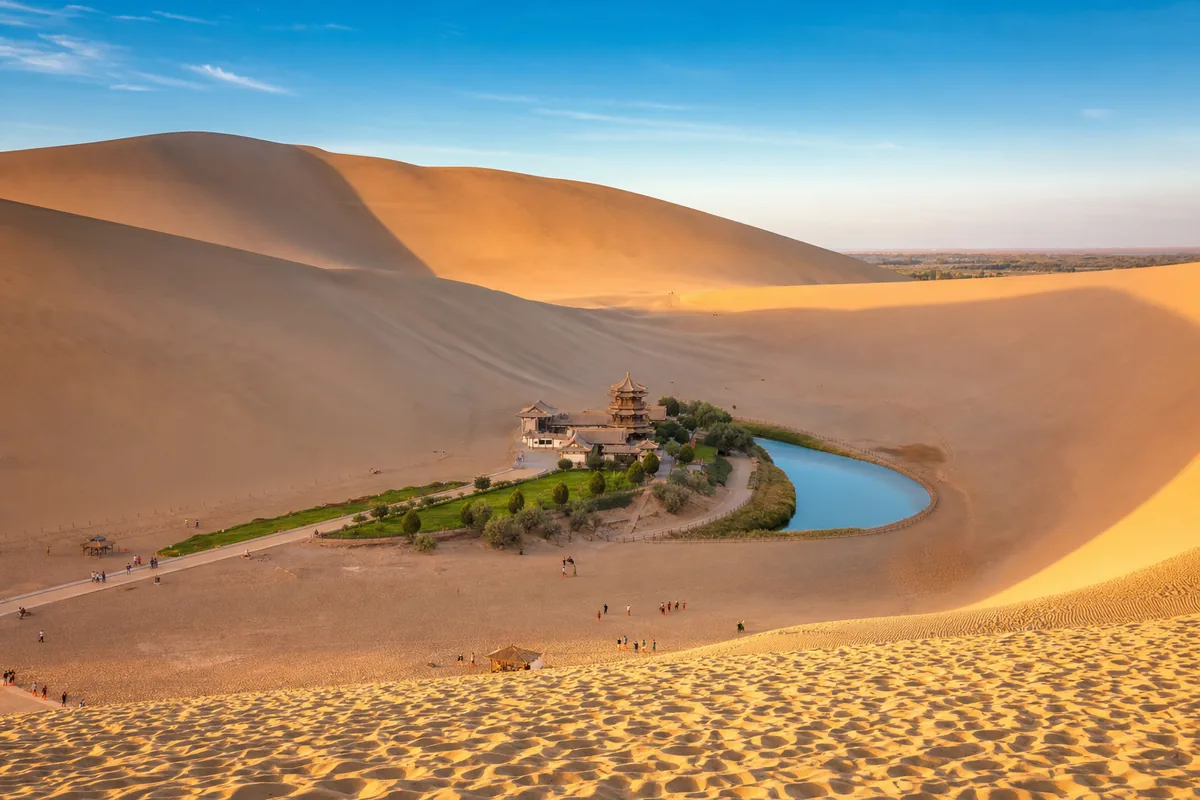
Just 6 km south of the city center, the desert begins abruptly. The Mingsha Mountain (鸣沙山, Míngshā Shān) — "Singing Sand Mountain" — is a range of towering dunes named for the low rumbling hum the sand makes when it slides. Nestled among the dunes is Crescent Moon Spring (月牙泉, Yuèyá Quán), a curved freshwater pool that has survived in the same hollow for centuries despite the surrounding sand. The two share one ticketed scenic area and are the postcard image of Dunhuang.
What you actually do here:
- Ride a camel. Strings of camels carry visitors over the dunes in caravans — a nod to the Silk Road trade routes. It's touristy but genuinely fun, and the view from a dune crest looking down on the green spring ringed by sand is the shot everyone comes for.
- Climb the dunes. Wooden-step ladders are laid up the steepest faces to make the climb easier; you can also rent bright shoe covers to keep sand out. Sliding or sandboarding back down is part of the appeal.
- Stay for sunset. Late afternoon into evening is the best light and the coolest temperature. In summer the scenic area runs special late hours, and watching the sky change color over the dunes is the highlight of many trips.
For the camel rides, paragliding, and desert buggy add-ons, booking through GetYourGuide or at the gate both work; pre-booking mainly saves queueing in peak season. The basic dune-and-spring entry doesn't require advance reservation the way Mogao does.
Yumen Pass & the Western Desert
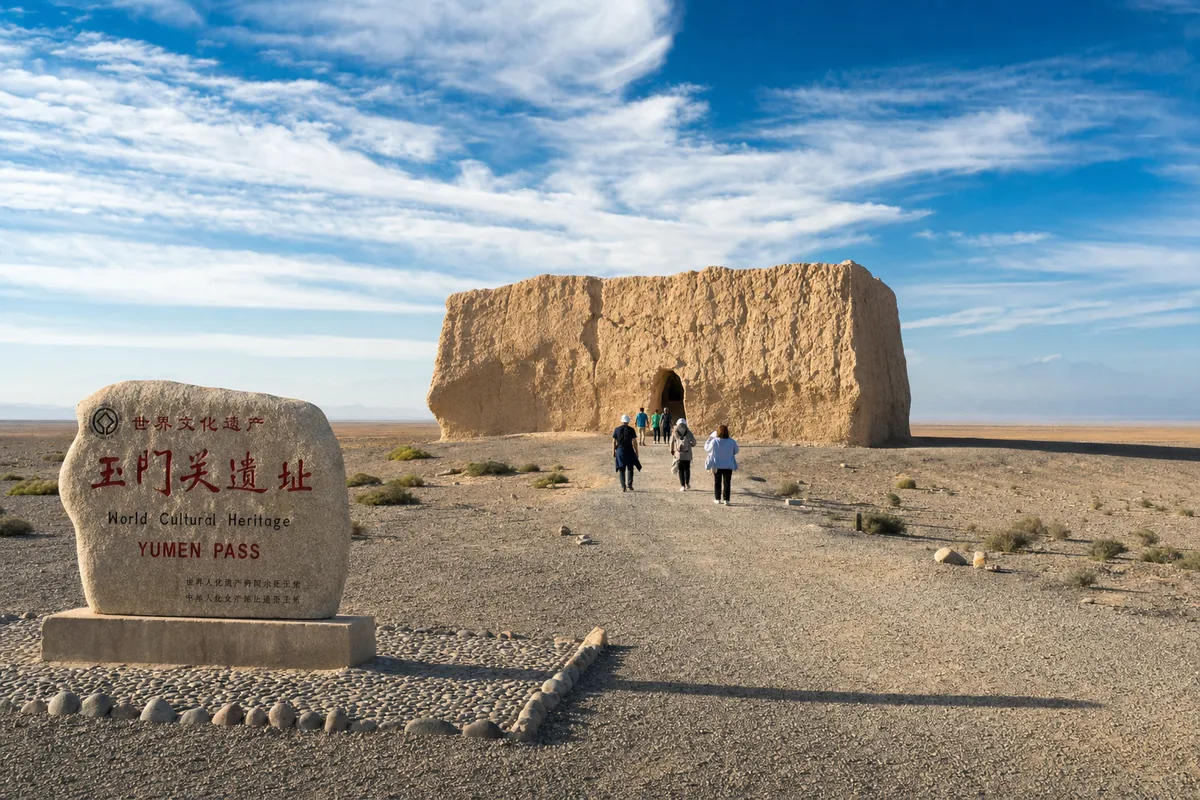
About 90 km northwest of Dunhuang, out in open Gobi, stands the Yumen Pass (玉门关, Yùmén Guān) — the "Jade Gate Pass." During the Han Dynasty this was a frontier checkpoint and customs gate on the Silk Road, the literal edge of the Chinese empire, named for the jade that passed through it from the western regions. What remains today is a weathered rammed-earth fort standing alone in the desert, plus nearby sections of Han Dynasty Great Wall built from reeds and gravel — some of the oldest surviving wall in the country.
It's a long, dusty trip out, and the ruins are modest compared to the caves — but the sense of standing at the historical end of the known world, where Tang poets wrote of soldiers gazing west, is something the photos don't capture. The same direction holds the Yardang National Geopark (the "Devil City" wind-carved rock formations) further out, and Yangguan Pass to the southwest. Most visitors combine Yumen Pass, the Han Great Wall, and Yardang into a single full-day chartered-car or tour trip, since public transport out here is minimal.
Where to Stay
Dunhuang's accommodation clusters in two areas. Downtown, around the night market and Mingshan Road, puts you near restaurants and transport and is the most convenient base. Near the dunes, a growing number of desert-view hotels and boutique guesthouses let you walk to the Mingsha scenic area and catch sunrise over the sand.
- Budget: Hostels and guesthouses downtown, often with helpful English-speaking staff who arrange Mogao bookings and desert tours.
- Mid-range: Comfortable chain and boutique hotels near the city center, the sweet spot for most travelers.
- Higher-end: Desert resorts and tented camps near the dunes, some with private dune views and stargazing — Dunhuang's dark skies are excellent.
You can compare locations and prices for all of these on Booking.com. Wherever you stay, hotels handle the required police registration (住宿登记, zhùsù dēngjì) automatically when you check in with your passport — just make sure they log it. For more on how that works, see our guide to booking hotels and registration rules.
What to Eat
Dunhuang's food is hearty northwestern fare, heavy on lamb, hand-pulled noodles, and wheat. Don't miss:
- Donkey meat "yellow noodles" (驴肉黄面, lǘròu huángmiàn): Dunhuang's signature dish — springy yellow wheat noodles served with tender donkey meat. Sounds unusual, tastes great.
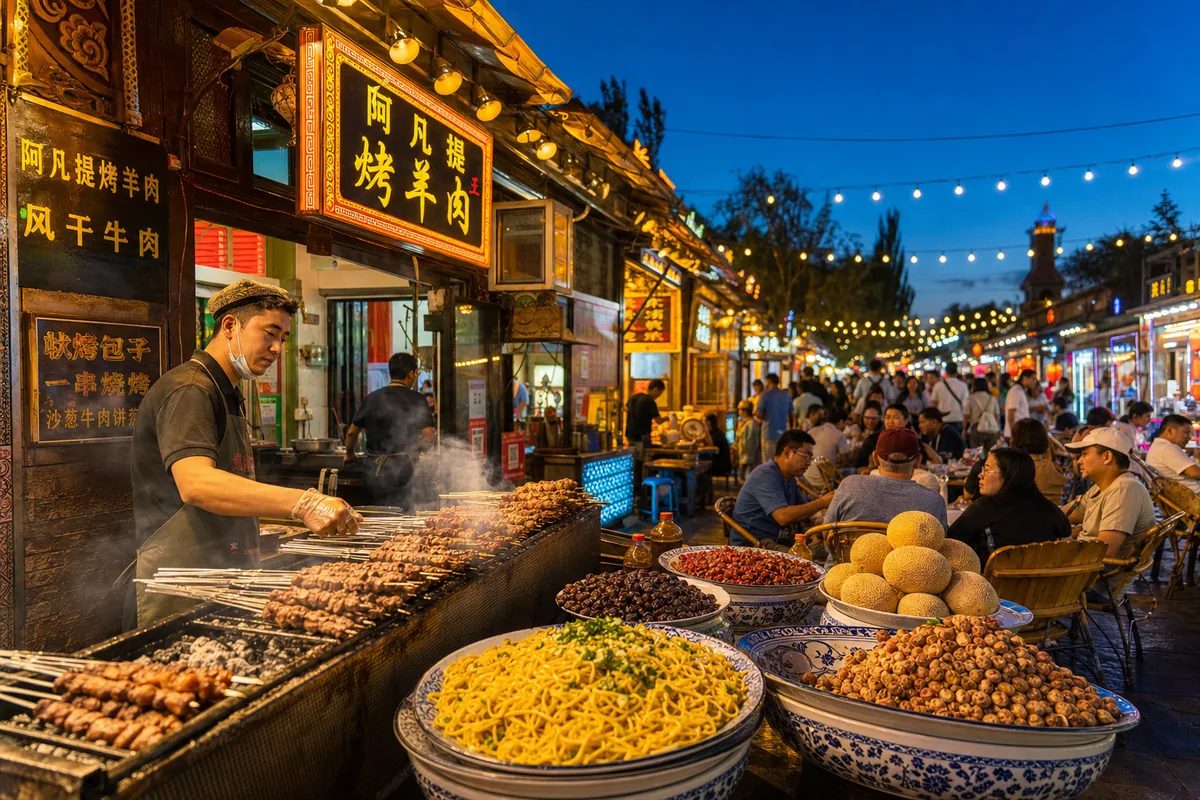
- Lamb skewers and roast lamb: Cumin-heavy, charcoal-grilled, best from the Shazhou Night Market.
- Apricot skin water (杏皮水, xìngpí shuǐ): A sweet-tart cold drink made from local apricots — the regional answer to a hot day.
The Shazhou Night Market (沙州夜市) downtown is the place to graze in the evening: skewers, noodles, dried fruit, and local melons, with plenty of outdoor seating. It's lively, cheap, and the easiest place to try several local specialties in one sitting.
Suggested 2–3 Day Itinerary
Day 1 — Mogao Caves
Visit the Mogao Caves in the morning (reserved in advance), starting at the Digital Exhibition Center. Spend the afternoon at the small museums in town or resting after the journey. Eat at the Shazhou Night Market in the evening.
Day 2 — Desert Day
Take it easy in the morning, then head to Mingsha Mountain and Crescent Moon Spring in the late afternoon for camel riding, dune climbing, and sunset. This is the timing that avoids the worst heat and gives the best light.
Day 3 (optional) — Western Passes
A full-day private-car or tour trip to Yumen Pass, the Han Great Wall, and the Yardang geopark. Skip this if you're tight on time and prefer a slower pace — the caves and dunes are the essentials.
Practical Tips Before You Go
- Bring your passport everywhere. It's checked at the Mogao Caves against your booking and needed for hotel check-in.
- Set up mobile payment in advance. Almost everything runs on QR codes, including the night market and many tour desks. Cash still works at larger places but is increasingly rare.
- Carry water and sun protection. The desert is dry and the UV is intense even on cool days.
- Check seasonal hours. Attraction opening times and flight schedules shift between summer and winter — confirm the latest before you travel.
The Bottom Line
Dunhuang rewards a little planning. The one thing you cannot leave to chance is the Mogao Caves reservation — book it as soon as your dates are set, ideally weeks ahead in high season, or go through a tour that bundles it. Beyond that, give yourself a desert evening at Mingsha Mountain and Crescent Moon Spring, eat your way through the night market, and if you have a third day, head out to Yumen Pass to stand where the Silk Road met the open desert. Two days covers the must-sees; three lets you breathe. Lock in the caves, plan the journey in (remember Liuyuan), and the rest falls into place.
Last updated: June 2026
Read in other languages
Last train times for 10 Chinese metro systems
Every line and station, checked by hand — the same data behind our offline route planner.
Get the WaysChina App
Offline guides, currency converter, essential phrases, and more — all in your pocket.

Related Articles
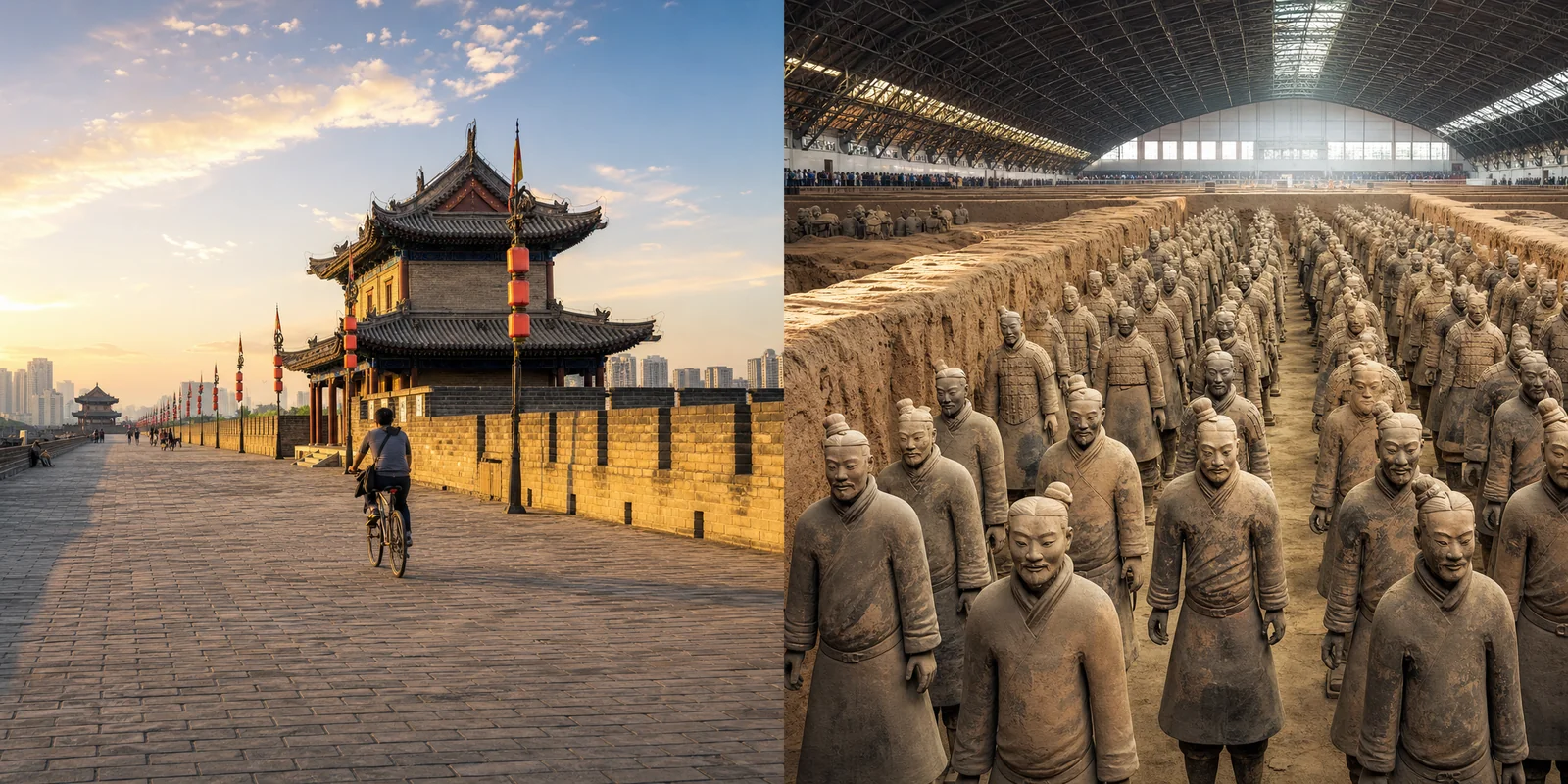
2-Day Xi'an Itinerary: Terracotta Warriors, City Wall & More
A practical 2-day Xi'an itinerary with real timings and transport: the Terracotta Warriors and Huaqing Palace on Day...
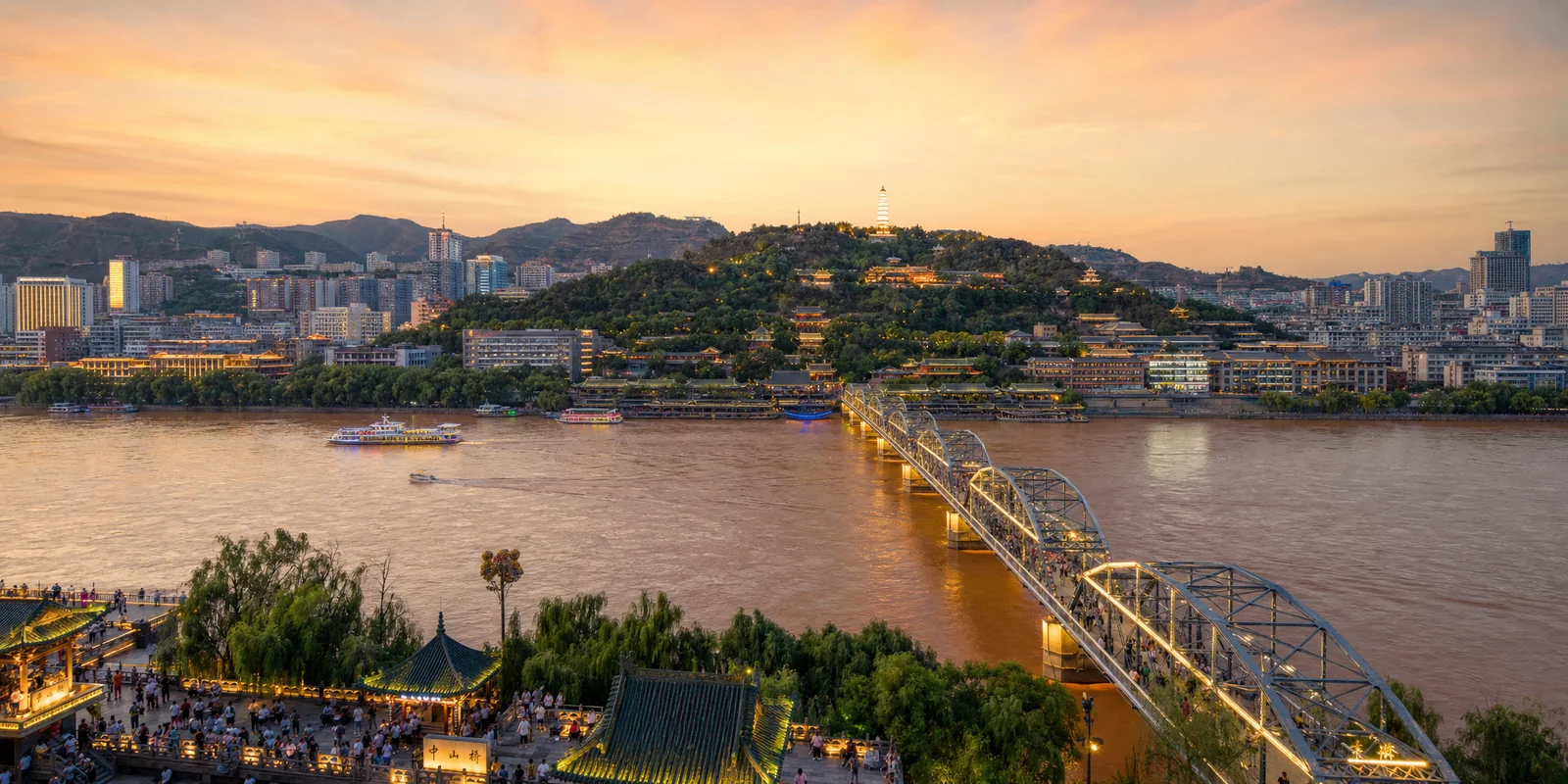
Lanzhou Complete Guide
Everything you need for visiting Lanzhou: the famous beef noodles, the Yellow River waterfront, the Gansu Provincial...
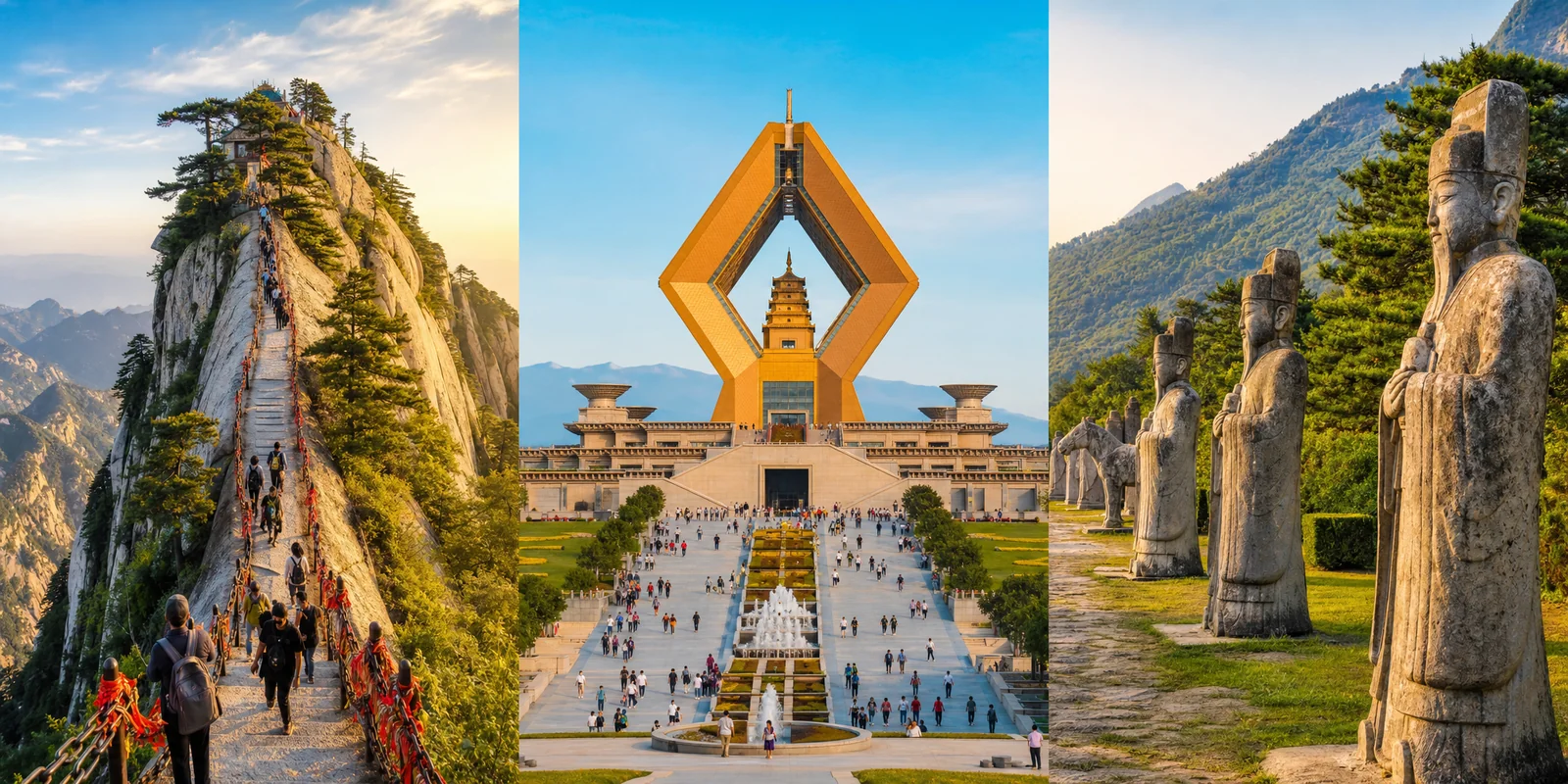
Xi'an Day Trips
Four of the best day trips from Xi'an — Mount Huashan, Famen Temple, Qianling Mausoleum, and Hanyangling Museum —...
Xi'an Food Guide
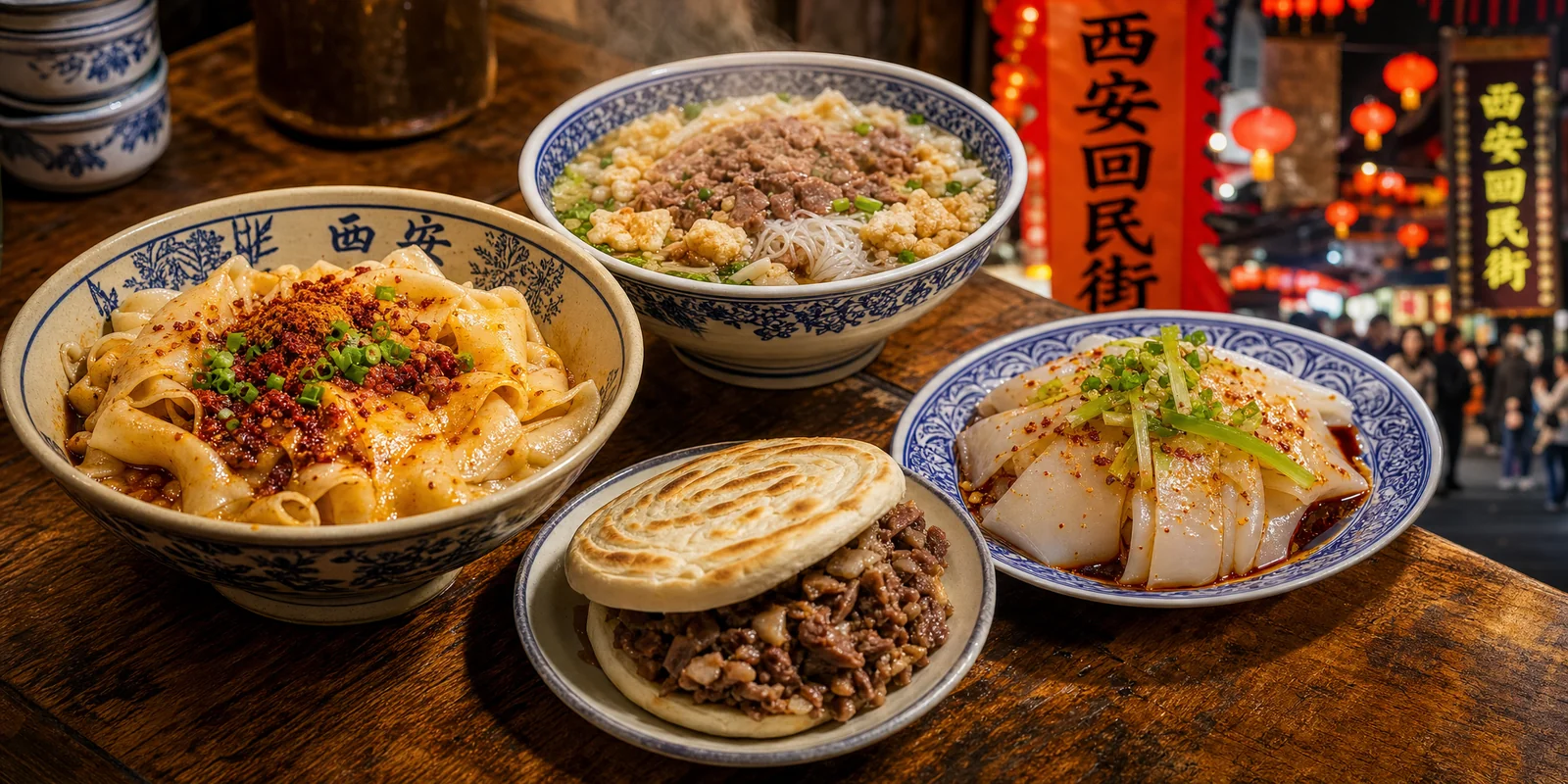
What to eat in Xi'an and where to find it — from biangbiang noodles and roujiamo to lamb soup in the Muslim Quarter,...