
This article contains affiliate links. If you make a purchase through these links, we may earn a small commission at no extra cost to you. This helps support our work in creating free travel guides.
Budget travel in China is genuinely cheap and comfortable, but there's one catch foreign visitors need to understand before booking: not every cheap hotel can legally check you in. By law, any hotel that takes you has to register your stay with the local police, and some smaller, budget properties either lack the system to do it or are nervous about getting it wrong. The good news is the major budget chains and most established hostels handle foreign guests fine — you just need to know which ones and how to confirm before you arrive.
This guide covers the budget chains worth booking, what hostels are like in China today, realistic prices, and the booking and registration details that trip up first-timers.
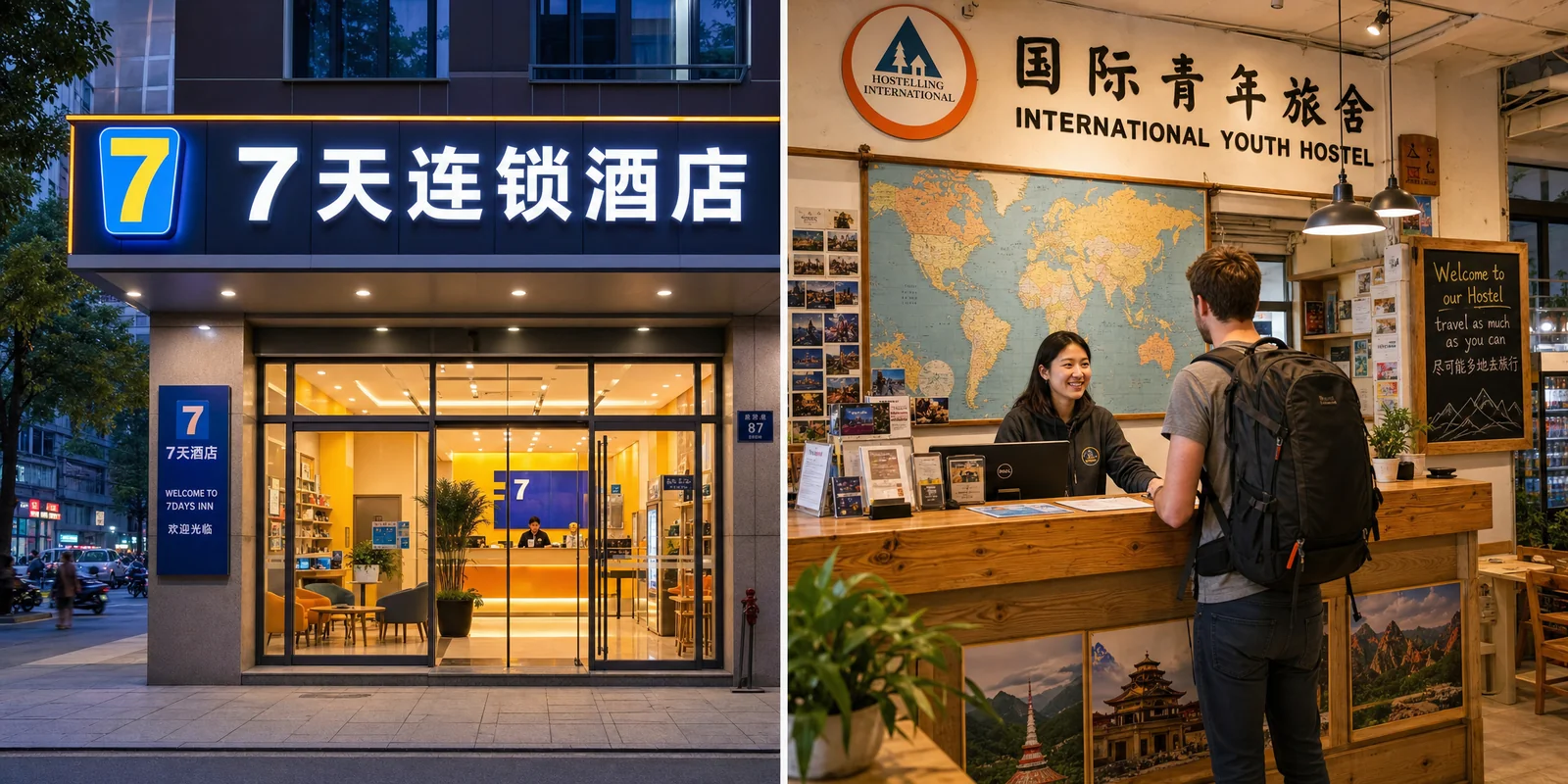
The registration rule that affects where you can stay
Every foreigner staying in China must have their accommodation registered with local police (住宿登记, zhùsù dēngjì). If you stay in a hotel, the hotel does this automatically at check-in and reports it within 24 hours — you don't have to do anything except hand over your passport. If you stay somewhere that isn't a registered hotel (a friend's home, some short-term rentals), you're responsible for registering yourself at the local police station within 24 hours. The National Immigration Administration spells this out in Article 39 of the Exit and Entry Administration Law.
Why this matters for budget travelers: a hotel that can't register foreign guests will usually just turn you away at the door, even if you have a confirmed booking. Policy has actually moved in your favor here. In 2024, seven government departments including the Ministry of Commerce issued official measures stating that hotels should not refuse foreign guests on the grounds of lacking "foreign-related qualifications." But rules and reality don't always match — a 2025 survey near Xi'an's Tang Dynasty district found that of 52 hotels within 500 meters, only 15 claimed they could host foreign guests, and just 2 of those were budget properties.
Budget hotel chains worth booking
For most budget travelers, the big chain hotels are the safest bet. They're standardized, clean, centrally located, and the large groups have fully rolled out foreign-guest reception and international card payment. Rooms are typically 15–25 m², with air conditioning, a TV, basic toiletries, a kettle, 24-hour front desk, and luggage storage. English at the front desk is limited but functional with a translation app.
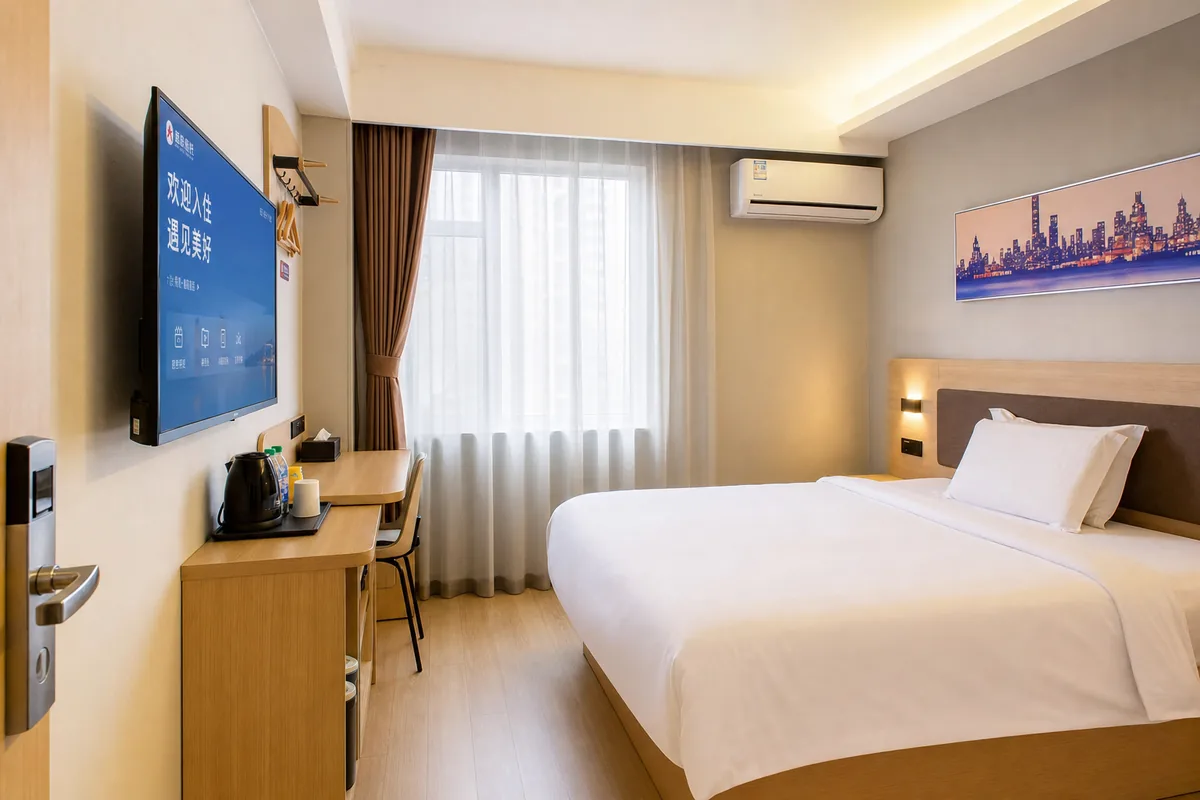
Two giant groups own most of the recognizable budget brands:
| Group | Budget brands | Rough price/night | Notes |
|---|---|---|---|
| Huazhu (华住) | Hanting, Hi Inn, Ibis, Orange, JI Hotel | ~$20–80 | App booking page explicitly states it accepts guests from any country; international cards accepted |
| Jinjiang (锦江之星) | Vienna, Lavande, Xana, James Joyce Coffetel, 7 Days Inn | ~$25–80 | Over 1,000 properties nationwide |
| BTG Homeinns (首旅如家) | Home Inn (如家) | ~$20–60 | 2,000+ properties; foreign card settlement fully open |
These price ranges come from third-party aggregators and shift with season and city — treat them as ballpark figures and check the actual quote when you book. 7 Days Inn (7天), one of the most widespread cheap brands, started in Guangzhou in 2005 and now operates under the Jinjiang group with thousands of locations.
Hostels and backpacker accommodation
China's hostel scene is smaller than it was a decade ago. Rising rents and many properties converting into boutique hotels have thinned the ranks — by 2025, fewer than 70 hostels remained inside the YHA China network, down from a much larger peak. That said, good hostels still exist in every major tourist city, and they remain the cheapest way to stay, especially for solo travelers.
Typical pricing across China: dorm beds run roughly $3–99 a night (the average lands around $9), and private rooms range from about $14 to $290 (averaging near $53). Holidays and peak season push these higher. In Beijing, established hostels advertise dorm beds starting around $20–28, though these blog-sourced figures float constantly — check live prices when you book.
Hostels generally welcome foreign guests and check you in with a valid passport plus visa or residence permit. But the same registration caveat applies: a small, locally-run hostel may not have foreign-guest registration capability. Stick to hostels that clearly state they accept international guests, and message the property to confirm they can register you before paying.
How to book and confirm you'll be accepted
The booking platform you choose matters, because the better ones let you filter for places that take foreign guests.
- Trip.com — English interface and app, 24-hour English customer service, and it accepts international cards (Visa, Mastercard, Apple Pay). It's the most foreigner-friendly platform for China hotels. Still confirm the specific property accepts foreign passports.
- Booking.com / Agoda — Check the "Guests Accepted" line in each listing's policy section. If it says guests from all countries are welcome, you're fine; avoid listings marked "Chinese nationals only" / "mainland China residents only."
- Hostelworld — Good for filtering hostels and reading recent reviews from other foreign travelers, which often mention whether check-in went smoothly.
For booking budget chains and hostels in one place with English support, many travelers use Booking.com for hotels and Hostelworld for dorm beds — both let you read recent guest reviews that flag any check-in problems.
Paying and deposits
Budget chains and most hostels now accept international cards, but it pays to have mobile payment set up too. You can link an international card (Visa, Mastercard, JCB and others) to Alipay, which is the easier option for foreign users; WeChat Pay also supports international cards. Specific transaction limits and fees vary, so test it on a small purchase early in your trip.
Most hotels in China take a refundable deposit at check-in, payable by cash or card, and return it when you check out. The amount varies by property — often a few hundred yuan or more. Keep the deposit receipt; you'll need it to get the money back. For full details on payment setup and registration, see our guides below.
Timing your stay for lower prices
China has clear high and low seasons. Roughly April through October is peak season with higher prices; November through March is generally cheaper. Chinese New Year (in January or February) is treated as peak even though it's winter, and prices spike around it and during the October Golden Week holiday. If your dates are flexible, traveling in the shoulder or low season cuts accommodation costs noticeably.
If you're entering China visa-free, note that the 240-hour (10-day) transit visa-free policy now covers 55 countries through dozens of ports of entry — useful if a short, budget-focused city stop is all you need. Confirm the latest eligible countries and ports on the official visa service center FAQ before you travel.
The bottom line
For reliable, cheap stays in China, default to a major budget chain — Hanting, Home Inn, JI Hotel, or 7 Days Inn — booked through Trip.com or another English-language platform. Expect roughly $20–60 a night for a clean, functional room near transit. For the lowest prices and a social atmosphere, hostels still work well in major cities, though the network has shrunk. Whatever you pick outside the big chains, do the one thing that prevents almost every problem: confirm the property can register foreign guests before you arrive. Travel in the low season, set up Alipay as a backup payment method, and keep your passport handy at check-in.
Related reading
- Booking Hotels & Registration Rules
- Types of Accommodation
- How to Use Alipay with Foreign Cards
- China Travel Budget Guide
- Visa-Free & Transit Policies
Last updated: June 2026
Read in other languages
Last train times for 10 Chinese metro systems
Every line and station, checked by hand — the same data behind our offline route planner.
Get the WaysChina App
Offline guides, currency converter, essential phrases, and more — all in your pocket.

Related Articles
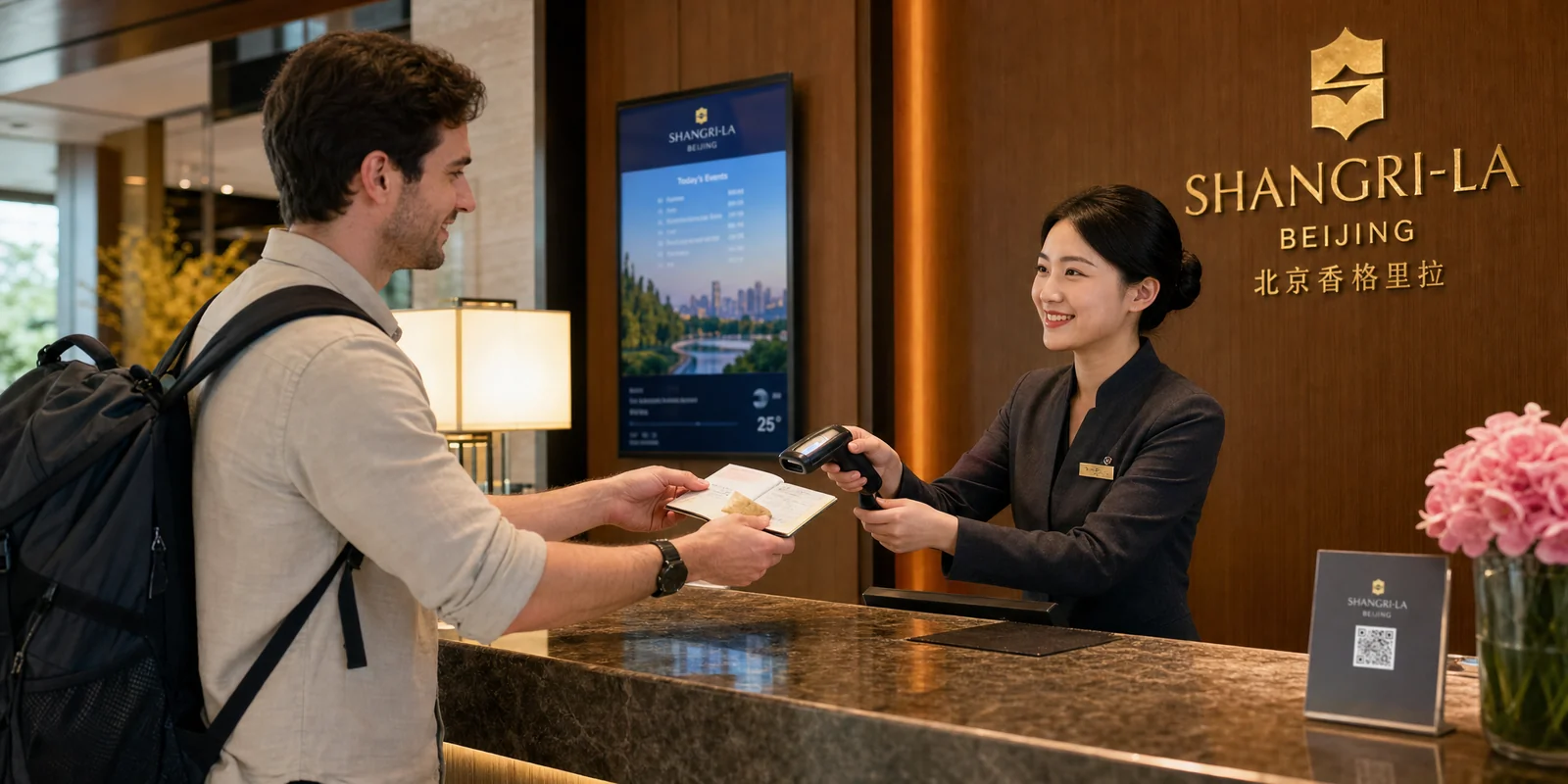
Booking Hotels & Registration Rules
How foreigners book hotels in China, what police registration means, and what to do if you stay in an apartment or...

Luxury Hotels in China: Where to Stay in Style
From a Bulgari address in Beijing to relocated Ming-dynasty courtyards near Shanghai and beachfront resorts in...
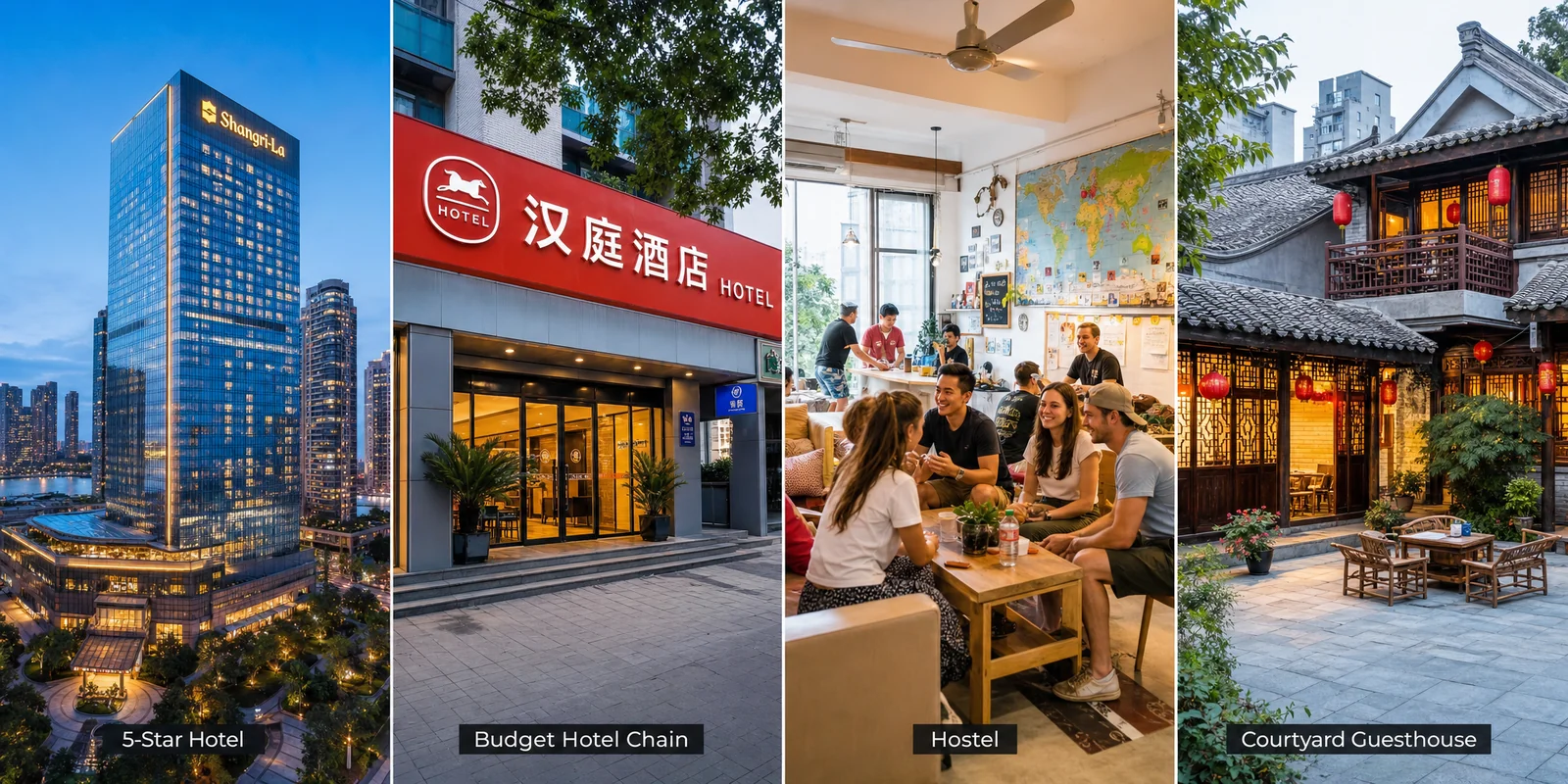
Types of Accommodation in China: A Guide for Travelers
From five-star hotels to hostels, guesthouses, and serviced apartments — here's how accommodation in China actually...