
This article contains affiliate links. If you make a purchase through these links, we may earn a small commission at no extra cost to you. This helps support our work in creating free travel guides.
A trip to China can cost anywhere from $40 a day to $400+ a day per person, and the gap between those two numbers is mostly about where you sleep and how you get around. The good news: China is cheaper than most travelers expect once they understand the local systems. Street food costs a few dollars, the subway is rarely over $1 a ride, and high-speed trains are comfortable and fairly priced. This guide breaks down what you'll actually spend by travel style, gives you real prices for the big-ticket items, and points out where the money quietly leaks if you're not paying attention.
One thing to keep in mind before we get into numbers: prices below are recent estimates, and exchange rates move. Treat the dollar figures as approximate (roughly ¥7 to $1) and check current prices before you book anything.
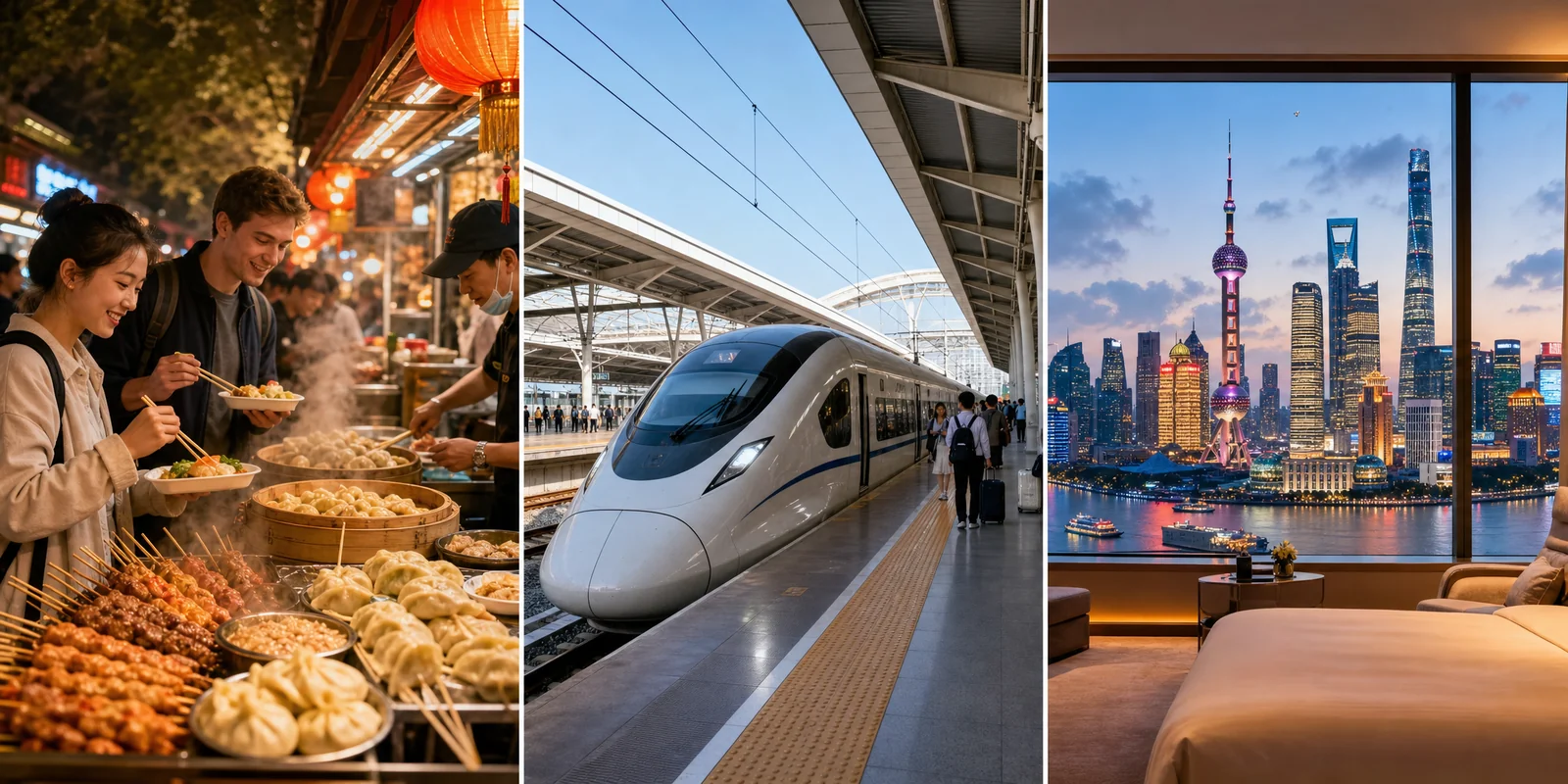
The Quick Answer: Daily Budgets by Travel Style
Most travelers fall into one of three brackets. These figures are per person, per day, and assume two people sharing a room (solo travelers pay more for accommodation). They exclude international flights to and from China.
| Style | Daily Budget (per person) | What it looks like |
|---|---|---|
| Backpacker | ¥250–400 ($35–55) | Hostel dorm, street food and small local restaurants, public transport, mostly free or cheap attractions |
| Mid-range | ¥500–900 ($70–125) | 3-star hotel or private room, mix of casual restaurants and the occasional nicer meal, metro plus some taxis, paid attractions |
| Comfort / Luxury | ¥1,000–2,500+ ($140–350+) | 4–5 star hotels, restaurant dining, private drivers or frequent taxis, guided tours and premium experiences |
For a rough planning anchor, a 10-day mid-range trip excluding international and domestic flights tends to land around $700–900 per person, according to travel-cost estimates from Trip.com. Add intercity transport on top of that and you have a realistic figure.
Accommodation: Where Your Budget Lives or Dies
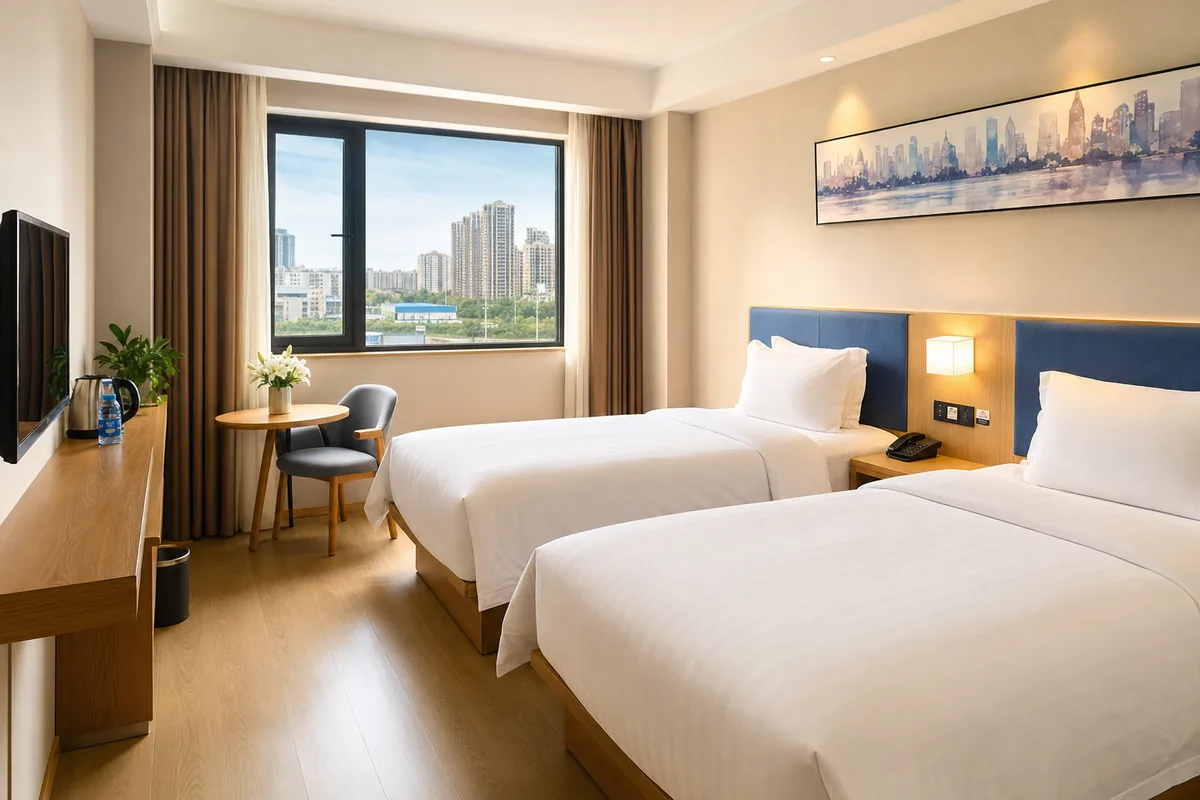
Here's roughly what you'll pay per night across the country. Big cities like Beijing, Shanghai, and Shenzhen sit at the higher end; smaller cities and towns run cheaper.
| Type | Price per night |
|---|---|
| Hostel dorm bed | ¥50–80 ($10–20) |
| Budget hotel / private hostel room | ¥200–350 ($30–50) |
| Mid-range hotel | ¥350–700 ($50–100) |
| Luxury hotel | ¥700+ ($100+) |
There's one quirk that catches a lot of foreign travelers off guard: not every hotel in China can legally accept foreign guests. Some budget hotels and small guesthouses lack the registration license to take international visitors and will turn you away at check-in. In May 2024, the Ministry of Public Security and the National Immigration Administration told hotels to stop refusing foreigners on the grounds of "lacking the qualification" to receive them, but in practice you'll still run into places that say no.
The simplest workaround: book through international platforms like Booking.com, Agoda, Trip.com, or Hostelworld, which generally filter for properties that accept foreign guests. Hostels almost always can. You can compare foreigner-friendly hotels and read recent guest reviews on Booking.com before you commit.
Intercity Transport: Trains vs Flights
This is where mid-range and luxury budgets really separate from backpacker ones, because it's a category you can't avoid if you're visiting more than one city.
High-speed rail
China's high-speed trains (高铁, gāotiě) are the default choice for most intercity routes. They're fast, punctual, and connect city centers, which often makes them quicker door-to-door than flying once you account for airport time. The classic Beijing–Shanghai route (about 1,318 km, 4.5–7.5 hours depending on the train) costs roughly:
- Second class: ¥553–673 ($81–99)
- First class: ¥930–1,076 ($136–158)
- Business class: ¥1,748–2,354 ($256–345)
Second class is perfectly comfortable and what most travelers book. Note that fares on some Beijing–Shanghai trains are subject to price adjustments and frequent discount fares, so check the current price when you book.
Domestic flights
For long distances (think Beijing to Chengdu, or anywhere over ~1,200 km) flights can be cheaper and faster than rail. Beijing–Shanghai flights start around $77 one-way when booked ahead, with the flight itself taking about 2 hours 14 minutes. Book early and avoid peak holiday periods for the lowest fares.
City Transport: Cheaper Than You Think
Getting around within cities is one of the best budget bargains in China.
Metro
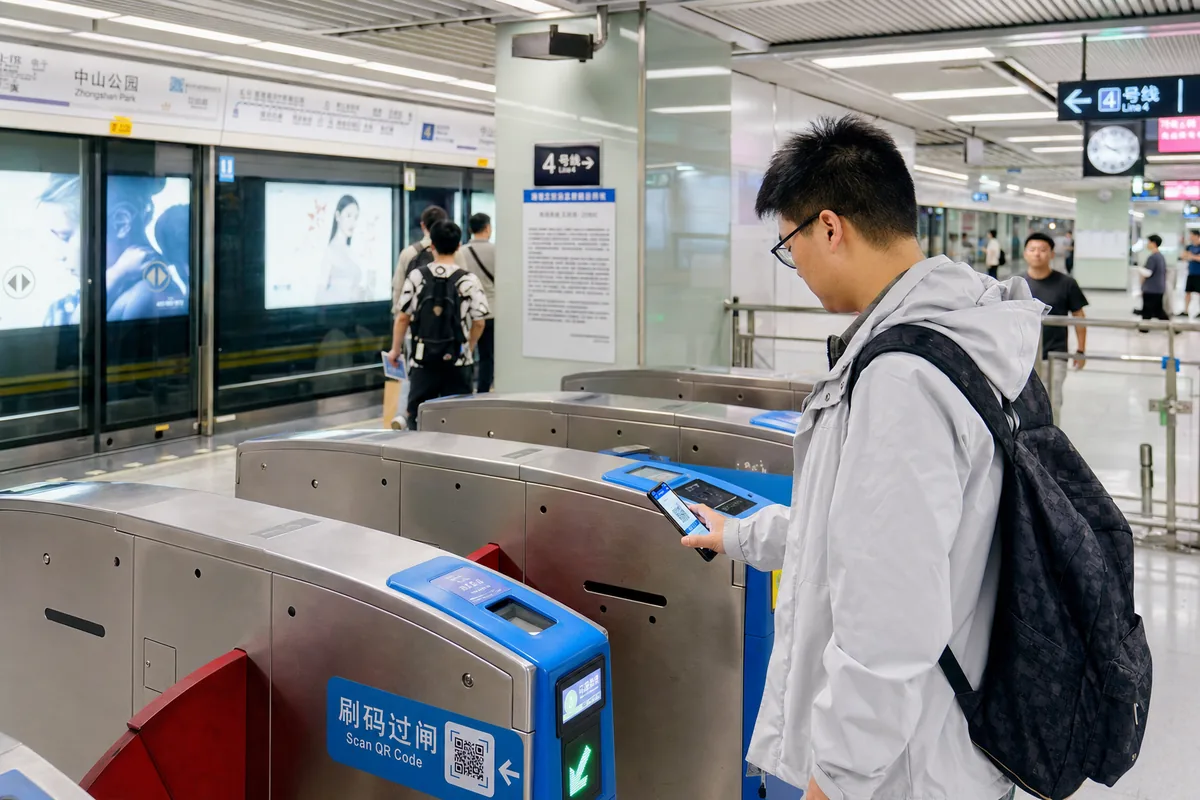
Subways are clean, extensive, and priced by distance. In both Beijing and Shanghai, fares start at ¥3 and most city-center trips run ¥3–6 (well under $1). Airport links cost a bit more — Beijing's Capital Airport Express is ¥25, the Daxing line ¥10–35.
You no longer strictly need a transit card. Beijing's subway gates have accepted contactless foreign Visa and Mastercard since September 2024, and Shanghai metro service centers sell tickets to foreign cardholders. That said, Alipay and WeChat Pay QR codes are the smoothest way to ride.
Taxis and ride-hailing
Taxis are metered and affordable by Western standards. Beijing starts at ¥13 (first 3 km), then ¥2.3/km; Shanghai starts at ¥14–16, then ¥2.7/km, with night surcharges in both.
DiDi (滴滴), China's Uber equivalent, is usually cheaper than street taxis and far easier for non-Chinese speakers — it has an English interface, accepts international cards, and offers in-app translation with drivers. An 8 km, 20-minute Express ride in Beijing runs about ¥30–40 ($4.30–5.75). When you download it, choose "DiDi" with international features rather than the local-only version.
Food: From ¥10 Noodles to White-Tablecloth Dining
Food is where China is genuinely cheap if you eat the way locals do. You can eat very well on a small budget.
- Street food and breakfast stalls: ¥5–15 for baozi, jianbing, noodles, or skewers
- Casual local restaurants: ¥20–40 per person for a filling meal
- Mid-range sit-down restaurants: ¥60–120 per person
- Upscale / hotel dining: ¥200+ per person
A backpacker eating street food and local diners can keep food costs to ¥60–100 a day. A mid-range traveler mixing in nicer dinners might spend ¥150–300 a day. The jump to luxury comes from restaurant choice, not from China being expensive overall.
Attractions: Budget for the Big Sites
Entry fees in China are generally reasonable, and many of the best experiences — wandering old neighborhoods, parks, temples — are free or nearly so. The famous sites do add up, though:
| Site | Entry fee |
|---|---|
| Forbidden City (Beijing) | ¥60 peak (Apr–Oct), ¥40 off-peak; exhibition halls +¥10 each |
| Badaling Great Wall | ¥40 (Apr–Oct), ¥35 (Nov–Mar) |
| Juyongguan Great Wall | ¥45 adult, ¥25 concession |
A self-guided day trip to the Great Wall using public transport (round-trip subway + bus 877 + entry + a simple meal) can be done for as little as ¥105–164 — far cheaper than a tour. Children under 1.2 m and seniors get discounts at most sites. For official ticketing details on Beijing attractions, see the Beijing municipal government site.
Other headline attractions — the Terracotta Warriors in Xi'an, Chengdu's panda base, Zhangjiajie — charge their own fees that change seasonally, so check current prices before you go. Budget roughly ¥50–100 a day for attractions if you're sightseeing actively.
Connectivity: SIM Cards and eSIMs
Staying online is cheap. A tourist eSIM or SIM card covers data and the apps you'll rely on (maps, DiDi, payments, translation). Sample prices:
- China Unicom CUniq eSIM: ~$12 for 8 days (7GB + 2GB); ~$16 for 30 days (15GB + 2GB)
- China Mobile SIM at Shanghai Pudong airport: ¥90 (~$13) for 7 days, 30GB + 100 minutes
An eSIM you can set up before arrival saves you fumbling at the airport. Just confirm your phone is unlocked and eSIM-compatible. For the full rundown of options, see our China SIM card and eSIM guide.
Payments and Saving on Money Itself
Almost everything in China runs on mobile payments. You can link a foreign Visa or Mastercard to Alipay (支付宝, Zhīfùbǎo) or WeChat Pay (微信支付, Wēixìn zhīfù) and pay by QR code nearly everywhere. The catch: Alipay charges a 3% fee on transactions over ¥200 (transactions of ¥200 or less are free), with per-transaction and annual limits, according to Beijing Chaoyang District's official guide.
That 3% fee adds up over a trip. To trim currency and card costs, many travelers carry a multi-currency travel card like Wise, which tends to offer better exchange rates than airport bureaus and many bank cards. Keep some cash on hand too — small vendors, rural areas, and the occasional hotel deposit still want it. Set up your payment apps before you fly; it takes about 10 minutes and saves stress on day one. Our guide to using Alipay with foreign cards walks through the setup.
Sample 10-Day Budgets (Excluding International Flights)
Putting it together for a classic Beijing–Xi'an–Shanghai route, two people sharing rooms:
| Category | Backpacker | Mid-range |
|---|---|---|
| Accommodation (10 nights) | ¥600–800 | ¥3,500–6,000 |
| Food | ¥700–1,000 | ¥1,800–3,000 |
| Intercity transport (trains/flights) | ¥1,200–1,800 | ¥1,500–2,500 |
| Local transport | ¥200–400 | ¥500–900 |
| Attractions | ¥400–700 | ¥600–1,000 |
| SIM/eSIM + extras | ¥150–300 | ¥300–600 |
| Approx. total per person | ¥3,250–5,000 ($450–700) | ¥8,200–14,000 ($1,150–2,000) |
Luxury travel doesn't fit neatly in a table because it scales almost without limit — 5-star hotels, private guides and drivers, and fine dining can push a single day past ¥2,500 per person. A reliable rule of thumb is that the luxury tier costs whatever the accommodation costs, plus everything else roughly doubled.
Money-Saving Tips That Actually Work
- Travel off-peak. Avoid Chinese New Year and the October Golden Week — prices spike and everything is crowded. Shoulder seasons (spring and autumn) are cheaper and more pleasant.
- Book trains early. Tickets are released about 15 days out and popular routes sell out; booking ahead also gives you seat choice and avoids last-minute scrambles.
- Eat where locals eat. The ¥25 dumpling joint full of office workers is usually better and a fraction of the price of the tourist-strip restaurant next door.
- Use the metro. It's the single cheapest way to move around any major city.
- Keep Alipay transactions under ¥200 where practical to avoid the 3% fee, or use a low-fee travel card.
- Self-guide the big sights. Public transport to places like the Great Wall costs a fraction of an organized tour.
Visa Costs and Entry — Don't Forget This Line Item
Many travelers can now skip the visa entirely. China's expanded 240-hour (10-day) transit visa-free policy lets eligible passport holders from 55 countries — including the US, Canada, most of Europe, Australia, Japan, South Korea, and Singapore — transit through China to a third country without a visa, with cross-province travel allowed within designated regions. Separately, a unilateral 30-day visa-free policy (extended through the end of 2026) covers tourism, business, and family visits for qualifying nationalities.
If you do need a tourist visa, costs vary by nationality — roughly $140–160 for US citizens, £151 for UK citizens, with agency service fees on top. These figures are approximate; confirm with your nearest Chinese visa application center. For the full picture, read our visa-free and transit policies guide, and the official National Immigration Administration announcement.
The Bottom Line
China rewards travelers who understand its systems. A backpacker can have a rich trip on ¥250–400 ($35–55) a day, a mid-range traveler on ¥500–900 ($70–125), and luxury starts around ¥1,000+ and climbs from there. Accommodation is your biggest variable; food and city transport stay cheap across all tiers. The smart moves are to set up your payment apps before arrival, book trains early, travel outside the major holidays, and eat where locals eat. Decide your accommodation tier, plan your intercity route, and the rest of the budget falls into place. Prices shift over time, so verify current fares and fees before you book.
Last updated: June 2026
Read in other languages
Last train times for 10 Chinese metro systems
Every line and station, checked by hand — the same data behind our offline route planner.
Get the WaysChina App
Offline guides, currency converter, essential phrases, and more — all in your pocket.