
This article contains affiliate links. If you make a purchase through these links, we may earn a small commission at no extra cost to you. This helps support our work in creating free travel guides.
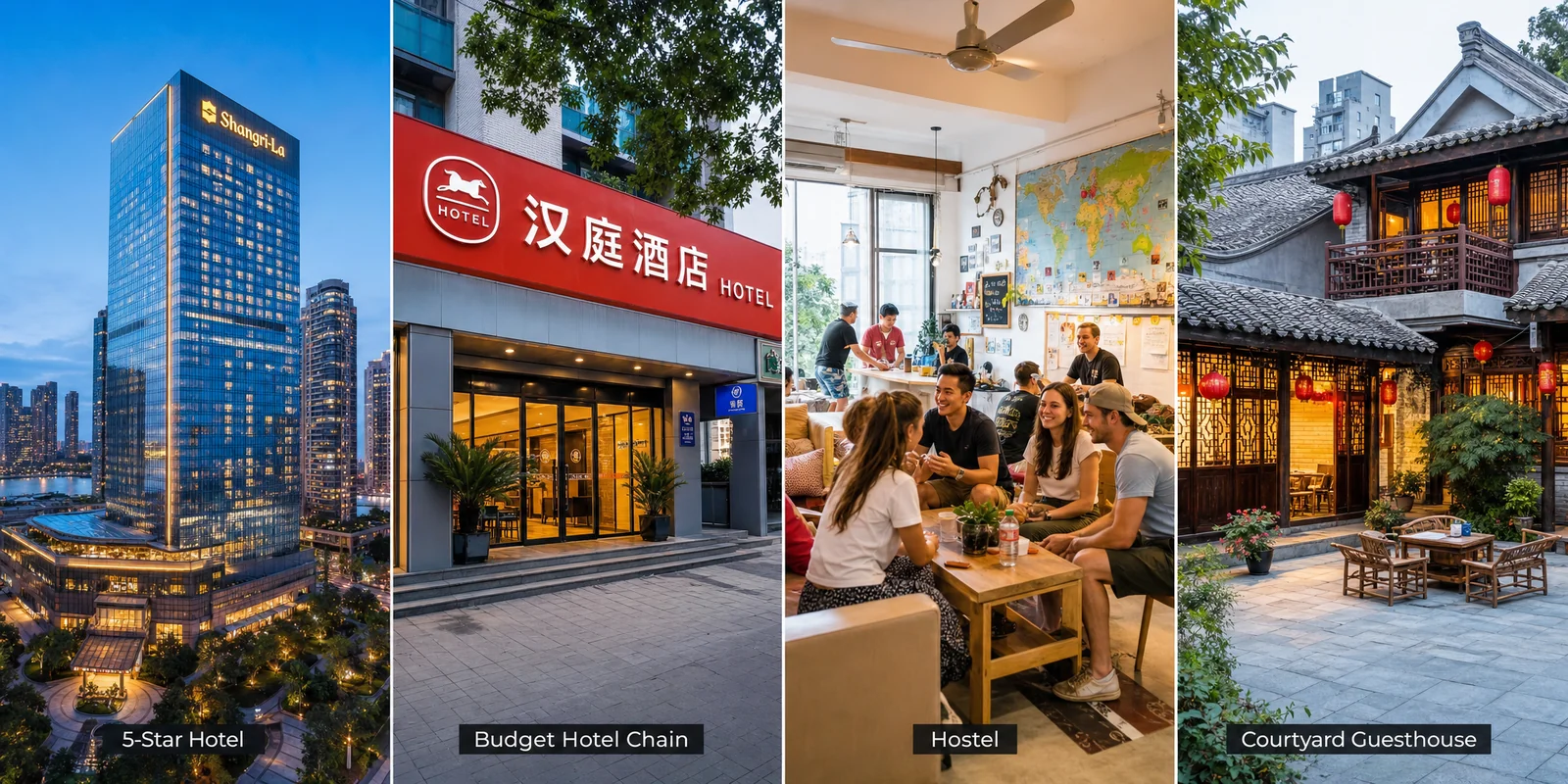
Accommodation in China covers the full range you'd expect — international five-star hotels, budget chains, hostels, family-run guesthouses, and serviced apartments for longer stays. The bigger question for most foreign visitors isn't comfort or price; it's which places can legally host you and how the mandatory police registration works. The rules have loosened in recent years, and central authorities have explicitly told hotels to stop turning foreign guests away, but you'll still run into the occasional small-town hotel that hesitates. This guide walks through each accommodation type, what to expect, and how to choose the right one for your trip.
The one rule that affects every choice: police registration
Wherever you sleep in China, your stay has to be registered with the police. This is called accommodation registration (住宿登记, zhùsù dēngjì), and it applies to all foreigners under Article 39 of China's Exit and Entry Administration Law.
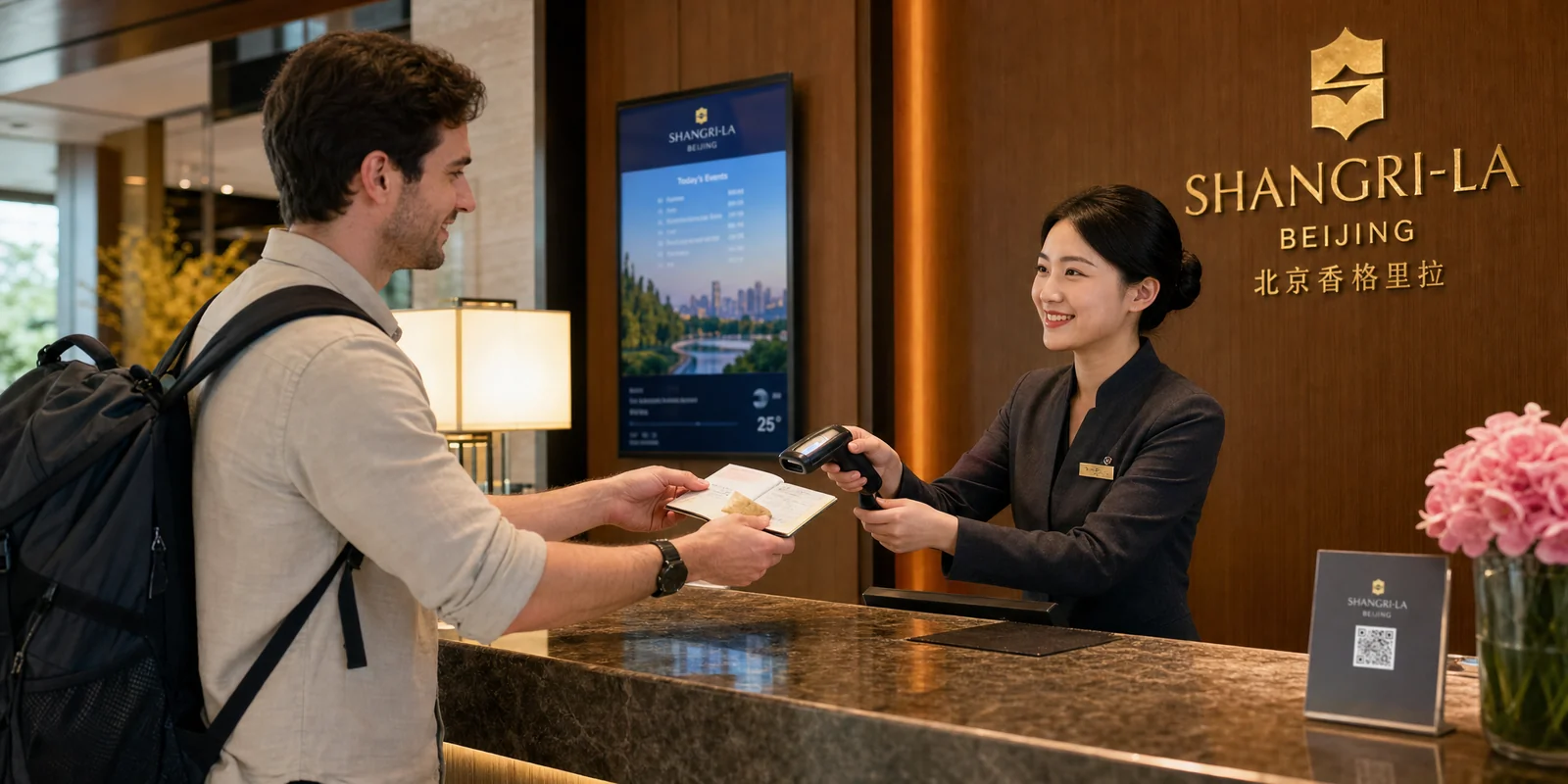
The good news: if you stay in a hotel, the front desk does it for you automatically. You hand over your passport at check-in, they scan it, and the registration is filed. You don't have to do anything else. This is the single biggest reason most first-time visitors stick to hotels.
If you stay somewhere that isn't a hotel — a friend's apartment, a short-term rental, certain guesthouses — you (or your host) are responsible for registering your stay at the local police station within 24 hours of arrival. According to the National Immigration Administration, you can do this at a police station, a community police office, or a foreigner service station, and you can call the 12367 immigration hotline with questions.
One simplification worth knowing: if you hold a residence permit and return to the same registered home address after traveling, you don't need to re-register. Visa holders, however, must register again every time they change location or re-enter the country. A pilot program launched in seven provinces (Hebei, Liaoning, Zhejiang, Hubei, Guangxi, Chongqing, and Sichuan) now lets you complete non-hotel registration online through the immigration administration's website or the "12367" mini-programs, with the same legal effect as doing it in person. In-person channels remain available everywhere. We cover the full process in our dedicated guide on booking hotels and registration rules.
Hotels: the default choice for most visitors
Hotels are the most straightforward option, and for good reason — they handle registration, almost all have English-capable staff at the levels travelers use, and they're easy to book on international platforms.
How China's star ratings work
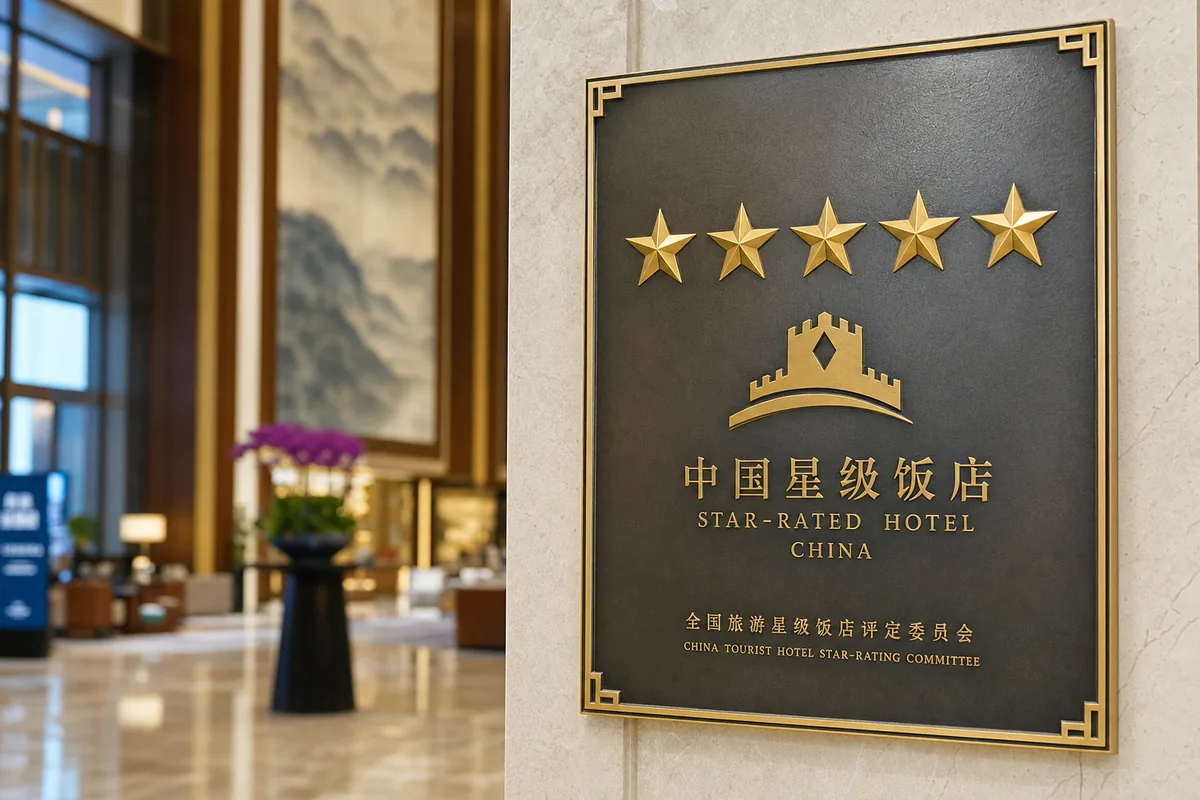
China runs an official hotel star-rating system, from one star up to five stars, with a top "platinum five-star" tier. The symbol is a gilded five-pointed star, and more stars mean a higher class of hotel. The current national standard is GB/T 14308-2023, which replaced the older 2010 version. Five-star ratings are awarded by a national-level body, while four-star and below are handled at the provincial or municipal level. The standard is overseen by the National Technical Committee on Tourism Standardization under the Ministry of Culture and Tourism, with the China Tourist Hotel Association among the drafting bodies.
A couple of practical points. Ratings are now valid for five years rather than being permanent, and newly opened hotels can apply for a one-year "preliminary" star rating. The standard also requires that rated hotels (one star and above) display signage and service information in both standard Chinese and English, and be able to provide service in English — useful to know if your spoken Chinese is limited.
Budget and mid-range chains
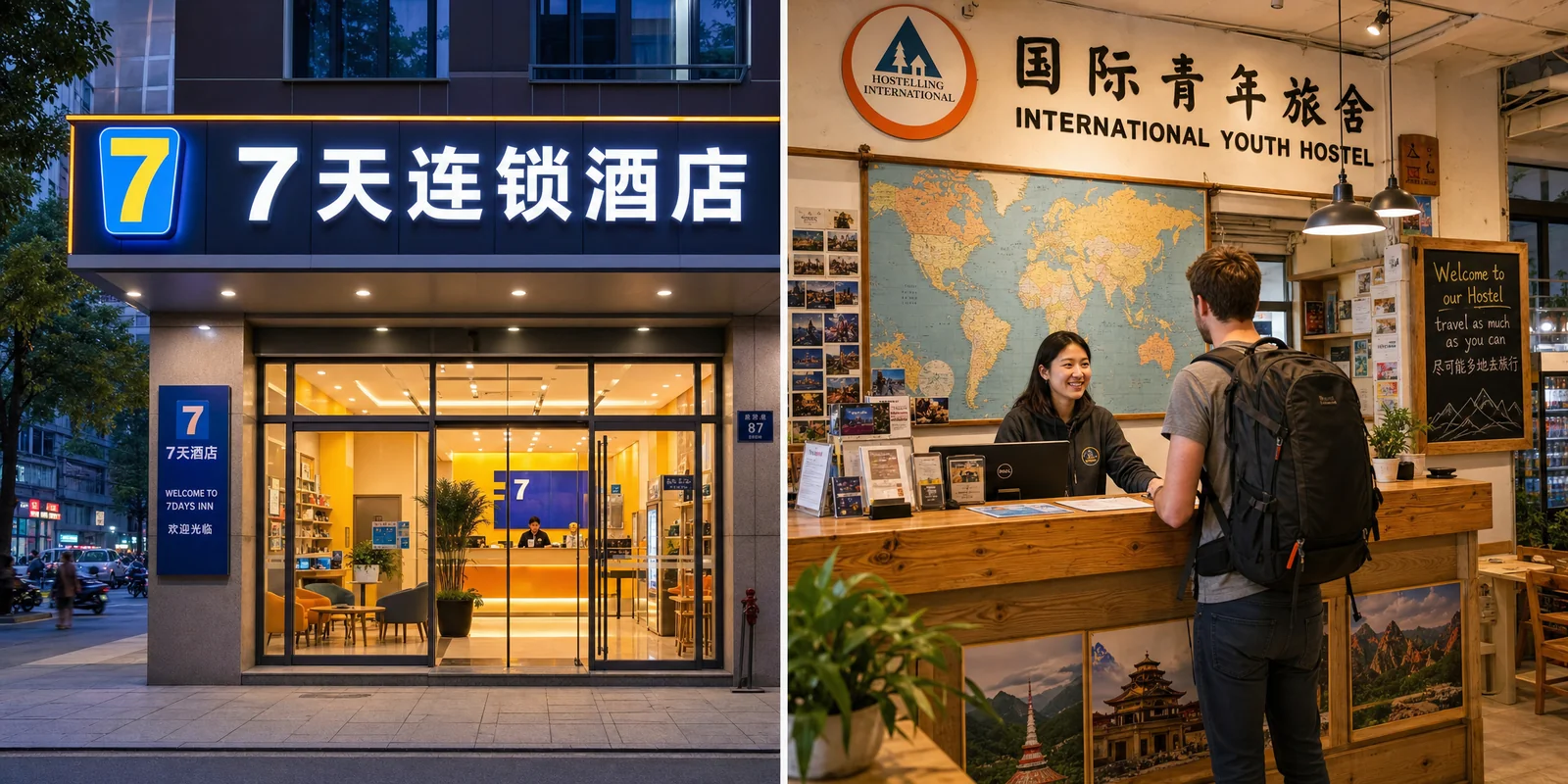
China has a huge domestic budget and mid-range hotel market. Major economy chains you'll see everywhere include Hanting (汉庭), Home Inn (如家), 7 Days Inn (7天), GreenTree (格林豪泰), and the Jinjiang (锦江) and Huazhu (华住) groups. These are clean, reliable, and cheap, with the trade-off that English signage and English-speaking staff can be hit or miss outside major cities. Rooms are functional rather than spacious.
Historically, some of these properties were reluctant to take foreign guests, citing a lack of "foreign-related qualifications" (涉外资质). That's changing. In 2024, the Ministry of Public Security, Ministry of Commerce, and National Immigration Administration told hotels they may not refuse foreign guests on qualification grounds. A follow-up notice from seven government departments in July 2024 reinforced this, also pushing hotels to improve payment options — accepting cash, foreign cards, and mobile wallets.
Booking hotels as a foreigner
Booking platforms designed for international travelers list properties that are confirmed to accept foreign guests, offer English interfaces, and take international cards. Trip.com, for example, is built for international users with English-language 24/7 support and accepts Visa, Mastercard, and Apple Pay — which is why it's a common starting point for first-timers. Booking.com and Agoda also have wide China coverage. If you want the smoothest path, you can browse and book China hotels on Booking.com and filter for properties with strong recent reviews from international guests.
Hostels: budget-friendly and traveler-focused
Hostels are well established in China, particularly in backpacker hubs and major cities. Hostelling International China (YHA China) alone operates close to 200 hostels across 27 provinces and regions, offering membership cards and online booking through its official site. Beyond YHA, countless independent hostels cluster in places like Yangshuo, Dali, Lijiang, Chengdu, and Xi'an.
What you get in a hostel: cheap dorm beds or basic private rooms, English-speaking staff (hostels cater to international travelers, so this is usually their strong point), communal areas, and often a travel desk that books tours and onward transport. They're a great way to meet other travelers and get local tips.
On the registration question, established hostels function like hotels — they're licensed accommodation and handle your police registration at check-in. If you're booking a very small or informal place, confirm this in advance.
Guesthouses and the "China Airbnb" question
Two things commonly confuse visitors here: family-run guesthouses, and what happened to Airbnb.
Guesthouses (民宿, mínsù)
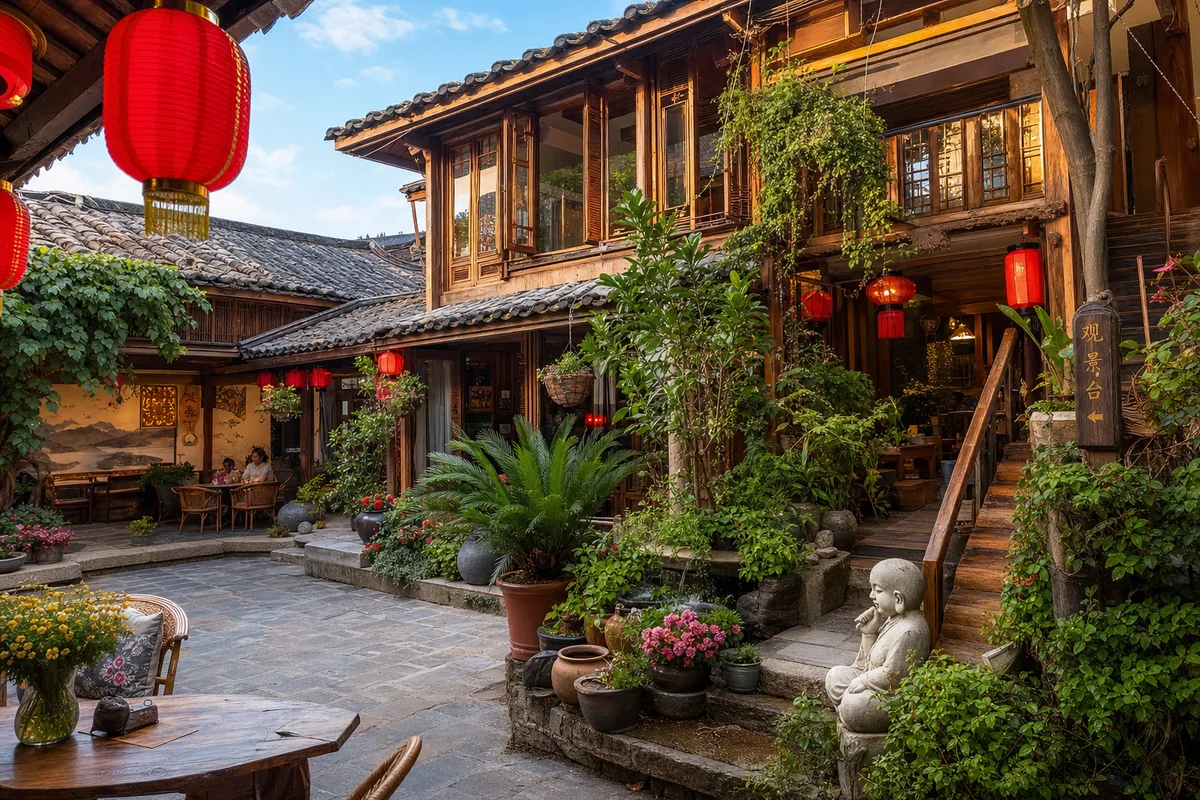
A mínsù is roughly the Chinese equivalent of a guesthouse, B&B, or homestay — often a converted home, courtyard house, or small character property, especially common in scenic and rural areas like water towns, Yunnan, and around mountains. They range from rustic to genuinely stylish boutique stays, and they're a lovely way to experience a place beyond a standard hotel.
The catch is registration. A licensed mínsù should handle your police registration just like a hotel, but informal or unlicensed ones may not be set up for foreign guests at all. Before booking, confirm two things: that the property accepts foreign passports, and that it handles or helps with your accommodation registration. If it can't, you'll need to register yourself at the local police station within 24 hours.
What happened to Airbnb
If you're used to booking Airbnb, note that Airbnb removed all its mainland China listings in mid-2022 and exited the domestic short-term rental market. The China Airbnb alternatives are domestic platforms — Tujia (途家), Xiaozhu (小猪), Meituan BNB (美团民宿), and Ant Short Rent (蚂蚁短租). These are mainly Chinese-language platforms aimed at domestic travelers, and it's not always clear whether you can book with a foreign passport or get an English interface — confirm before relying on one. For most short-trip visitors, hotels and licensed guesthouses booked through international platforms remain the simpler path.
Serviced apartments: for longer stays
If you're staying for weeks rather than days — for work, an extended visit, or as a base for slow travel — serviced apartments are worth considering. These are fully furnished apartments with hotel-style services (cleaning, reception, sometimes a gym), aimed at longer-term residents and expats. International brands like Ascott operate properties in cities such as Shanghai, and Chinese booking platforms list well over 100,000 hotels and serviced apartments nationwide.
They typically cost more per night than a budget hotel but less than a comparable luxury hotel, and the per-night rate usually drops for longer bookings. Like hotels, licensed serviced apartments handle registration. They're a good middle ground between a hotel (convenient but expensive long-term) and a private rental (cheaper but with the registration burden on you).
Comparing your options
Here's how the main accommodation types stack up on the factors that matter most to foreign travelers.
| Type | Best for | Relative cost | Handles registration? | English support |
|---|---|---|---|---|
| Luxury / 4–5 star hotels | Comfort, business, special trips | High | Yes | Reliable |
| Mid-range / budget chains | Reliable, affordable stays | Low–medium | Yes | Varies by city |
| Hostels | Budget, solo travelers, meeting people | Lowest | Yes (licensed ones) | Usually good |
| Guesthouses (mínsù) | Character, scenic/rural areas | Low–high (varies) | If licensed — confirm | Varies |
| Serviced apartments | Long stays, working visits | Medium–high | Yes | Usually good |
| Domestic short-term rentals | Local experience (advanced) | Low–medium | Often not — you register | Limited |
Which should you choose?
For most first-time visitors on a typical one-to-three-week trip, hotels booked through an international platform are the simplest, lowest-stress choice — they handle registration, accept your cards, and have English support. Pick a mid-range chain to save money or a four-/five-star property when you want comfort.
If you're traveling on a budget or solo, hostels are excellent value and a good way to connect with other travelers and get local advice. If you're after character and atmosphere in a scenic or rural destination, a licensed guesthouse is hard to beat — just confirm the registration and foreign-passport details first. And if you're settling in for a long stay, a serviced apartment gives you space and home comforts without the paperwork hassle of a private rental.
Whatever you choose, the deciding factor is almost always the same: does it handle your registration, and will it confidently accept a foreign passport? Get a yes on both and the rest comes down to budget and taste.
Key takeaways
Accommodation in China is plentiful and, for the most part, straightforward for foreigners. Hotels — from budget chains to five-star properties — are the default because they automatically handle the mandatory police registration and have improving English support. Hostels offer the best value and the most traveler-friendly atmosphere. Guesthouses bring character but require you to confirm registration and foreign-guest policy upfront. Serviced apartments suit longer stays. Airbnb no longer operates domestically, so for private rentals you'd use Chinese-language platforms, where you take on the registration responsibility yourself.
Your next step: read our guide on booking hotels and registration rules to see exactly how the process works, and set up a mobile payment wallet before you arrive so paying for everything is smooth from day one. Always verify current prices and any local hosting restrictions before you book.
Last updated: June 2026
Read in other languages
Last train times for 10 Chinese metro systems
Every line and station, checked by hand — the same data behind our offline route planner.
Get the WaysChina App
Offline guides, currency converter, essential phrases, and more — all in your pocket.

Related Articles
Booking Hotels & Registration Rules
How foreigners book hotels in China, what police registration means, and what to do if you stay in an apartment or...
Budget Options: Cheap Hotels & Hostels in China
A practical guide to budget accommodation in China — chain hotels, hostels, and how to book a place that will...

Luxury Hotels in China: Where to Stay in Style
From a Bulgari address in Beijing to relocated Ming-dynasty courtyards near Shanghai and beachfront resorts in...