
This article contains affiliate links. If you make a purchase through these links, we may earn a small commission at no extra cost to you. This helps support our work in creating free travel guides.
China builds tall, and it builds fast. The country is home to more than half of the world's 100 tallest buildings, and cities like Shanghai, Shenzhen, and Beijing have skylines that didn't exist 25 years ago. For travelers who want to see the side of China that gets less attention than the Great Wall or the Forbidden City, the modern landmarks are worth your time — partly for the views, partly because they show you where the country is now. This guide covers the buildings, towers, and observation decks most worth visiting, with practical notes on tickets, timing, and what you'll actually see from the top.
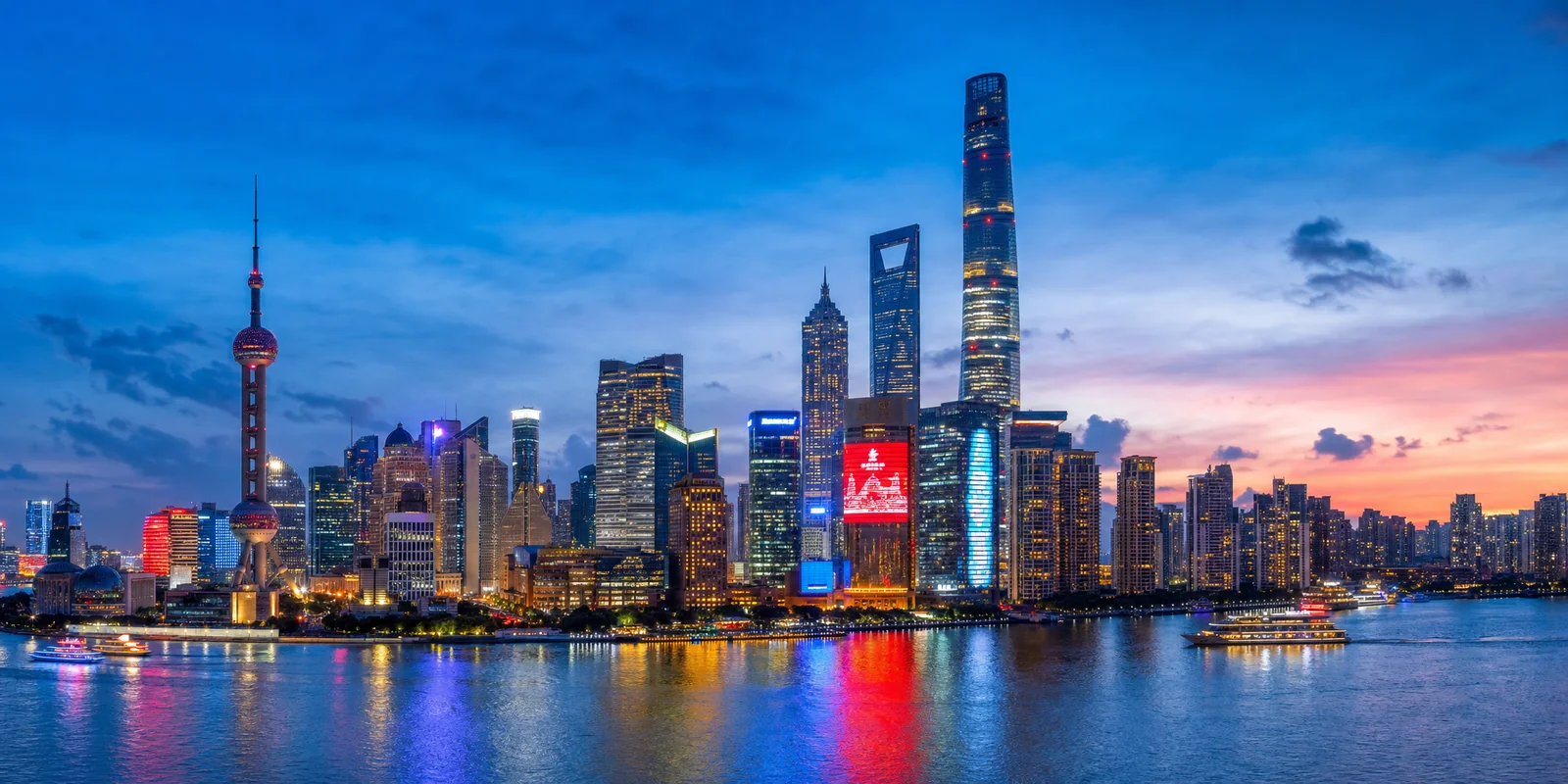
Shanghai: The Skyline Everyone Photographs
If you only visit one city for modern architecture, make it Shanghai. The Lujiazui (陆家嘴, Lùjiāzuǐ) financial district in Pudong packs three of China's most recognizable towers into a single cluster, all visible from across the Huangpu River at the Bund (外滩, Wàitān). The classic photo — neon towers reflected in the river — is taken from the Bund promenade, and it's free.
Shanghai Tower (上海中心大厦)
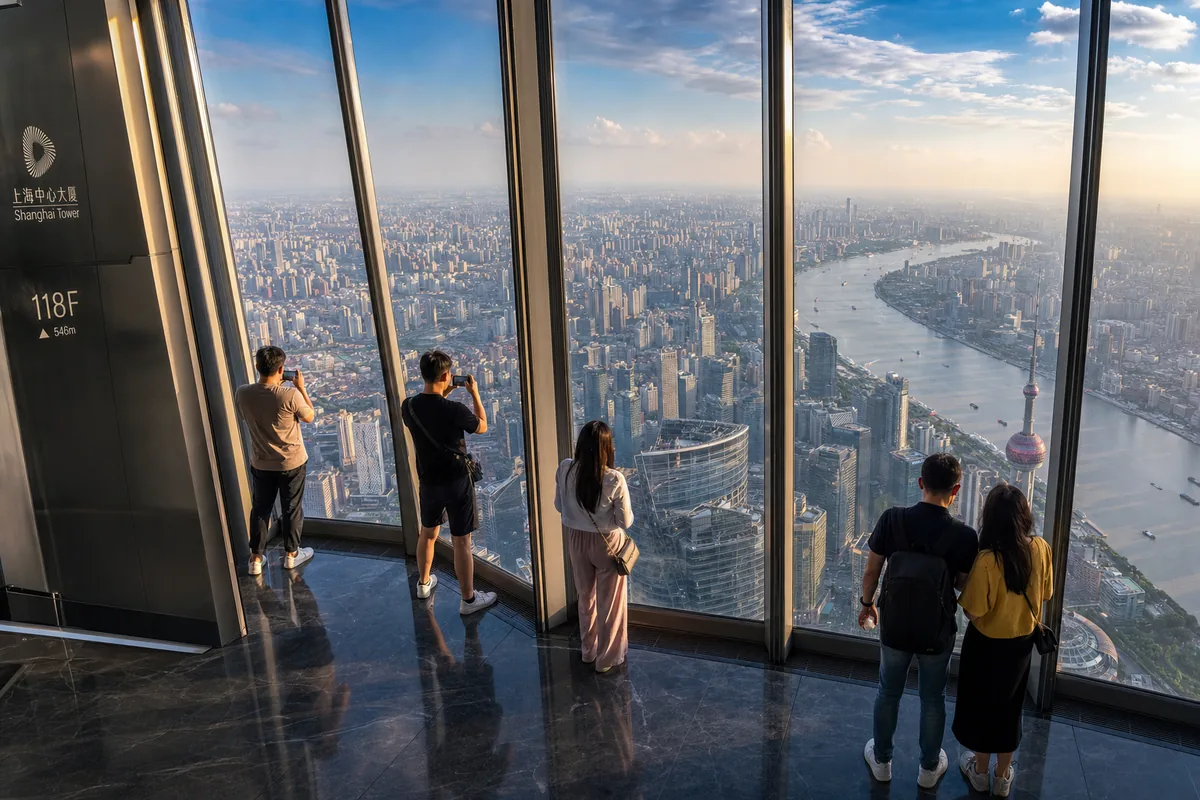
At 632 meters, Shanghai Tower is the tallest building in China and the second tallest in the world. Its twisting form isn't just for looks — the spiral shape reduces wind load. The observation deck on floor 118 sits at 546 meters and is reached by one of the fastest elevators in the world (it covers the trip in under a minute). On a clear day you can see across the whole city and pick out the river bends; on a hazy day, which is common, you'll mostly see the towers immediately around you. Tickets run around 180 RMB. Go late afternoon if you want to catch both daylight and the city lighting up.
Shanghai World Financial Center (环球金融中心)
The flat-topped tower with the rectangular opening near the top — locals nicknamed it "the bottle opener." Its observation deck on floor 100 includes a glass-floored skywalk where you can look straight down through the hole you see from the street. At 474 meters, it's lower than Shanghai Tower but the open-top design gives a different feel.
Jin Mao Tower (金茂大厦)
The oldest of the three (and the shortest at 421 meters), Jin Mao has a tiered, pagoda-inspired design that ages better than most 1990s skyscrapers. The upper floors house the Grand Hyatt, and its 33-story atrium is one of the tallest in the world. You can ride up to the observation deck, or have a drink at the hotel's high bar for the price of a cocktail.
Book observation deck tickets ahead during holidays and weekends to skip the line. You can compare deck options and reserve through Klook, which usually offers timed-entry slots.
Shenzhen: China's Newest Big City
Shenzhen went from a fishing town to a megacity of 17 million in about 40 years, and its skyline reflects that — almost everything is new. The Ping An Finance Center is the standout at 599 meters, the second-tallest building in China. Its observation deck, "Free Sky" on floor 116, sits at 562 meters and on clear days gives you views toward Hong Kong. Tickets are around 200 RMB.
Shenzhen is also worth a stop if you're into design and tech. The city is the hardware capital of the world, and districts like Futian and Nanshan are dense with glass towers, many lit up at night in coordinated light shows. If you're crossing between Hong Kong and mainland China, Shenzhen is an easy add — the border crossing at Futian connects directly to the metro.
Beijing: Modern Icons Among the History
Beijing is better known for imperial sites, but it has a strong set of modern landmarks, several built around the 2008 Olympics.
CCTV Headquarters (中央电视台总部大楼)
The CCTV building — a continuous loop of two leaning towers joined at the top and bottom — is one of the most unusual large buildings anywhere. Locals call it "big underpants" (大裤衩, dà kùchǎ) because of its shape. You can't go inside as a tourist, but it's striking from the street, especially in the Guomao (国贸) business district.
Bird's Nest and Water Cube (鸟巢 / 水立方)
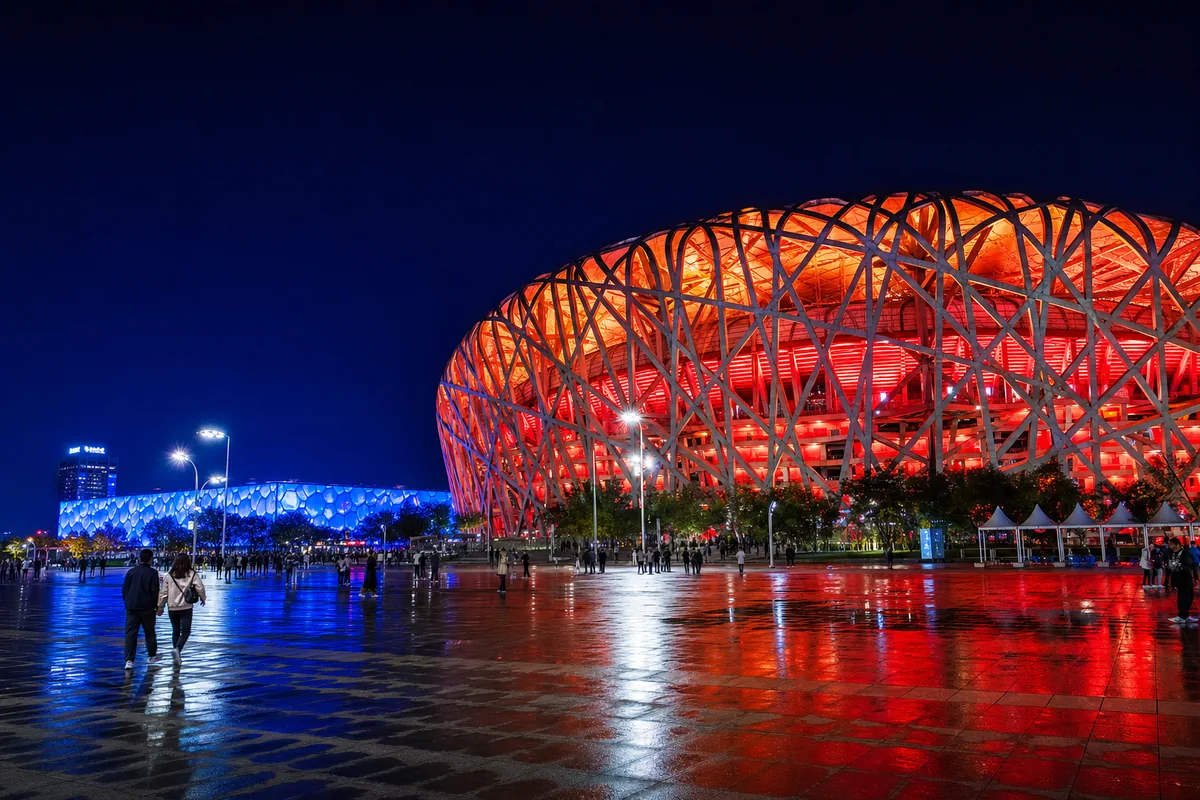
The 2008 Olympic stadium (officially the National Stadium) and the National Aquatics Center sit next to each other in the Olympic Park. The Bird's Nest's woven steel structure and the Water Cube's bubble-wrap facade are both worth seeing, especially after dark when they're lit. The area hosted events again for the Winter Olympics. You can buy entry to walk inside the Bird's Nest, and the Water Cube has been partly converted into a water park.
Beijing Daxing International Airport
If you're flying into Beijing's newer airport (PKX), the terminal itself is a landmark — a starfish-shaped building designed by Zaha Hadid's firm, with a vast skylit central hall. It's one of the few airports people visit early just to look around. For details on which Beijing airport you're using, see our airport guide below.
Guangzhou: The Twisting Tower
The Canton Tower (广州塔) is Guangzhou's signature structure — a 600-meter observation and TV tower with a slim, twisted "waist" that locals call "the slim waist" (小蛮腰, xiǎományāo). It's one of the more interactive landmarks in China: the top has open-air observation decks, a sky drop ride, and bubble pods on the outer rim that rotate around the tower. Tickets vary by how high you go and which attractions you add; basic observation entry is around 150 RMB, with the thrill rides costing more.
Guangzhou's other modern cluster is the Zhujiang New Town area across the river, which lights up at night and pairs well with a Pearl River cruise.
Other Notable Modern Landmarks
- Wuhan Greenland Center (Wuhan) — a 475-meter supertall anchoring the central China skyline along the Yangtze.
- Raffles City Chongqing (Chongqing) — a cluster of towers connected near the top by "The Crystal," a horizontal sky bridge with an observation deck. Chongqing's mountain-and-river setting makes its modern buildings especially dramatic.
- Nanjing Olympic Sports Center & Zifeng Tower (Nanjing) — Zifeng Tower is one of the tallest in eastern China at 450 meters.
- Tianjin Radio and TV Tower / Tianjin 117 (Tianjin) — Tianjin's skyline along the Hai River mixes old European-style architecture with modern towers.
How to Plan Your Visits
Best time of day
For observation decks, the hour around sunset (often called "blue hour") gives you daylight, sunset, and the city lights all in one visit — but it's also the busiest. If you prefer fewer crowds, weekday mornings are quietest. Night-only visits give you the lights but flatter views of the surrounding landscape.
Tickets and crowds
Most observation decks accept advance online booking, which saves time during peak periods. Chinese holidays — especially the Golden Week in October and the Spring Festival period — bring large domestic crowds, so book ahead or go early. You'll usually need your passport for entry, since tickets are tied to ID.
| Landmark | City | Height | Deck height | Approx. ticket |
|---|---|---|---|---|
| Shanghai Tower | Shanghai | 632 m | 546 m (fl. 118) | ~180 RMB |
| Shanghai World Financial Center | Shanghai | 492 m | 474 m (fl. 100) | ~120–180 RMB |
| Ping An Finance Center | Shenzhen | 599 m | 562 m (fl. 116) | ~200 RMB |
| Canton Tower | Guangzhou | 600 m | ~450 m | ~150 RMB+ |
Prices change and vary by package; treat these as rough guides and check the official site before you go.
Getting there
All of these landmarks are easy to reach by metro. Shanghai's Lujiazui station drops you right under the three towers; Shenzhen's Ping An is at Shixia/Futian; Canton Tower has its own metro stop. For planning metro routes and day-by-day itineraries across these cities, the WaysChina app has offline metro maps and a built-in trip planner.
The Bottom Line
If you have limited time, Shanghai gives you the most modern landmarks in one place — the three Lujiazui towers, the Bund view, and easy metro access make it the obvious first choice. Add Shenzhen if you're already heading through Hong Kong, Guangzhou for the Canton Tower, and Beijing if you want Olympic-era icons alongside its imperial sites. Pick one observation deck per city rather than going up every tower, check the air quality before buying tickets, and aim for late afternoon if you want both day and night views. These buildings won't replace China's historic sites on your itinerary, but they round out the picture of a country that's as much about the next 30 years as the last 3,000.
Related Reading
- Shanghai Complete Guide — full city guide including Pudong and the Bund
- Historical Sites — pair modern landmarks with China's ancient sites
- Metro Systems Guide — how to get around the cities in this guide
- Beijing Airport Guide (PEK & PKX) — including the landmark Daxing terminal
- Guangzhou & Shenzhen Guide — for the southern megacities
Last updated: June 2026
Read in other languages
Last train times for 10 Chinese metro systems
Every line and station, checked by hand — the same data behind our offline route planner.
Get the WaysChina App
Offline guides, currency converter, essential phrases, and more — all in your pocket.

Related Articles
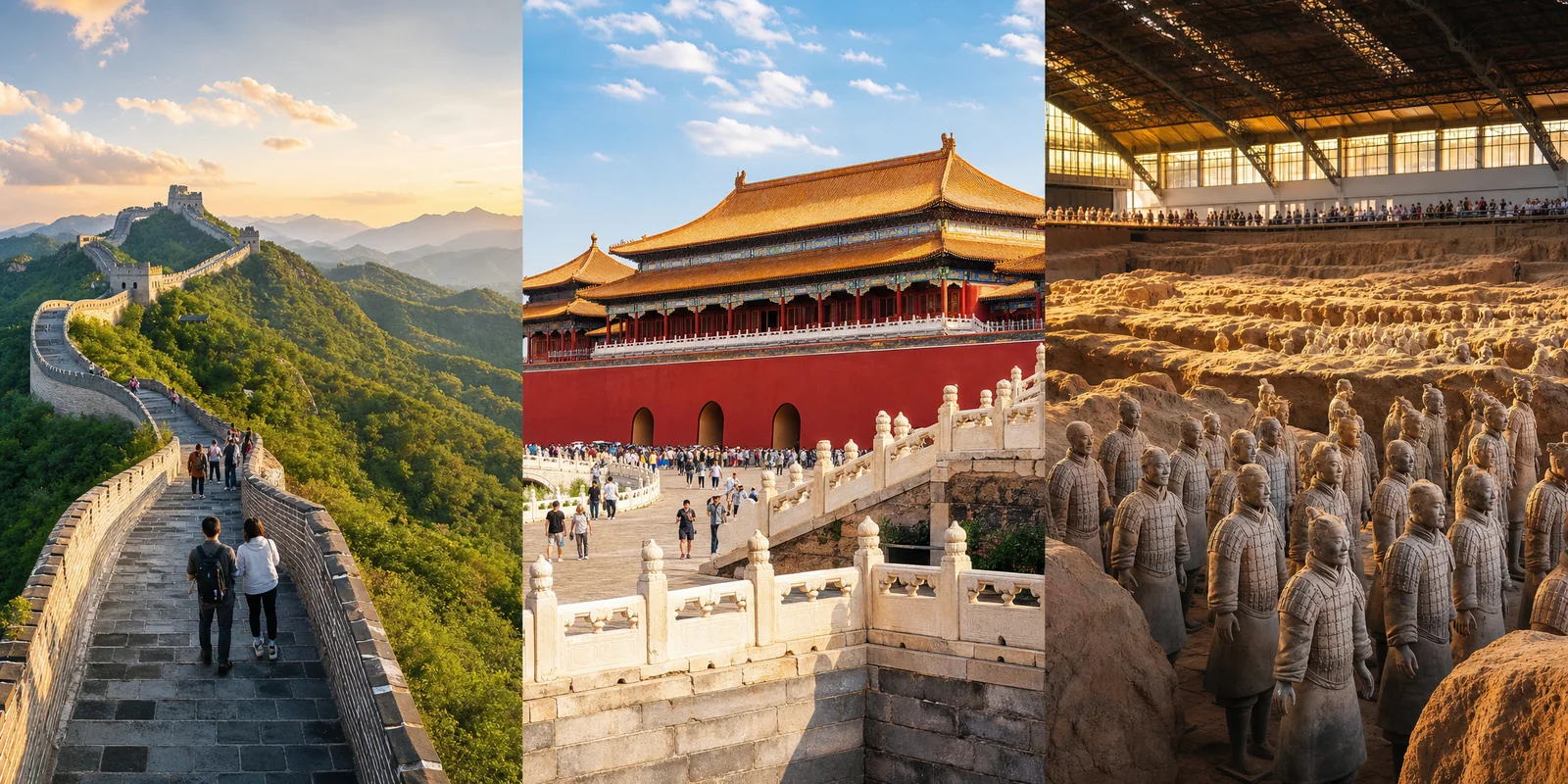
China's Historical Sites: 12 Ancient Landmarks Worth Your Time
From the Great Wall to the Terracotta Army, here are the historical sites in China that actually live up to their...
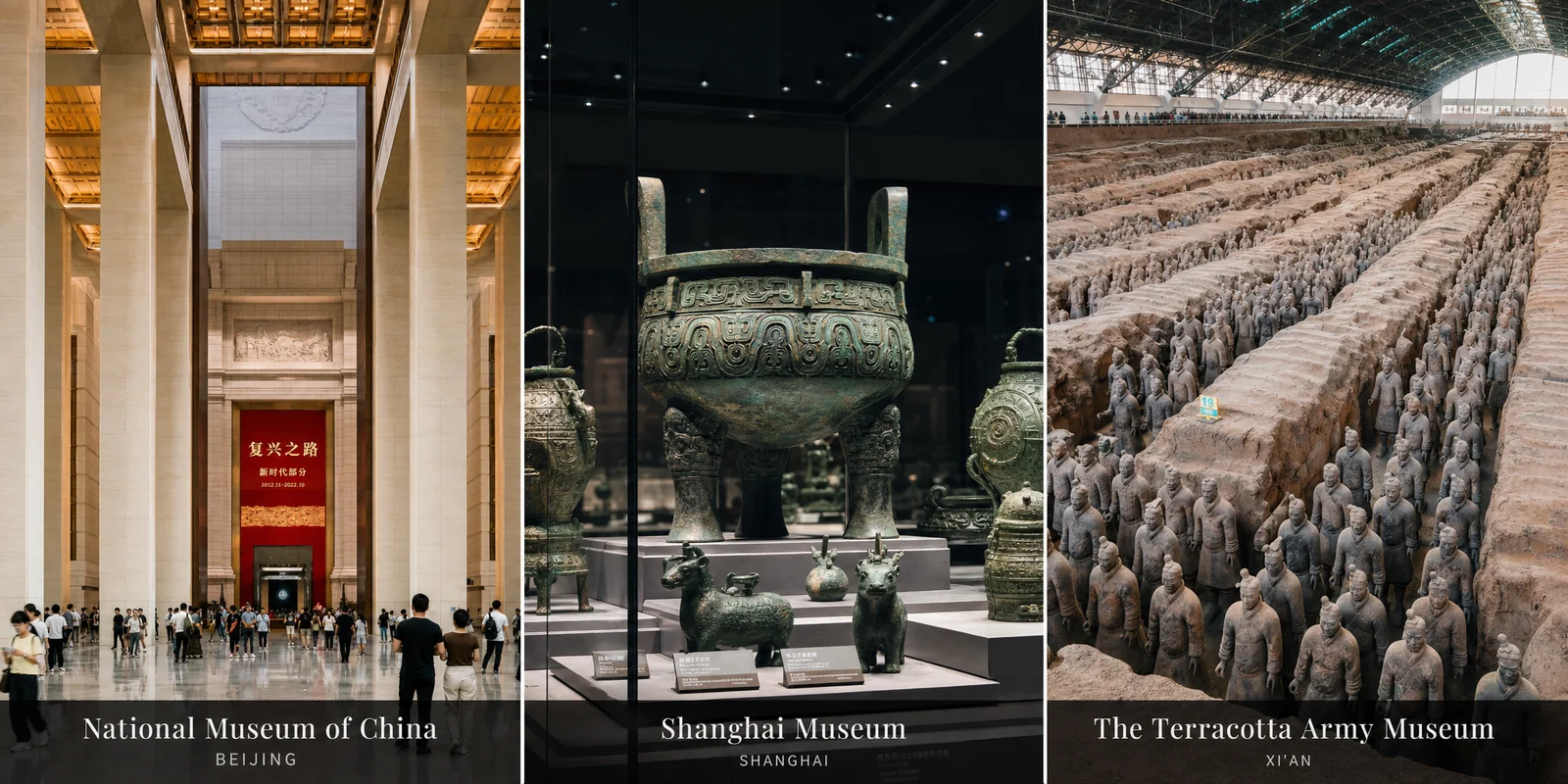
Best Museums in China: A Visitor's Guide
China's top museums hold thousands of years of art, history, and discovery — and most are free. Here's where to go,...
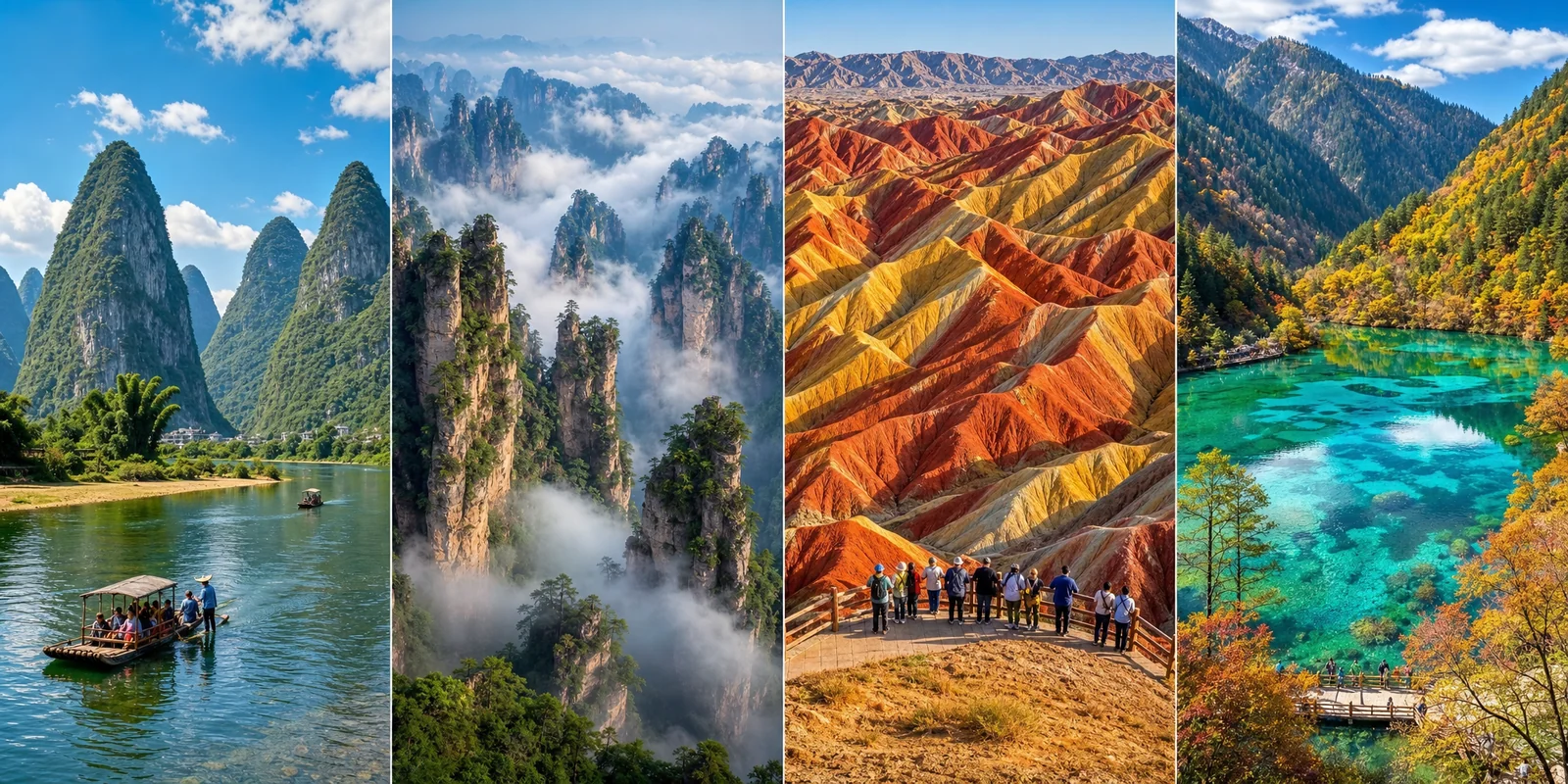
Natural Wonders: China's Most Spectacular Landscapes
From the sandstone pillars of Zhangjiajie to the rainbow-striped hills of Zhangye, here are China's most striking...
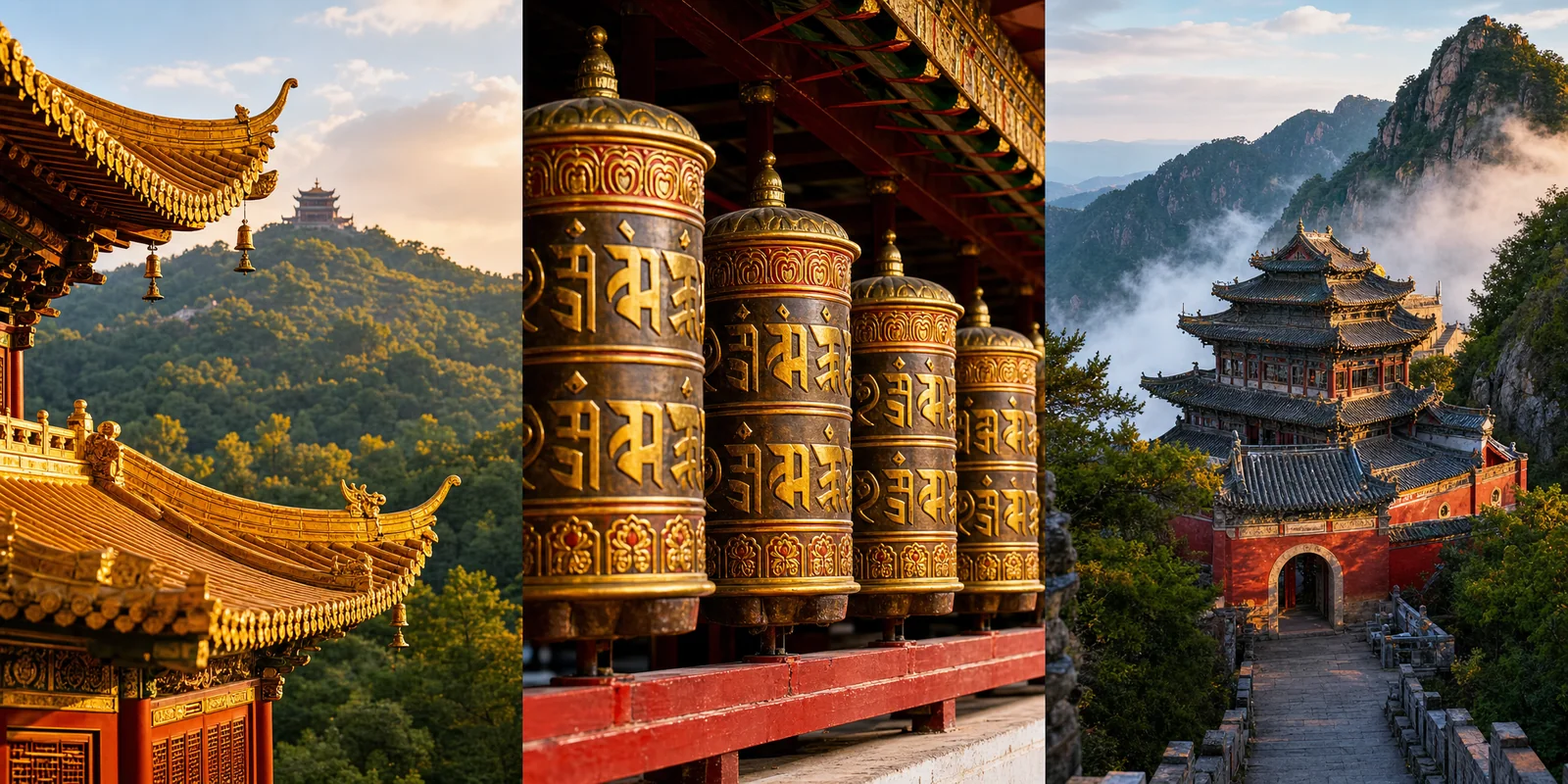
Religious Sites in China: Temples, Monasteries & Etiquette
A practical guide to China's most rewarding temples, monasteries, and mosques — what to see, how to behave, and the...