
Cet article contient des liens affiliés. Si vous effectuez un achat via ces liens, nous pouvons recevoir une petite commission sans frais supplémentaires pour vous. Cela nous aide à continuer à créer des guides de voyage gratuits.
You can eat well in China without speaking or reading a word of Chinese. Plenty of restaurants have picture menus, translation apps handle the rest, and pointing still works the way it always has. The one thing that genuinely trips people up is the QR-code ordering system that's now standard in millions of restaurants, because the menu opens entirely in Chinese on your own phone. This guide covers every common ordering situation you'll run into, from a street stall to a sit-down restaurant with no English anywhere, and the specific tools that get you fed.
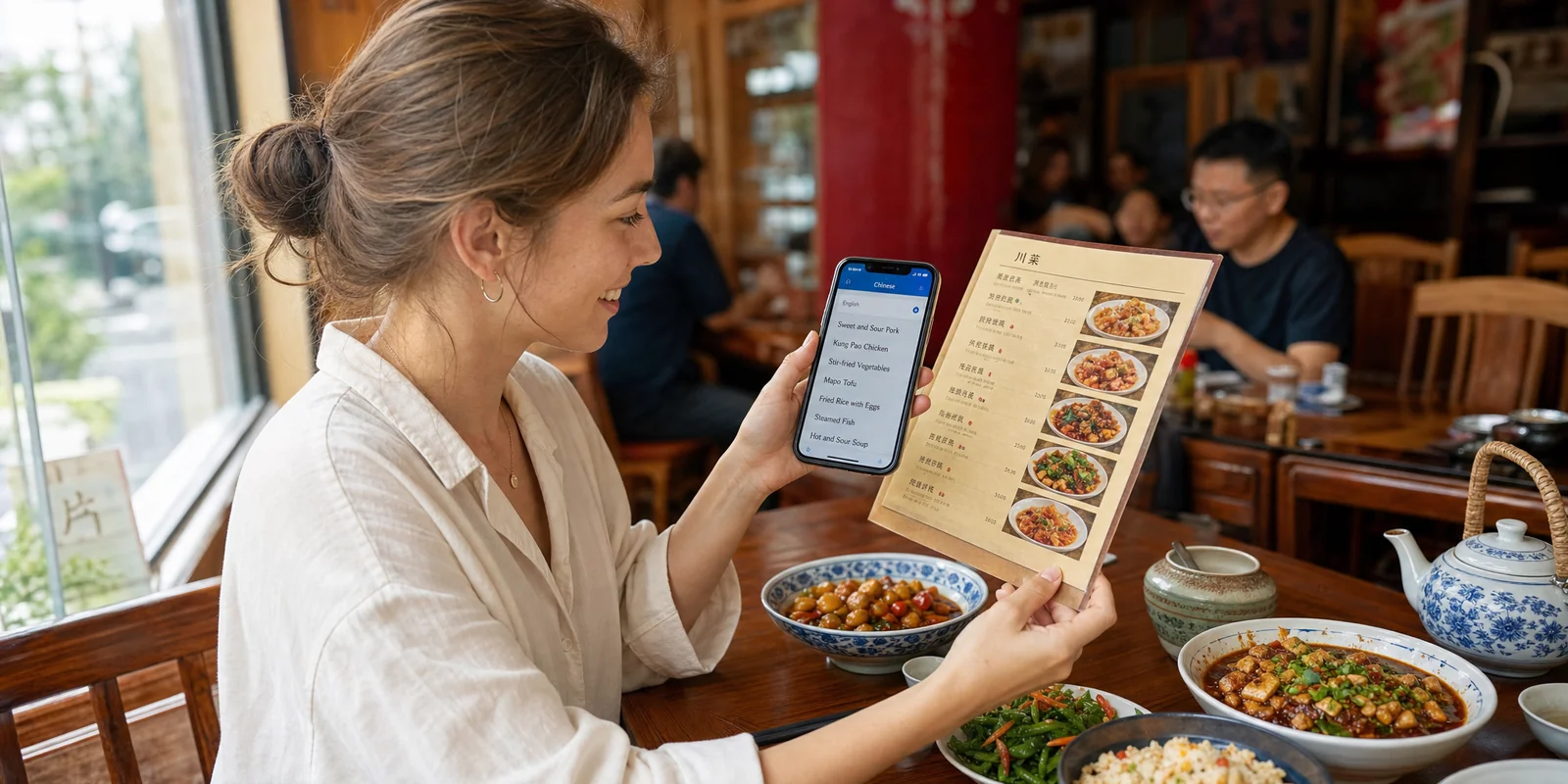
The four ways you'll actually order
Almost every meal in China falls into one of these four setups. Knowing which one you're in tells you exactly what to do.
- Paper picture menu. Common at mid-range restaurants and chains. Photos next to each dish. The easiest scenario, you just point.
- QR-code ordering (扫码点餐, sǎomǎ diǎncān). You scan a code on the table, the menu opens in WeChat or Alipay, you order and pay on your phone. Now the most common system in cities, and it's in Chinese by default.
- Text-only menu. A printed menu with characters and no pictures. Older restaurants, some regional spots. This is where a camera translator earns its keep.
- Counter or stall. Street food, noodle shops, fast food. You see the food, point, and pay. Almost no language needed.
Set up your phone before you go hungry
Two free apps cover almost everything. Install both before your trip and test them while you still have reliable internet.
Google Translate
The camera feature is the star here. Point your phone at a menu and it overlays the English translation in real time, or you can take a photo and translate the whole thing at once. Crucially, you can download the Chinese language pack for offline use, so the camera translation keeps working even with no signal. Do this before you leave home, since Google services are blocked on most Chinese networks without a VPN. The offline camera mode does not need the internet once the pack is installed. Google explains the offline setup in its official Translate Help Center.
Pleco
Pleco is a Chinese dictionary app beloved by language learners, and its optical character recognition (OCR) is excellent for menus. Point it at a single dish name and it breaks down each character with clear definitions, which is more accurate than full-sentence translation for food terms. The core app is free. You can find it on the official Pleco website.
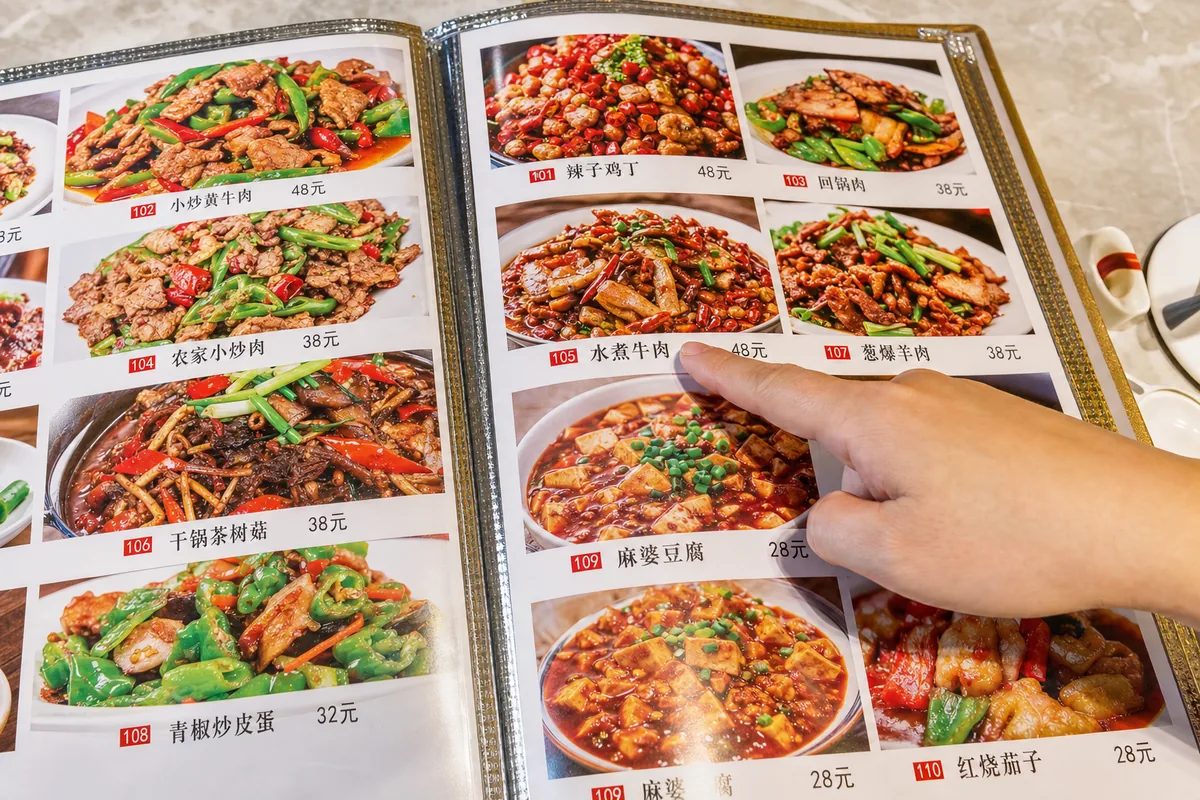
Scenario 1: The picture menu
This is the dream. Many restaurants, especially chains and tourist-area spots, print full-color photos beside every dish. Point at what you want, hold up fingers for quantity, and you're done. A few things to make it smoother:
- If you want rice, say "mǐfàn" (米饭) or just point at a neighboring table's bowl. Rice is rarely shown on the menu and often ordered separately.
- Dishes in China are usually shared, family-style. Two people ordering three dishes plus rice is normal. You don't each need your own main.
- Portion sizes are larger than they look in photos. Order less than you think, then add more if you're still hungry.
Scenario 2: QR-code ordering (the one that catches people out)
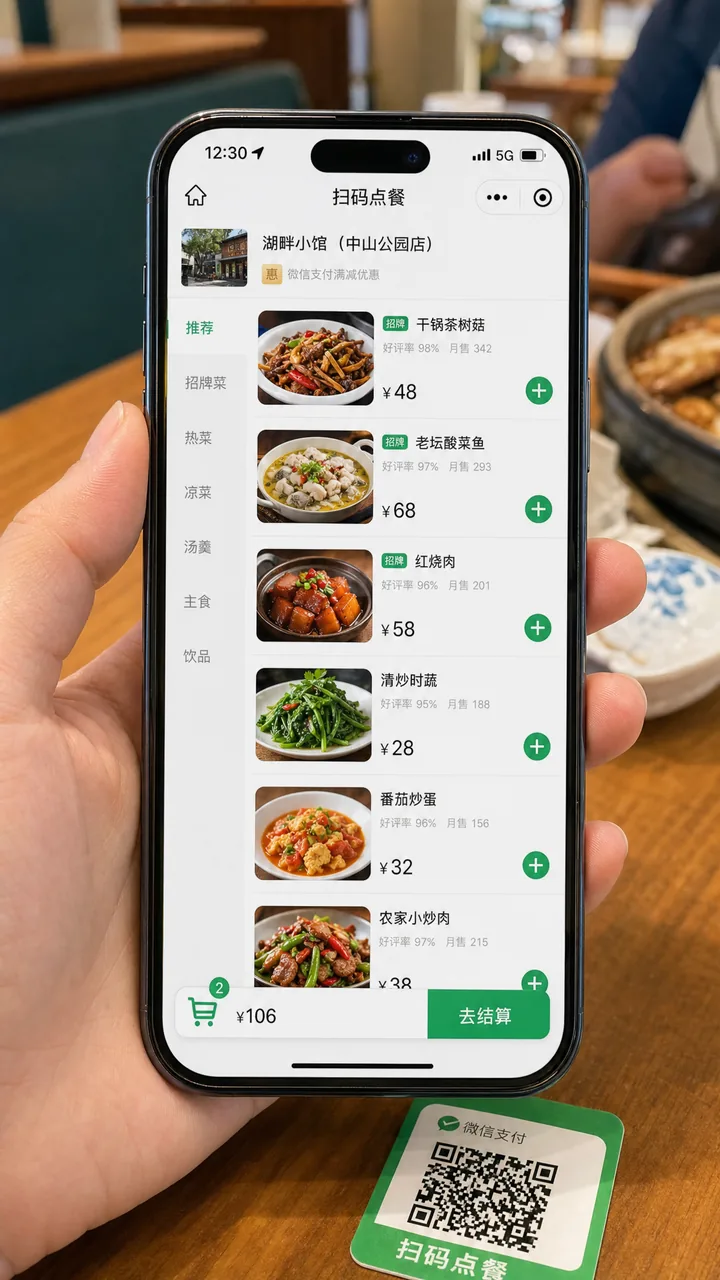
This is the single biggest change in Chinese restaurants over the past few years, and the one that surprises returning visitors. You sit down, there's no paper menu, just a QR code or table number sticker. You scan it, a mini-program opens inside WeChat or Alipay, and you browse the menu, add items to a cart, and pay, all on your own phone. The catch: it's almost always in Chinese only.
Here's how to handle it:
- Scan the code using the scan function in WeChat or Alipay (not your regular camera app, which often won't open the mini-program).
- Screenshot the menu as you scroll, then run the screenshots through Google Translate's image feature. The camera-overlay trick doesn't work well on a screen, so take the screenshot first, then translate the saved image.
- Add items, then look for the cart and the green or orange "confirm/pay" button, usually at the bottom of the screen. It'll connect to your linked WeChat Pay or Alipay balance.
If it's too fiddly, you have an easy out. Wave a server over and say "càidān" (菜单, menu) while making a flat-book gesture with your hands. Many places still keep a few paper menus behind the counter for older customers and will bring one. You can also just ask staff to take your order directly.
Because both QR ordering and translation apps depend on a reliable connection, a working data plan matters more for eating than for almost anything else on your trip. If your home carrier's roaming is expensive or unreliable, an eSIM you set up before arrival saves a lot of stress, services like Airalo let you activate a China-ready data plan the moment you land. For a full breakdown of connectivity options, see our guide below.
Scenario 3: The text-only menu
Some of the best food in China is at no-frills spots with a laminated, character-only menu. Don't skip these. Open Google Translate's camera and pan slowly across the menu, or use Pleco's OCR on individual lines. A few translation quirks to expect:
- Dish names are often poetic or literal in ways that confuse translators. "Husband and wife lung slices" (夫妻肺片) is a famous cold beef dish, not what it sounds like. "Ants climbing a tree" (蚂蚁上树) is glass noodles with minced pork.
- Translations sometimes render a dish as a string of ingredients. "Pork, green pepper, fermented" usually means a perfectly good stir-fry.
- When in doubt, look at what other tables ordered and point. "Same as them" needs no words, just a gesture toward a dish you like the look of.
Scenario 4: Stalls, counters, and street food
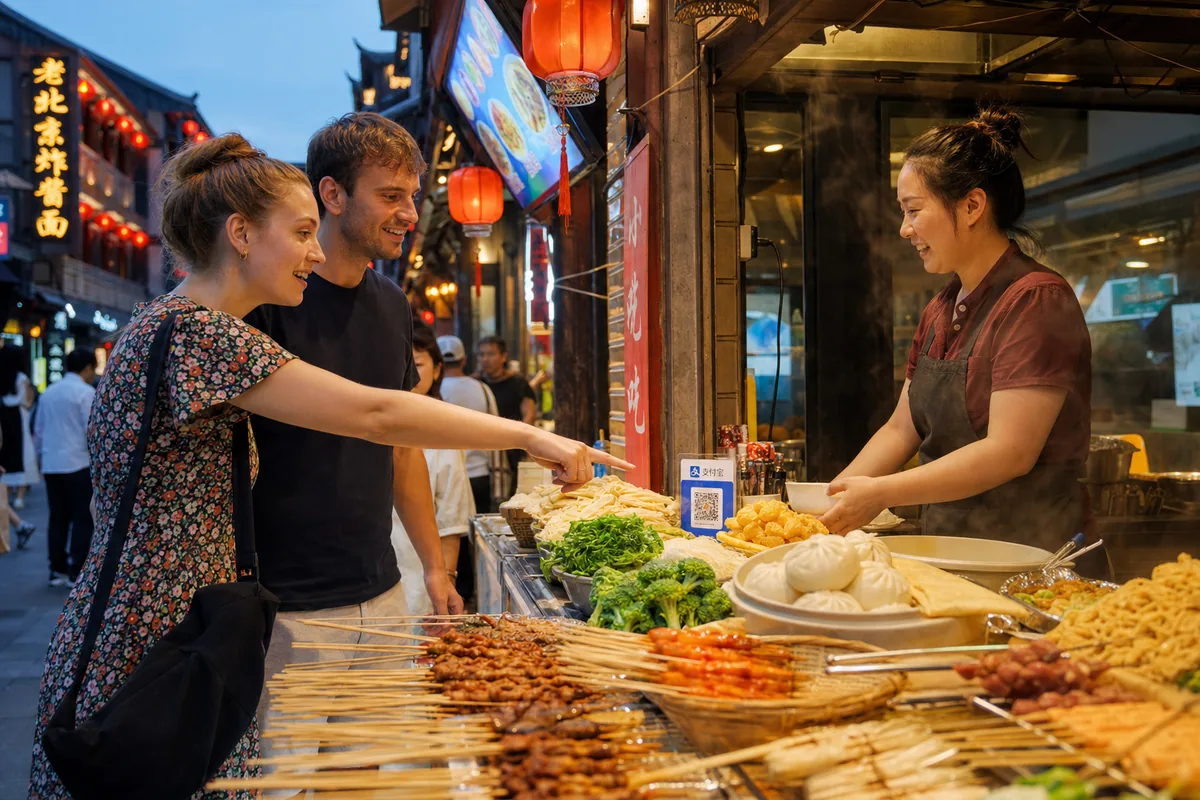
The most foreigner-friendly food in China is often the cheapest. At a street stall or a noodle counter, the food is right in front of you. Point at what you want, hold up fingers for how many, and show your QR code or tap your phone to pay. Many stalls have a printed price next to each item. If there's a steamer of dumplings or a tray of skewers, just indicate which ones.
Communicating dietary needs and spice level
This is where a translation app moves from convenient to essential. Don't rely on gestures for allergies. Type your requirement into Google Translate, then show the Chinese text to your server. Useful phrases to have ready:
| English | Chinese | Pinyin |
|---|---|---|
| I don't eat meat (vegetarian) | 我不吃肉(素食) | wǒ bù chī ròu (sùshí) |
| No spice / not spicy | 不要辣 | bù yào là |
| A little spicy | 微辣 | wēi là |
| I'm allergic to peanuts | 我对花生过敏 | wǒ duì huāshēng guòmǐn |
| No coriander / cilantro | 不要香菜 | bù yào xiāngcài |
| No MSG | 不要味精 | bù yào wèijīng |
A note on spice: in Sichuan, Hunan, and Chongqing, "not spicy" still sometimes arrives with a kick. If you're sensitive, say so firmly and consider ordering a clearly mild dish rather than asking the kitchen to tone down a famously spicy one.
Asking for an English menu
It never hurts to ask. In big cities, tourist districts, hotel restaurants, and international chains, English menus are common. The phrase is "Yīngwén càidān" (英文菜单, English menu). Even if they don't have one, the question often prompts staff to find someone who speaks a little English, or to walk you through the picture menu themselves. Hospitality is genuine in most places, and people will go out of their way to help a confused-looking foreigner order.
Paying the bill
At sit-down restaurants, you usually pay at the counter on your way out, not at the table. At QR-ordering spots, you've often already paid when you ordered. To ask for the bill, say "mǎidān" (买单, the check) or make a writing-in-the-air gesture. Mobile payment via Alipay or WeChat Pay is accepted virtually everywhere; cash works at most places but expect that small stalls may struggle to make change for large notes. Tipping is not expected in mainland China, so the price you see is the price you pay.
Frequently asked questions
Will Google Translate work in China?
The app works for offline camera translation if you download the Chinese language pack before you arrive, but online features need a VPN since Google is blocked on Chinese networks. That's why downloading the offline pack in advance matters. WeChat's built-in translate is a reliable backup that works without a VPN.
What if a restaurant only has QR-code ordering and I can't make it work?
Ask for a paper menu ("càidān") or ask staff to take your order directly. Most restaurants can accommodate you. If the QR menu is the only option, screenshot it and translate the images, then order through the mini-program with your linked payment app.
Do I need to speak Chinese to eat at local, non-touristy places?
No. A translation app plus pointing gets you through almost any local restaurant. The food at small neighborhood spots is often the best, and staff are used to helping. Don't let the language barrier push you toward only international chains.
How do I know what a dish actually is?
Use Pleco's OCR for character-by-character breakdowns, check photos on the menu where available, or look at what nearby tables are eating and point. Saving photos of dishes you like to your phone is the fastest universal solution.
The bottom line
Eating in China without Chinese comes down to three habits: install Google Translate with the offline Chinese pack and Pleco before you arrive, get comfortable scanning QR menus and translating screenshots, and keep a payment app linked and your phone charged. With those in place, picture menus and pointing handle the rest. The biggest mistake travelers make is sticking to familiar chains out of nervousness, when the small local places are both easier than they look and far more rewarding. Order a little less than you expect, share dishes family-style, and don't be shy about asking staff for help, they're usually glad to give it.
Related reading
- Translation Apps Comparison — a deeper look at which apps work best in China and how to set them up.
- Vegetarian/Vegan Guide — how to eat meat-free in a cuisine that loves pork fat and stock.
- Guide to Chinese Cuisine by Region — know what to order before you sit down.
- China SIM Card & eSIM Guide — keep the data flowing so your translation apps and QR menus always work.
- Language Basics - Survival Phrases — a handful of words that smooth every interaction.
Last updated: juin 2026
Lire dans d'autres langues
Derniers métros dans 10 villes chinoises
Chaque ligne et chaque station, vérifiées à la main — les données de notre planificateur hors ligne.
Téléchargez l'app WaysChina
Guides hors ligne, convertisseur de devises, phrases essentielles — tout dans votre poche.

Articles connexes
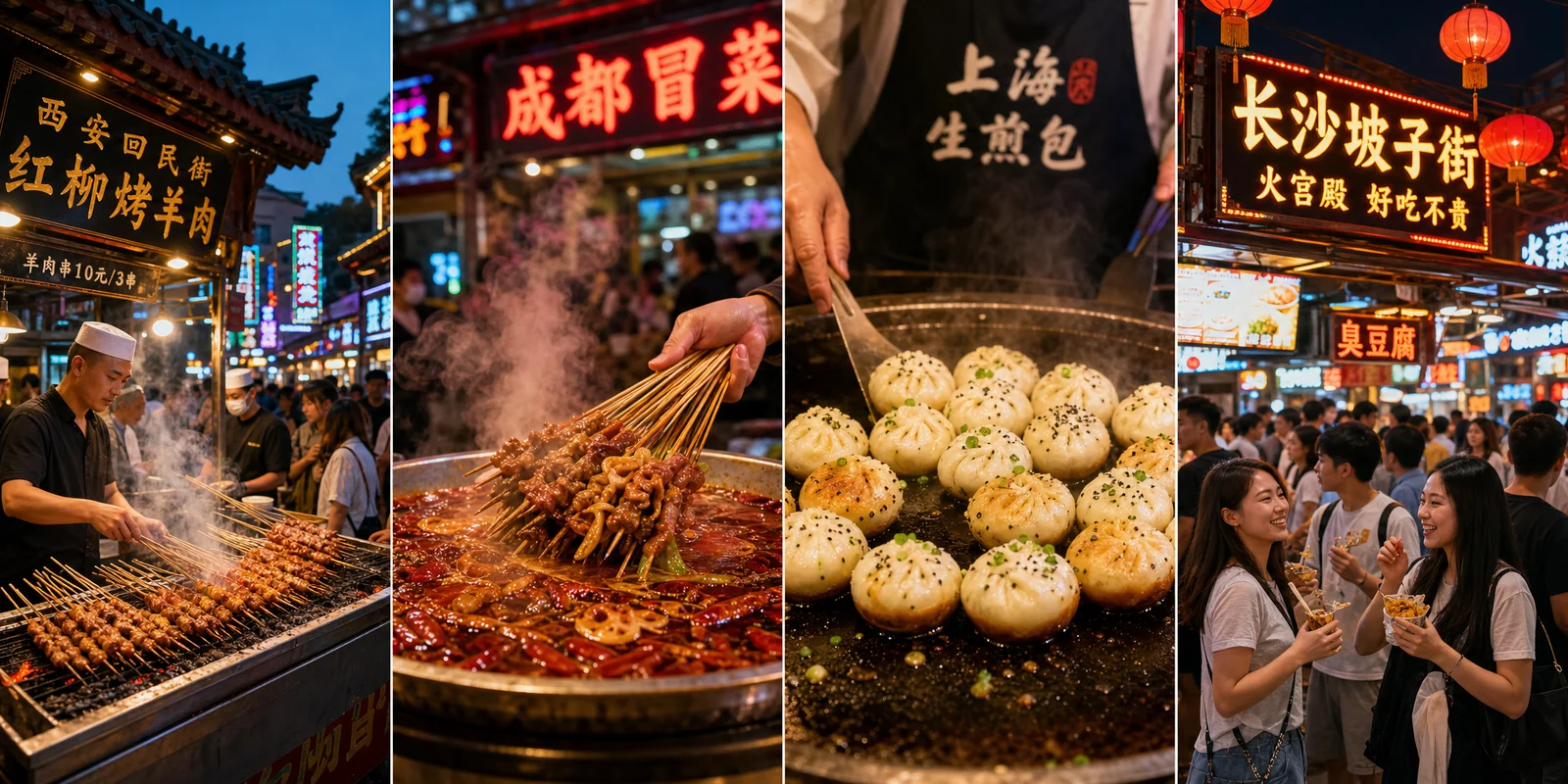
Les Meilleures Villes de Chine pour la Street Food
Des galettes farcies à l'agneau de Xi'an aux brochettes engourdissantes de Chengdu, voici les villes chinoises où la...
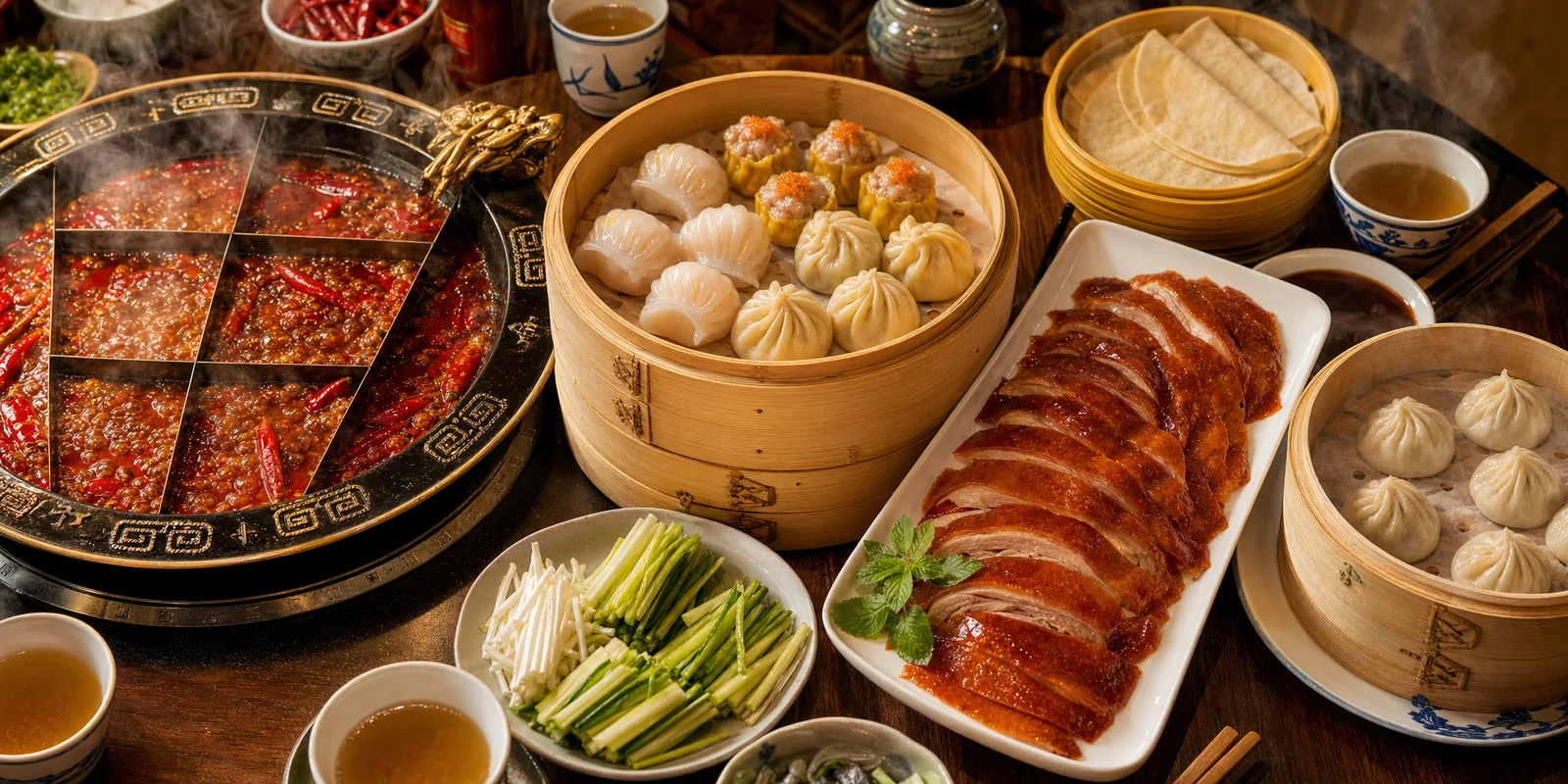
Guide de la cuisine chinoise par région
La cuisine chinoise n'est pas une chose unique — c'est une multitude de cuisines régionales distinctes. Voici un...
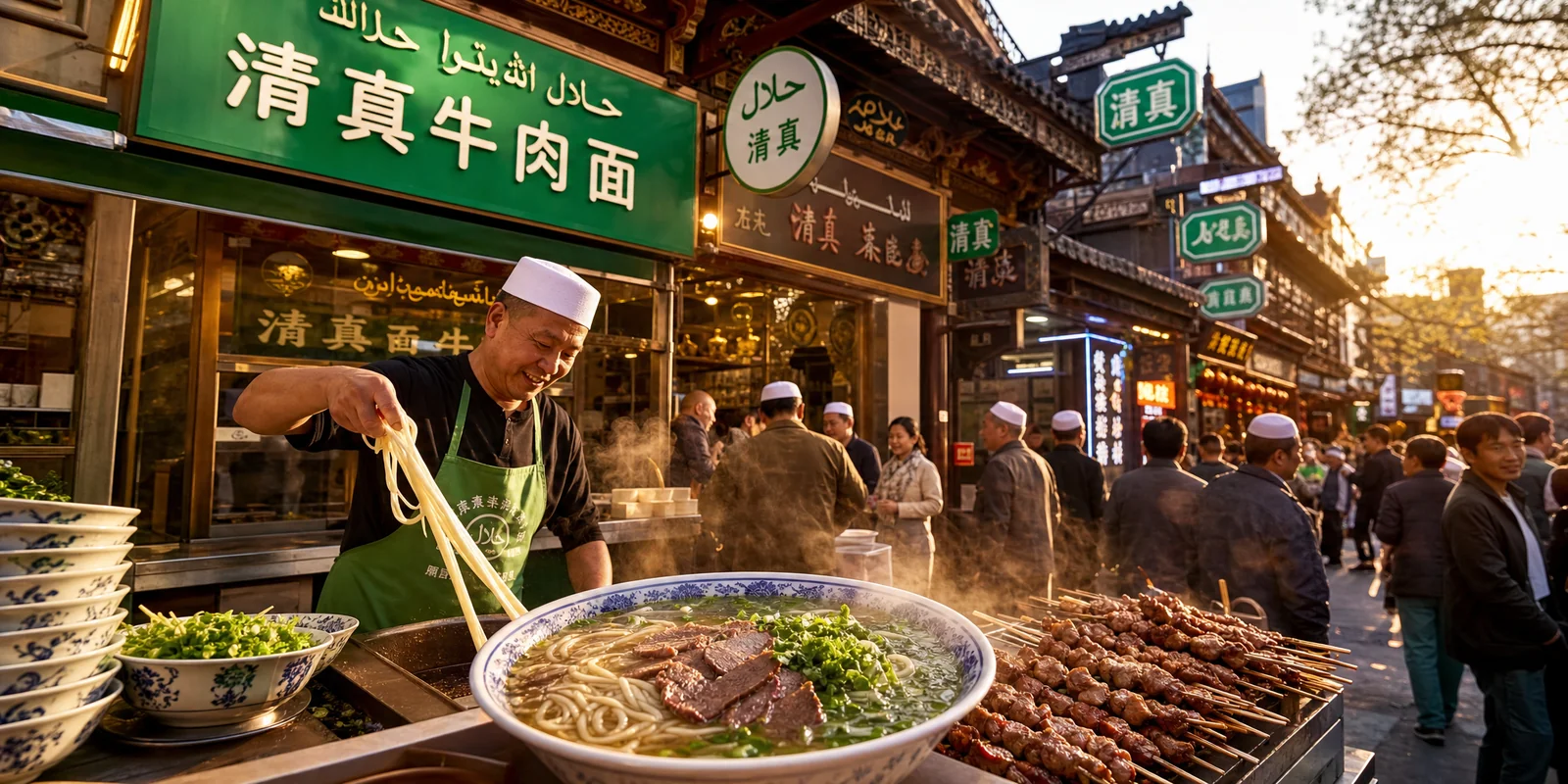
Nourriture halal en Chine
Trouver de la nourriture halal en Chine est plus facile que la plupart des voyageurs ne l'imaginent. Voici comment...
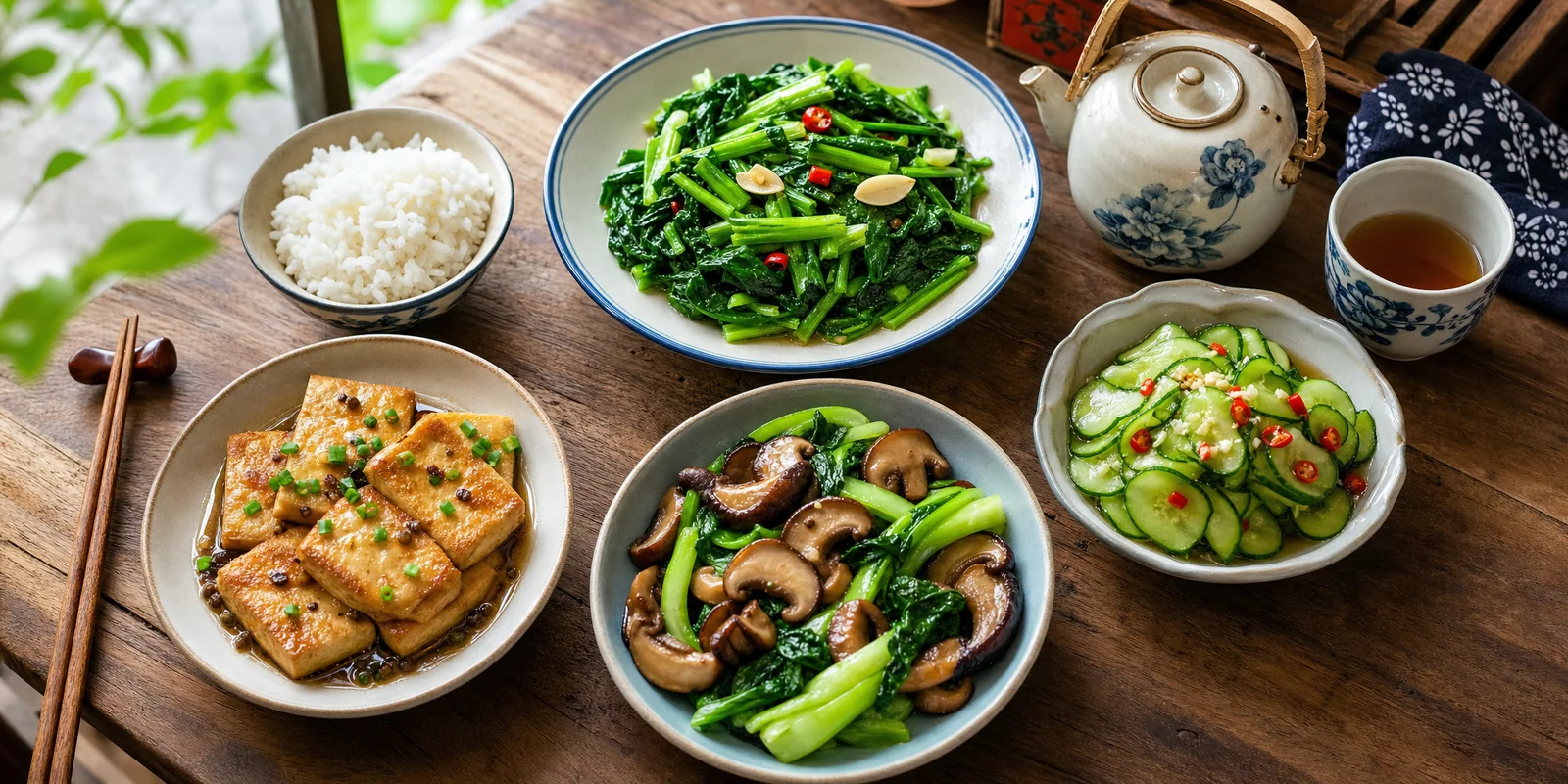
Voyage Végétarien & Vegan en Chine : Guide Pratique
Manger végétarien ou vegan en Chine est plus facile que la plupart des voyageurs ne le pensent, mais cela demande un...