
This article contains affiliate links. If you make a purchase through these links, we may earn a small commission at no extra cost to you. This helps support our work in creating free travel guides.
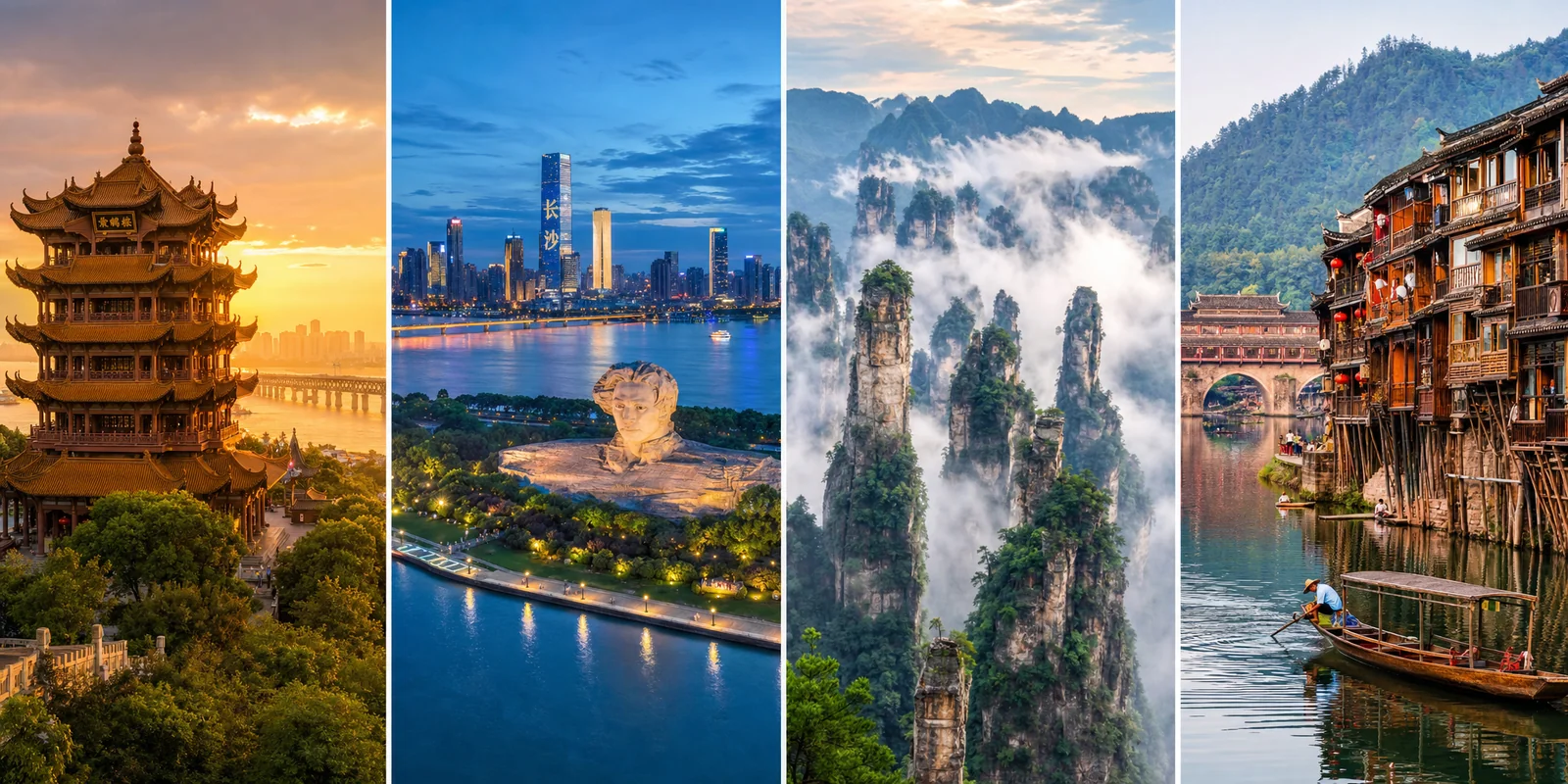
Central China rarely makes a first-timer's shortlist, which is exactly why it's worth your time. In one week you can pair two of the country's best food cities with the sandstone pillars that inspired the floating mountains in Avatar, then finish in a riverside old town that looks like a Chinese ink painting. The whole loop runs on high-speed rail (高铁, gāotiě), so you're never stuck on long bus rides. This guide lays out a 7-8 day route through Wuhan, Changsha, Zhangjiajie, and Fenghuang, with realistic timings, train connections, and a budget you can plan around.
Why this route works
Three things make Wuhan-Changsha-Zhangjiajie a strong week. First, the contrast: Wuhan brings history and a noodle-soup breakfast culture, Changsha brings spicy food and a genuinely fun night scene, and Zhangjiajie brings some of the most dramatic scenery in the country. Fenghuang adds a slower, old-town finish. Second, the distances are short. Wuhan to Changsha is about 1.5 hours by train, and Changsha to Zhangjiajie is roughly 3 hours since the high-speed line opened. Third, it's far less crowded with foreign tourists than the Beijing-Xi'an-Shanghai classic, so it feels more like everyday China.
Spring (March to May) and autumn (September to November) are the best windows. Summer in Wuhan and Changsha is hot and humid, and Zhangjiajie's peaks often sit in fog from June through August, which can either ruin your views or make them more atmospheric, depending on luck. Winter is cold and the mountain park gets icy, though crowds thin out a lot.
Route overview at a glance
| Stop | Nights | Best for | Getting to next stop |
|---|---|---|---|
| Wuhan | 2 | History, riverfront, breakfast culture | HSR to Changsha, ~1.5 hrs |
| Changsha | 1-2 | Spicy food, nightlife, museums | HSR to Zhangjiajie, ~3 hrs |
| Zhangjiajie | 2-3 | National park, Tianmen Mountain | Bus to Fenghuang, ~4 hrs |
| Fenghuang | 1-2 | Riverside old town, Miao culture | Bus back to Zhangjiajie/Huaihua for HSR out |
The one weak link is Zhangjiajie to Fenghuang. There's no direct train, so you'll take a tourist bus or private transfer (about 4 hours). Plan your exit carefully, since Fenghuang's nearest high-speed station is Fenghuang Gucheng, with onward connections through Huaihua. More on that below.
Day-by-day itinerary
Days 1-2: Wuhan (武汉, Wǔhàn)
Wuhan is a sprawling city split by the Yangtze and Han rivers into three historic towns. Don't try to see all of it. Focus on the east bank around East Lake and the old riverfront, and you'll have a full, satisfying two days.
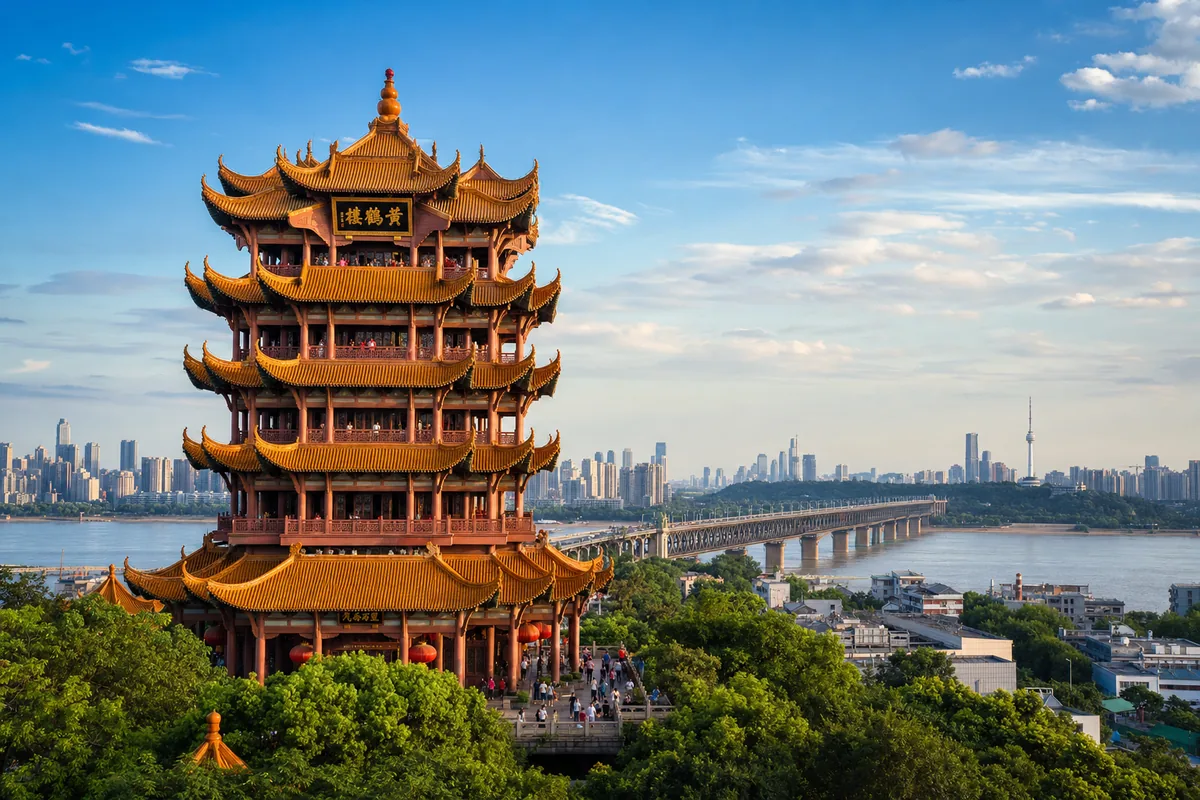
Start day one with breakfast, because in Wuhan that's a ritual. The local dish is reganmian (热干面, règānmiàn), hot dry noodles tossed with sesame paste. Locals call grabbing breakfast "guo zao" (过早), and the street stalls near Hubu Alley (户部巷, Hùbù Xiàng) are a good, if touristy, introduction. After that, head to the Yellow Crane Tower (黄鹤楼, Huánghèlóu), a rebuilt riverside tower that's been a poetic landmark for over a thousand years. From the top you can see the river bend and the long Wuhan Yangtze River Bridge.
Spend the afternoon at the Hubei Provincial Museum, home to the 2,400-year-old bronze bell set of Marquis Yi of Zeng, one of the most impressive ancient instruments anywhere in China. It's free, but you'll want to reserve a timed entry slot in advance through its official channels. Then walk or cycle around East Lake (东湖, Dōnghú), which is bigger than Hangzhou's more famous West Lake and far less crowded.
Day two, slow down. The early-20th-century riverfront along the former concession areas (Jianghan Road and the Bund) has European-style buildings, coffee shops, and good evening walks. If cherry blossoms are your thing and you're visiting in late March, Wuhan University's campus is one of the country's best viewing spots, though it requires advance booking and gets packed.
Day 3: Changsha (长沙, Chángshā)
Take a morning high-speed train from Wuhan to Changsha South Station. The ride is about 1.5 hours and trains run constantly, so you don't need to commit to an exact one far ahead, but booking the day before guarantees a seat in peak season. You can compare schedules and reserve through Trip.com, which handles foreign passports and English-language booking more smoothly than the official app for first-timers.
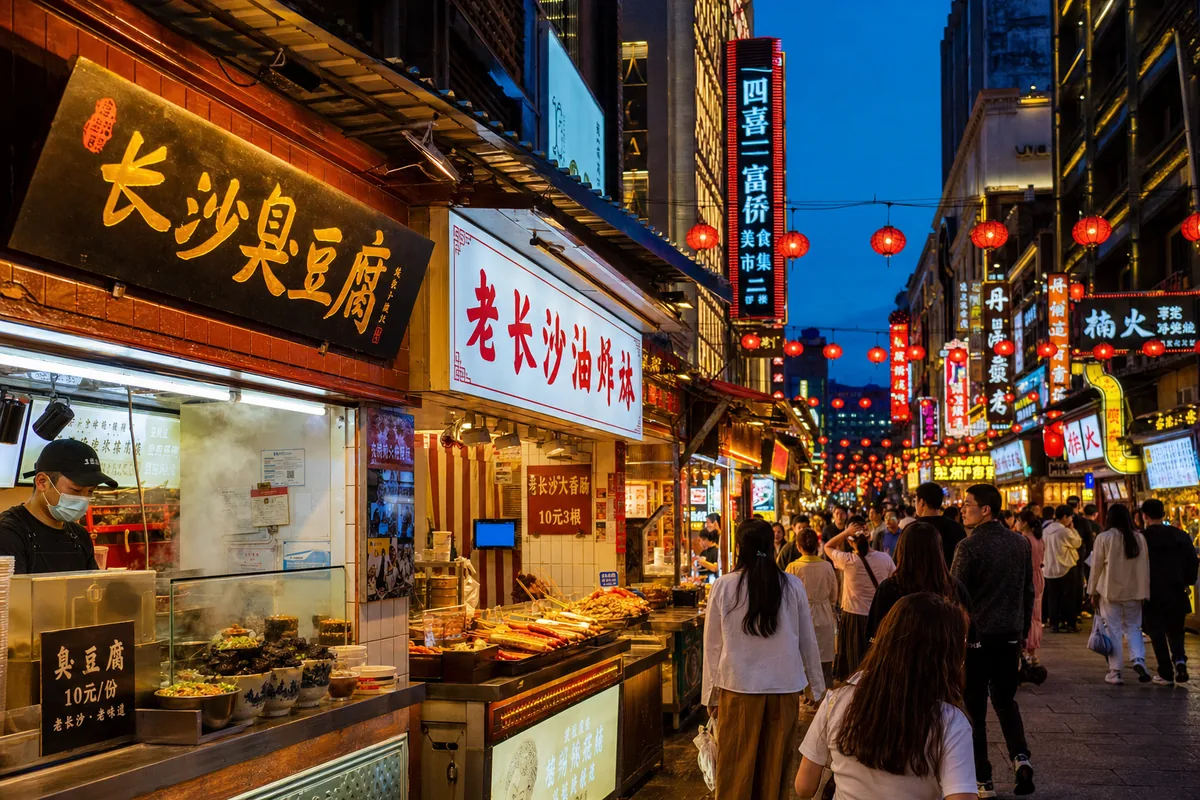
Changsha is Hunan's capital and the spiritual home of fiery Hunan cuisine (湘菜, xiāngcài). This is a food-and-nightlife stop more than a sightseeing one. Drop your bags and head to Wenheyou (文和友), a multi-floor complex built to look like a gritty 1980s Changsha neighborhood, packed with food stalls and a famous crayfish restaurant. It's a spectacle as much as a meal.
For history, the Mawangdui exhibits at the Hunan Museum include the remarkably preserved 2,100-year-old body of Lady Dai, a genuinely startling archaeological find. In the afternoon, cross to Orange Isle (橘子洲, Júzizhōu), a long island in the Xiang River with a giant stone bust of a young Mao Zedong, who studied in Changsha. On weekend evenings there's a fireworks show over the river.
At night, the area around Huangxing Road and the Taiping Street old lane buzzes with milk-tea shops (Changsha is where the chain Sexy Tea began), barbecue stalls, and bars. Try stinky tofu (臭豆腐, chòudòufu) here, the black Changsha version, before you write it off. If you have an extra day, give Changsha a second night rather than rushing the mountains.
Days 4-6: Zhangjiajie (张家界, Zhāngjiājiè)
Catch a high-speed train from Changsha to Zhangjiajie West Station, around 3 hours. This is the centerpiece of the trip and deserves at least two full days, three if you want a relaxed pace.
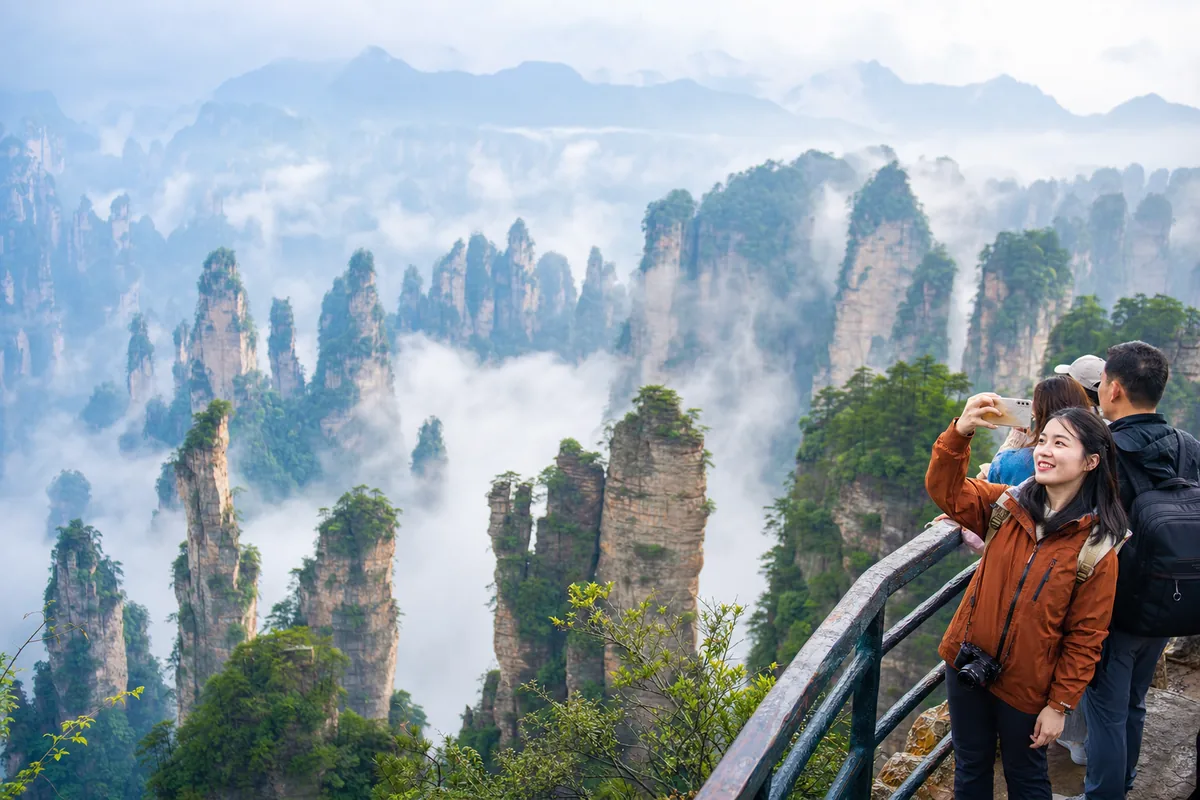
The main attraction is Zhangjiajie National Forest Park, part of the larger Wulingyuan UNESCO World Heritage area. It's famous for thousands of quartz-sandstone pillars rising straight out of the forest, often wreathed in cloud. The park is huge and the logistics confuse a lot of first-timers, so here's the practical version:
- Your entry ticket is valid for multiple days (typically a few consecutive days), so you don't need to see everything at once.
- The Bailong Elevator (百龙天梯), a glass elevator bolted to a cliff, saves a long climb to the upper viewing areas.
- The Yuanjiajie area holds the "Avatar Hallelujah Mountain," the pillar that the film's floating peaks were modeled on. The Tianzi Mountain area has some of the widest panoramas.
- Free park shuttle buses connect the main zones, but they involve a lot of waiting and walking. Wear real shoes.
On a separate day, visit Tianmen Mountain (天门山, Tiānménshān), which is right by Zhangjiajie city and not inside the national park, so it needs its own ticket. The highlights are the world's longest passenger cableway, a glass skywalk along the cliff face, and Tianmen Cave, a natural arch you reach by climbing 999 steps. The famous "99 bends" road switchbacks below.
Because the ticketing, cable cars, and shuttle system are genuinely complicated, many travelers find a guided day tour worth it here, both to skip queues and to avoid wasting half a day figuring out the bus routes. You can book Zhangjiajie and Tianmen Mountain experiences through Klook with English-speaking guides and pre-arranged transport.
If you have a third day and want fewer crowds, the nearby Tianmen Mountain alternative is Grand Canyon of Zhangjiajie with its glass bridge, or you can simply spend more time in the national park finding quieter trails. For deeper logistics on tickets, where to stay near the park gate versus in the city, and how the shuttle network actually works, see our dedicated guide below.
Days 6-7: Fenghuang (凤凰, Fènghuáng)
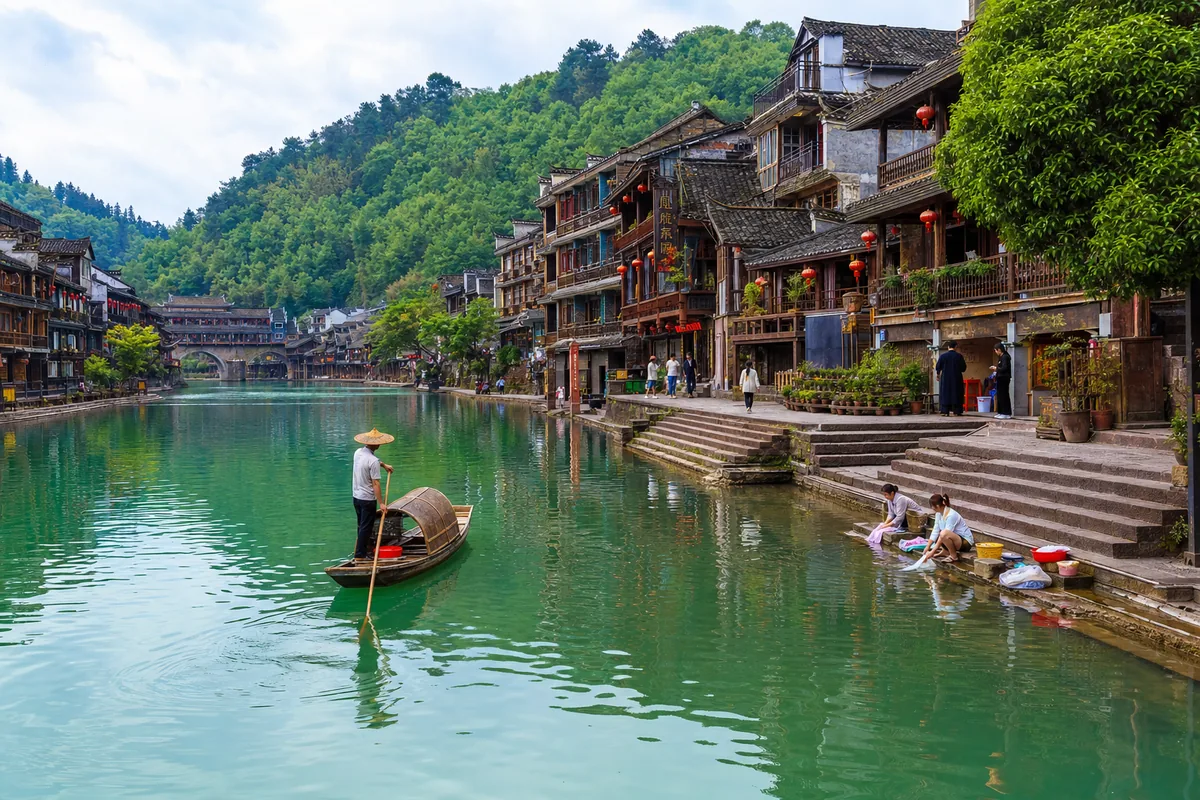
From Zhangjiajie, take a tourist bus or private transfer to Fenghuang Ancient Town, about 4 hours away. Fenghuang sits on the Tuo River (沱江, Tuójiāng), with stilted wooden houses leaning over the water and stone bridges connecting the banks. It's a Miao and Tujia ethnic-minority area, and the old town is the kind of place best seen in the early morning before the day-trippers arrive and at night when the riverside lights come on.
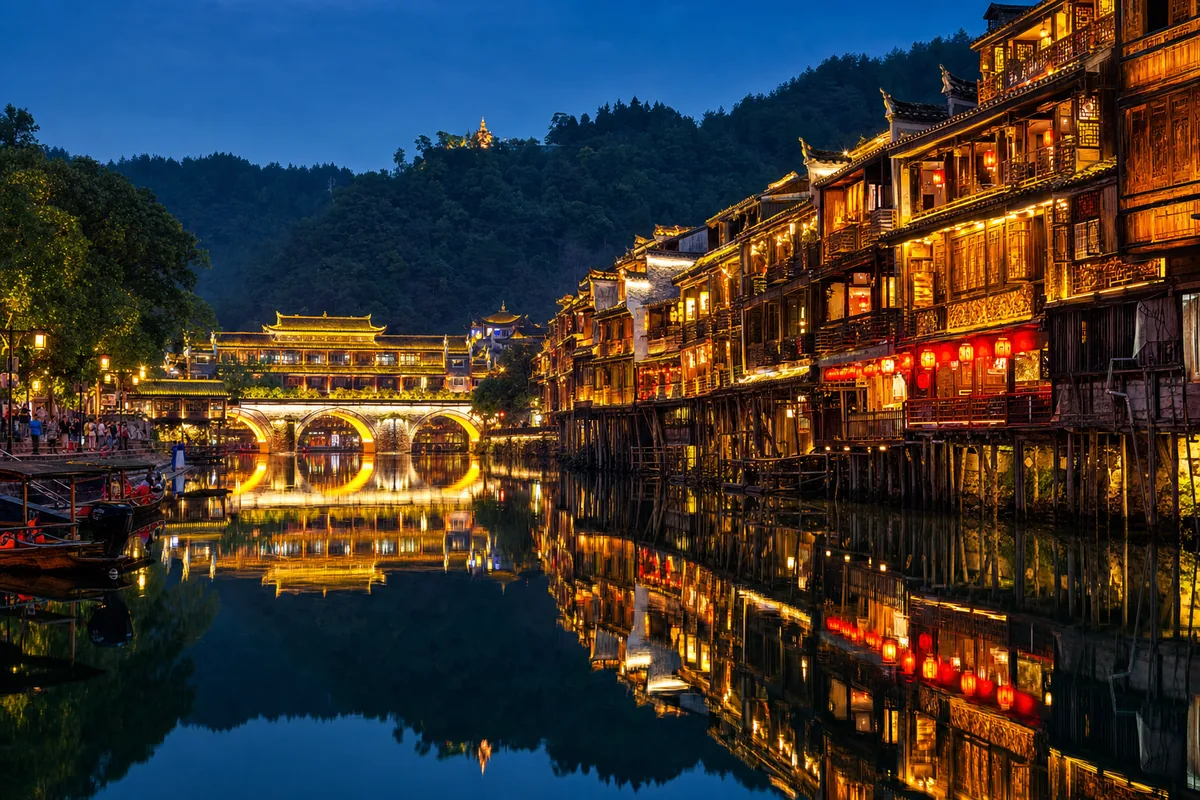
There's no single must-do here. Walk the riverbank, cross the wobbly stepping-stones, take a wooden boat along the Tuo, and eat blood-duck or sour-fish soup, both local specialties. The old town itself is free to enter, though a combined ticket covers a handful of individual historic houses and museums inside, which most casual visitors skip.
Fenghuang is touristy and commercial, no question. But early and late, when the crowds thin, it earns its reputation. One night is enough for many people; two if you want a genuinely slow finish to the trip.
Getting around: the transport backbone
High-speed rail does almost all the heavy lifting on this route. Here's how the legs break down:
| Leg | Mode | Duration | Approx. 2nd-class fare |
|---|---|---|---|
| Wuhan → Changsha | High-speed rail | ~1.5 hrs | ¥150-180 |
| Changsha → Zhangjiajie | High-speed rail | ~3 hrs | ¥130-160 |
| Zhangjiajie → Fenghuang | Bus / transfer | ~4 hrs | ¥80-150 |
| Fenghuang → exit (via Huaihua) | Bus + HSR | varies | varies |
A few practical notes. China's trains require your passport to buy and board tickets, and you'll tap your passport at the gate. Arrive at large stations like Changsha South a good 40-60 minutes early for security and the walk to your platform. For booking, the official platform is run by China Railway; the National Railway's 12306 ticketing system is the source of truth for schedules, though many foreign travelers find third-party sites easier to navigate for payment and seat selection.
For the Zhangjiajie-Fenghuang leg, the cleanest option is the direct tourist bus from Zhangjiajie Central Bus Station to Fenghuang. If you're exiting the region from Fenghuang afterward, note that the Fenghuang Gucheng high-speed station connects you onward, often routing through Huaihua, toward Changsha, Guangzhou, or Guiyang.
Where to stay
Accommodation on this route is good value compared with Beijing or Shanghai. Rough guidance per stop:
- Wuhan: Stay near Jianghan Road or around the Hubu Alley/Yellow Crane Tower area for walkability and metro access.
- Changsha: The Wuyi Square and Huangxing Road pedestrian district puts you in the middle of the food and nightlife.
- Zhangjiajie: You have a real choice here. Stay in Zhangjiajie city for Tianmen Mountain and transport links, or in Wulingyuan town right by the national park gate to start hiking early and beat the crowds. Many travelers split, one night each.
- Fenghuang: A riverside guesthouse inside the old town is the whole point. Rooms overlooking the Tuo River book out fast in peak season and can be noisy at night, so weigh the view against your sleep.
For comparing options across all four cities in one place, Booking.com has the widest English-language inventory for this region, including the smaller Wulingyuan and Fenghuang guesthouses that don't always show up elsewhere. Remember that Chinese hotels must register foreign guests with the local police at check-in (住宿登记, zhùsù dēngjì), so bring your passport and confirm the property accepts foreign passport holders before you book.
Budget reference
Here's a realistic per-person estimate for a 7-day trip, excluding international flights. Prices are approximate and shift with season and demand, so treat them as planning figures and check current rates before you go.
| Category | Budget (¥/day) | Mid-range (¥/day) |
|---|---|---|
| Accommodation | 150-250 | 350-600 |
| Food | 60-100 | 120-250 |
| Local transport | 20-40 | 40-80 |
| Attractions | 0-100 (varies by day) | 100-250 |
The big fixed costs are the intercity trains (roughly ¥360-500 total for the three HSR/bus legs) and the Zhangjiajie tickets. The national park entry plus the Bailong Elevator and shuttle, and a separate Tianmen Mountain ticket with cable car, will run a few hundred yuan combined, so the Zhangjiajie portion is where most of your attraction spending goes. A reasonable all-in for a 7-day mid-range trip, excluding international airfare, lands somewhere around ¥4,000-6,000 per person.
Adjusting the route
This itinerary flexes easily depending on your time and interests:
- Short on time (5 days): Cut Fenghuang and give the saved days to Zhangjiajie, or drop Wuhan and start in Changsha if you're arriving from the south.
- Have 8-9 days: Add the second Changsha night and a buffer day in Zhangjiajie for weather. Both pay off.
- Nature-focused: Skip Wuhan entirely, fly or train straight into Changsha or Zhangjiajie, and spend three full days in the park plus Tianmen Mountain.
- Connecting to a bigger trip: This route slots neatly into a longer China loop. Changsha and Wuhan both link by HSR to Guangzhou and Shanghai, and Zhangjiajie's exit through Guiyang opens up southwest China.
If this is part of your first visit to the country, our 7-day China itinerary and the more relaxed 10-day China trip plan show how to combine a regional loop like this with the headline cities.
Final thoughts
Central China gives you range in a single week: a food-and-history city in Wuhan, a spicy night-out city in Changsha, otherworldly mountains in Zhangjiajie, and a quiet riverside town in Fenghuang, all stitched together by fast trains and one bus ride. Book your high-speed legs a day or two ahead in peak season, build a weather buffer into Zhangjiajie, and lean on Alipay or WeChat Pay for everything from metro rides to noodle stalls. Confirm current ticket prices and park rules before you travel, since they change. Do that, and this is one of the most rewarding weeks in the country, with a fraction of the foreign crowds you'd meet on the classic routes.
Related reading
- Zhangjiajie Guide — detailed park logistics, ticket breakdown, and where to stay.
- Wuhan Complete Guide — full city guide beyond this itinerary's highlights.
- Changsha Complete Guide — deeper on Hunan food and nightlife.
- Fenghuang Ancient Town Guide — when to go, what to skip, where to sleep.
- How to Book Train Tickets — step-by-step for booking HSR with a foreign passport.
Last updated: June 2026
Read in other languages
Last train times for 10 Chinese metro systems
Every line and station, checked by hand — the same data behind our offline route planner.
Get the WaysChina App
Offline guides, currency converter, essential phrases, and more — all in your pocket.

Related Articles
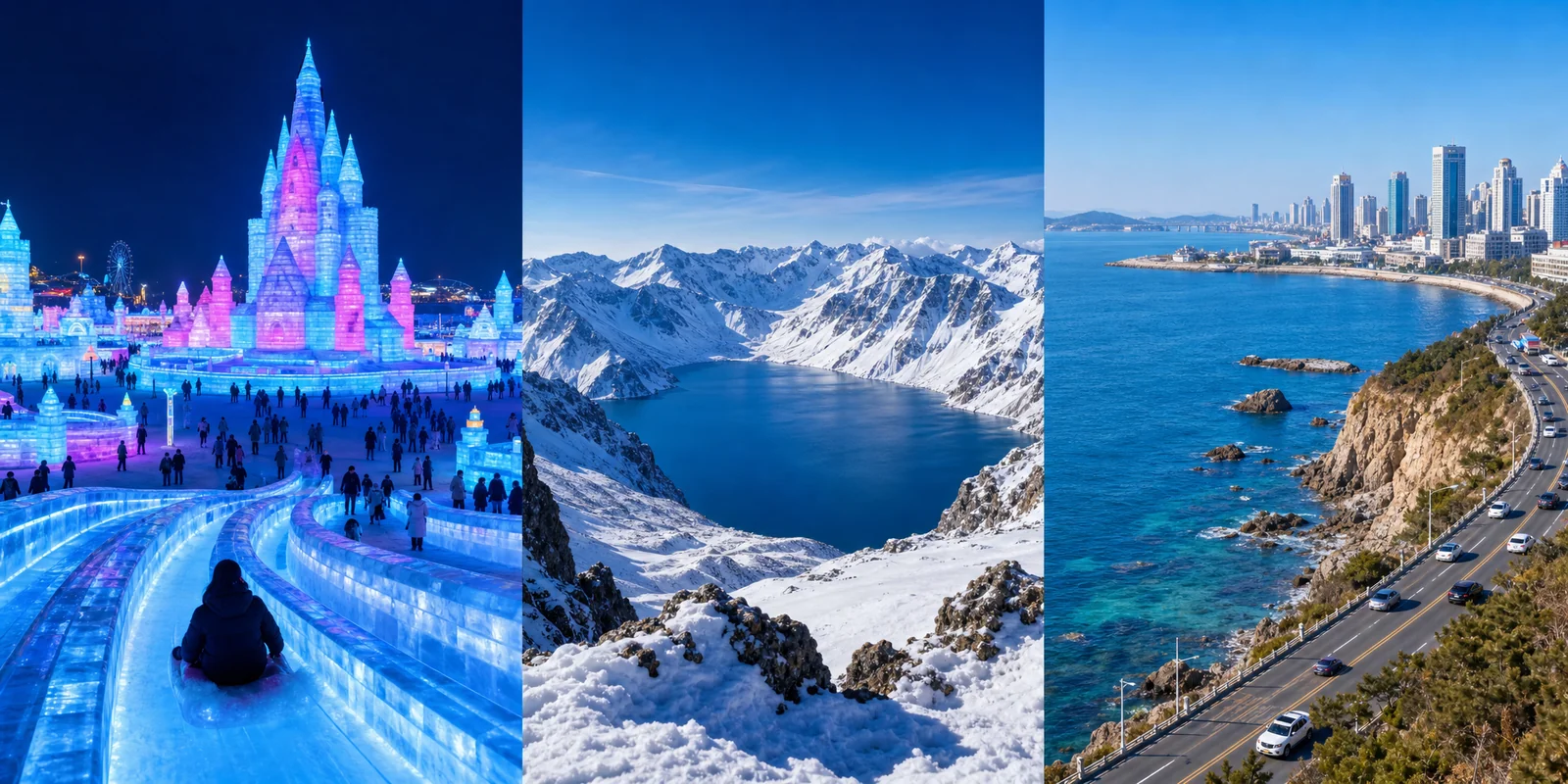
Northeast China Route: Harbin-Changbaishan-Dalian
A 7-8 day route through Northeast China linking Harbin, Changbaishan, and Dalian, with separate winter and summer...

Jiangnan Water Towns Route: Shanghai, Suzhou, Wuzhen and Hangzhou in 5 to 7 Days
Shanghai → Suzhou → a night in Wuzhen or Xitang → Hangzhou: the order, nights per stop, which water town to pick,...
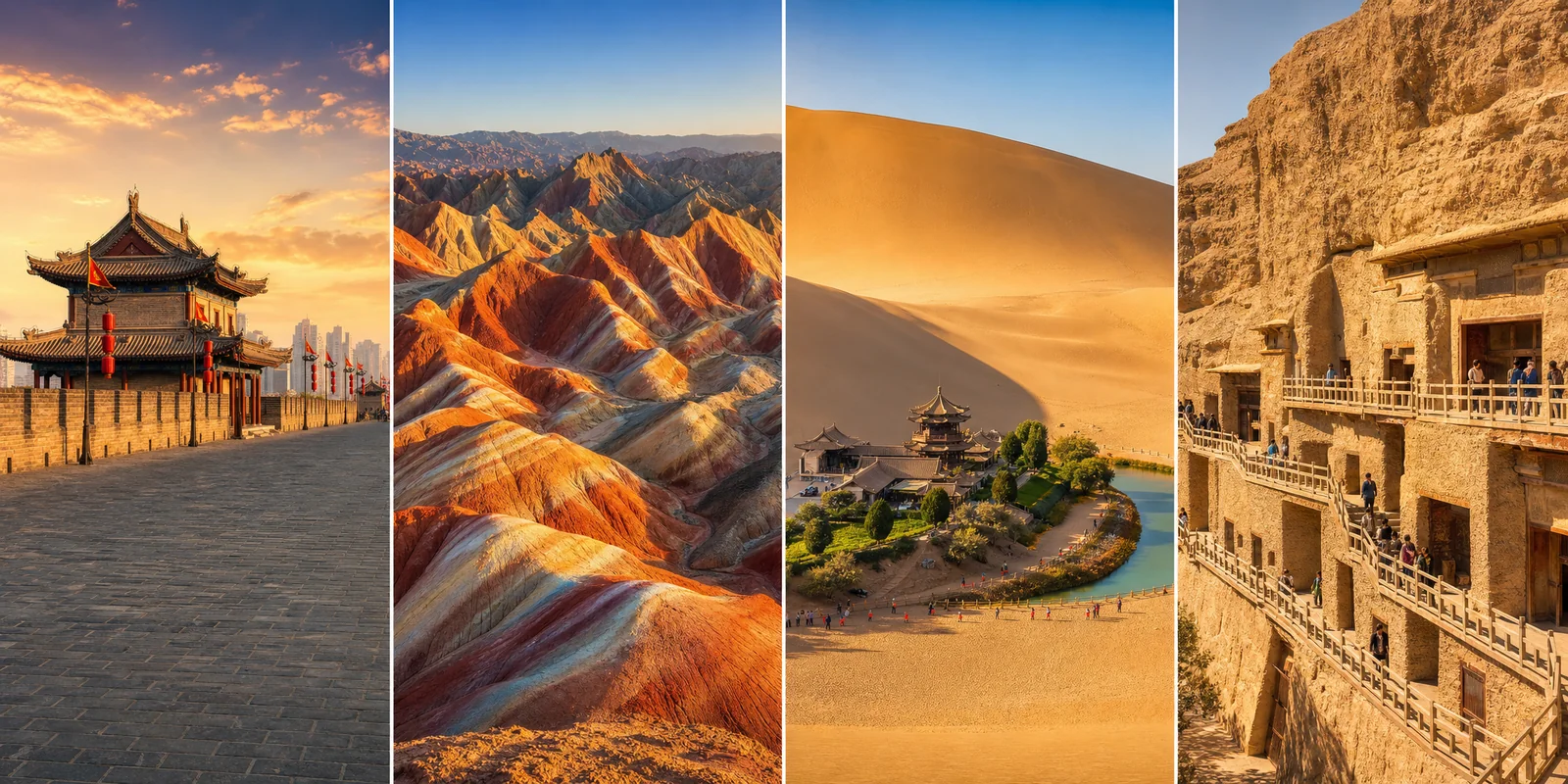
Silk Road Route: Xi'an to Dunhuang
A practical 7-8 day Silk Road itinerary from Xi'an through Lanzhou and Zhangye to Dunhuang, with day-by-day plans,...
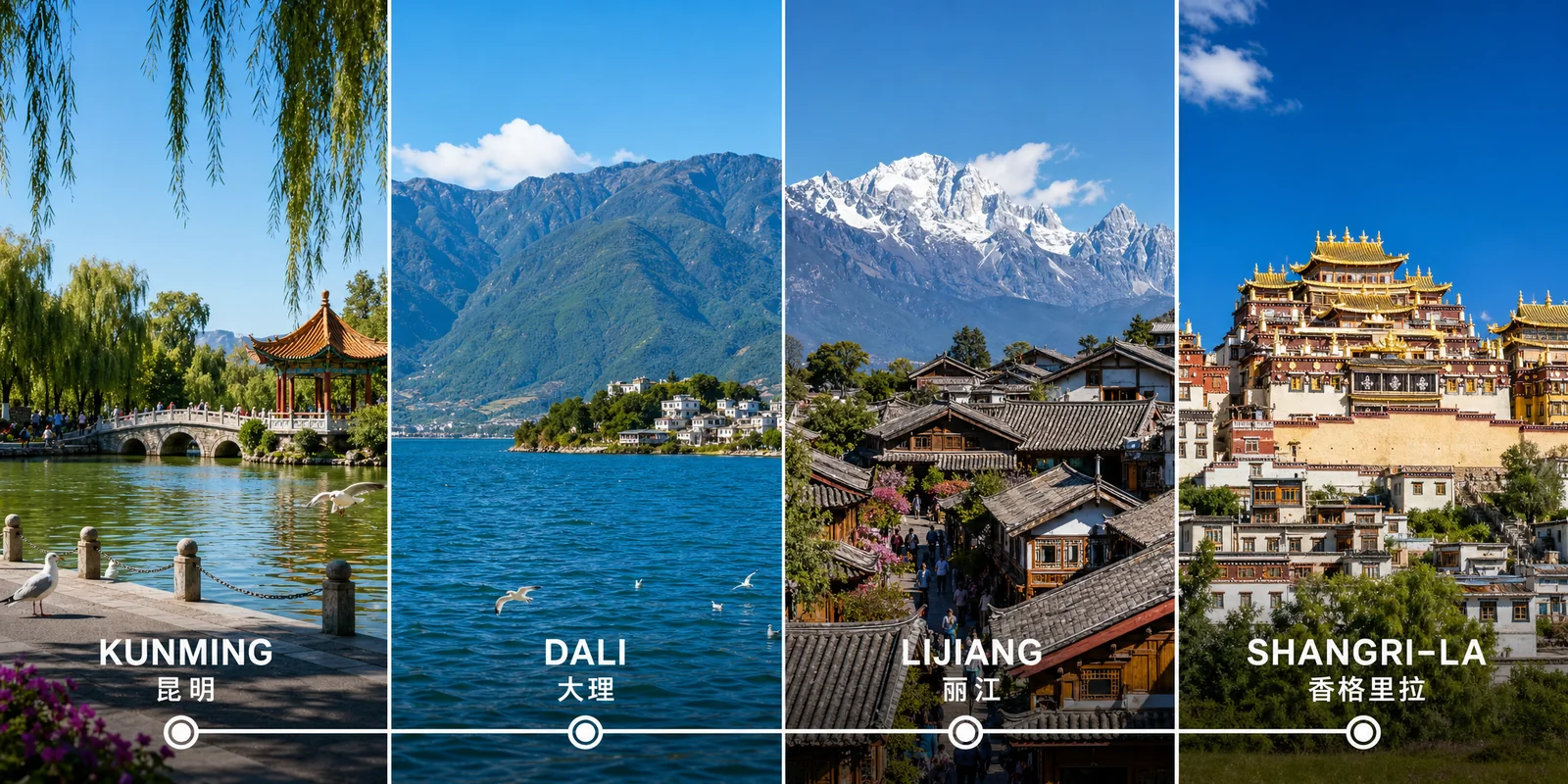
Yunnan Circuit: Kunming-Dali-Lijiang-Shangri-La
A practical 7-10 day Yunnan itinerary covering Kunming, Dali, Lijiang, and Shangri-La — with daily plans, transport...