
This article contains affiliate links. If you make a purchase through these links, we may earn a small commission at no extra cost to you. This helps support our work in creating free travel guides.
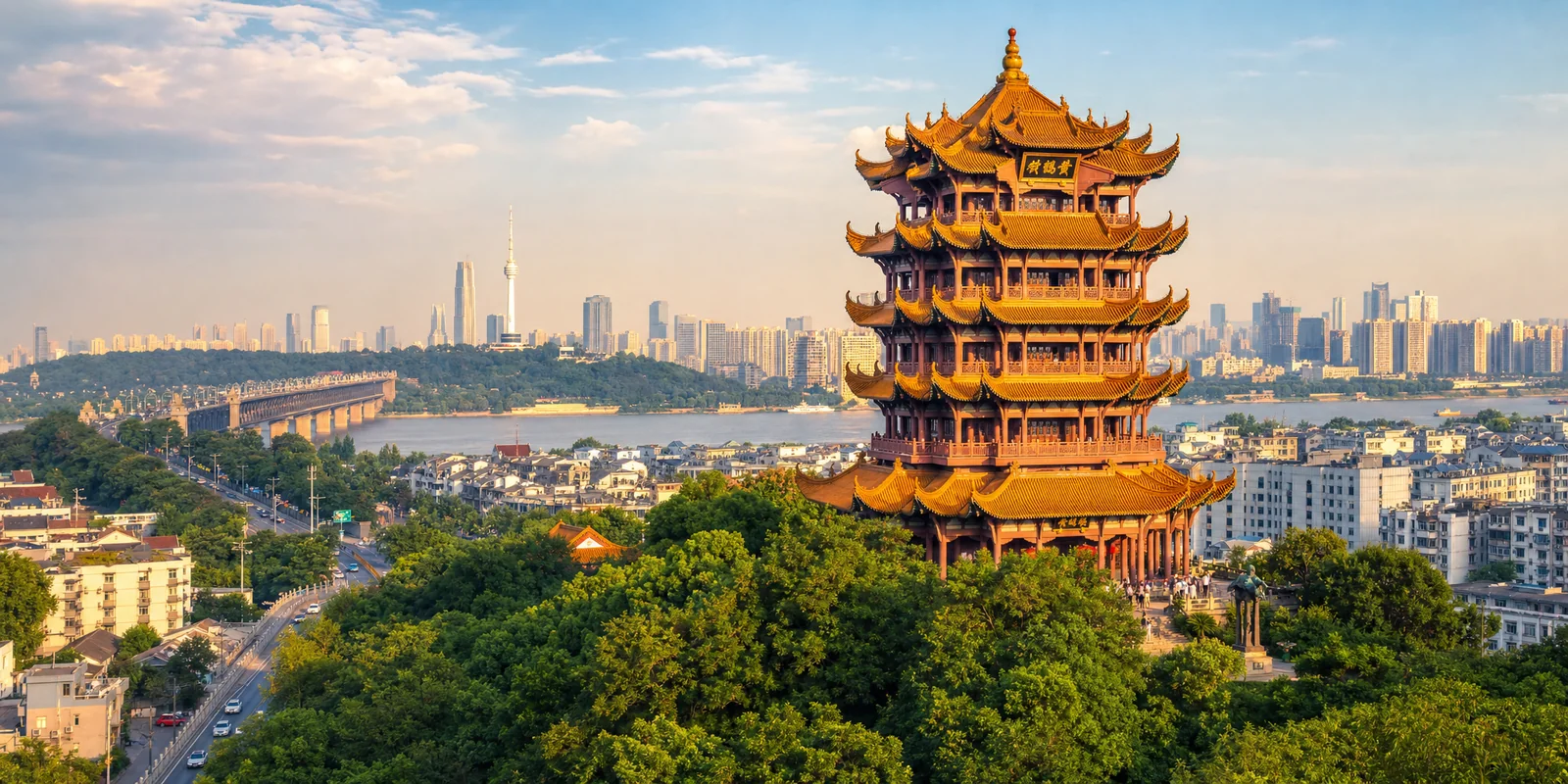
Wuhan is the biggest city in central China and the capital of Hubei Province, sitting where the Yangtze and Han rivers meet. For centuries it was known as the "thoroughfare to nine provinces" (九省通衢, jiǔ shěng tōngqú) because so many roads, rivers, and now rail lines pass through it. Most travelers come for three things: the Yellow Crane Tower, the cherry blossoms at Wuhan University in spring, and the food — especially hot dry noodles. Two or three days is enough to cover the highlights without rushing. This guide walks through the main sights, what to eat, how to move around, where to stay, and how Wuhan fits into a wider central China trip.
Wuhan at a Glance
Wuhan is really three old towns merged into one sprawling metropolis: Wuchang, Hankou, and Hanyang — collectively called the "Three Towns of Wuhan" (武汉三镇, Wǔhàn sān zhèn). The Yangtze splits them, so you'll cross the river more than once during a typical visit. Wuchang holds most of the historic sights and Wuhan University; Hankou is the commercial heart with old European-style architecture and the liveliest shopping; Hanyang is quieter and more industrial.
The city has a real climate. Summers (June–August) are genuinely hot and humid — Wuhan is one of China's traditional "three furnaces" — and winters are damp and cold with no central heating in many older buildings. The two windows worth aiming for are spring (March–May), when the cherry blossoms peak in late March, and autumn (September–November), when the weather is dry and mild. If your main goal is the blossoms, plan around the third or fourth week of March, but know that exact timing shifts year to year with the weather.
Top Things to Do in Wuhan
Yellow Crane Tower (黄鹤楼)
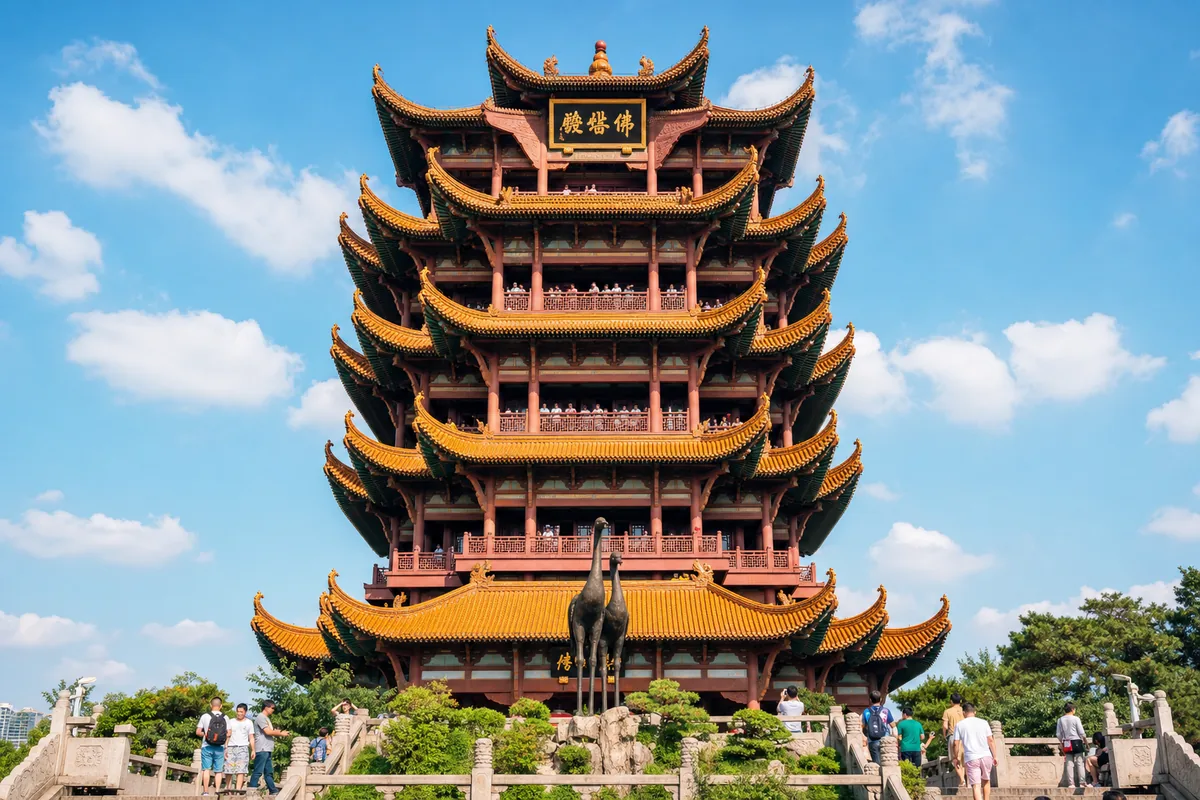
The Yellow Crane Tower (黄鹤楼, Huánghè Lóu) is Wuhan's signature landmark and one of the "Four Great Towers" of southern China. The current building is a 1980s reconstruction in reinforced concrete, sitting on Snake Hill (蛇山) in Wuchang — the original wooden tower was first built around the 3rd century and burned down and was rebuilt many times over 1,700 years. People come less for the building's age and more for what it represents: it's the subject of one of the most famous poems in Chinese literature, by the Tang poet Cui Hao, and generations of scholars climbed it to look out over the Yangtze.
From the top floor you get a wide view of the river, the Yangtze River Bridge, and the Wuchang skyline. Allow 1.5–2 hours. It's busiest on weekends and holidays. Entry is around ¥60–70; check the official site for current pricing and the increasingly common requirement to reserve a time slot online with your passport.
Wuhan University Cherry Blossoms (武汉大学樱花)
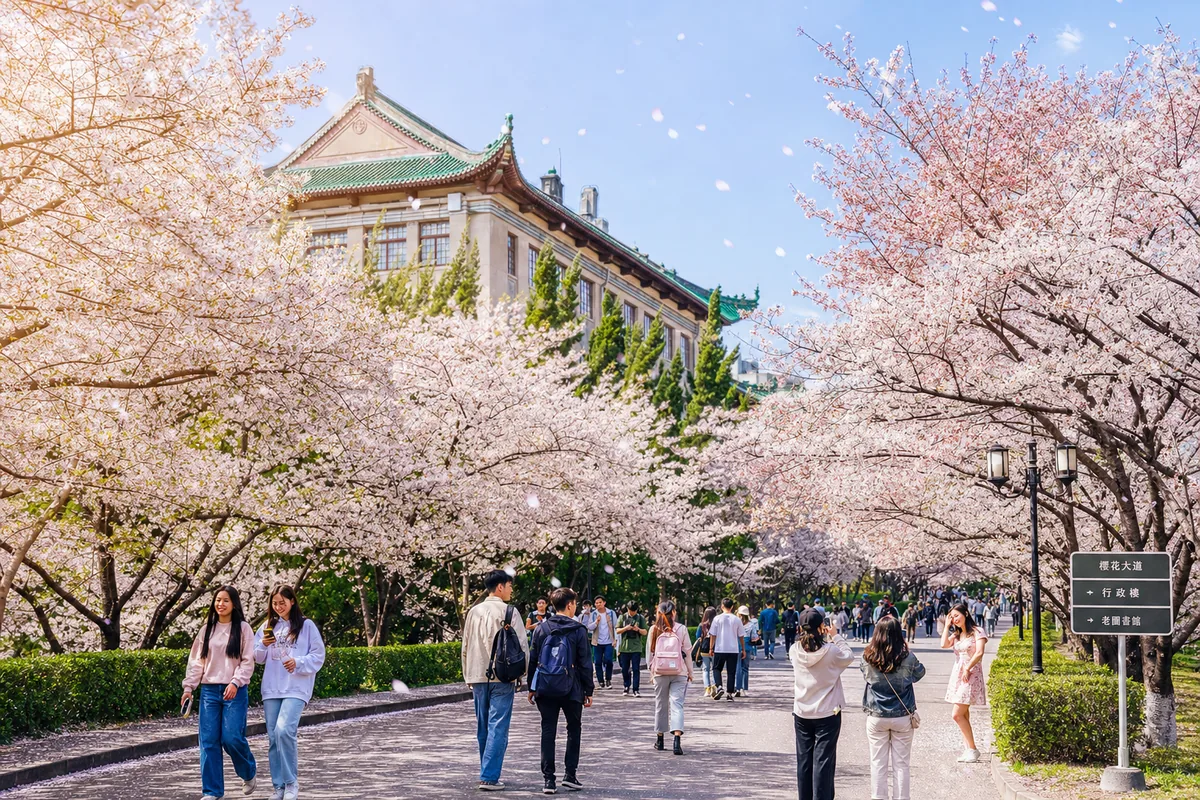
For about two weeks in late March, the cherry trees lining Wuhan University's older campus burst into bloom, and the whole city — plus a good chunk of the country — tries to get in. The blossom avenue runs past the university's 1930s-era buildings with green-tiled roofs, which makes the setting more interesting than a generic park. Wuhan University (武汉大学, Wǔhàn Dàxué) is one of China's most beautiful campuses and remains a working university.
During blossom season the campus requires advance reservation through its official WeChat account, entry is capped daily, and slots disappear fast. This is not a turn-up-and-walk-in situation in peak week. Foreign visitors generally need to register with passport details. If you can't get a slot, East Lake Cherry Blossom Garden (see below) is a paid alternative with even more trees, just without the historic architecture.
East Lake (东湖)
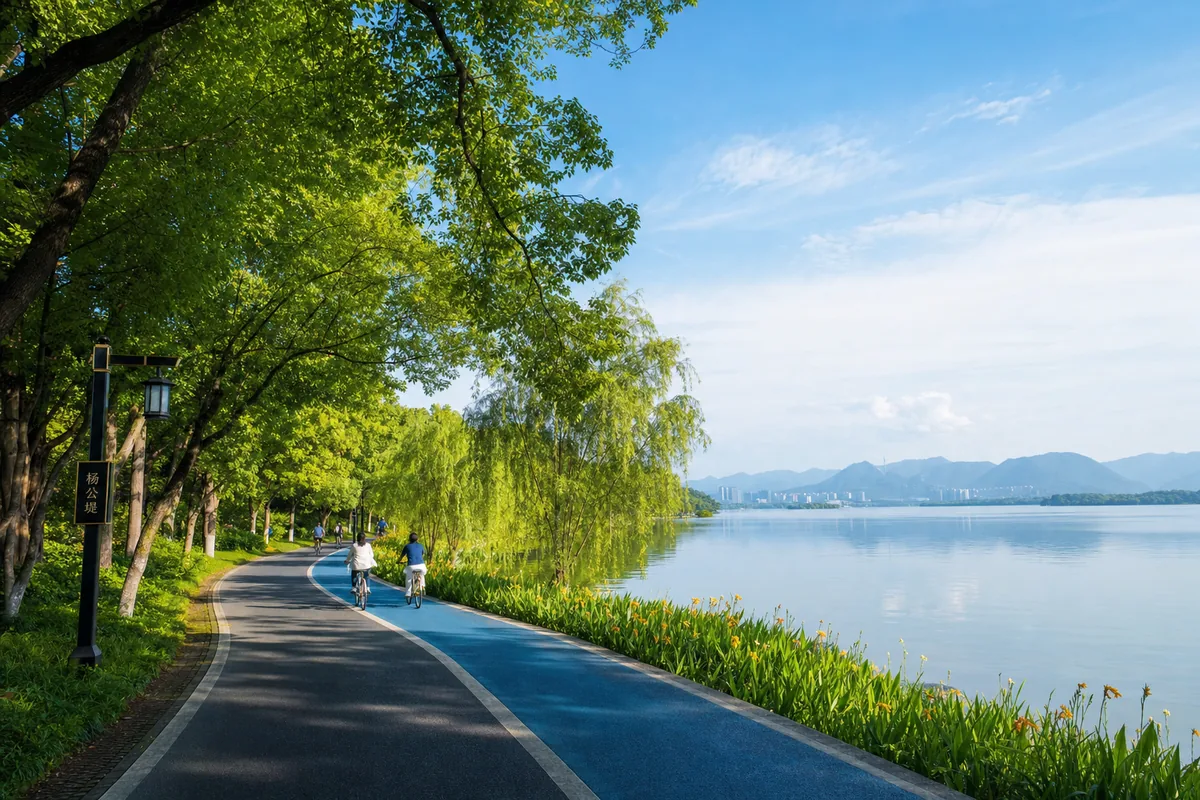
East Lake (东湖, Dōnghú) is one of the largest urban lakes in China — several times the size of Hangzhou's West Lake — and it's where locals go to breathe. The standout is the East Lake Greenway (东湖绿道), a long network of car-free paths for walking and cycling that loops through forest, lakeshore, and wetland. Renting a bike or taking the sightseeing shuttle is the easy way to cover ground. The Moshan (磨山) scenic area on the lake has gardens, a Chu-culture pavilion complex, and the East Lake Cherry Blossom Garden.
Give it a half day if the weather is good. It's free to enter the greenway; individual gardens and the cherry blossom area charge separately.
Hubei Provincial Museum (湖北省博物馆)
If you visit one museum in Wuhan, make it this one — and it's free. The Hubei Provincial Museum (湖北省博物馆, Húběi Shěng Bówùguǎn) sits on the shore of East Lake and houses the treasures excavated from the tomb of Marquis Yi of Zeng (曾侯乙), a ruler who died around 433 BCE. The headline artifact is the Bianzhong (曾侯乙编钟) — a colossal set of 65 bronze bells that can still play music across multiple octaves. The craftsmanship and the fact that the tuning survived 2,400 years underground genuinely impress people who don't normally care about ancient bronze.
Other highlights include the sword of Goujian and a rich collection of lacquerware. Entry is free but requires advance online reservation with your passport, and daily numbers are capped — book a day or two ahead, especially in high season. Allow 2–3 hours. Check the museum's official site for hours; it's typically closed on Mondays.
Jianghan Road (江汉路)
Jianghan Road (江汉路, Jiānghàn Lù) is Hankou's main pedestrian shopping street, lined with early 20th-century European-style buildings from Wuhan's era as a treaty port. It runs down toward the Yangtze, and the surrounding former concession area has some of the city's best-preserved old architecture. This is the spot for evening strolling, street snacks, malls, and people-watching. Combine it with the nearby Hankou Riverside (汉口江滩) park for views across the water, especially after dark when the skyline lights up.
Wuhan Food Guide
Wuhan takes breakfast seriously — locals call the morning meal "guo zao" (过早, guò zǎo), literally "passing the early," and it's practically a cultural institution. Eating your way through a Wuhan morning is one of the best things you can do here.
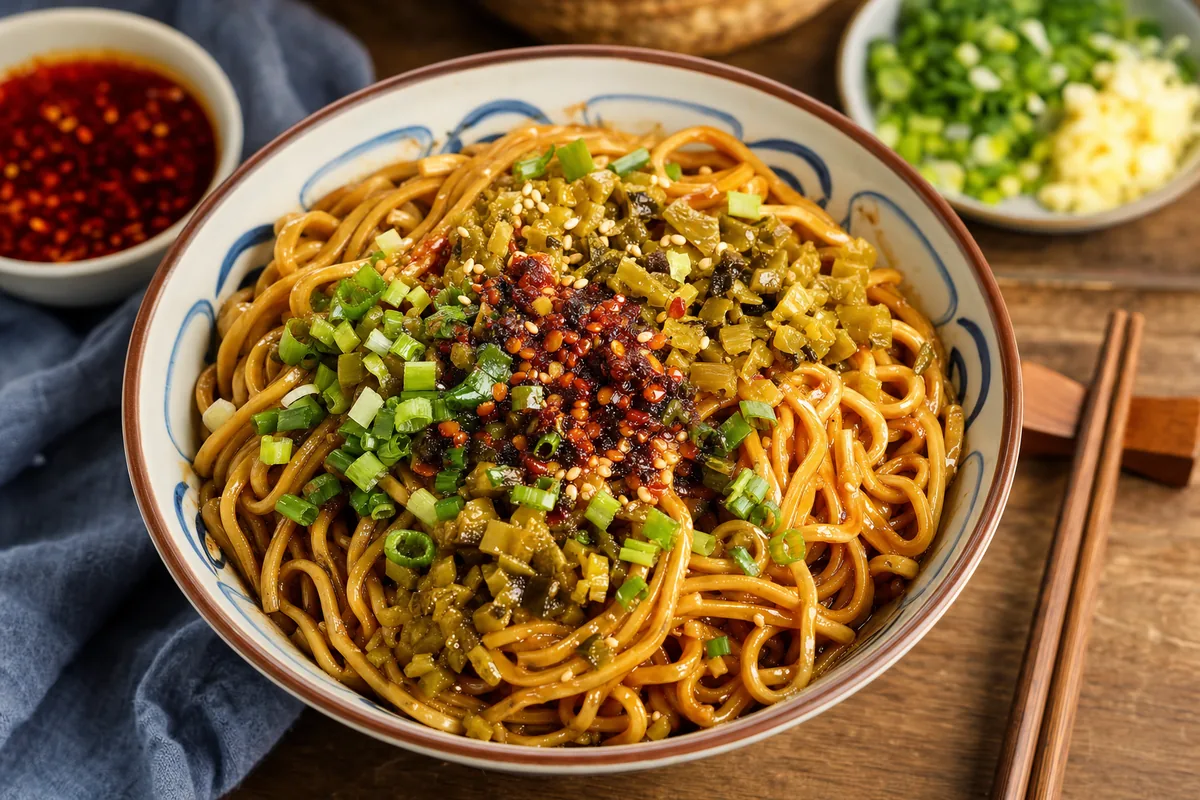
- Hot dry noodles (热干面, règānmiàn) — the dish Wuhan is famous for. Wheat noodles tossed with sesame paste, soy, pickled vegetables, and chili oil. No soup. It's dense, nutty, and eaten fast, standing up or walking. Around ¥5–10 a bowl.
- Doupi (豆皮) — a pan-fried square of egg-and-bean-skin wrapped around sticky rice, diced pork, and mushrooms. A classic guo zao item.
- Mian wo (面窝) — a savory ring-shaped fried dough snack, crispy outside, soft inside.
- Soup dumplings and steamed buns (汤包, tāngbāo) — Sijimei (四季美) is a long-running name for these.
- Lotus root soup (排骨藕汤, páigǔ ǒutāng) — Hubei is lotus root country; the pork rib and lotus root soup is a regional comfort dish.
- Spicy duck necks (鸭脖, yābó) — Wuhan is the home of the duck-neck snack craze. Jingwu (精武) duck necks are the original. Sold in vacuum packs everywhere — great for a train snack if you like spice.
For a concentrated hit of street food, head to Hubu Alley (户部巷, Hùbù Xiàng) in Wuchang, the most famous breakfast street, or the food streets around Jiqing Street (吉庆街) in Hankou. Hubu Alley is touristy and prices reflect it, but it's a convenient way to sample many dishes in one walk.
Getting to and Around Wuhan
Getting there
Wuhan is one of China's busiest rail interchanges. Wuhan Station (武汉站) and Hankou Station (汉口站) handle most high-speed trains, with Wuchang Station (武昌站) serving some routes. Approximate high-speed rail times: Beijing 4.5–5 hours, Shanghai 4–5 hours, Guangzhou about 4 hours, Changsha about 1.5 hours, Xi'an around 4 hours. Wuhan Tianhe International Airport (WUH) connects to most major Chinese cities and a growing list of international destinations, and links to the city by metro line and airport shuttle.
You can book high-speed rail through the official China Railway 12306 system, or use an English-language platform like Trip Com Train if you'd rather avoid the Chinese-only interface and pay with a foreign card.
Getting around the city
Wuhan's metro is extensive and the simplest way to cross between the three towns and the river. Buy single-journey tickets at machines, or — much easier — add a transit QR code in Alipay or WeChat and just scan in and out. Taxis and the ride-hailing app Didi are cheap and plentiful. Because the city is large and split by water, factor in real travel time: getting from Hankou to East Lake can easily take 40–60 minutes.
There are also Yangtze River ferries between Wuchang and Hankou — a cheap, scenic crossing and a nice change from the metro, especially in the evening.
Where to Stay in Wuhan
Where you base yourself depends on your priorities:
- Hankou (around Jianghan Road) — best for first-timers. Central, walkable, great food and shopping, easy metro access, full range of hotels from budget to international chains.
- Wuchang (near the Yellow Crane Tower or Hubu Alley) — convenient for the historic sights and closest to Wuhan University and East Lake.
- Optical Valley (光谷, Guānggǔ) — a modern tech and university district, good value, lively at night, but farther from the classic sights.
You'll find the widest selection and easy filtering by location and price on platforms like Booking Com Hotel. Whatever you book, remember that hotels in China must register foreign guests with the police at check-in (住宿登记, zhùsù dēngjì) — confirm the property accepts foreign passport holders before you pay, as some smaller guesthouses don't.
Suggested Wuhan Itinerary
Here's a practical two-day plan, easy to stretch to three.
| Day | Morning | Afternoon | Evening |
|---|---|---|---|
| Day 1 | Guo zao breakfast at Hubu Alley, then Yellow Crane Tower | Cross to Hankou; explore the old concession area and Jianghan Road | Hankou Riverside for the skyline; dinner nearby |
| Day 2 | Hubei Provincial Museum (book ahead) | East Lake Greenway — cycle or shuttle around the lake | Yangtze ferry crossing at sunset; spicy duck necks |
| Day 3 (optional) | Wuhan University (cherry blossoms in late March) or East Lake gardens | Optical Valley, more food, or a day trip | Depart or relax |
Day Trips and Onward Travel
Wuhan's central position makes it a natural launch point. By high-speed rail:
- Changsha — about 1.5 hours. Hunan's capital, famous for spicy food and a buzzing nightlife scene. An easy pairing with Wuhan.
- Chongqing — roughly 5–6 hours by high-speed rail, or a short flight. The mountain megacity of hotpot, layered streets, and the Yangtze.
- Luoyang — around 2 hours. The ancient capital in Henan, home to the Longmen Grottoes.
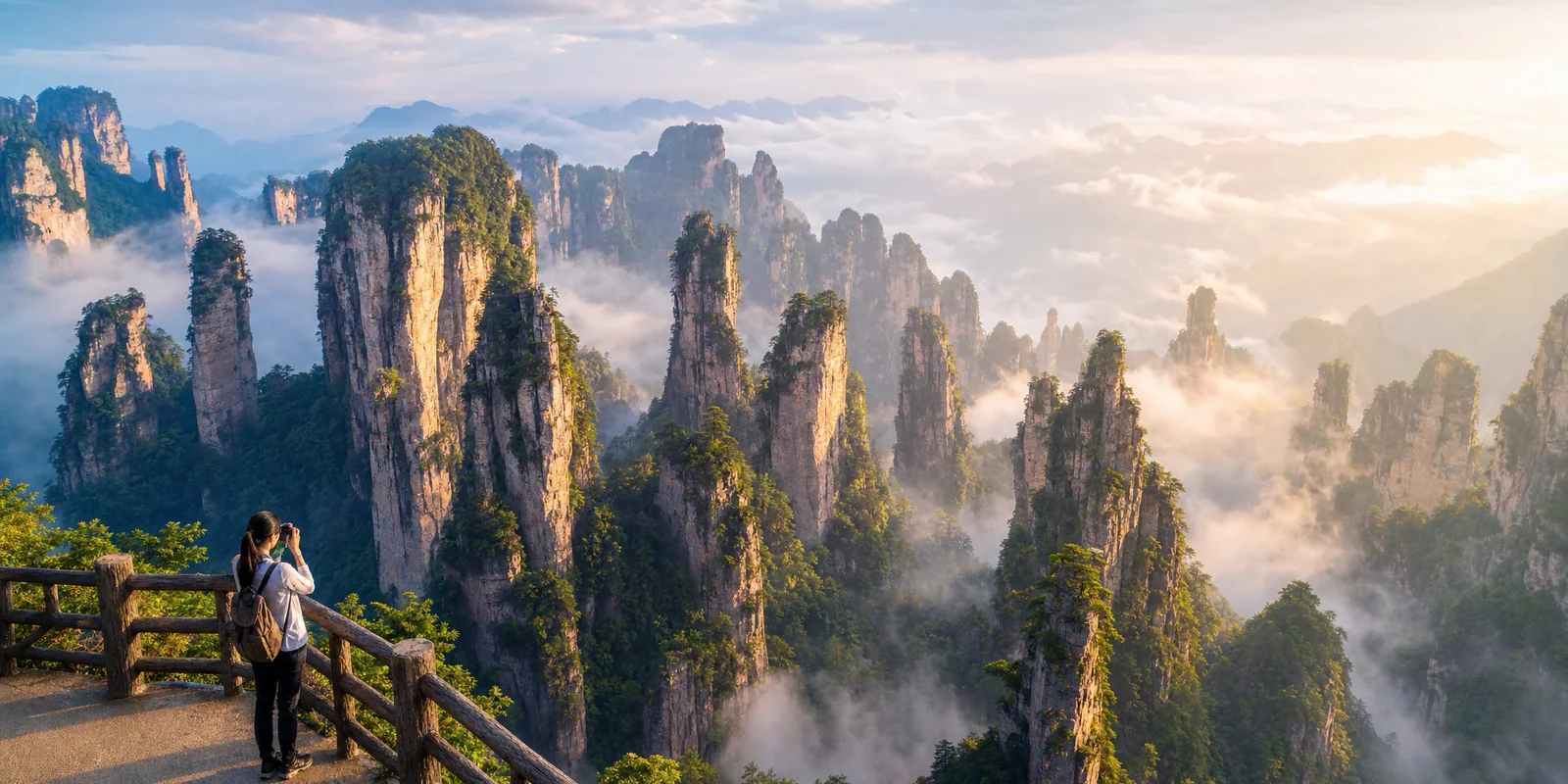
A classic regional route runs Wuhan → Changsha → Zhangjiajie, combining a big city, great food, and the towering sandstone pillars that inspired the floating mountains in Avatar. See our Central China route: Wuhan-Changsha-Zhangjiajie for the full plan.
Practical Tips Before You Go
- Set up mobile payments before arrival — almost everything from noodle stalls to ferries runs on QR codes.
- Reserve museum and Wuhan University slots online in advance during spring and holidays; some sights require your passport to book.
- Pack for the season honestly: summer is hot and sticky, winter is damp and cold indoors. Spring and autumn are the comfortable sweet spots.
- Prices and reservation rules change — always check official sites close to your travel dates.
The Bottom Line
Wuhan rewards a focused two- or three-day visit: climb the Yellow Crane Tower for the river view, stand in front of the 2,400-year-old bronze bells at the Hubei Provincial Museum, walk or cycle the East Lake Greenway, and eat your way through a proper Wuhan breakfast. Time your trip for spring or autumn, book the popular sights ahead, and treat the city as the hub it has always been — easy to reach, easy to leave, and a strong opening or closing chapter for a wider central China trip. Next step: lock in your rail tickets and museum reservations, then build the rest of your route around them.
Related Reading
- Changsha Complete Guide — the obvious next stop, 90 minutes south by train.
- Zhangjiajie Guide — the sandstone pillars within easy reach of Wuhan.
- How to Order Food with Zero Chinese — essential for Wuhan's no-English noodle stalls.
- High-Speed Train Complete Guide — make the most of Wuhan's rail connections.
- Spring Travel in China — plan around the cherry blossom season.
Last updated: June 2026
Read in other languages
Getting to the sights by metro
Yellow Crane Tower
Iconic 5-story tower on Snake Mountain, immortalized by Tang-dynasty poetry.
- SiMenKouHuangHeLou
Hubu Lane Snack Street
Wuhan's most famous breakfast (guo zao) street: hot dry noodles, dumplings, fish soup.
- SiMenKouHuangHeLou
- Jiyuqiao
East Lake (Donghu) Scenic Area
China's largest urban lake — 33 sq km with 100+km of cycling-friendly lakeside trails.
- Chuhe Hanjie
- Optics Valley Square
Wuhan University (Cherry Blossom)
Famed campus with 1,000+ cherry trees blooming in late March; pre-book entry online.
- Jiedaokou
- Zhongnan Road
Hubei Provincial Museum
Top museum for Chu-state bronze artifacts, including the famed Marquis Yi bells.
- Hubei Provincial Museum & Hubei Daily
Chu River Han Street
1.5km riverside Republic-era-themed shopping street between Sha Lake and East Lake.
- Chuhe Hanjie
Jianghan Road Pedestrian Street
Old Hankou's premier pedestrian street, lined with restored Republic-era buildings.
- Jianghan Road
Hankou Bund (Yangtze River Bank)
Yangtze River promenade with views of the bridge and historic Hankou Customs House.
- Jianghan Road
- Dazhi Road
Wuhan Yangtze River Bridge
1957 'First Bridge over the Ten-Thousand-Li Yangtze', combined road & rail bridge.
- SiMenKouHuangHeLou
- Zhongjiacun
Guiyuan Buddhist Temple
Active Buddhist monastery famed for its hall of 500 painted arhat statues.
- Zhongjiacun
Gude Buddhist Temple
Rare Burmese-style Han Buddhist temple, modeled on Bagan's Ananda Temple.
- Sanyang Road
Xinhai Revolution Museum
Memorial to the 1911 Wuchang Uprising that ended Imperial China; includes the iconic Red Building.
- SiMenKouHuangHeLou
Optics Valley Walking Street
Central China's largest pedestrian street with European-style replicas and student crowds.
- Optics Valley Square
Wuhan Tianhe International Airport
Central China's main international airport (WUH), Terminal 3 opened 2017.
- Tianhe International Airport
Wuhan Railway Station
Wuhan's main high-speed rail station on the Beijing–Guangzhou and Shanghai–Wuhan–Chengdu lines.
- Wuhan Railway
- West Square of Wuhan Railway
Hankou Railway Station
Northern Wuhan terminus on the historic Beijing–Hankou rail axis; high-speed and conventional services.
- Hankou Railway
Wuchang Railway Station
Southern Wuhan station on the historic Wuchang line; Wuhan's oldest active rail terminus.
- Wuchang Railway
- East Square of Wuchang Railway
Wuhan metro: last train times by station
Every line and station, checked by hand — the same data behind our offline route planner.
Get the WaysChina App
Offline guides, currency converter, essential phrases, and more — all in your pocket.

Related Articles
Changsha Complete Guide
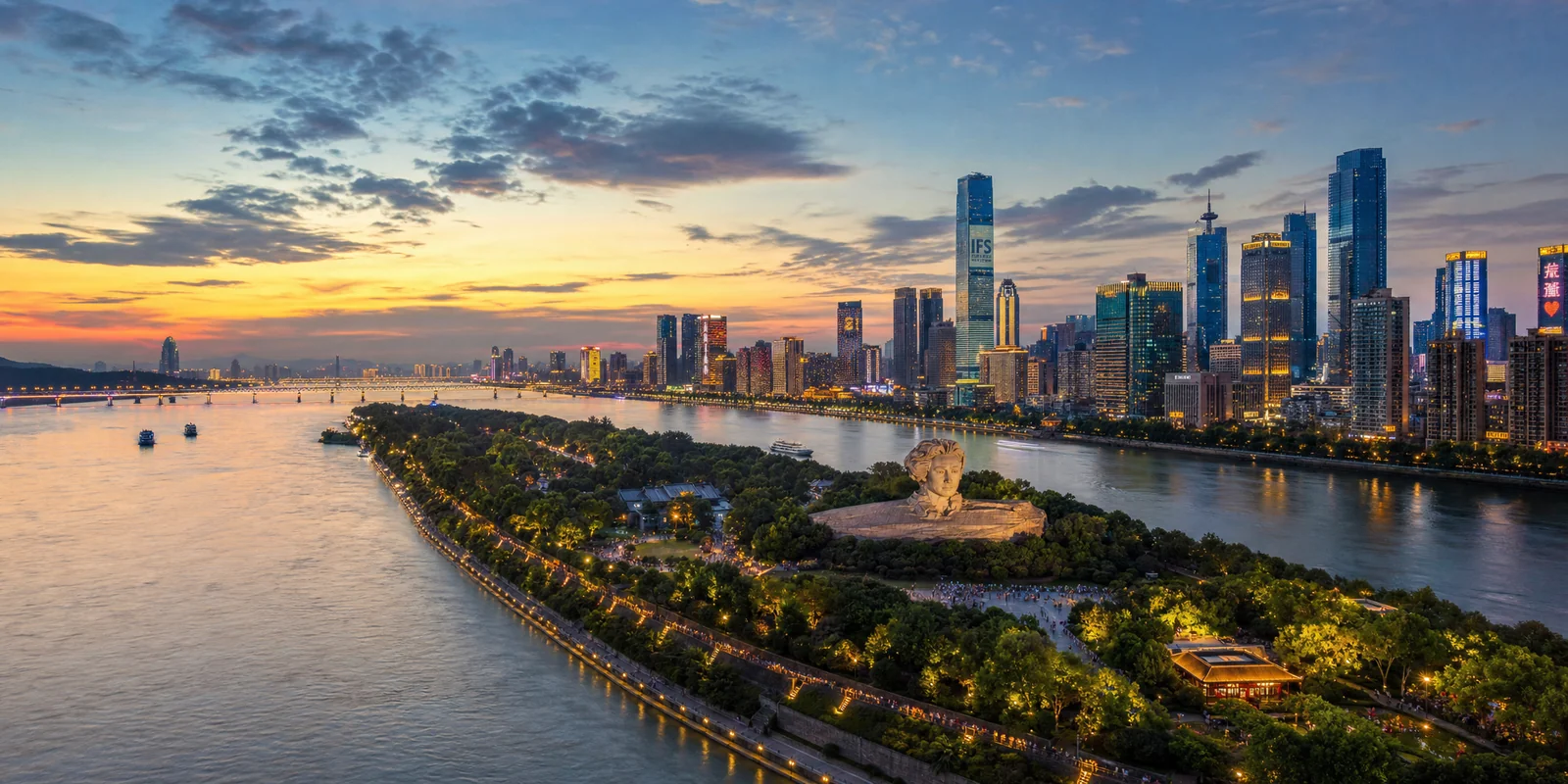
Changsha is China's capital of spicy food and late-night street life. Here's how to eat, explore Orange Island and...
Fenghuang Ancient Town Guide
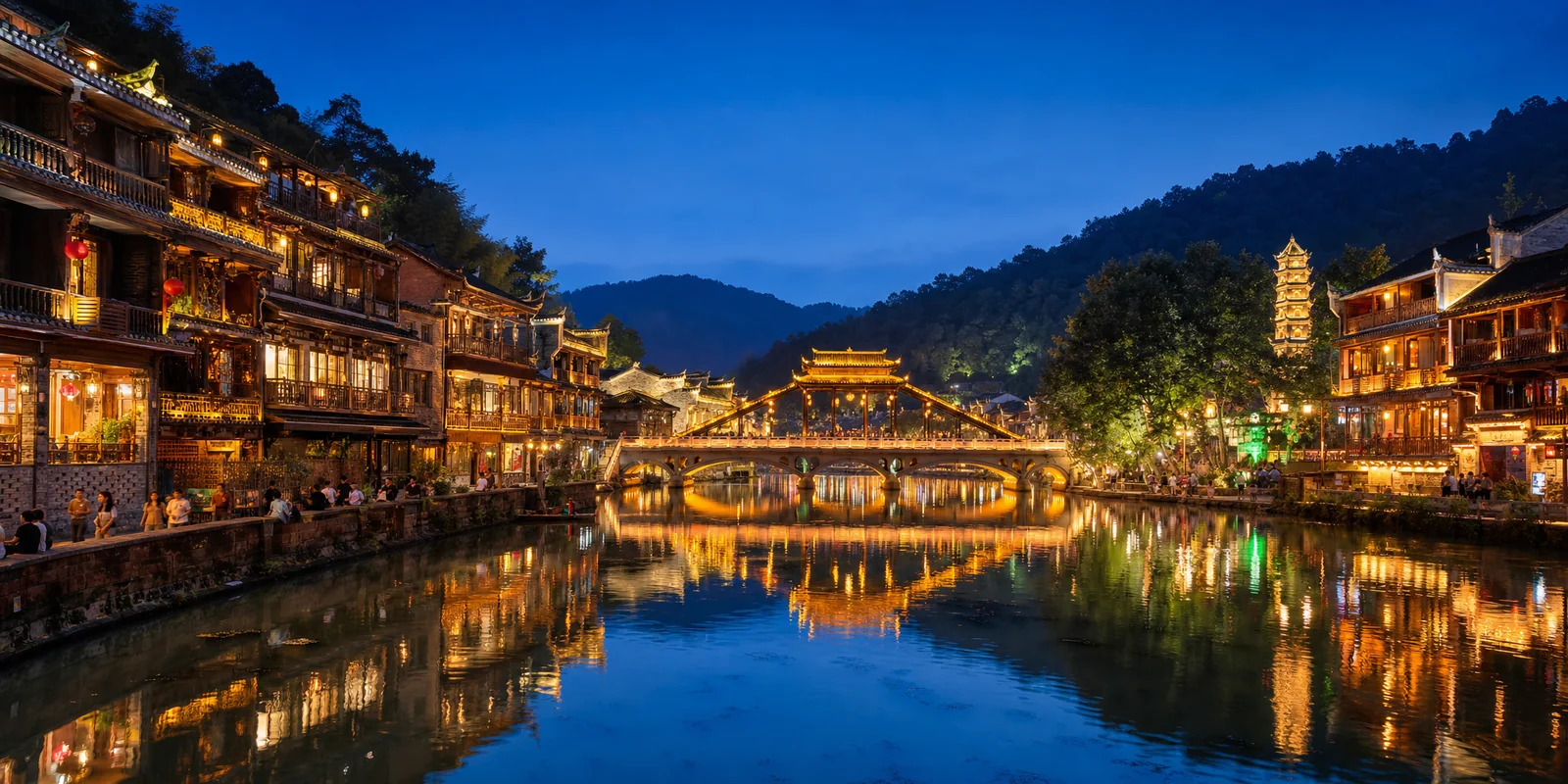
Stilt houses on the Tuojiang River, Miao villages, and a 1,300-year-old town that comes alive at night. Here's how...
Luoyang Ancient Capital Guide
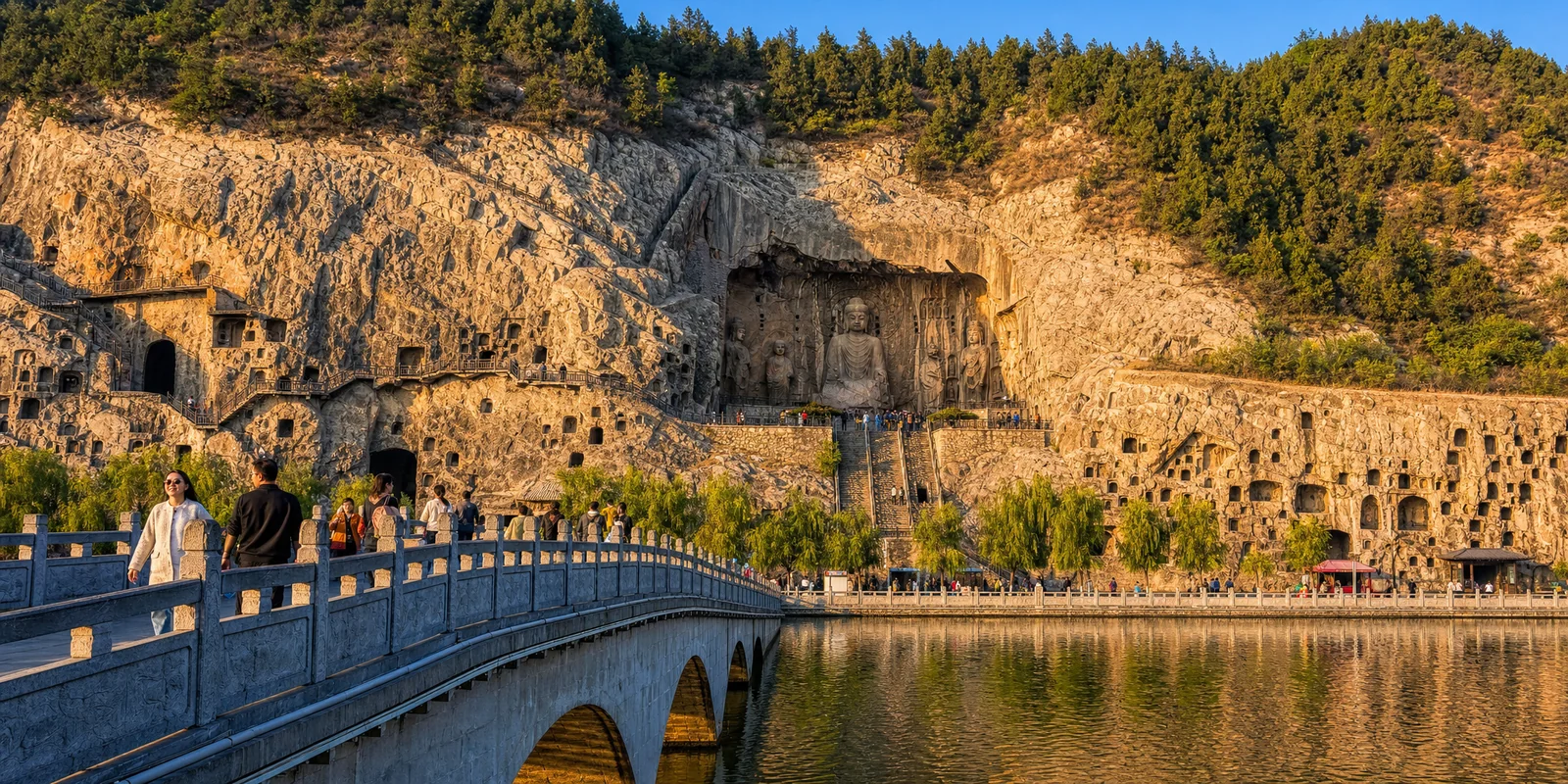
Luoyang served as capital to thirteen Chinese dynasties and holds the UNESCO-listed Longmen Grottoes. Here's how to...
Zhangjiajie Travel Guide
The sandstone pillars that inspired Avatar's floating mountains are real, and they're in Zhangjiajie. Here's how to...