
This article contains affiliate links. If you make a purchase through these links, we may earn a small commission at no extra cost to you. This helps support our work in creating free travel guides.
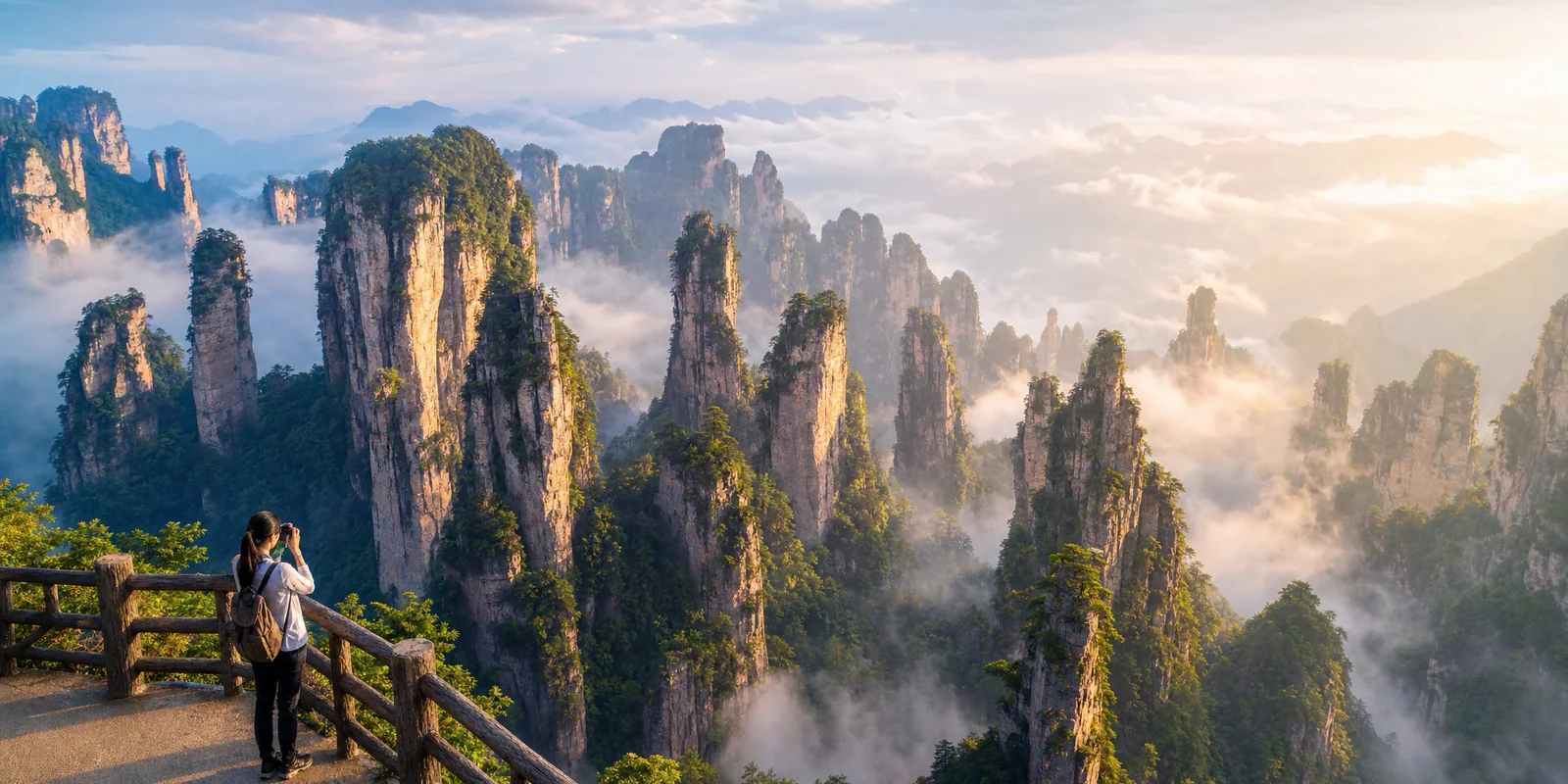
Zhangjiajie is the place that inspired the floating Hallelujah Mountains in Avatar. The real version is a forest of more than 3,000 quartz-sandstone pillars, some over 200 meters tall, draped in mist and pine. It became China's first national forest park in 1982 and is part of a UNESCO World Heritage site. The catch: it sits in the mountainous northwest of Hunan province, with no high-speed rail line until recently and an airport with limited international connections. This guide covers how to actually get there, the four sights worth your time, where to stay, and how to fit it into a 2-3 day trip.
Why Zhangjiajie Is Worth the Detour
Most foreign visitors to China stick to Beijing, Xi'an, and Shanghai. Zhangjiajie takes effort to reach, which is exactly why the scenery still feels worth it. The main draw is the national forest park, where wooden walkways and glass-floored viewing platforms thread between towering stone columns. Add to that a separate mountain with a cliff-hugging cable car and a natural arch you can climb to, plus one of the longest glass bridges in the world. It's a landscape-and-adrenaline destination more than a history-and-culture one, so it pairs well with the ancient town of Fenghuang or the food-and-nightlife city of Changsha nearby.
Two place names cause confusion, so clear them up early. "Zhangjiajie" (张家界, Zhāngjiājiè) is both the prefecture-level city and the shorthand for the national park. The park itself is officially Wulingyuan (武陵源, Wǔlíngyuán), and the main tourist base is Wulingyuan town, about 32 km from Zhangjiajie city center. When booking hotels, check which one you mean.
When to Go
Spring (March-May) and autumn (September-November) are the best windows. Temperatures are mild, the pillars are often wrapped in moving cloud (which looks dramatic), and the crowds are manageable on weekdays. Summer is green and lush but hot, humid, and busy, with afternoon thunderstorms common. Winter is cold and quiet; snow on the sandstone columns is genuinely striking, but some high walkways and cable cars close in bad weather, and morning fog can be so thick you see nothing.
Avoid the national holiday weeks if you can: the first week of October (National Day) and early May (Labor Day) bring enormous domestic crowds, long cable car queues, and inflated hotel prices. For a broader view, see our guide to the best time to visit China and the Golden Week survival guide.
How to Get to Zhangjiajie
You have three realistic routes in, and most travelers come via Changsha (长沙, Chángshā), the provincial capital.
By air
Zhangjiajie Hehua Airport (DYG) has domestic flights from Beijing, Shanghai, Guangzhou, Chengdu, Chongqing, and a handful of other cities, plus seasonal international routes from Seoul and a few Southeast Asian hubs. It's small and only about 5-6 km from the city center, roughly a 15-minute taxi ride. If you're already in China, flying straight in saves the most time. Compare fares across carriers and dates on Trip.com before booking.
By train via Changsha
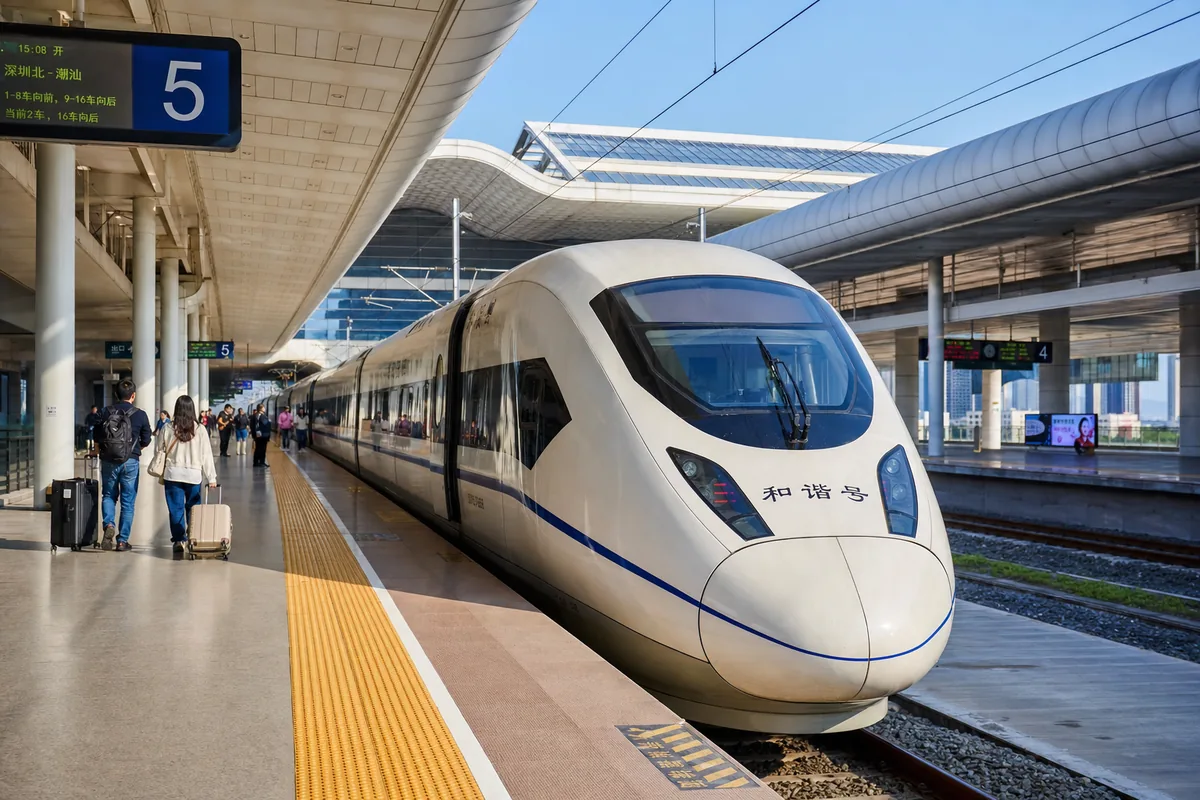
Changsha is the main gateway. High-speed trains (高铁, gāotiě) reach Changsha from Guangzhou (about 2.5 hours), Wuhan (about 1.5 hours), and Shanghai (about 5-6 hours). From Changsha, a high-speed train to Zhangjiajie West Station takes roughly 2.5-3 hours. From that station you'll need a taxi or bus into the city or onward to Wulingyuan. Book rail tickets in advance through our guide to booking train tickets; the high-speed train complete guide explains seat classes and station logistics.
Direct buses and the Wulingyuan question
Once in the region, decide where to sleep. Wulingyuan town puts you at the park's main gate; Zhangjiajie city is better for Tianmen Mountain and the airport. Buses run between the two (about 40-60 minutes). Taxis and ride-hailing via Didi work in both, though English is limited, so see the Didi guide before you arrive.
Zhangjiajie National Forest Park (Wulingyuan)
This is the main event and where you'll spend the most time. The park is huge, so don't expect to "see it all" in a day. The core areas worth targeting are Yuanjiajie, Yangjiajie, Tianzi Mountain, and the Golden Whip Stream valley walk.
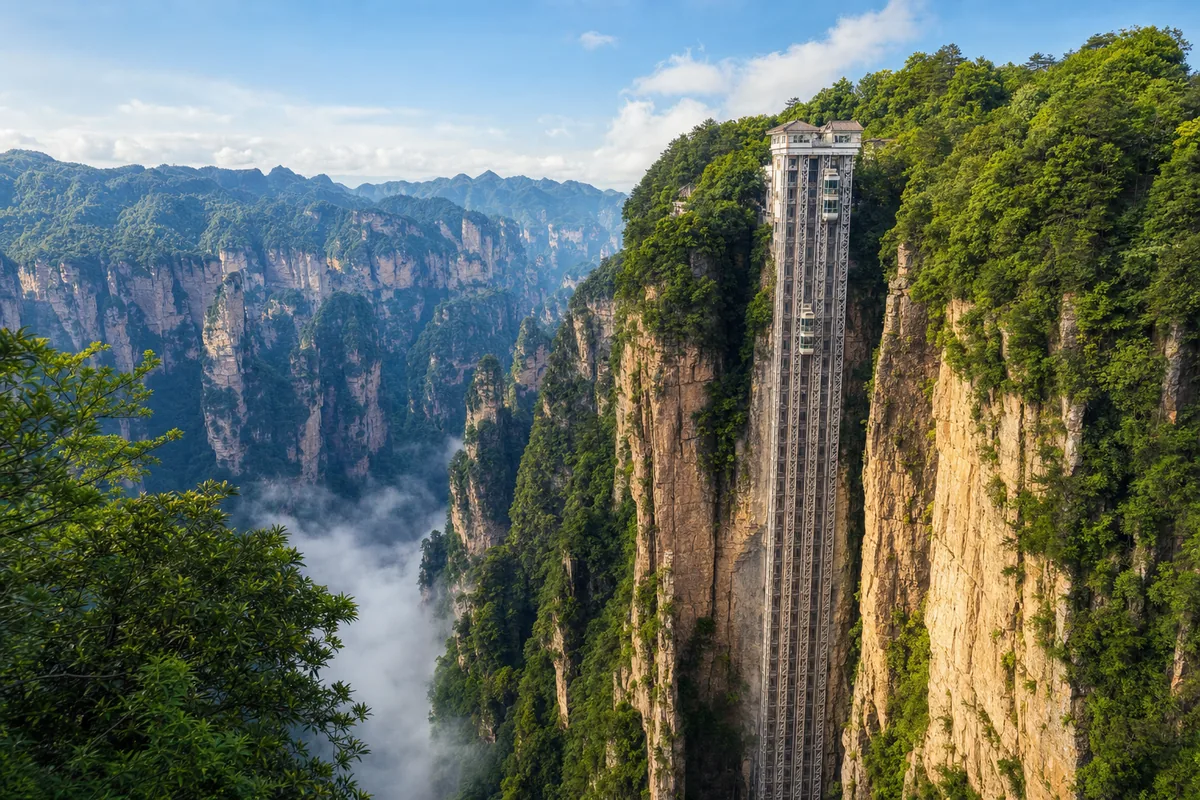
Yuanjiajie holds the most famous viewpoint, the pillar nicknamed the "Avatar Hallelujah Mountain." To get up there, you ride the Bailong Elevator (百龙天梯, Bǎilóng Tiāntī), a glass lift bolted to the outside of a 326-meter cliff. It's billed as one of the tallest outdoor elevators in the world and hauls you up in under two minutes. Lines can be long; arrive early.
Tianzi Mountain (天子山, Tiānzǐ Shān) offers wide-angle views over a sea of pillars and has its own cable car if you'd rather not hike up. Golden Whip Stream (金鞭溪, Jīnbiān Xī) is a flat, shaded 7.5 km valley path along a clear creek, popular with macaque monkeys, and a good option for travelers who want scenery without steep climbs.
The park ticket is valid for multiple days (commonly sold as a multi-day pass) and includes the in-park shuttle buses, which you'll rely on to move between zones. The Bailong Elevator and the various cable cars are usually charged separately. A common first-timer mistake is underestimating distances; the free shuttle network is essential, not optional.
Skip-the-line entry and guided options that bundle the park pass with cable car or elevator tickets can save real time in peak season. Day tours that include transport from your hotel are available on platforms like Klook, which helps if you'd rather not work out the shuttle system yourself.
Tianmen Mountain
Tianmen Mountain (天门山, Tiānmén Shān) is a separate sight just outside Zhangjiajie city, not inside the forest park, and many people confuse the two. It's a full half-day on its own and arguably the most adrenaline-heavy stop.
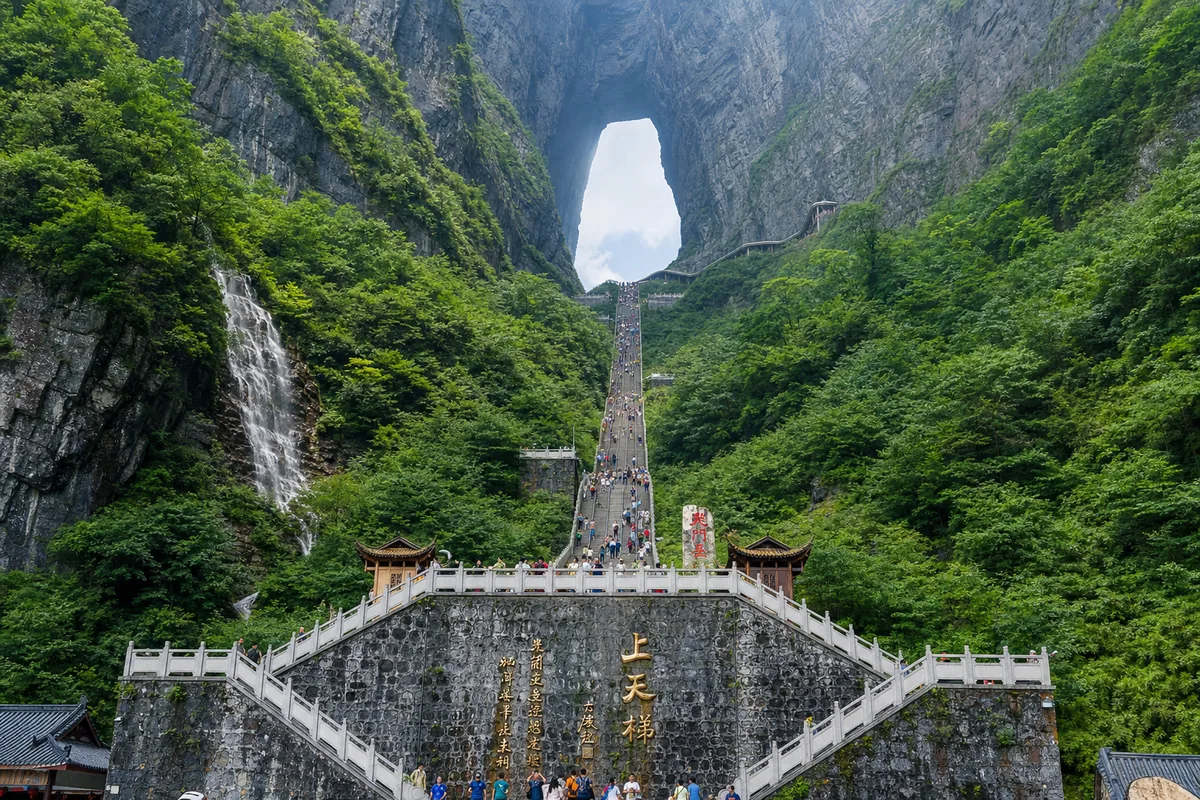
You start with the Tianmen Mountain Cableway, one of the longest passenger cable cars in the world at about 7.5 km, rising from near the city center to the summit in roughly 30 minutes. From the top, a network of cliffside walkways includes several glass-floored skywalks cantilevered over sheer drops. Then there's Heaven's Gate (天门洞, Tiānmén Dòng), a natural arch punched 130 meters through the rock. To reach it you either climb the 999 steps of the "Stairway to Heaven" or descend by a series of escalators built inside the mountain. The road up, the "99 Bends" (通天大道), with its hairpin switchbacks, is famous in its own right.
The Zhangjiajie Glass Bridge
The Zhangjiajie Glass Bridge (张家界大峡谷玻璃桥) spans the Grand Canyon of Zhangjiajie, not the national forest park, so it's another separate ticket and location. When it opened it was billed as the highest and longest glass-bottomed bridge in the world, around 430 meters long and roughly 300 meters above the canyon floor. Walking across a transparent deck that high is the whole point, and yes, it flexes slightly underfoot, which is by design.
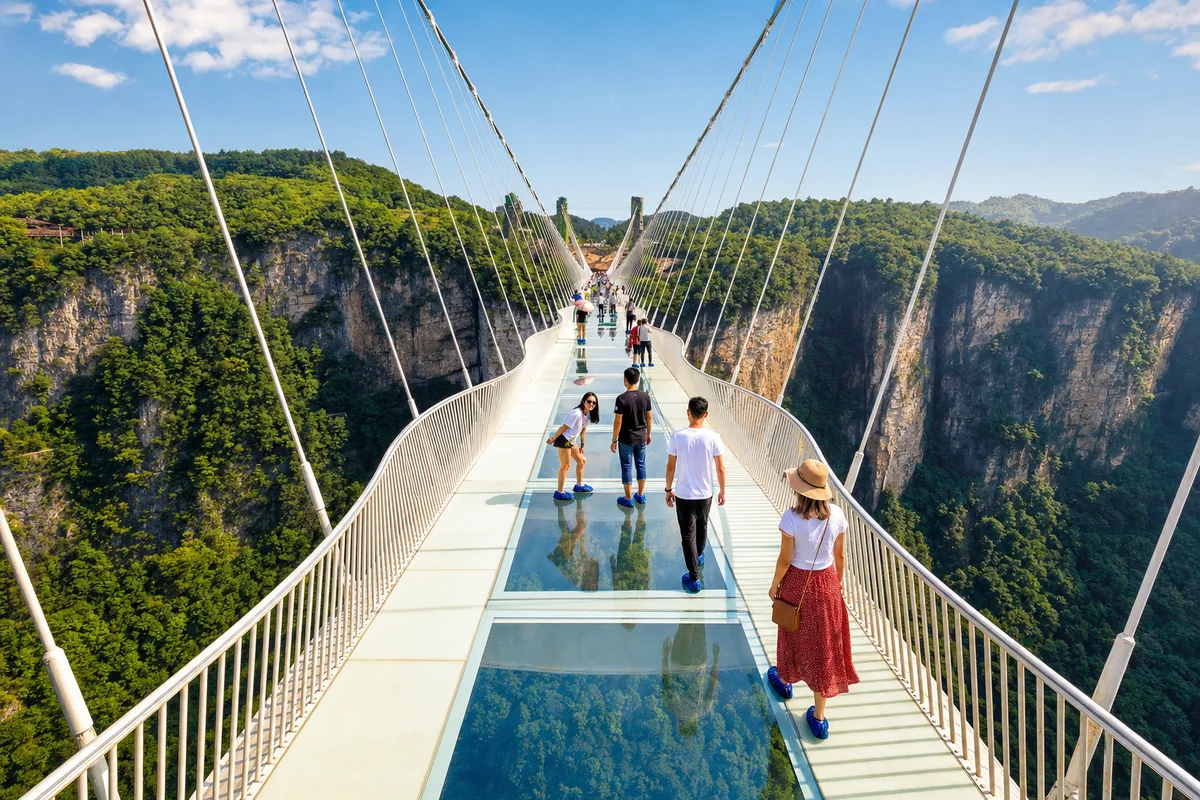
Entry is by timed slot and capacity is capped, so book ahead in peak season. After the bridge you can continue down into the canyon on foot and finish with a short boat ride along the river at the bottom, which makes a relaxed contrast to the heights above.
Baofeng Lake
Baofeng Lake (宝峰湖, Bǎofēng Hú) is the gentle counterpoint to all the cliffs and glass. It's a clear mountain lake sitting high among the peaks, created by a dam, where you take a slow boat between sheer green walls. Local Tujia (土家, Tǔjiā) ethnic performers often sing folk songs from the shore as boats pass, a bit staged but a pleasant break. It's close to Wulingyuan town and works well as a half-day add-on, especially for families or anyone wanting a lower-effort afternoon after the steep walking elsewhere.
Where to Stay
Three bases, each with a trade-off:
- Wulingyuan town — closest to the national forest park's main gate, Baofeng Lake, and the Glass Bridge. Best for park-focused trips. Plenty of mid-range hotels and guesthouses.
- Zhangjiajie city — best for Tianmen Mountain (cable car departs near downtown) and the airport. More restaurants and city amenities, but a 40-60 minute transfer from the park.
- Inside the park / Tianzi Mountain area — basic guesthouses let you catch sunrise above the pillars without the morning commute, but rooms are simple and options limited.
For a first visit I'd base in Wulingyuan for the park days and, if you're also doing Tianmen, either spend one night in Zhangjiajie city or do Tianmen on your arrival or departure day. You can compare hotels in both towns on Booking.com to see which location and price suits your plan. Note that all hotels must register foreign guests with the police at check-in; our hotel booking and registration guide explains how that works.
Food
Hunan cooking is hot. Local Tujia and Hunan dishes lean on chili, garlic, and smoked or cured meats. Look for Tujia smoked pork (腊肉, làròu) stir-fried with dried chili, sour-and-spicy fish, three-cup chicken, and rice-flour-steamed pork. Wulingyuan and Zhangjiajie city both have tourist-facing restaurant strips; step one block back from the main gate and prices drop. If you can't take heat, say "bù yào là" (不要辣, no chili) when ordering, though in Hunan that's often interpreted loosely.
Suggested 2-3 Day Itinerary
Two days is enough for the highlights; three lets you slow down and add Baofeng Lake or a side trip.
| Day | Plan |
|---|---|
| Day 1 | Arrive, base in Wulingyuan. National Forest Park: Bailong Elevator up to Yuanjiajie (Avatar viewpoint), then Tianzi Mountain. Overnight Wulingyuan. |
| Day 2 | Glass Bridge at the Grand Canyon in the morning, Baofeng Lake in the afternoon. Or a second, slower park day via Golden Whip Stream. |
| Day 3 | Transfer to Zhangjiajie city for Tianmen Mountain (cable car, glass walkways, Heaven's Gate). Depart from the city or airport. |
For trip-planning and getting around once you're in nearby cities, the WaysChina app has offline metro maps for major hubs like Changsha and Wuhan plus a day-by-day itinerary planner.
Side Trips: Changsha and Fenghuang
Most people pass through Changsha anyway, and it's worth a night for its food scene and riverside nightlife. The high-speed train between Changsha and Zhangjiajie West runs in about 2.5-3 hours. See the Changsha complete guide for what to do there.
Fenghuang (凤凰, Fènghuáng), an ancient riverside town of stilt houses lit up at night, is a popular pairing with Zhangjiajie. Direct buses run from Zhangjiajie in roughly 4-4.5 hours. It's a complete change of pace from the mountains; the Fenghuang ancient town guide covers the details. If you want the whole region in one trip, the Central China route from Wuhan through Changsha to Zhangjiajie ties it together.
Practical Notes
- Tickets and prices change. Park, cable car, elevator, bridge, and Tianmen tickets are sold separately and prices shift seasonally. Check current rates before you go.
- Wear real shoes. You'll walk a lot on uneven stone steps and walkways. Skip sandals.
- Cloud is a coin flip. Mist makes great photos but can also hide everything. If your first morning is socked in, the multi-day park pass lets you try again.
- Cash and QR. Mobile payment is standard; set up Alipay (支付宝, Zhīfùbǎo) or WeChat Pay before arriving. UNESCO lists Wulingyuan among its World Heritage sites if you want the official background.
The Bottom Line
Zhangjiajie is a detour, not a quick stop, and that's the trade. Getting there usually means a flight or a train through Changsha, and the four main sights, the national forest park, Tianmen Mountain, the Glass Bridge, and Baofeng Lake, are spread across separate locations with separate tickets. Give it two full days minimum, three if you can. Base in Wulingyuan for the park, handle Tianmen from the city, and time your visit for spring or autumn outside the holiday weeks. Pair it with Fenghuang or Changsha to round out a trip through central China. Then go stand on a glass platform 300 meters up and decide whether the photos did it justice.
Last updated: June 2026
Read in other languages
Last train times for 10 Chinese metro systems
Every line and station, checked by hand — the same data behind our offline route planner.
Get the WaysChina App
Offline guides, currency converter, essential phrases, and more — all in your pocket.

Related Articles
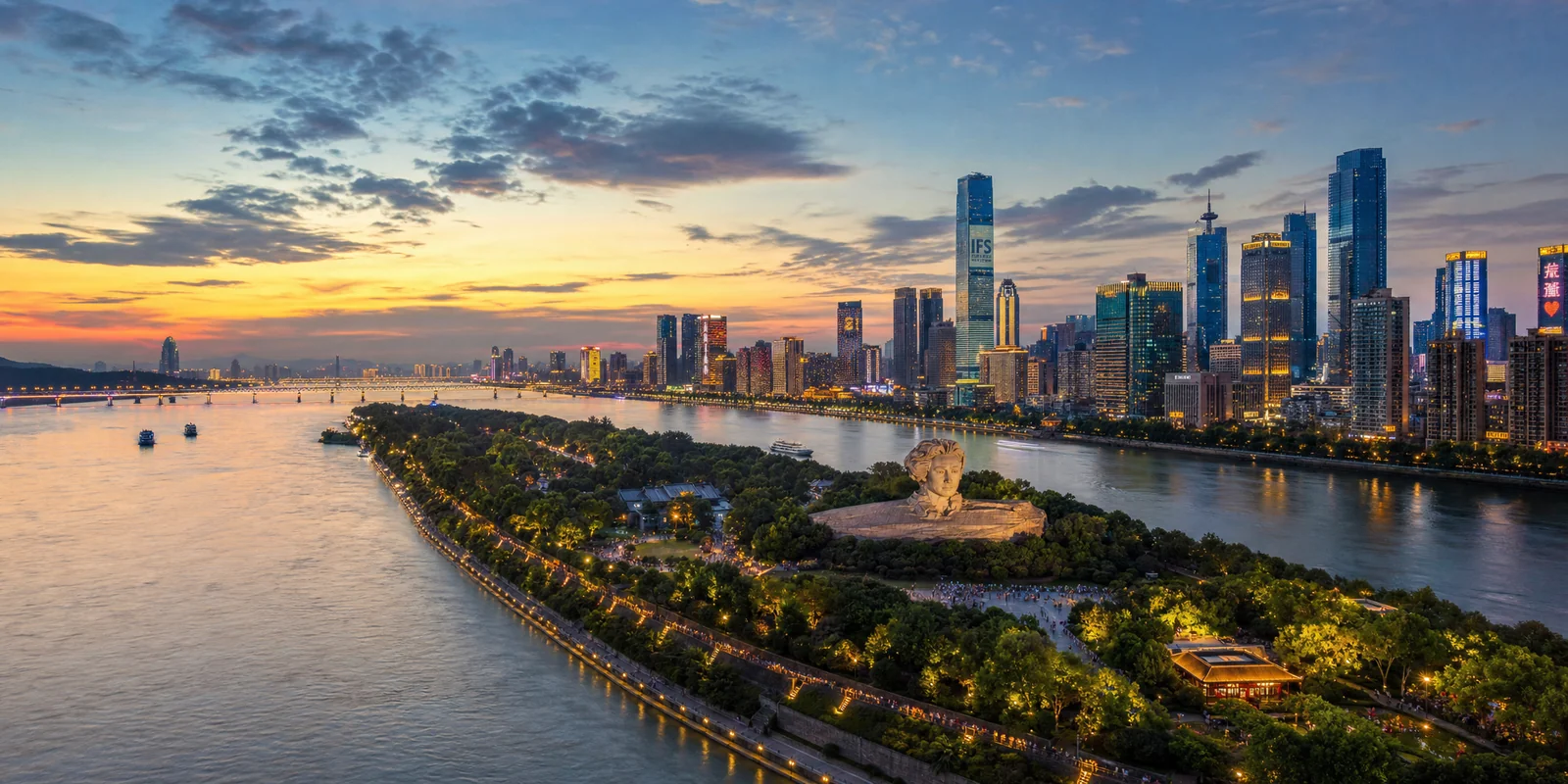
Changsha Complete Guide
Changsha is China's capital of spicy food and late-night street life. Here's how to eat, explore Orange Island and...
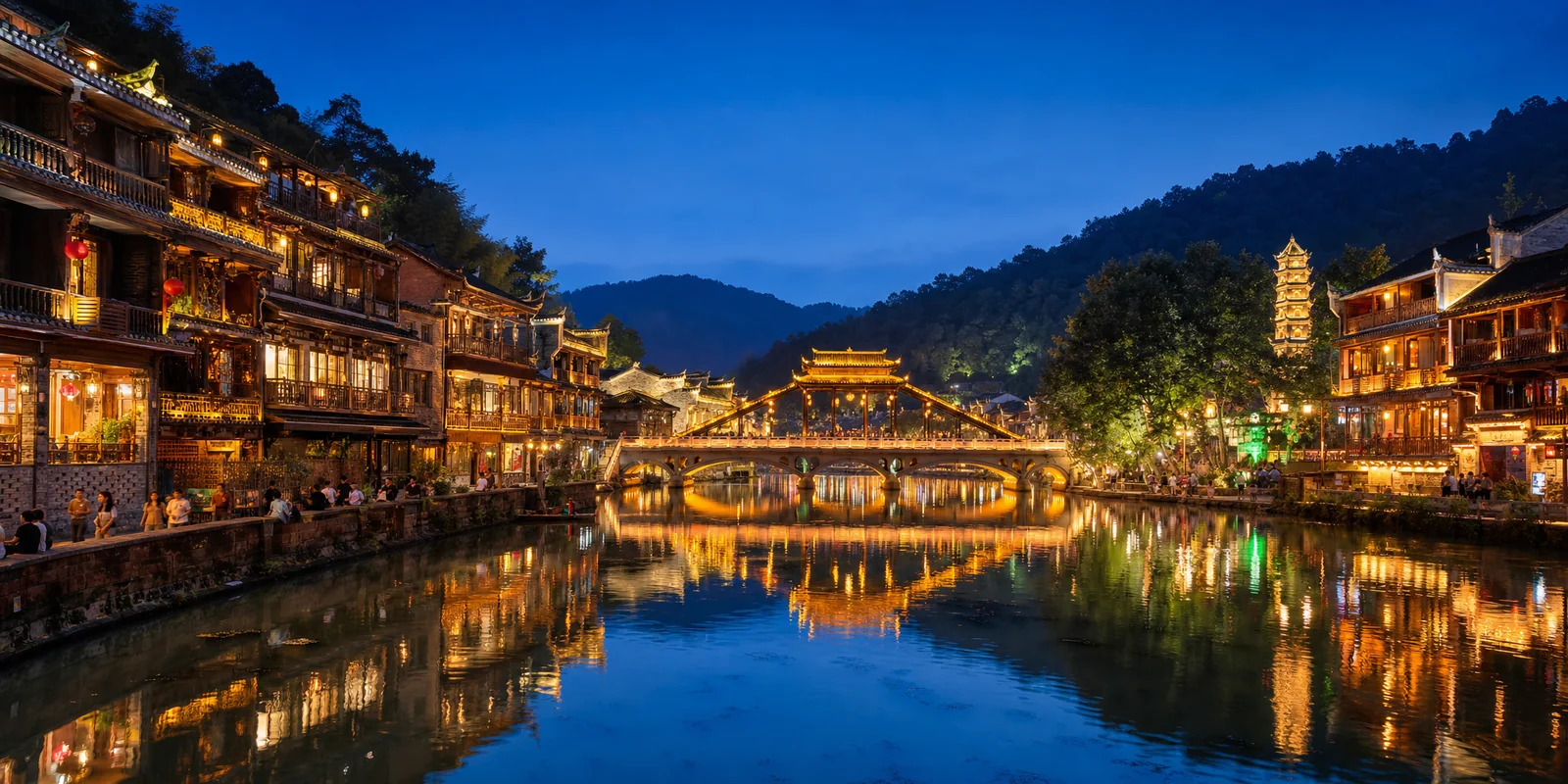
Fenghuang Ancient Town Guide
Stilt houses on the Tuojiang River, Miao villages, and a 1,300-year-old town that comes alive at night. Here's how...
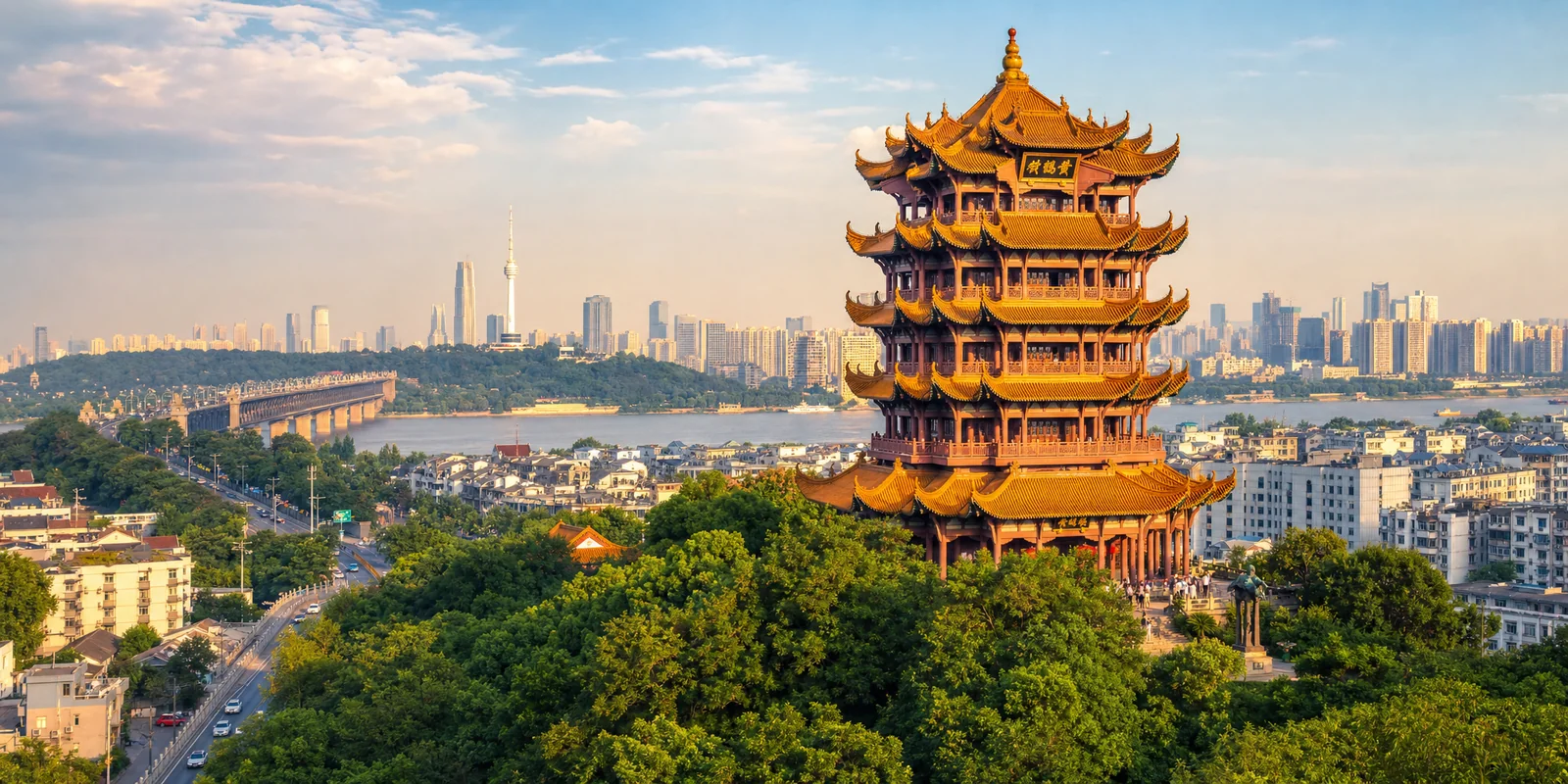
Wuhan Complete Guide
Everything you need to plan a 2-3 day trip to Wuhan: the Yellow Crane Tower, East Lake, Hubei Provincial Museum,...
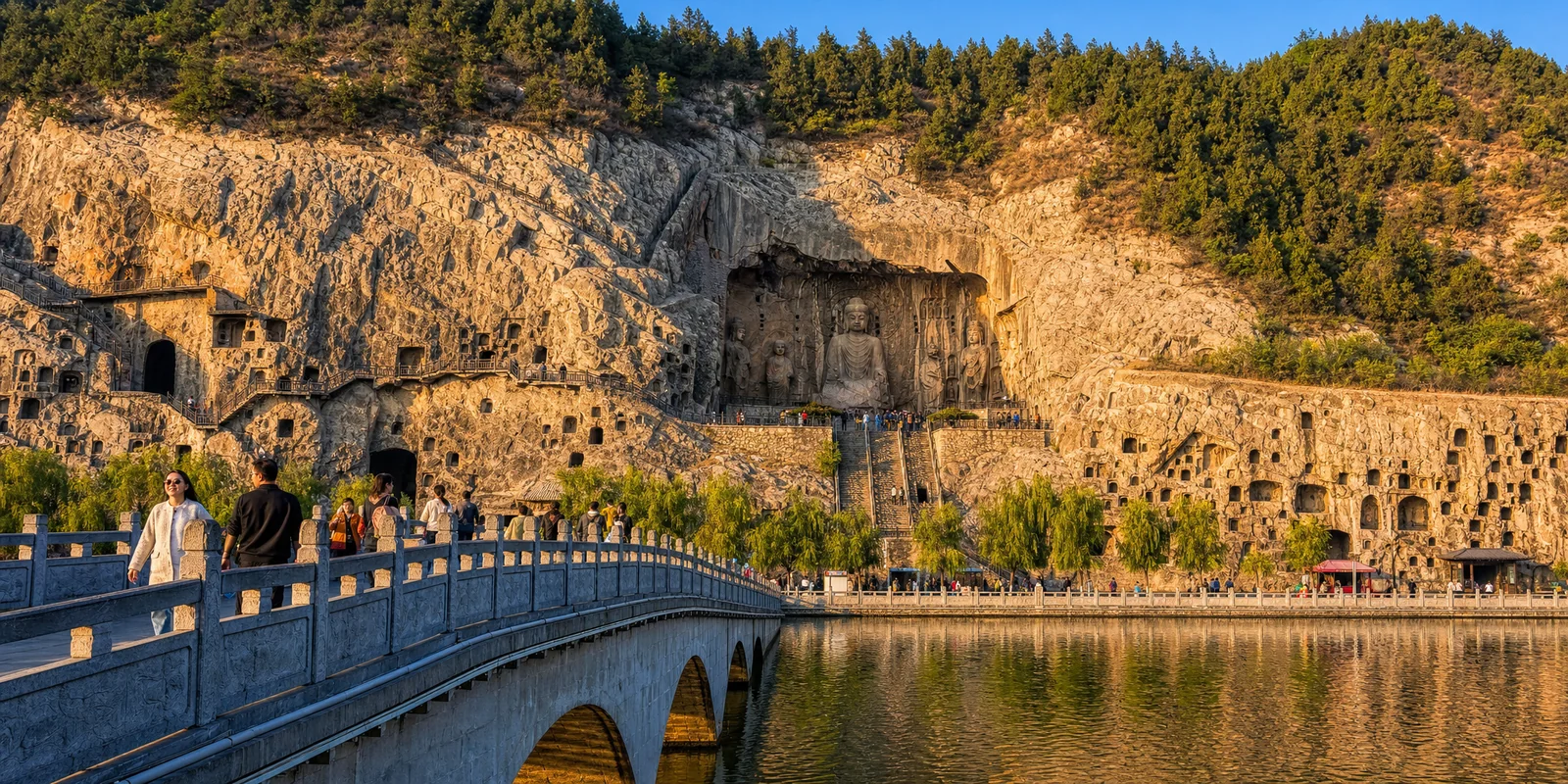
Luoyang Ancient Capital Guide
Luoyang served as capital to thirteen Chinese dynasties and holds the UNESCO-listed Longmen Grottoes. Here's how to...