
This article contains affiliate links. If you make a purchase through these links, we may earn a small commission at no extra cost to you. This helps support our work in creating free travel guides.
Changsha (长沙, Chángshā), the capital of Hunan Province, is where Chinese tourists go to eat. It's the home of Hunan cuisine (湘菜, xiāngcài) — fiery, garlicky, smoky food that locals are genuinely proud of — and it has one of the most energetic nightlife and snack-street scenes in the country. Most international visitors arrive here for one of two reasons: they're transferring to Zhangjiajie (the inspiration for the floating mountains in Avatar), or they've heard the food is worth a detour. Both are good reasons. Two to three days is enough to cover the city's highlights and still have time for a day trip. This guide covers what to see, what to eat, how to get around, and where to base yourself.
Overview: Why Visit Changsha
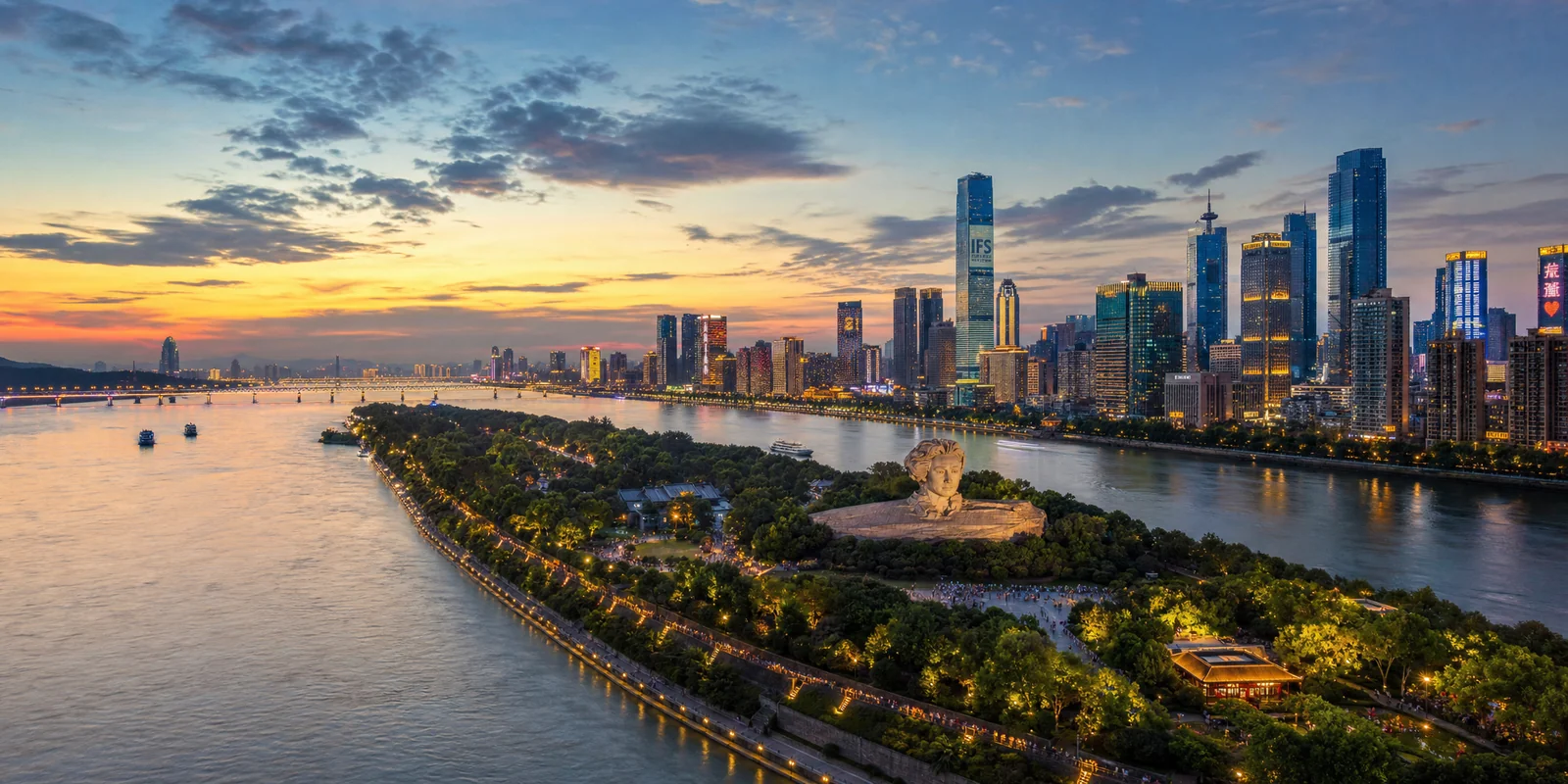
Changsha isn't a postcard city the way Guilin or Hangzhou are. It's a working provincial capital with a riverfront, a couple of standout historic sites, and a food culture that punches well above its weight. The Xiang River (湘江, Xiāng Jiāng) splits the city, with the commercial core on the east bank and Yuelu Mountain and the university district on the west.
What makes Changsha worth the stop is the combination: serious history (a 2,000-year-old academy, one of China's best provincial museums) sitting right next to a snack and nightlife scene that runs past midnight every day of the week. It's also become a magnet for young domestic tourists chasing viral food brands like Wenheyou and Chayan Yuese, which gives the central districts a buzzing, slightly chaotic energy.
The city is well connected by high-speed rail, which is the main reason it works as a gateway. You can be in Zhangjiajie in under 90 minutes and Wuhan in about an hour and a half.
Best Time to Visit
Spring (March–May) and autumn (September–November) are the most comfortable seasons, with mild temperatures and manageable humidity. Summers are hot and very humid — Changsha sits in one of China's so-called "furnace" regions — and winters are damp and cold without much snow. If you can choose, aim for spring or autumn. For broader timing advice, see our guide to the best time to visit China.
Getting There and Getting Around
Arriving in Changsha
Changsha Huanghua International Airport (CSX) handles domestic flights and a growing number of regional international routes. The airport is about 30 km east of the city center; the metro and the maglev line connect it to the rail network, or a taxi to downtown takes roughly 40 minutes.
For most travelers coming from elsewhere in China, the high-speed train is easier. Changsha South Railway Station (长沙南站, Chángshā Nán Zhàn) is the main hub, with frequent connections across the country. From here it's a quick metro ride into the center.
Getting Around the City
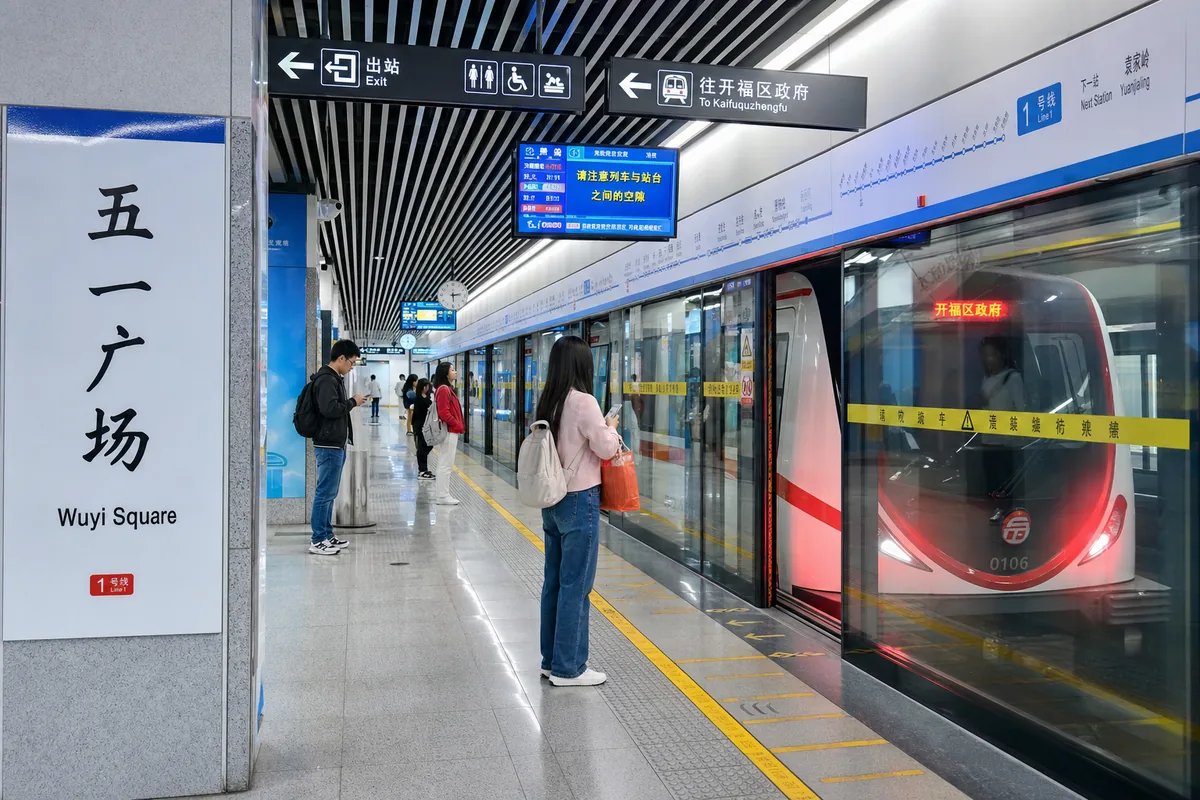
Changsha's metro is clean, cheap, and signed in English. Lines 1 and 2 cross at Wuyi Square (五一广场, Wǔyī Guǎngchǎng), the central interchange that puts you within walking distance of Taiping Old Street and the main snack streets. Buy single tickets at machines (cash and QR-code payment accepted) or tap in with Alipay's transit feature.
For door-to-door trips, ride-hailing through Didi is reliable and inexpensive — useful late at night when the metro has closed. Taxis are metered and plentiful. Most drivers don't speak English, so have your destination saved in Chinese characters.
Core Attractions
Orange Island (Juzizhou)
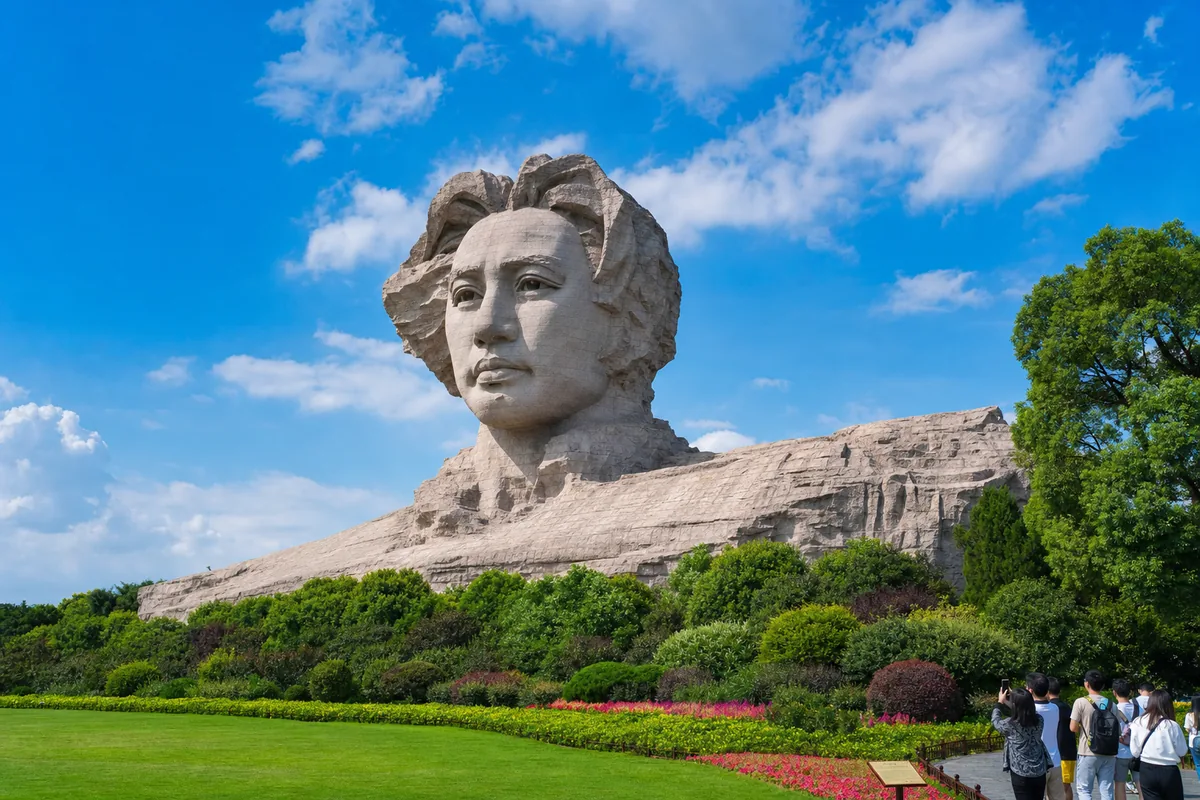
Orange Island (橘子洲, Júzizhōu) is a long, narrow sandbar in the middle of the Xiang River, and it's the single most photographed spot in Changsha. The reason most people come is the giant stone sculpture at the southern tip: a 32-meter-tall portrait of a young Mao Zedong, who studied in Changsha as a student and famously wrote about swimming in this river. The sculpture depicts him in his twenties, gazing across the water.
The island itself is a free public park, pleasant for a slow walk among the orange trees that give it its name. A small sightseeing train shuttles visitors along its length for a few yuan if you don't want to walk the full distance. Entry to the park is free; you only pay for the optional train. On weekend evenings in warmer months there's often a fireworks show over the river — check locally for the current schedule, as it changes seasonally.
The metro stop is named directly for the island (Orange Isle / Juzizhou, Line 2), which makes it one of the easiest sights to reach.
Yuelu Academy and Yuelu Mountain
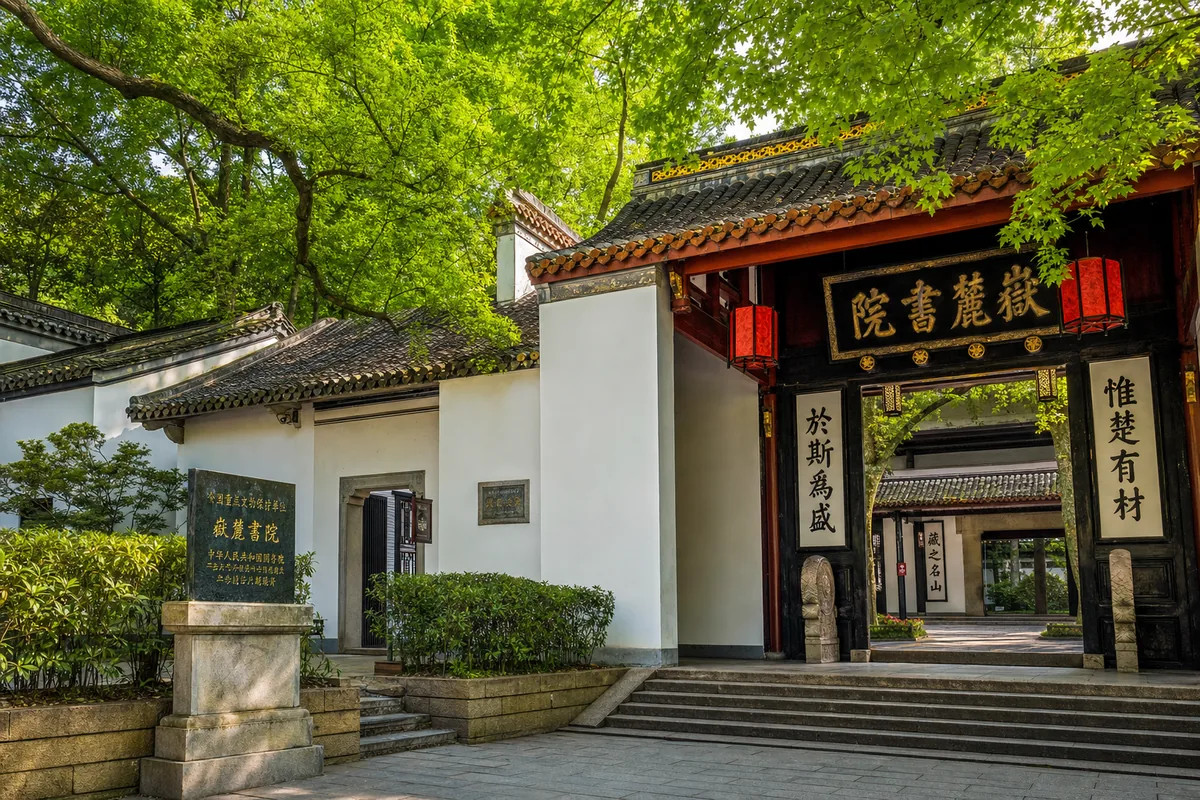
Yuelu Academy (岳麓书院, Yuèlù Shūyuàn) is one of the four great academies of ancient China, founded over a thousand years ago and still standing on the lower slopes of Yuelu Mountain. Today it sits inside the campus of Hunan University, and walking through its courtyards — past lecture halls, libraries, and stone tablets carved with classical texts — gives you a genuine sense of how Confucian scholars studied and debated for centuries. It's quieter and more contemplative than the city's other sights.
Behind the academy, Yuelu Mountain (岳麓山, Yuèlù Shān) is a forested hill you can climb on foot or by cable car. It's especially popular in late autumn when the maple leaves turn red. From the upper paths you get a clear view across the river to the city skyline. Plan a half-day if you want to combine the academy and the climb.
Hunan Provincial Museum
The Hunan Provincial Museum (湖南省博物馆, Húnán Shěng Bówùguǎn) is the city's must-do indoor attraction, and it's free — though you need to book a timed entry slot in advance through its official channels, as daily numbers are capped. The star exhibit is the Mawangdui (马王堆) collection: the tomb of Lady Dai (辛追, Xīn Zhuī), a noblewoman who died over 2,100 years ago and whose body was so extraordinarily preserved that her skin and joints remained supple when archaeologists opened the tomb in the 1970s. It's one of the most significant archaeological finds in China.
Alongside her remarkably intact remains, the museum displays the silk garments, lacquerware, painted banners, and everyday objects buried with her — an unusually complete window into Han dynasty life. Give yourself two to three hours. English labeling is decent but not exhaustive, so a translation app or the audio guide helps.
Taiping Old Street
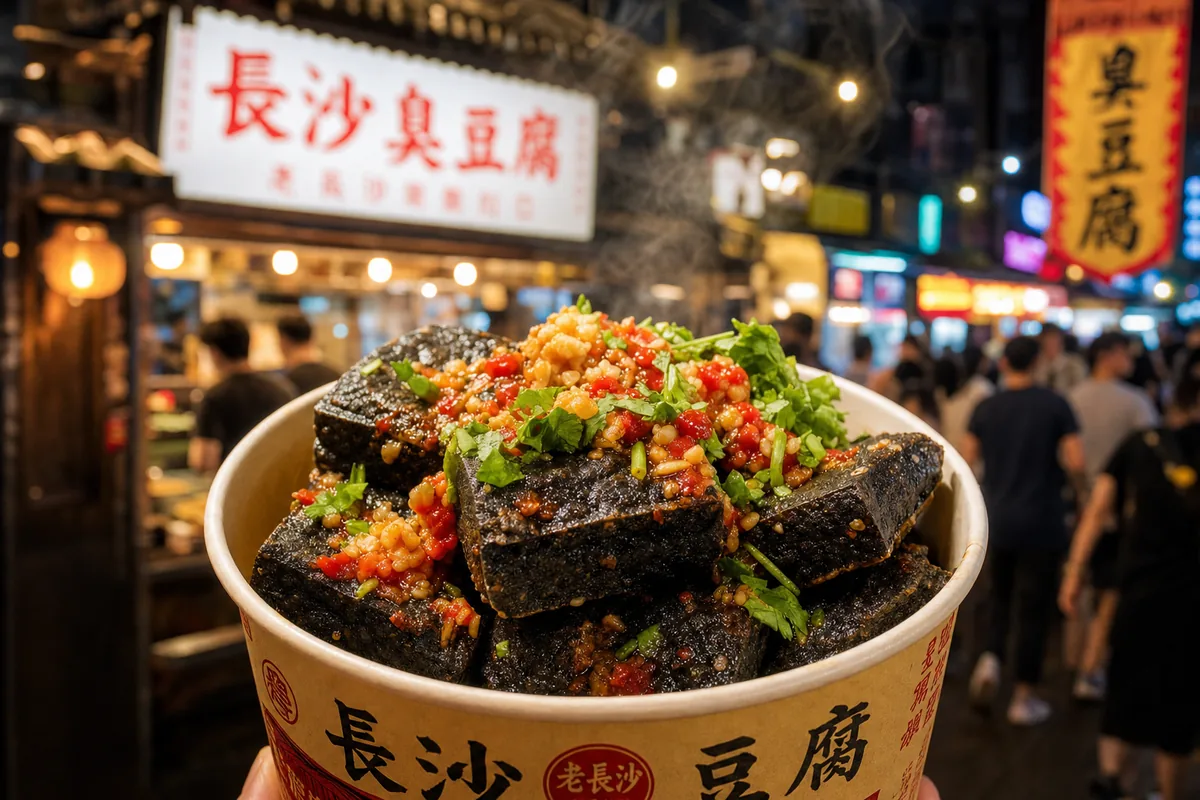
Taiping Old Street (太平老街, Tàipíng Lǎojiē) is a restored historic lane near Wuyi Square, paved in stone and lined with snack stalls, tea shops, souvenir sellers, and a few preserved old residences. It's touristy and crowded, especially at night, but it's also one of the easiest places to graze your way through Changsha's famous snacks in one walk. This is where you'll find the original Chayan Yuese (茶颜悦色) milk tea shop and stalls selling stinky tofu, sugar-oil cakes, and rice noodles.
It's a short street, so it works well as an evening stop combined with dinner nearby. Come hungry rather than for the architecture.
Shaoshan: Mao Zedong's Birthplace
Shaoshan (韶山, Sháoshān) is a small town about 100 km southwest of Changsha, and it's where Mao Zedong was born and raised. For Chinese visitors it's a major pilgrimage site; for international travelers it's an interesting window into how modern China memorializes its founding leader. You can see Mao's childhood home — a modest farmhouse — a large bronze statue in the central square, and a memorial museum.
Direct high-speed trains run from Changsha to Shaoshan South Station in around 30 minutes, though the station sits a little outside town and you'll need a local bus or taxi to reach the sites. It's a full day trip. Whether it's worth it depends on your interest in modern Chinese history — if that's not your thing, your time is better spent on the city's food and Yuelu Mountain.
Booking guided day trips to Shaoshan and other sights is straightforward through platforms like Klook, which can save the hassle of arranging local transport and timed entries yourself.
Changsha Food Guide
Food is the real headline in Changsha. Hunan cuisine is one of China's eight great culinary traditions, and locals will tell you it's spicier and more aromatic than Sichuan food — less numbing, more direct heat with heavy use of fresh and pickled chilies, garlic, and fermented black beans. If you don't handle spice well, say so when ordering ("不要辣", bù yào là, "no chili"), though some dishes are spicy by definition.
Dishes to Try
- Stinky tofu (臭豆腐, chòu dòufu) — Changsha's black-fried version is legendary, crisp outside and soft inside, doused in chili and garlic sauce. The smell is intense; the taste wins most people over.
- Chairman Mao's red-braised pork (毛氏红烧肉, máoshì hóngshāo ròu) — fatty pork belly braised in soy and sugar, said to be Mao's favorite dish, native to this region.
- Spicy crayfish (口味虾, kǒuwèi xiā) — a summer obsession, eaten by the bucket with beer late into the night.
- Rice noodles (米粉, mǐfěn) — the standard local breakfast, served in broth with various toppings.
- Sugar-oil cake (糖油粑粑, táng yóu bābā) — sweet glutinous rice balls fried in sugar syrup, a classic street snack.
- Chayan Yuese (茶颜悦色) — the milk tea brand that started here and is borderline mandatory among young visitors; expect a queue.
Where to Eat
For street snacks, the area around Pozi Street (坡子街, Pōzi Jiē) and Taiping Old Street near Wuyi Square is the densest cluster. Wenheyou (文和友) is a sprawling, theatrical food complex designed to look like an old Changsha neighborhood from decades past — part restaurant, part theme park, and a destination in its own right for the spicy crayfish and retro setting. It gets extremely crowded; go off-peak if you can.
For sit-down Hunan restaurants, you'll find good options throughout the central districts. Look for places that are busy with locals. For broader advice on ordering without Chinese, see our guide on how to order food with zero Chinese.
Changsha Nightlife
Changsha has a reputation as one of China's best nightlife cities, and it earns it. The energy isn't only in clubs — it's the whole rhythm of the city. Snack streets stay busy until the early hours, crayfish restaurants fill up after 10 pm, and the entertainment districts around Jiefang West Road (解放西路, Jiěfàng Xī Lù) — known locally as "Jie Xi" — are packed with bars, clubs, and karaoke until dawn.
Changsha is also the home of Hunan Broadcasting System, China's most-watched provincial TV network, which has fed a strong local culture of live performance, variety entertainment, and music bars. If you want a quieter evening, a walk along the riverfront at Orange Island or a livehouse music venue is a good alternative to the clubs.
Where to Stay
For first-time visitors, the most convenient base is around Wuyi Square (五一广场). You're on the metro interchange, within walking distance of Taiping Old Street, Pozi Street snacks, and the Jiefang West Road nightlife, and close to most major sights. This is where the city's energy concentrates.
If you prefer something quieter and more scenic, the west bank near Yuelu Mountain and Hunan University is calmer and more student-oriented, with easy access to the academy and riverside walks — though you'll cross the river for most dining and nightlife.
| Area | Best for | Trade-off |
|---|---|---|
| Wuyi Square (city center) | First-timers, food, nightlife, transport | Busy and noisy at night |
| Changsha South Station area | Quick onward train connections | Far from sights and atmosphere |
| West bank (Yuelu) | Quiet stays, university district, nature | River crossing for central sights |
Changsha has the full range, from international chains to budget guesthouses. You can compare options and prices for the Wuyi Square area on Booking Com Hotel to find something within walking distance of the action. For general advice on China's check-in process, see our guide to booking hotels and registration rules.
Day Trips and Onward Travel
Changsha's best feature for many travelers is its position. It's a natural hub for central China and the gateway to one of the country's most spectacular landscapes.
Changsha to Zhangjiajie
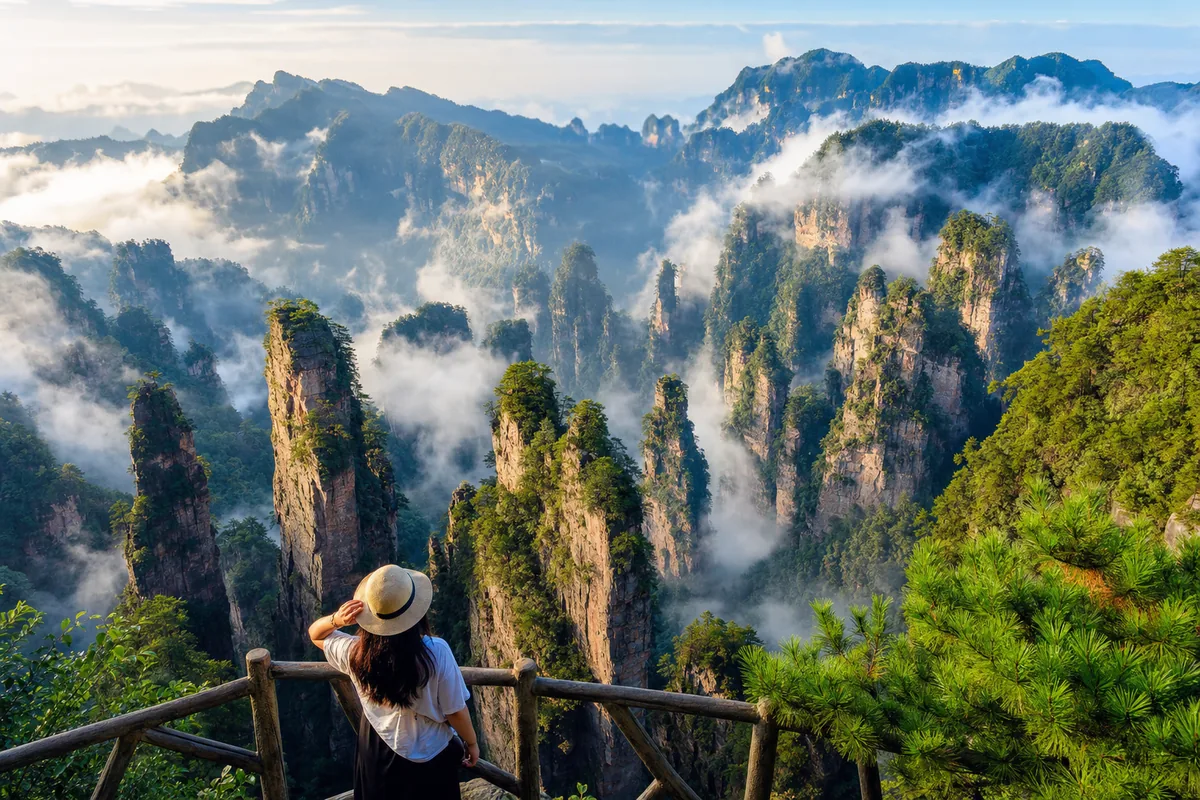
Zhangjiajie (张家界) — the towering sandstone pillars that inspired the Avatar mountains — is the most popular trip from Changsha. High-speed trains now make the journey in roughly 75–90 minutes, a huge improvement over the old slow route. Many travelers use Changsha for a day of food and history, then continue to Zhangjiajie for two or three days of hiking and the glass bridge. See our dedicated Zhangjiajie guide for planning the nature portion.
Changsha to Wuhan
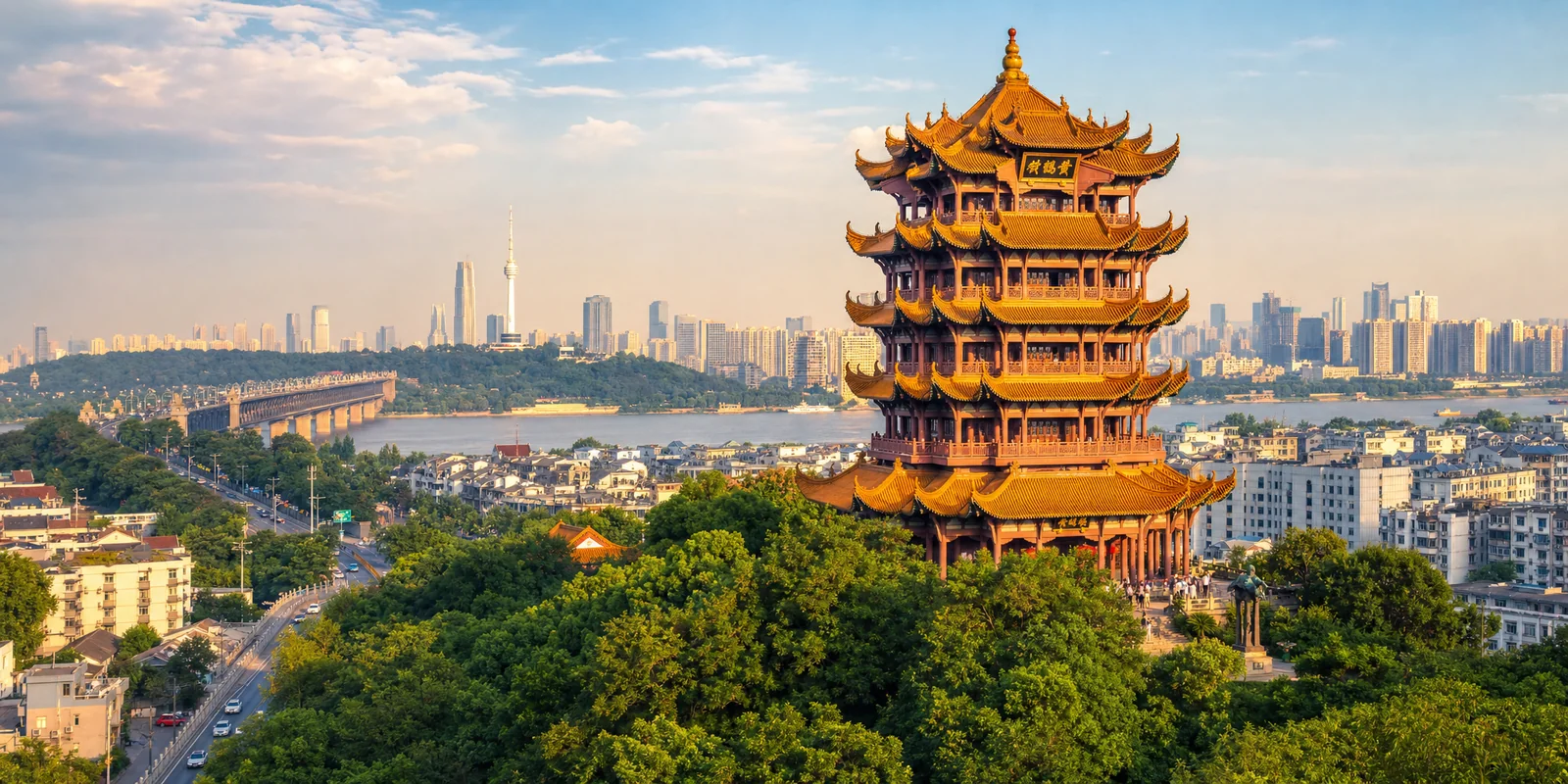
Wuhan, the capital of neighboring Hubei Province, is about 90 minutes north by high-speed train. It makes a logical next stop if you're working your way through central China. Our Wuhan complete guide covers what to do there.
Changsha to Fenghuang
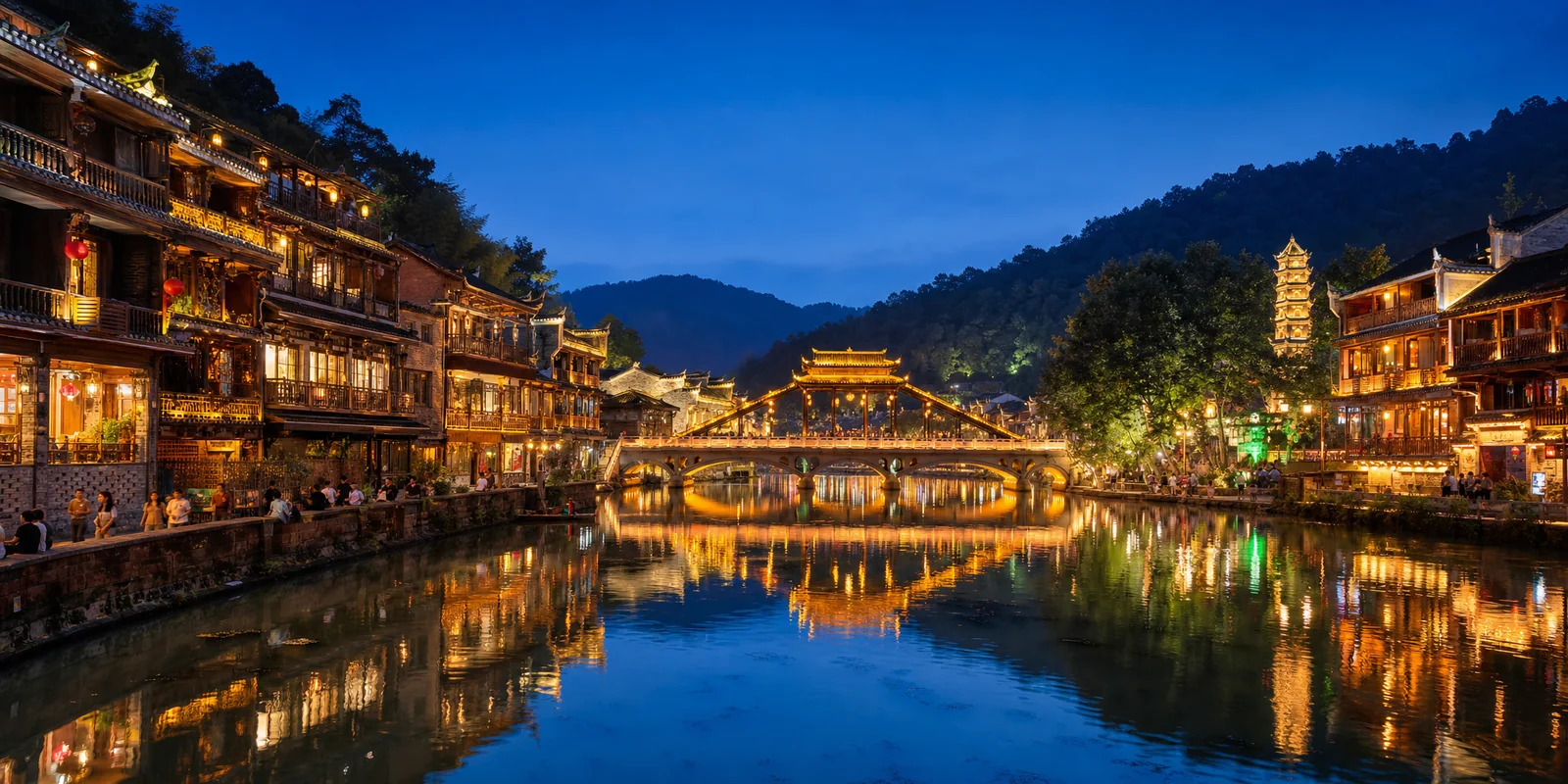
Fenghuang (凤凰), the riverside ancient town with stilt houses over the water, is in western Hunan and pairs naturally with a Zhangjiajie trip. There's no direct high-speed line all the way; most travelers take the train toward the Zhangjiajie/Jishou direction and connect by bus, totaling around 4–5 hours. Read our Fenghuang ancient town guide before you go.
If you want to string these together into one trip, the classic loop is covered in our Central China route: Wuhan–Changsha–Zhangjiajie. Train tickets for all these legs can be booked in advance through Trip Com Train, which has an English interface and accepts foreign cards.
Suggested Itinerary
Day 1 — City and food: Hunan Provincial Museum in the morning (book ahead), Orange Island in the afternoon, then dinner and snacks around Taiping Old Street and Pozi Street, finishing with a walk through the Jiefang West Road nightlife district.
Day 2 — History and nature: Cross to the west bank for Yuelu Academy, climb or take the cable car up Yuelu Mountain for the city view, and spend the evening with spicy crayfish and beer at Wenheyou.
Day 3 (optional) — Day trip: Either Shaoshan for modern history, or board a morning train to Zhangjiajie to continue your trip.
Practical Tips
- Set up Alipay with a foreign card before you arrive — you'll use it for nearly every payment, including snack stalls and the metro.
- Book the Hunan Provincial Museum and any popular sights through their official reservation systems a few days in advance.
- Carry your passport; you need it for hotel check-in, museum entry, and train travel.
- Hunan food is genuinely spicy. Ask for less chili if you're unsure, and keep something cooling like milk tea on hand.
- Summer is hot and humid; pace yourself, hydrate, and plan indoor activities for the midday heat.
Final Thoughts
Changsha rewards travelers who come for the food and stay for the unexpectedly rich history. In two days you can stand at the foot of a 32-meter Mao sculpture on Orange Island, walk the courtyards of a thousand-year-old academy, meet the extraordinarily preserved Lady Dai at the provincial museum, and eat your way through some of the spiciest, most distinctive food in China — all before a late night on Jiefang West Road. And when you're ready, Zhangjiajie's mountains are barely an hour away by train. Book your museum slot, set up mobile payments, and come hungry. That's most of the planning you need.
Last updated: June 2026
Read in other languages
Last train times for 10 Chinese metro systems
Every line and station, checked by hand — the same data behind our offline route planner.
Get the WaysChina App
Offline guides, currency converter, essential phrases, and more — all in your pocket.

Related Articles
Fenghuang Ancient Town Guide
Stilt houses on the Tuojiang River, Miao villages, and a 1,300-year-old town that comes alive at night. Here's how...
Wuhan Complete Guide
Everything you need to plan a 2-3 day trip to Wuhan: the Yellow Crane Tower, East Lake, Hubei Provincial Museum,...
Luoyang Ancient Capital Guide
Luoyang served as capital to thirteen Chinese dynasties and holds the UNESCO-listed Longmen Grottoes. Here's how to...
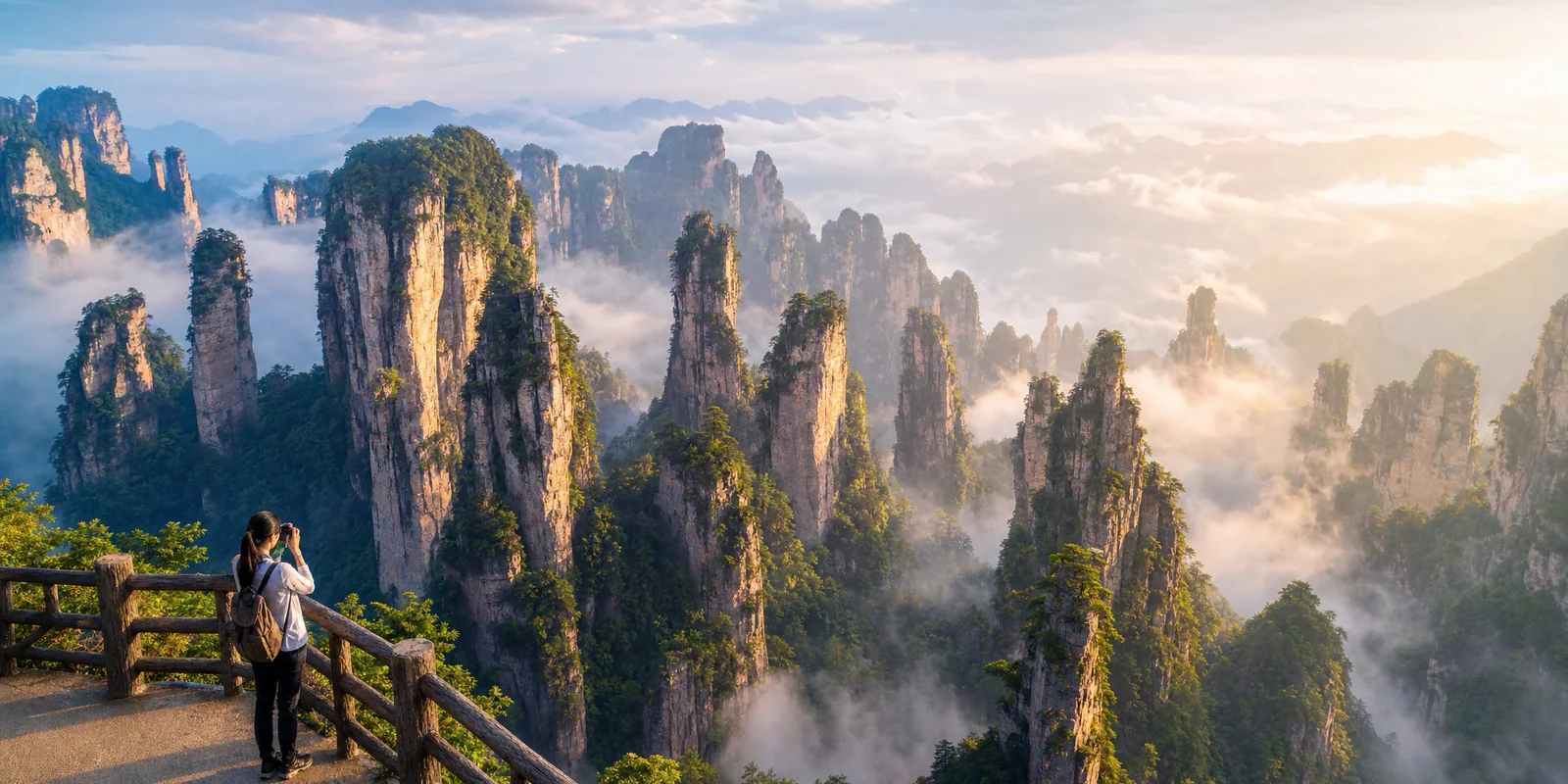
Zhangjiajie Travel Guide
The sandstone pillars that inspired Avatar's floating mountains are real, and they're in Zhangjiajie. Here's how to...