
This article contains affiliate links. If you make a purchase through these links, we may earn a small commission at no extra cost to you. This helps support our work in creating free travel guides.
Eating vegetarian or vegan in China is very doable, but it's not as simple as ordering a salad. The country has a centuries-old Buddhist vegetarian tradition and a huge variety of plant-based dishes, yet many "vegetable" dishes are cooked with meat broth, lard, or a few slices of pork "for flavor." The good news: with a handful of Chinese phrases and a sense of which dishes are reliably plant-based, you can eat well almost anywhere — from temple canteens to big-city vegan restaurants. This guide covers what to say, what to order, what to avoid, and where to find dedicated vegetarian spots.
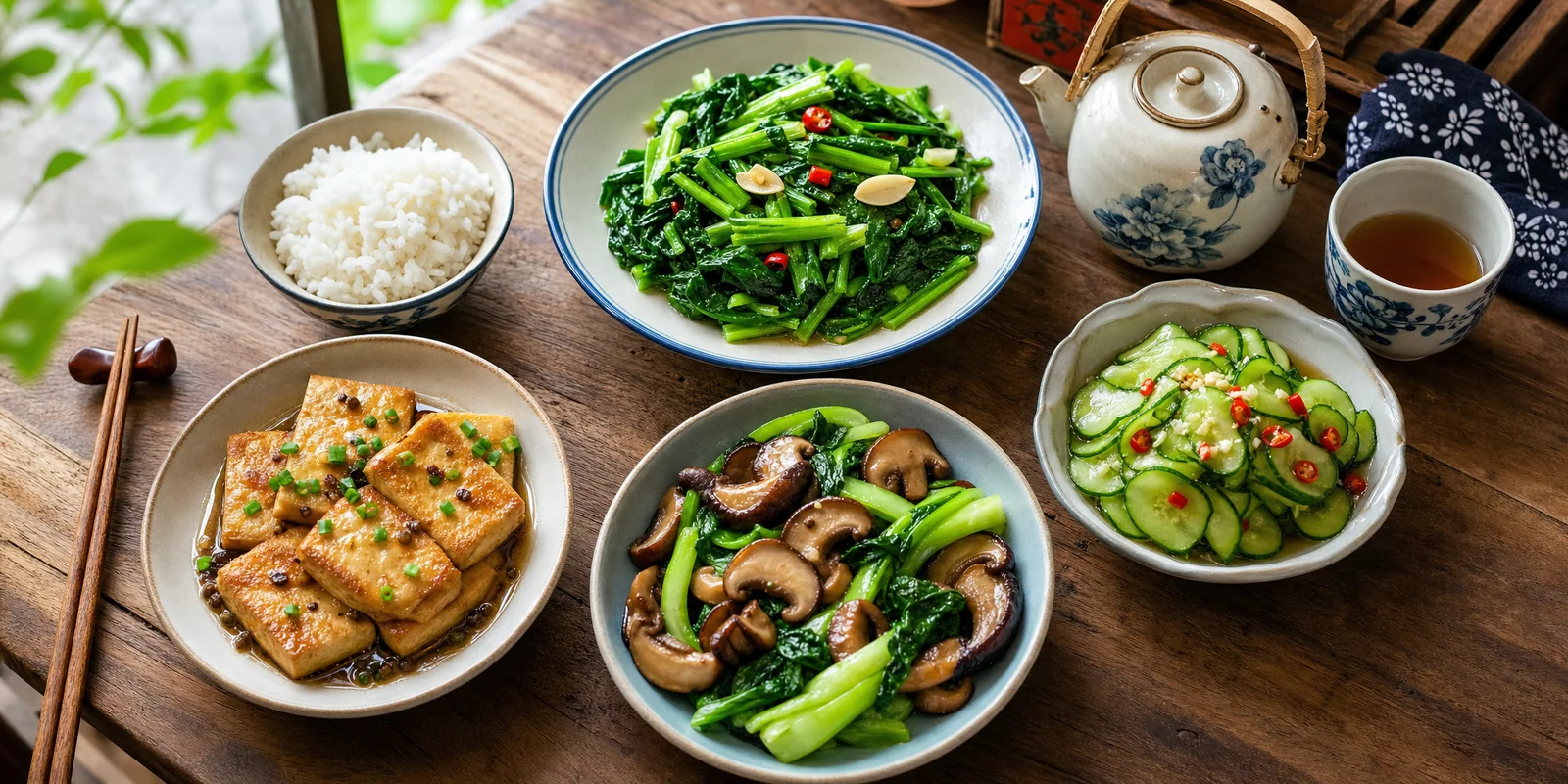
How Hard Is It, Really?
It depends on where you are and how strict you are. In major cities like Shanghai, Beijing, Chengdu, and Guangzhou, dedicated vegetarian and vegan restaurants are common and easy to find through apps. In smaller towns and rural areas, you'll rely more on ordering carefully at regular restaurants.
The single biggest challenge is that vegetarianism as a lifestyle is less common than in the West. When you say "I don't eat meat," some cooks interpret that as "no large chunks of meat" — so a stir-fried vegetable dish might still arrive with bits of pork or be cooked in animal fat. This isn't anyone trying to trick you; it's a difference in what "vegetarian" is assumed to mean. Being specific solves most problems.
Vegans face an extra layer: eggs, milk, and especially fish sauce, oyster sauce, and shrimp paste turn up in unexpected places. We'll cover the hidden ingredients below.
The Essential Phrases
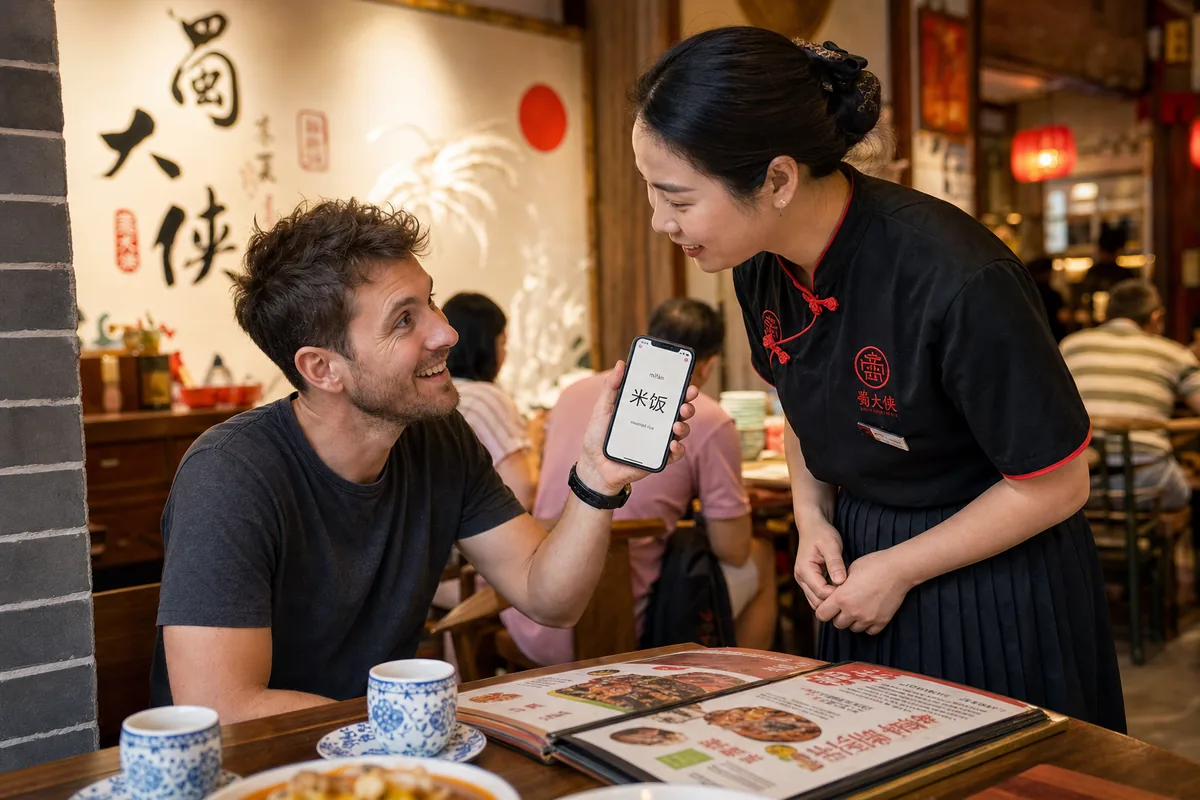
These are the phrases that do the heavy lifting. Even rough pronunciation works — and if speaking fails, point at the Chinese characters or show them on your phone.
| English | Chinese | Pinyin |
|---|---|---|
| I am vegetarian. | 我吃素 | Wǒ chī sù |
| I don't eat meat (no pork, beef, chicken, fish). | 我不吃肉(不吃猪肉、牛肉、鸡肉、鱼) | Wǒ bù chī ròu (bù chī zhūròu, niúròu, jīròu, yú) |
| I am vegan. I don't eat meat, eggs, or dairy. | 我吃全素,不吃肉、蛋、奶 | Wǒ chī quánsù, bù chī ròu, dàn, nǎi |
| Please don't add meat. | 请不要放肉 | Qǐng bùyào fàng ròu |
| No meat broth, please. Use vegetable oil. | 不要肉汤,用植物油 | Bùyào ròutāng, yòng zhíwùyóu |
| Does this have meat in it? | 这个有肉吗? | Zhège yǒu ròu ma? |
| No egg, please. | 不要鸡蛋 | Bùyào jīdàn |
| Is there a vegetarian restaurant nearby? | 附近有素食餐厅吗? | Fùjìn yǒu sùshí cāntīng ma? |
Hidden Animal Ingredients to Watch For
This is where well-meaning orders go wrong. Even a dish that looks entirely plant-based can contain:
- Meat broth (肉汤, ròutāng): The default base for many soups, noodles, and even some "vegetable" stir-fries. Tofu and greens are often simmered in chicken or pork stock.
- Lard (猪油, zhūyóu): Still used for frying and in pastries, especially in older or traditional restaurants.
- Oyster sauce (蚝油, háoyóu): A staple in Cantonese-style vegetable dishes. Tastes "vegetarian" but is made from oysters.
- Fish sauce & shrimp paste (鱼露 / 虾酱): Common in southern and coastal cooking.
- Ground pork / dried shrimp as "seasoning": Sprinkled into stir-fried greens, mapo tofu, and clay-pot dishes for umami. Cooks may not consider this "meat."
- Egg (鸡蛋, jīdàn): In fried rice, many noodle dishes, and pancakes — relevant for vegans.
- Gelatin and animal-derived additives: In some desserts and packaged snacks.
The fix is to name what you want avoided, not just say "vegetarian." Mentioning "no meat broth" and "no oyster sauce" specifically catches the two most common surprises.
Reliably Vegetarian Dishes to Order
When you're at a regular restaurant, these dishes are commonly plant-based or easily made so. Use the names below to order with confidence.
| Dish | Chinese | Notes |
|---|---|---|
| Stir-fried seasonal greens | 清炒时蔬 (qīngchǎo shíshū) | Ask for vegetable oil, no broth. Usually safe. |
| Dry-fried green beans | 干煸四季豆 (gānbiān sìjìdòu) | Often has minced pork — ask for none. |
| Tomato and egg (not for vegans) | 西红柿炒鸡蛋 (xīhóngshì chǎo jīdàn) | Vegetarian-friendly, contains egg. |
| Stir-fried potato slivers | 炒土豆丝 (chǎo tǔdòusī) | Usually vegan; confirm no broth. |
| Sautéed eggplant | 烧茄子 (shāo qiézi) | Ask for no minced meat. |
| Mushrooms and bok choy | 香菇青菜 (xiānggū qīngcài) | Often cooked in broth — specify vegetable stock or oil. |
| Cold cucumber salad | 拍黄瓜 (pāi huángguā) | Reliably vegan, refreshing. |
| Plain steamed rice | 米饭 (mǐfàn) | Always safe. |
| Steamed buns (plain) | 馒头 (mántou) | No filling; safe and filling. |
| Vegetable dumplings | 素饺子 (sù jiǎozi) | Ask if the filling has egg or shrimp. |
Mapo tofu, tofu skin, and braised tofu can all be made vegetarian if you ask — many places are happy to leave out the meat. Buddhist-influenced regions also have excellent mock-meat dishes made from soy, wheat gluten (seitan), and mushrooms.
Buddhist Vegetarian Restaurants: Your Safest Bet
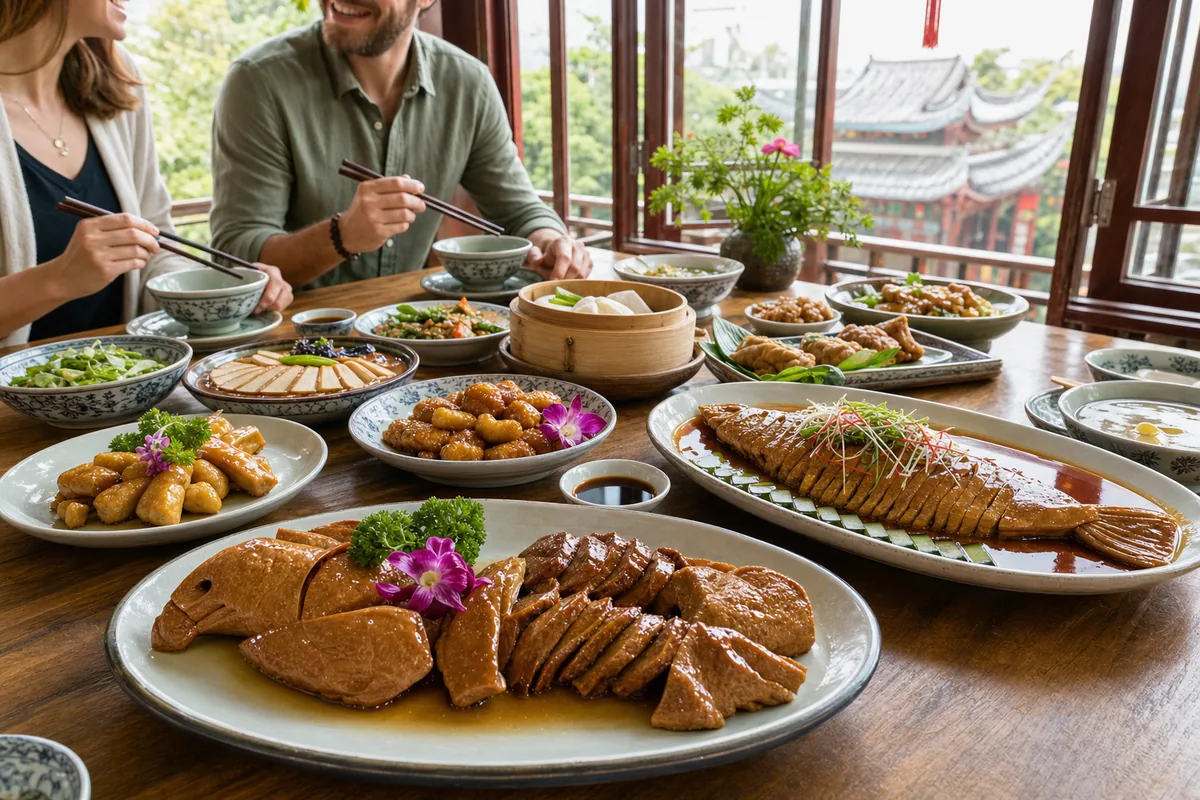
China's most reliable vegetarian food comes from its Buddhist tradition. Look for 素食 (sùshí) or 素菜 (sùcài) restaurants, often near or attached to temples. These kitchens are fully vegetarian by principle — no meat, no broth, no hidden pork. Many are also vegan-friendly, though some use egg or dairy, so it's still worth confirming.
Buddhist vegetarian cuisine is an art form in itself. Chefs create elaborate mock-meat dishes — "sweet and sour pork," "crispy duck," even "fish" — entirely from tofu, gluten, mushrooms, and vegetables. The textures can be startlingly convincing. Famous temples like Lingyin Temple in Hangzhou and Longhua Temple in Shanghai have well-known vegetarian canteens.
Note that some Buddhist vegetarian cooking avoids the "five pungent" vegetables (garlic, onion, leek, chives, and asafoetida), so dishes may taste milder than you expect. That's intentional, not a mistake.
Finding Vegetarian & Vegan Restaurants
Apps make this far easier than guessing on the street:
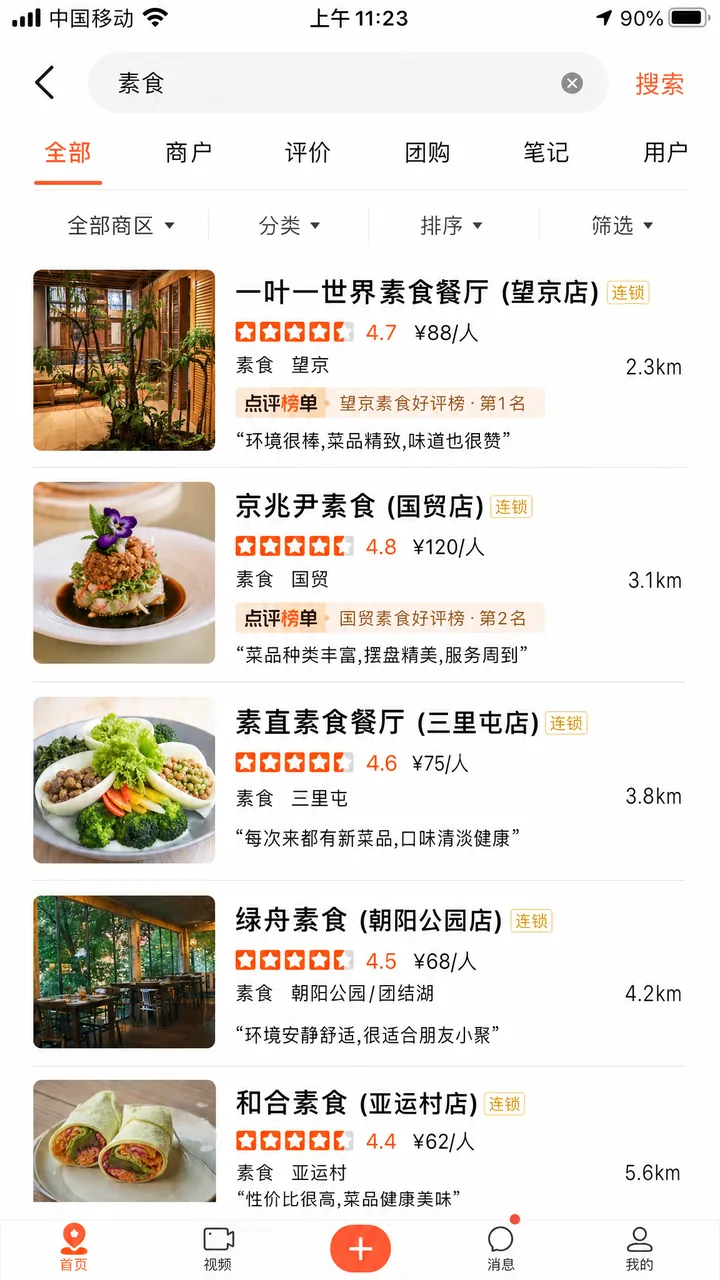
- Dianping (大众点评): China's main restaurant review app. Search "素食" or "vegetarian" to find nearby spots with photos, menus, and reviews. The interface is mostly Chinese, but a translation app helps.
- HappyCow: The international vegan/vegetarian directory works in major Chinese cities and is in English. Coverage thins out in smaller towns.
- Amap / Gaode (高德地图) or Baidu Maps: Search 素食餐厅 to map nearby vegetarian restaurants.
Translation apps are essential for reading menus and explaining your needs. See our comparison of translation apps for which ones handle photo-menu translation best, and our guide on how to order food with zero Chinese for the broader ordering playbook.
Cuisine by Region: What to Expect
Vegetarian-friendliness varies by regional cuisine:
- Cantonese (Guangdong, Hong Kong): Lots of vegetables and tofu, but watch for oyster sauce and broth. Dim sum has vegetarian options but also many with shrimp or pork.
- Sichuan (Chengdu, Chongqing): Bold and spicy, with great vegetable and tofu dishes — but minced pork is a common "seasoning." Always specify. Hotpot can be vegetarian if you choose a clear/mushroom broth and plant-based ingredients.
- Jiangnan (Shanghai, Hangzhou, Suzhou): Slightly sweet, with strong Buddhist vegetarian traditions and excellent mock-meat restaurants.
- Northern (Beijing, Xi'an): Lots of wheat — noodles, buns, dumplings. Many noodle soups use meat broth, so ask. Xi'an has great vegetable-stuffed flatbreads.
- Yunnan: Mushroom-heavy and produce-rich, with many naturally vegetable-forward dishes.
For a fuller picture of what each region does well, see our guide to Chinese cuisine by region.
Hotpot, Street Food, and Convenience Options
Hotpot can work well: choose a vegetarian or mushroom broth (菌菇汤底, jūngū tāngdǐ), and load up on tofu, mushrooms, greens, potato, lotus root, and noodles. Just avoid shared meat broths and check the dipping sauces (some contain shrimp or fish).
Street food offers options like roasted sweet potatoes (烤红薯), grilled corn, scallion pancakes (葱油饼 — usually vegan), tofu pudding (豆腐脑, though sometimes served savory with meat), steamed buns, and fresh fruit. Stinky tofu is vegetarian but check the dipping sauce.
Convenience stores (7-Eleven, FamilyMart, Lawson) stock plain steamed buns, tea eggs (vegetarian, not vegan), nuts, fruit, soy milk, and instant noodles — read labels or use a photo translator.
Practical Habits That Make It Easy
- Save the key phrases as screenshots on your phone, in large Chinese characters, so you can show them when speaking fails.
- Order specifically: Name the dish and say "no meat, no broth, vegetable oil." General statements get misread.
- Eat lunch as your big meal near temples or in city centers where vegetarian restaurants cluster.
- Carry snacks (nuts, energy bars, fruit) for long train rides and rural stretches where options thin out.
- Use Buddhist 素食 restaurants when you want a guaranteed worry-free meal.
If you have a serious allergy rather than a dietary preference, that's a stricter situation — read our guide on food safety and dietary restrictions for how to communicate allergies clearly and safely.
Frequently Asked Questions
Will people understand if I say I'm vegetarian?
Mostly yes, especially with "吃素 (chī sù)." The issue isn't understanding the word — it's that "vegetarian" may be assumed to mean "no big pieces of meat." Be specific about broth, lard, and seasonings to avoid surprises.
Is it harder to be vegan than vegetarian in China?
Somewhat. Eggs and dairy aside, the bigger traps are oyster sauce, fish sauce, and broth. Buddhist 素食 restaurants are your most reliable vegan-friendly option, though even there you should confirm no egg.
Can I eat vegetarian on trains and at airports?
It's manageable. Stock up on plain buns, fruit, nuts, and instant noodles beforehand. High-speed trains sell snacks but vegetarian hot meals are limited, so bring your own.
Are there vegan products in supermarkets?
Yes — tofu, soy milk, plant-based snacks, and an increasing range of mock-meat products are widely available in city supermarkets. Read ingredient labels with a translation app, as labeling for vegans isn't standardized.
Is hotpot safe for vegetarians?
Yes, if you pick a vegetable or mushroom broth and avoid the shared meat broth and seafood-based dipping sauces. It's one of the more fun and flexible meals for plant-based eaters.
The Bottom Line
Eating vegetarian or vegan in China is genuinely workable — more so than many travelers fear — as long as you order specifically and lean on the right resources. Save a few key phrases in Chinese, learn to spot hidden broth and oyster sauce, seek out Buddhist 素食 restaurants for guaranteed meals, and use Dianping or HappyCow to find dedicated spots in cities. With those habits, you'll eat varied and satisfying plant-based food across the country. Before you go, set up a good translation app and review the basic ordering phrases, and you'll handle nearly any menu that comes your way.
Last updated: June 2026
Read in other languages
Last train times for 10 Chinese metro systems
Every line and station, checked by hand — the same data behind our offline route planner.
Get the WaysChina App
Offline guides, currency converter, essential phrases, and more — all in your pocket.

Related Articles
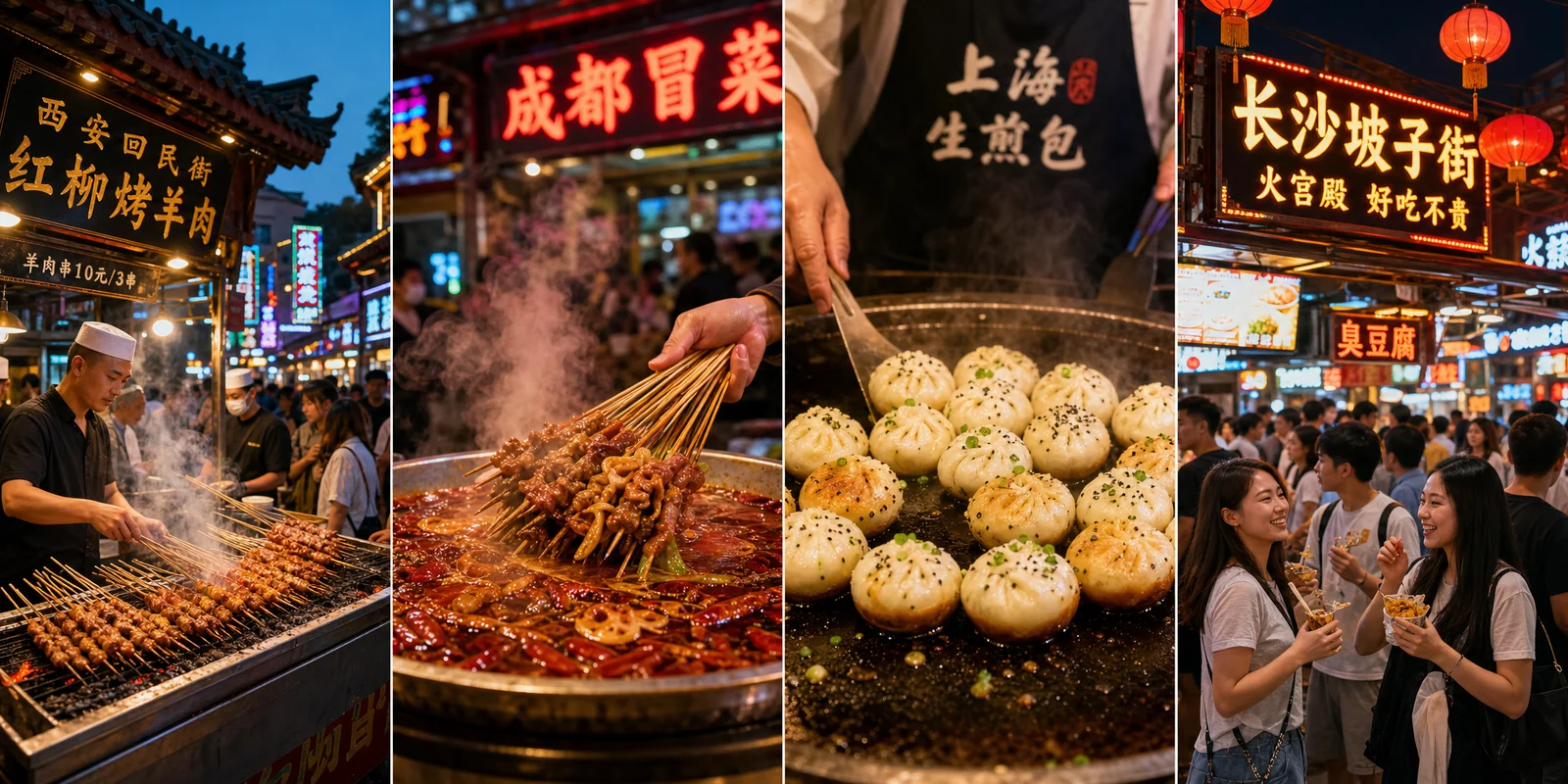
Best Street Food Cities in China
From Xi'an's lamb-stuffed flatbreads to Chengdu's numbing skewers, here are the Chinese cities where street food is...
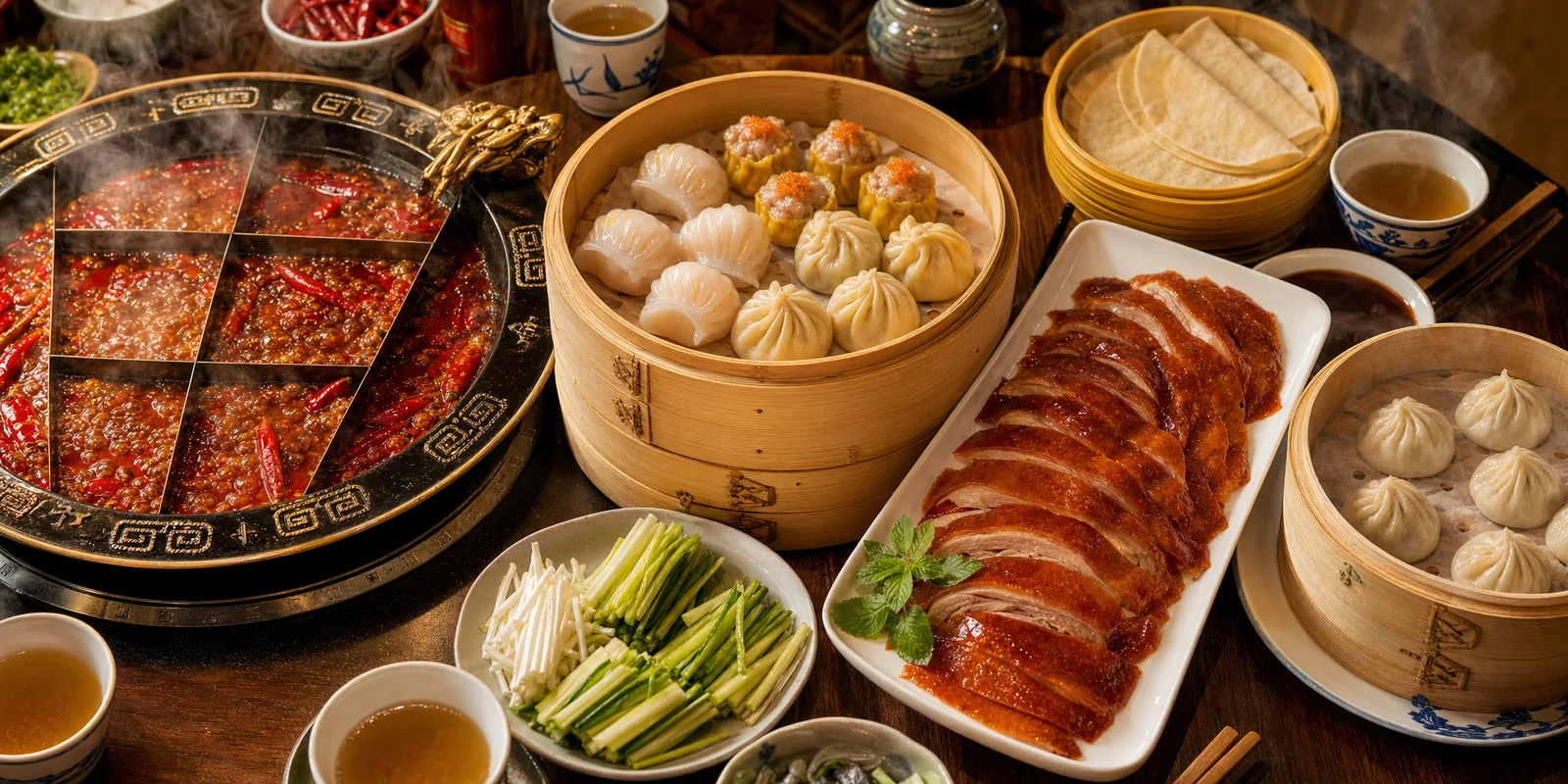
Guide to Chinese Cuisine by Region
Chinese food isn't one thing — it's dozens of distinct regional cuisines. Here's a practical guide to the Eight...
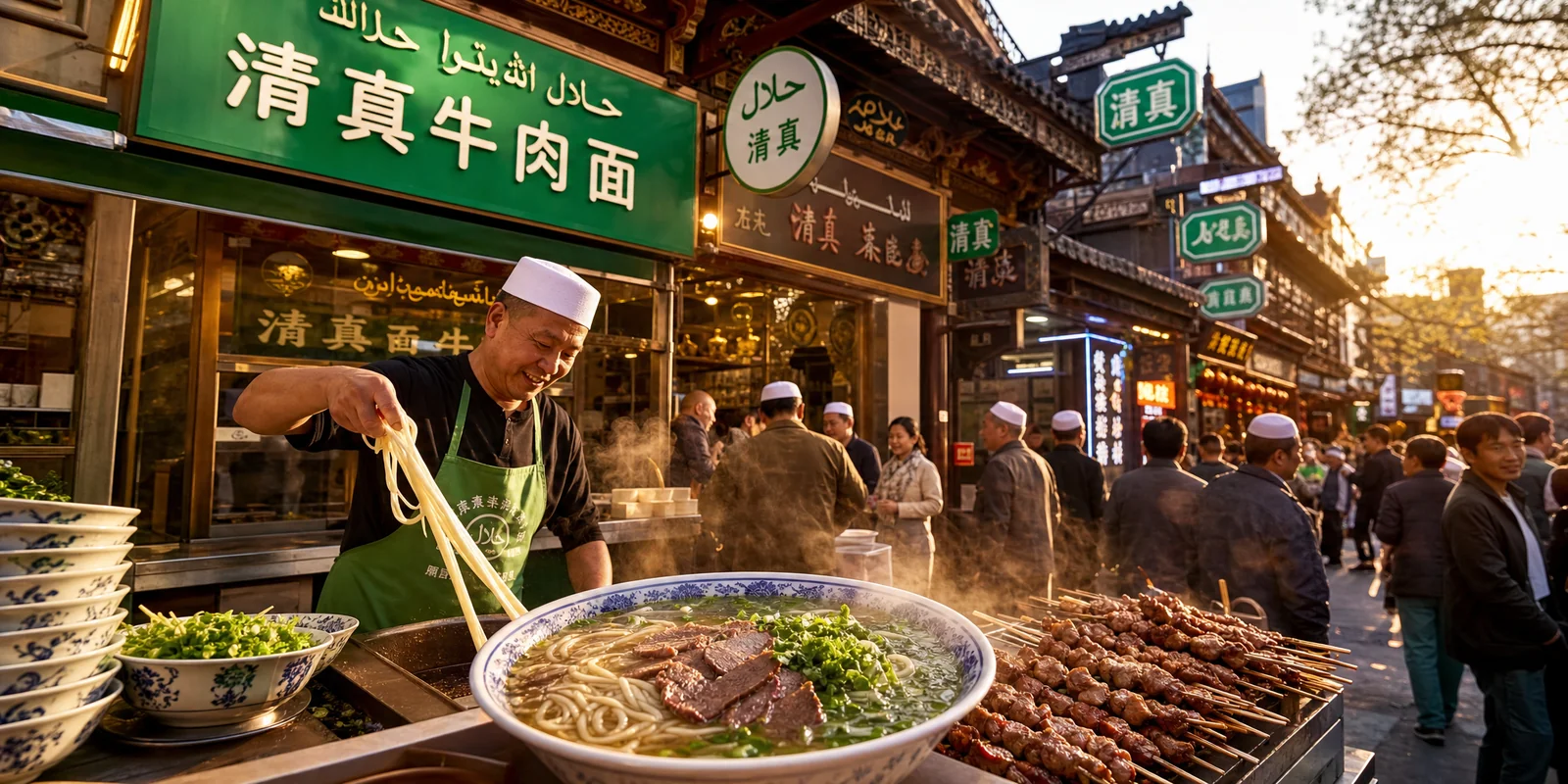
Halal Food in China
Finding halal food in China is easier than most travelers expect. Here's how to spot certified restaurants, what...
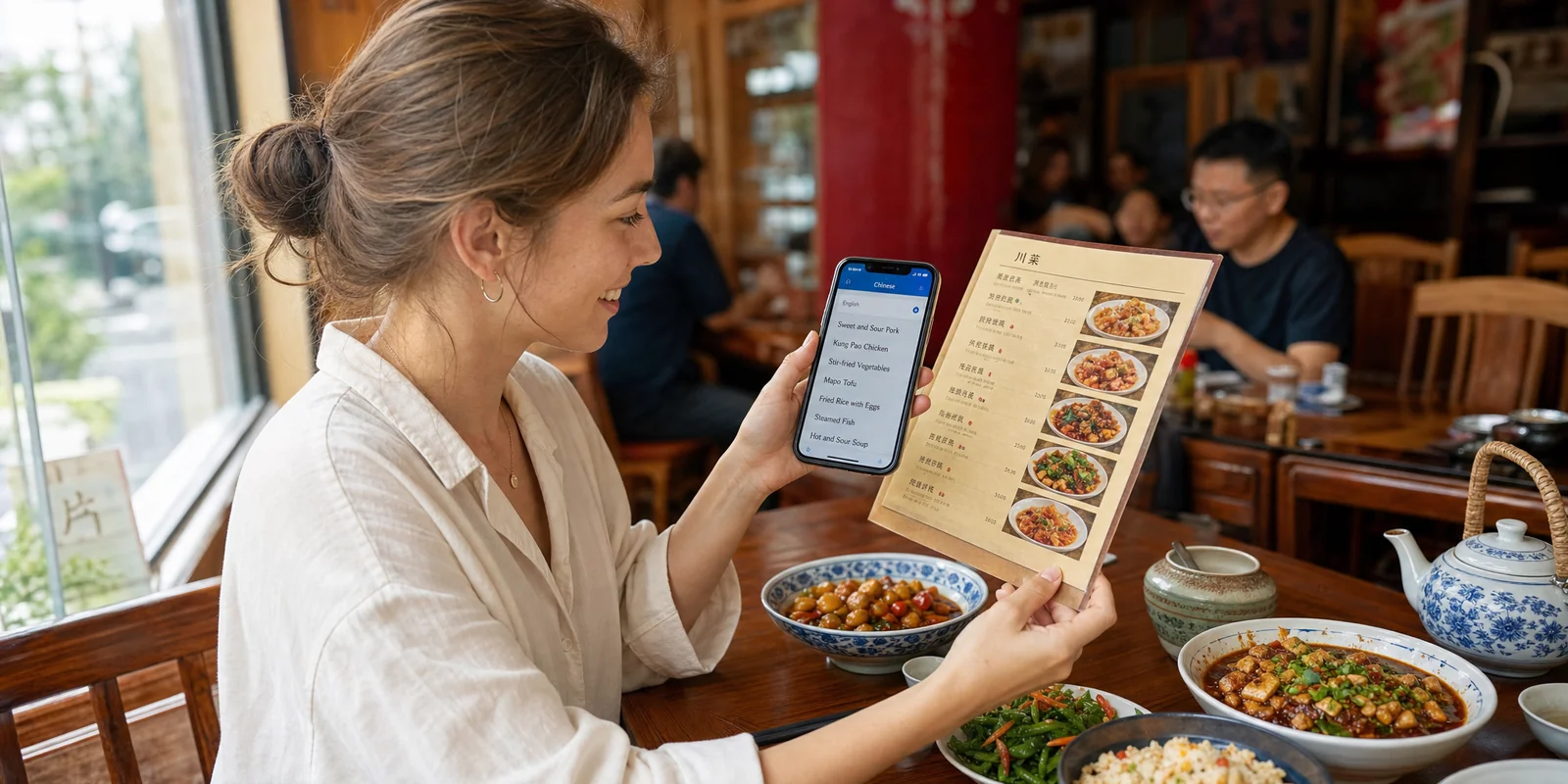
How to Order Food with Zero Chinese
Ordering food in China without speaking Chinese is easier than most travelers expect. Here are the apps, photo-menu...