
This article contains affiliate links. If you make a purchase through these links, we may earn a small commission at no extra cost to you. This helps support our work in creating free travel guides.
Finding halal food in China is far easier than most Muslim travelers expect. The country has around 20 million Muslims, mostly the Hui (回族, Huízú) and Uyghur (维吾尔族, Wéiwú'ěrzú) ethnic groups, and their cuisine is woven into everyday Chinese food culture. In almost any city you'll find halal noodle shops, often on the same block as your hotel. Lanzhou beef noodles — a genuinely beloved national dish — are halal by tradition. This guide covers how to identify certified restaurants, what to order, which cities are easiest, and how to handle the situations where halal options thin out.
How Halal Food Works in China
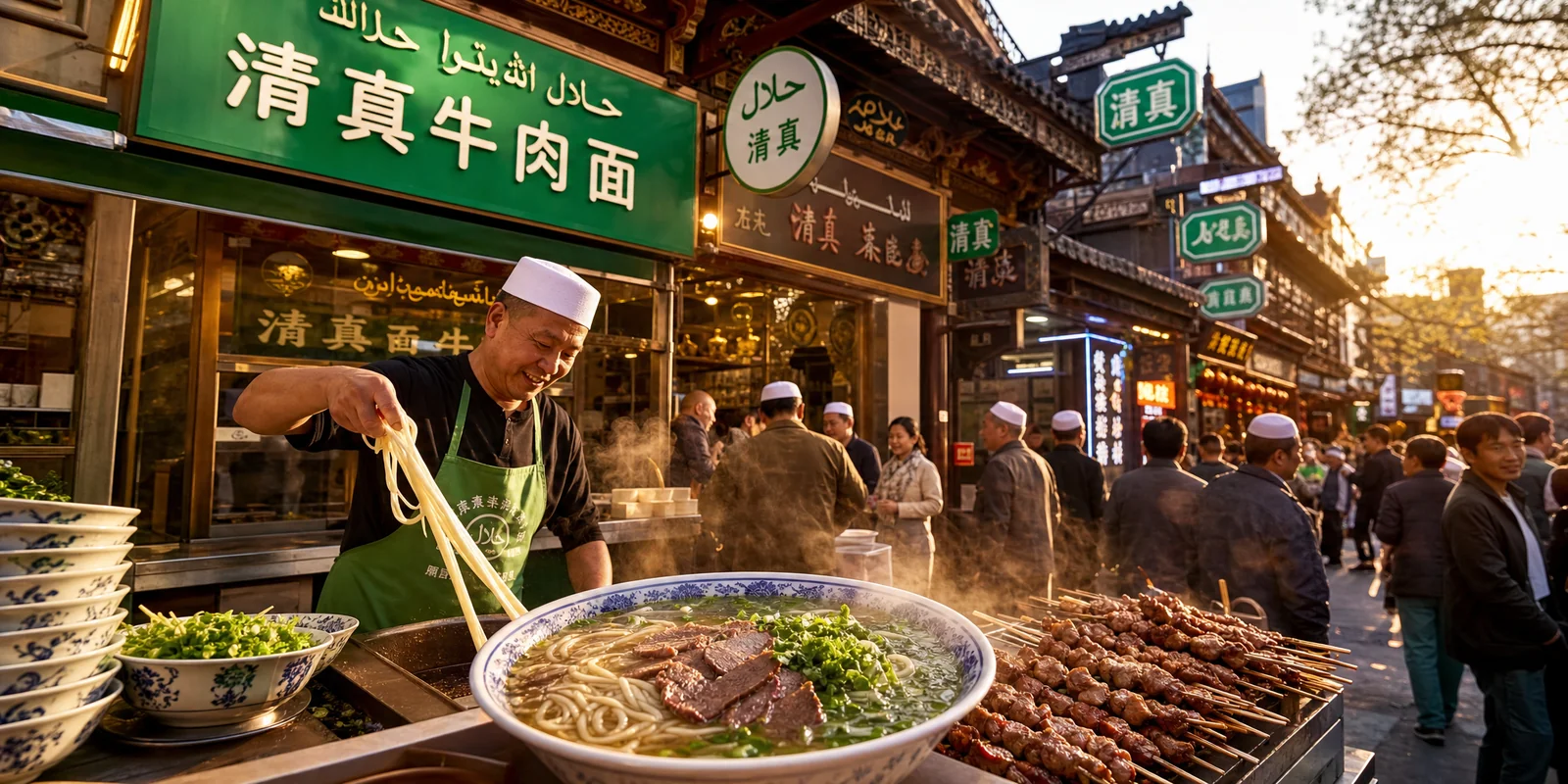
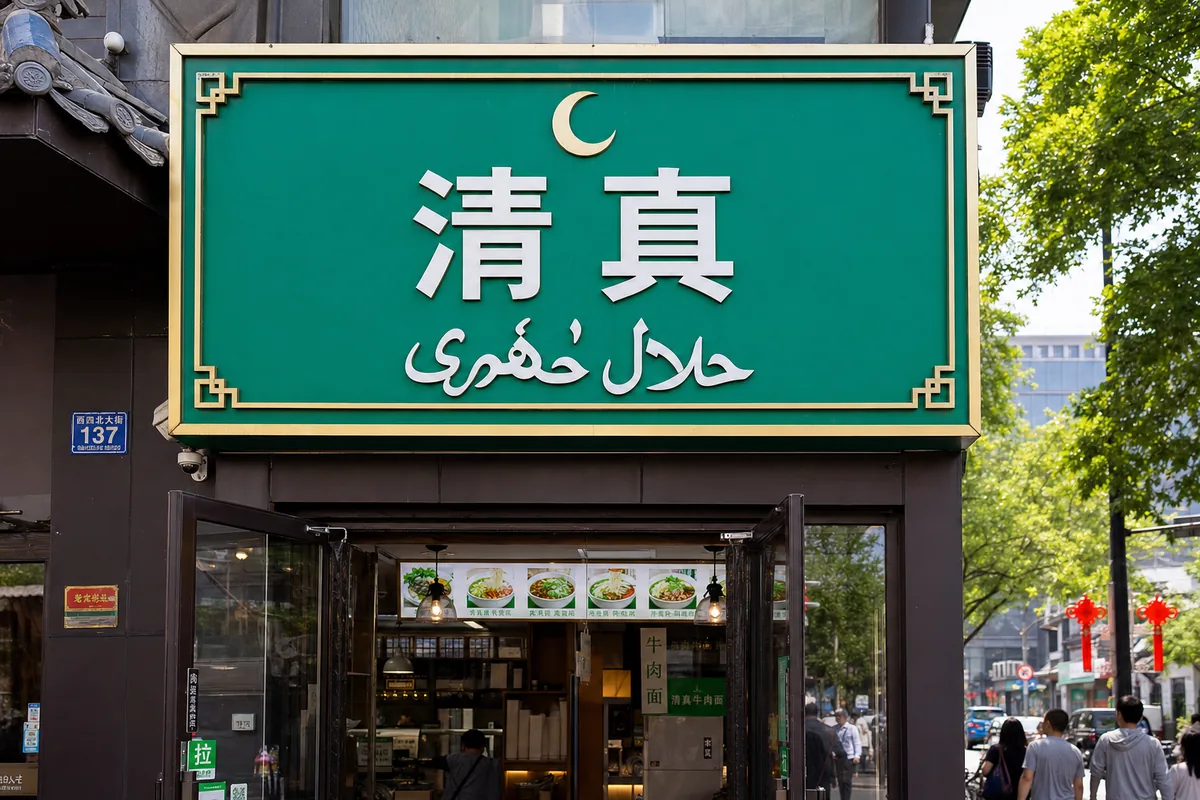
In China, halal is usually written as qīngzhēn (清真) — literally "pure and true." This is the word to look for, not the Arabic "halal," though larger cities increasingly display both. A qingzhen restaurant follows Islamic dietary rules: no pork, no alcohol in cooking, and meat slaughtered according to Islamic practice.
Halal food here isn't a niche specialty hidden away in one neighborhood. It's a recognized, regulated category. Local governments in many provinces certify qingzhen establishments, and the green signage is standardized enough that you'll learn to spot it within a day or two of arriving.
How to Identify a Halal Restaurant
There are a few reliable signals, listed roughly in order of how trustworthy they are:
- The 清真 (qīngzhēn) characters on the sign or window — usually in green, sometimes alongside Arabic script.
- A government-issued halal certification plaque displayed inside, often near the counter or kitchen. In Muslim-majority regions these are common; elsewhere less so.
- Arabic calligraphy or a crescent symbol in the décor.
- Staff wearing white caps (Hui men) or headscarves — a strong informal indicator, especially at small noodle shops.
- Halal supermarket sections — large supermarkets in many cities stock qingzhen-labeled meat and snacks.
Chain restaurants add another layer of certainty. Several national halal chains are certified at the corporate level, so any branch is reliable. We'll name a few below.
What to Order: Hui and Northwestern Cuisine
Chinese halal food is genuinely good, not a compromise. Most of it comes from the Hui and Uyghur culinary traditions, heavy on lamb, beef, wheat noodles, and warming spices. Here's what to look for.
Lanzhou Beef Noodles (兰州牛肉面)
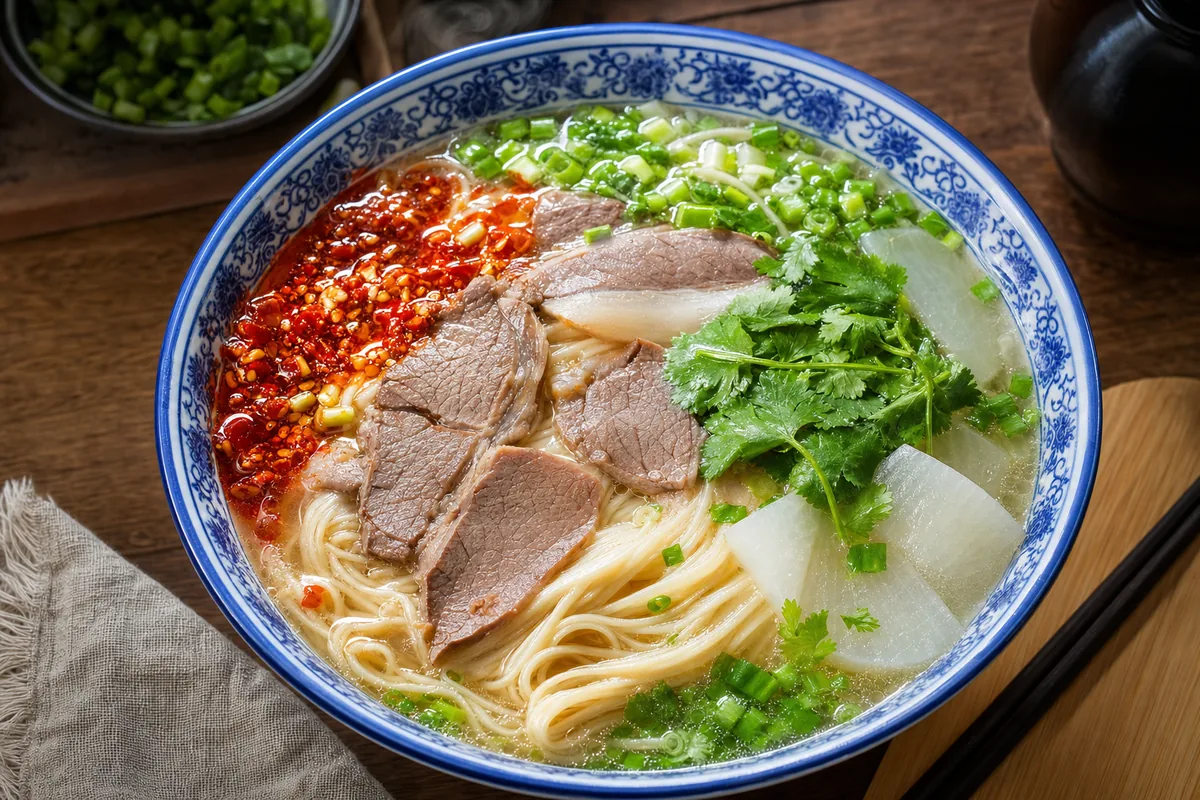
If you order one thing, make it this. Lanzhou beef noodles (lánzhōu niúròumiàn) are hand-pulled wheat noodles in a clear, slow-simmered beef broth, topped with thin slices of beef, white radish, chili oil, and fresh coriander. They are halal by origin — the dish comes from Lanzhou's Hui community — and the chains are reliable. You'll find shops in every Chinese city, often open from breakfast onward. A bowl costs roughly ¥15–30 (about $2–4).
Uyghur Dishes
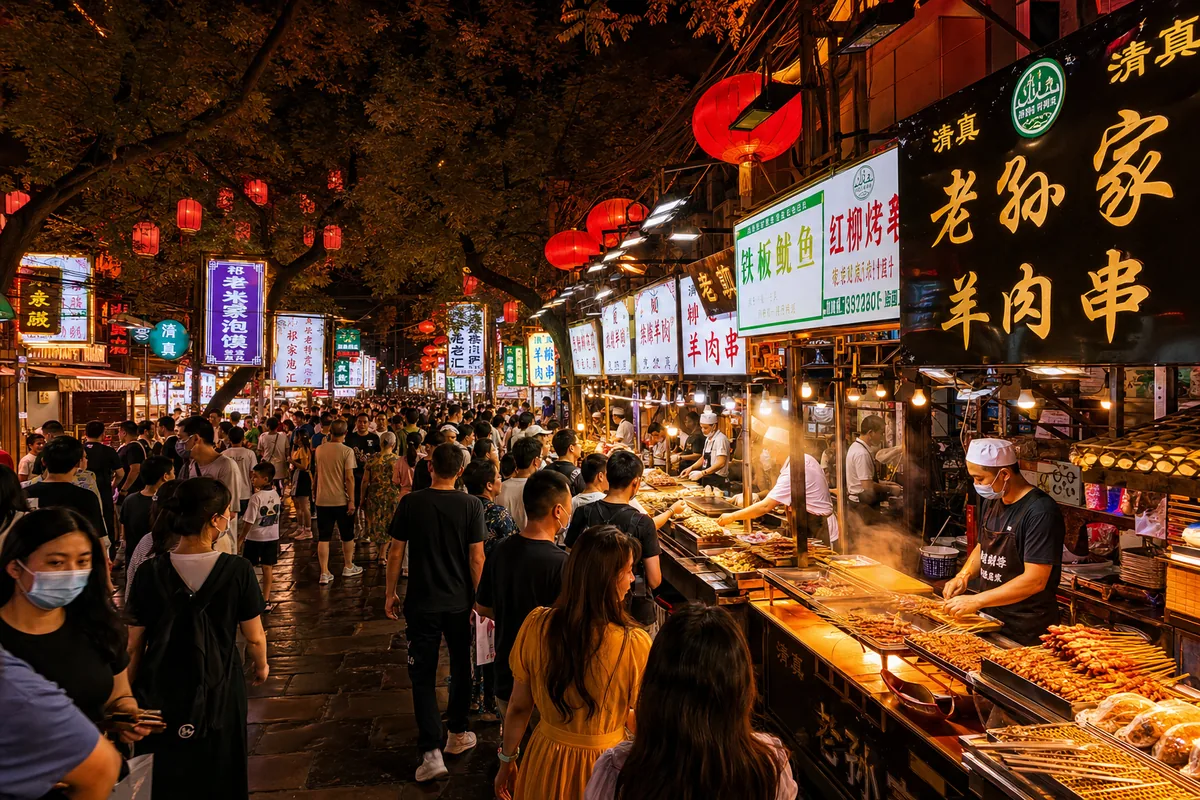
From Xinjiang in the far northwest, Uyghur food is a feast of grilled lamb skewers (yángròu chuàn), big-plate chicken (dàpánjī — chicken stewed with potatoes and wide noodles), hand-pulled laghman noodles, samsa (baked lamb pastries), and naan bread. Xinjiang restaurants are widespread across China and almost always halal. They're a great choice for groups.
Other Hui Specialties
- Yángròu pàomó (羊肉泡馍) — a Xi'an specialty of crumbled flatbread in lamb soup.
- Niúròu shāobǐng (牛肉烧饼) — flaky sesame pastry stuffed with beef.
- Lamb hotpot — many halal hotpot restaurants serve copper-pot lamb broth, especially in Beijing.
- Roujiamo — the "Chinese hamburger" comes in a halal beef version at qingzhen shops.
Best Cities for Muslim Travelers
Halal availability varies a lot by region. Here's a realistic breakdown.
| City / Region | Halal Availability | Notes |
|---|---|---|
| Xi'an | Excellent | Famous Muslim Quarter (回民街), large Hui community, Great Mosque |
| Lanzhou | Excellent | Home of beef noodles, strong Hui presence |
| Xining | Excellent | Large Muslim population, gateway to Qinghai |
| Urumqi / Kashgar | Excellent | Xinjiang — Uyghur food everywhere |
| Beijing | Very Good | Many halal restaurants, Niujie mosque area, halal hotpot |
| Shanghai | Good | Halal chains and Xinjiang restaurants, plus mosque-area eateries |
| Guangzhou | Good | Significant resident Muslim community, several mosques |
| Southern rural areas | Limited | Plan ahead; rely on chains and self-catering |
Xi'an: The Standout
If you want one city that's effortless for Muslim travelers, it's Xi'an. The Muslim Quarter near the Drum Tower is a dense network of halal food streets run by the local Hui community for generations — lamb skewers, persimmon cakes, beef pastries, and dozens of snack stalls. Xi'an's Great Mosque, one of the oldest in China, sits right inside the quarter.
Halal in Beijing and Shanghai
In Beijing, look around the Niujie (牛街) area, home to the city's largest mosque and a long-standing Muslim community with halal bakeries and restaurants. Halal hotpot and copper-pot lamb are Beijing staples. In Shanghal, halal options are slightly less concentrated but still plentiful — Xinjiang restaurants, halal noodle chains, and eateries near the city's mosques cover most needs. Both cities have enough certified options that you won't go hungry.
Halal Chains You Can Trust
For consistency, national and regional halal chains take the guesswork out of it:
- Lanzhou beef noodle chains (e.g. Dongfang Gong, Chen Ji, Ma Jiyong) — found nationwide, reliably halal.
- Xinjiang restaurant chains — widespread, certified, good for sit-down meals.
- Yum China / Western fast food — note that mainstream KFC and McDonald's in most of China are NOT halal. Some branches in Muslim-majority regions (Xinjiang, Ningxia, Gansu, Qinghai) are certified — check for the 清真 sign on that specific outlet.
Using Apps to Find Halal Food
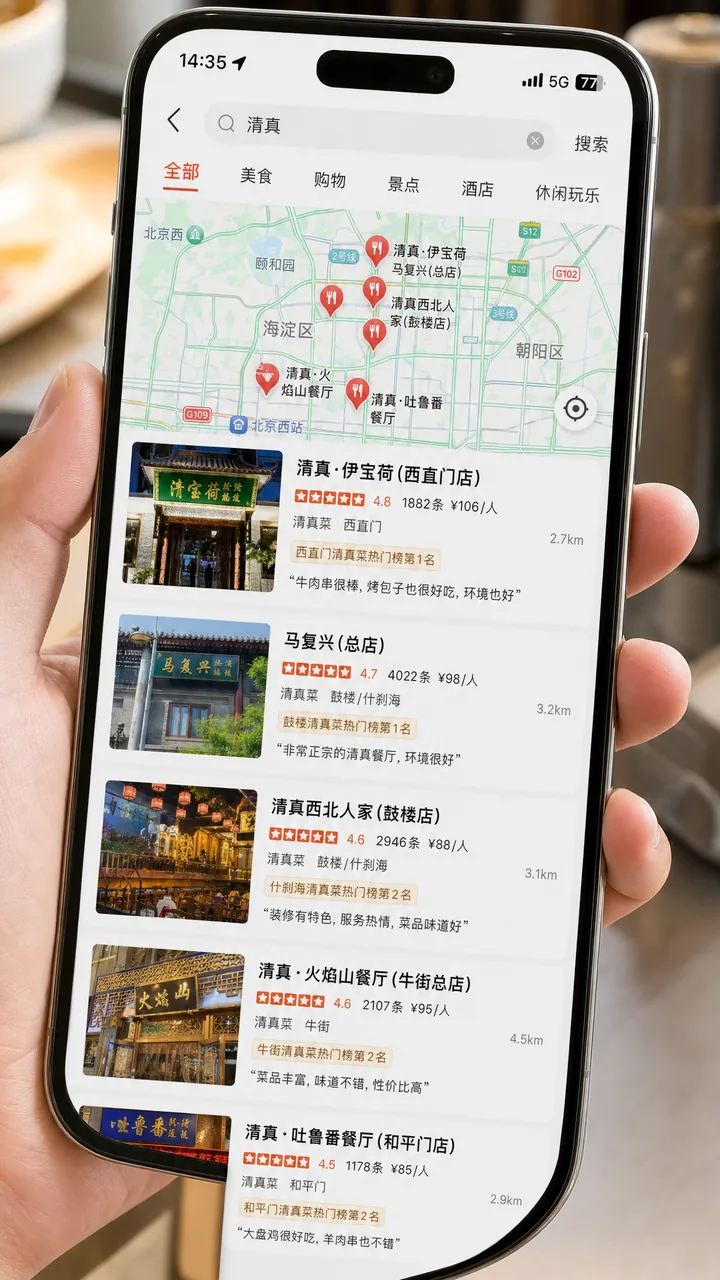
Chinese food and map apps are your best tool. On Dianping (大众点评, the local Yelp equivalent) or Amap (高德地图) and Baidu Maps, search for "清真" (qīngzhēn) and you'll get a map of nearby halal restaurants with reviews and photos. If your Chinese is limited, a translation app helps you read menus — type or photograph the dish names. Many travelers also use Google Maps before arrival to scout mosque neighborhoods, which tend to cluster halal eateries nearby.
For getting between these neighborhoods, the WaysChina app has offline metro maps and a trip planner for major cities — handy when you've pinned a halal restaurant across town and need to work out the subway route.
A Guided Food Experience
If you want to skip the trial and error, especially in a food-dense city like Xi'an, a guided halal or Muslim Quarter food tour can be worth it. A local guide takes you to certified, trusted stalls, explains the dishes, and handles the language. You'll usually try more in two hours than you'd find on your own in two days. You can browse and book book a Muslim Quarter food tour in Xi'an food tours in Xi'an, Beijing, and other cities.
Practical Tips for Strict Observance
- Carry the characters. Save 清真 on your phone to show drivers and locals.
- Self-cater when needed. Large supermarkets stock qingzhen-certified packaged meat, instant noodles, and snacks — useful for rural travel or long train rides.
- Train station food. Most major high-speed rail stations have at least one halal noodle counter; look for the green sign.
- Hotels. Mid-range and up hotels in big cities can often point you to nearby halal restaurants; some have halal breakfast options on request.
- Prayer needs. China has thousands of mosques, concentrated in the northwest and in cities with historic Muslim quarters. Find them via map apps by searching "清真寺" (qīngzhēnsì, mosque).
Common Questions
Is it hard to find halal food in China?
No, not in cities. Halal noodle shops are everywhere, and the northwest is one of the easiest regions in the world for Muslim travelers. Rural southern China requires more planning, but chains and self-catering bridge the gap.
Are the halal certifications trustworthy?
Government-certified qingzhen establishments follow regulated standards. For maximum confidence, stick to certified chains, mosque-area restaurants, and places displaying official plaques. Standards can vary between provinces, so observant travelers often prefer Hui- or Uyghur-run establishments.
Can I eat at regular Chinese restaurants by avoiding pork?
If you're strict, no. Ordinary kitchens commonly use lard, cooking wine, and shared equipment. Choose 清真 restaurants instead.
What about seafood and vegetarian options?
Seafood is generally acceptable in Islam, and China has excellent seafood. Vegetarian dishes at non-halal restaurants may still be cooked with lard or wine, so they aren't automatically a safe fallback. See our vegetarian and vegan guide for more on plant-based eating in China.
The Bottom Line
Eating halal in China is straightforward in most places and exceptional in the northwest. Learn to recognize the 清真 (qīngzhēn) characters, lean on certified chains and Hui or Uyghur restaurants, and use Dianping or map apps to find options nearby. Start with a bowl of Lanzhou beef noodles, work your way through Xinjiang lamb dishes, and treat Xi'an's Muslim Quarter as a destination in itself. With a little awareness and the right phrases, you'll eat very well. Plan rural stretches a bit more carefully, keep some supermarket snacks on hand for long journeys, and you'll rarely be stuck.
For broader context on regional eating, see our guide to Chinese cuisine by region, and if menus are a barrier, our guide on how to order food with zero Chinese will help.
Last updated: June 2026
Read in other languages
Last train times for 10 Chinese metro systems
Every line and station, checked by hand — the same data behind our offline route planner.
Get the WaysChina App
Offline guides, currency converter, essential phrases, and more — all in your pocket.

Related Articles
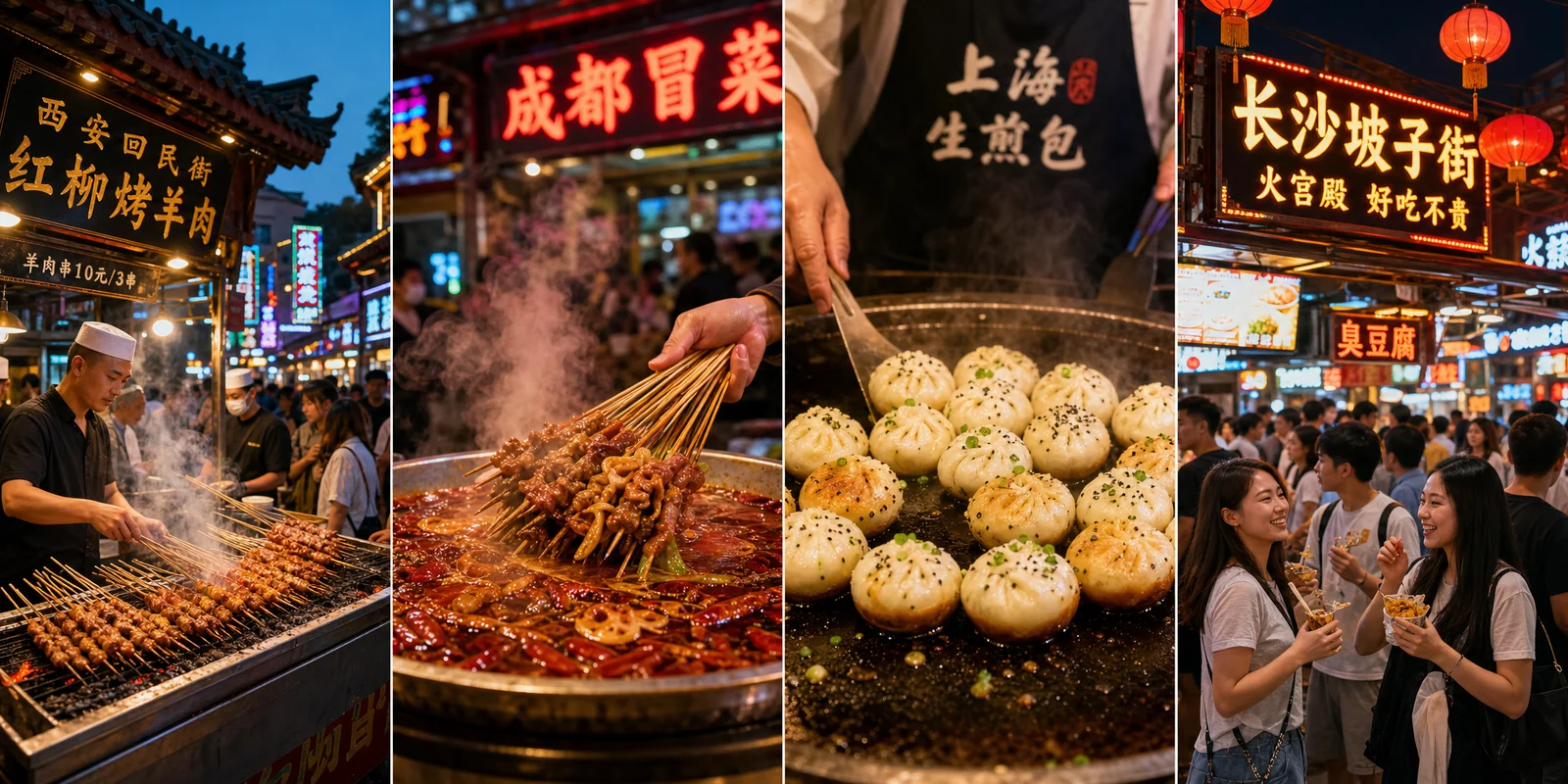
Best Street Food Cities in China
From Xi'an's lamb-stuffed flatbreads to Chengdu's numbing skewers, here are the Chinese cities where street food is...
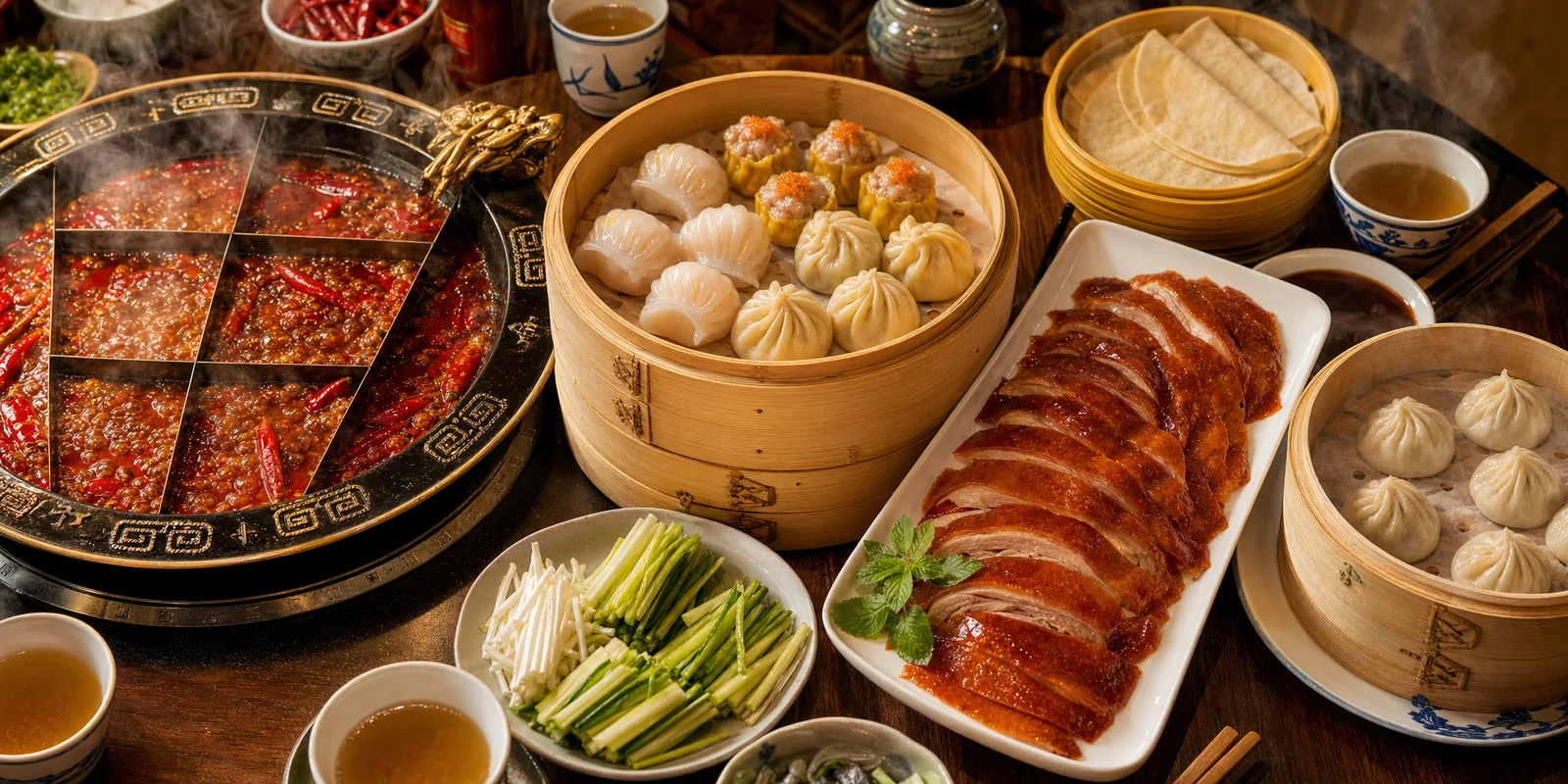
Guide to Chinese Cuisine by Region
Chinese food isn't one thing — it's dozens of distinct regional cuisines. Here's a practical guide to the Eight...
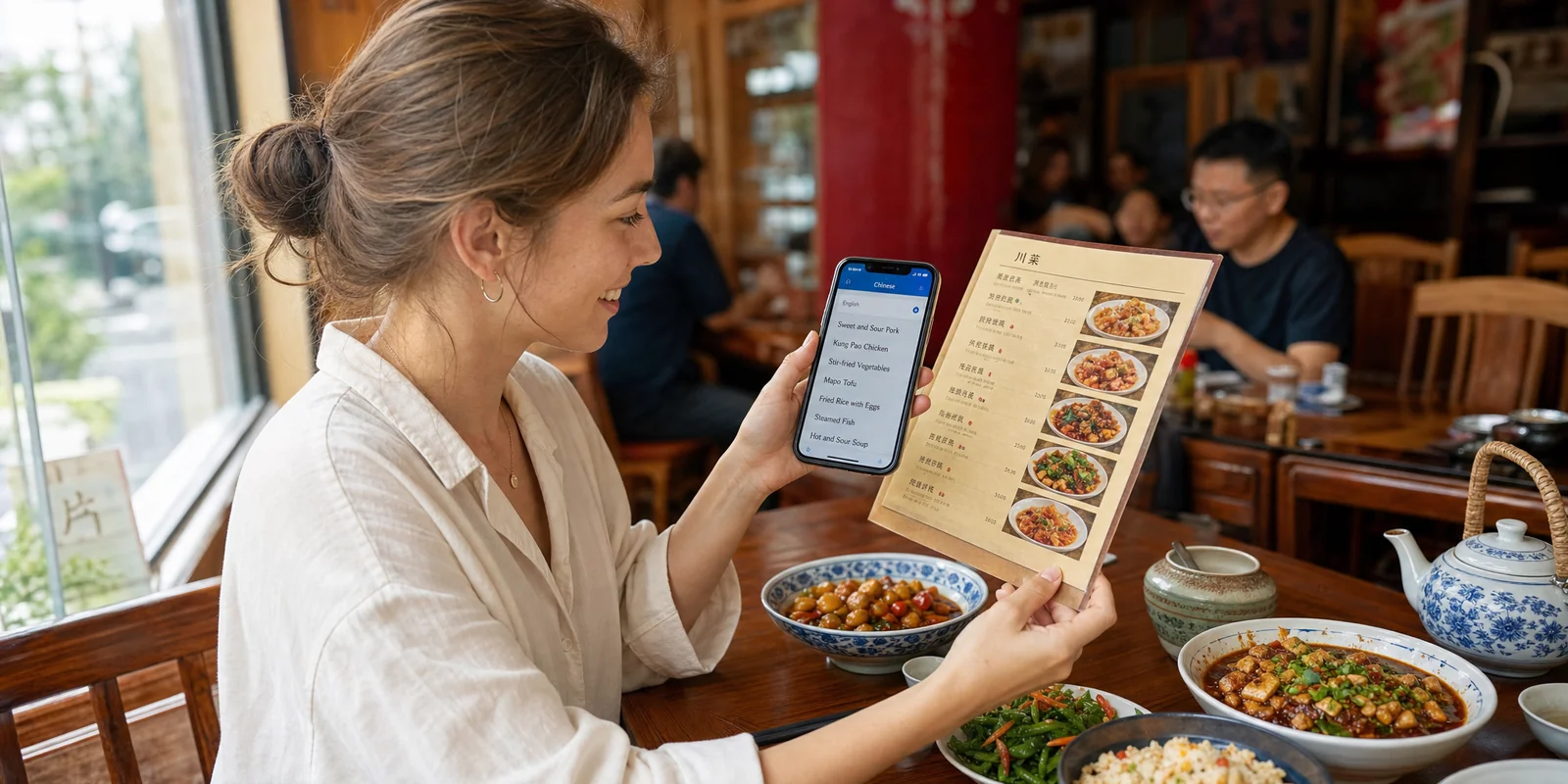
How to Order Food with Zero Chinese
Ordering food in China without speaking Chinese is easier than most travelers expect. Here are the apps, photo-menu...
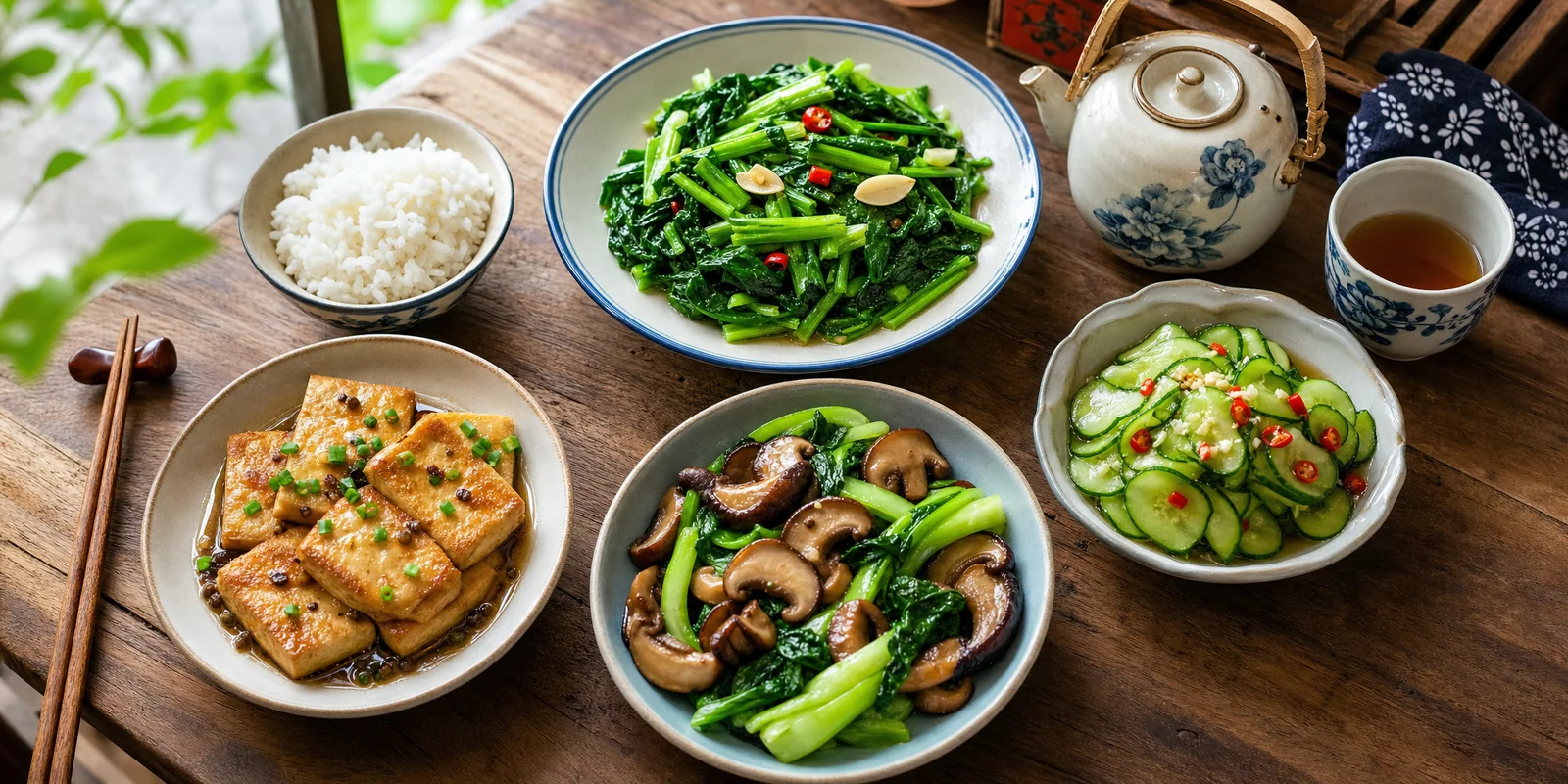
Vegetarian & Vegan Travel in China: A Practical Guide
Eating vegetarian or vegan in China is easier than most travelers expect, but it takes a bit of know-how. Here are...