
This article contains affiliate links. If you make a purchase through these links, we may earn a small commission at no extra cost to you. This helps support our work in creating free travel guides.
Two weeks is the sweet spot for a first big trip to China. It's enough time to see the Great Wall, the Terracotta Army, pandas, the karst hills around Guilin, and Shanghai's skyline without spending half your days in transit. This itinerary covers five cities — Beijing, Xi'an, Chengdu, Guilin, and Shanghai — connected mostly by high-speed rail and one or two flights. Below you'll find a day-by-day plan, exactly how to get between each stop, a budget you can actually use, and a few ways to adjust the route if your interests or pace differ.

Route Overview
The classic 14-day route follows a logical geographic arc: start in the north (Beijing), move west (Xi'an), then southwest (Chengdu), south (Guilin), and finish on the east coast (Shanghai). This avoids backtracking and lets you fly out of Shanghai, one of China's best-connected international airports.
| Days | City | Nights | Highlights |
|---|---|---|---|
| 1–4 | Beijing | 3 | Great Wall, Forbidden City, Temple of Heaven, hutongs |
| 4–6 | Xi'an | 2 | Terracotta Army, city wall, Muslim Quarter |
| 6–9 | Chengdu | 3 | Giant pandas, Sichuan food, teahouse culture, day trips |
| 9–12 | Guilin / Yangshuo | 3 | Li River, karst landscape, rice terraces, cycling |
| 12–14 | Shanghai | 2 | The Bund, Yu Garden, French Concession, modern skyline |
Before You Go: The Essentials
A few things will make the whole trip smoother if you handle them before you arrive. Set up Alipay (支付宝, Zhīfùbǎo) or WeChat Pay (微信支付, Wēixìn Zhīfù) and link a foreign card — almost everything in China runs on QR-code payments, from street food to taxis to subway gates. Cash still works but you'll be the only one using it.
You'll also want a way around the Great Firewall (a VPN, installed before you land) and a local data plan. Sort out your SIM card or eSIM and check whether you qualify for visa-free entry — many nationalities now get extended transit or short-stay visa-free access. Confirm the latest rules with the official National Immigration Administration before booking.
Days 1–4: Beijing
Beijing needs three full days at minimum. The big-ticket sights are spread out, so group them sensibly.
Day 1: Arrival and easing in
Most international flights land at Beijing Capital (PEK) or Daxing (PKX). After checking in, keep the first day light. Walk to Tiananmen Square and the surrounding area, then explore a hutong neighborhood like Nanluoguxiang in the late afternoon. Get an early night to beat jet lag.
Day 2: Forbidden City and Jingshan
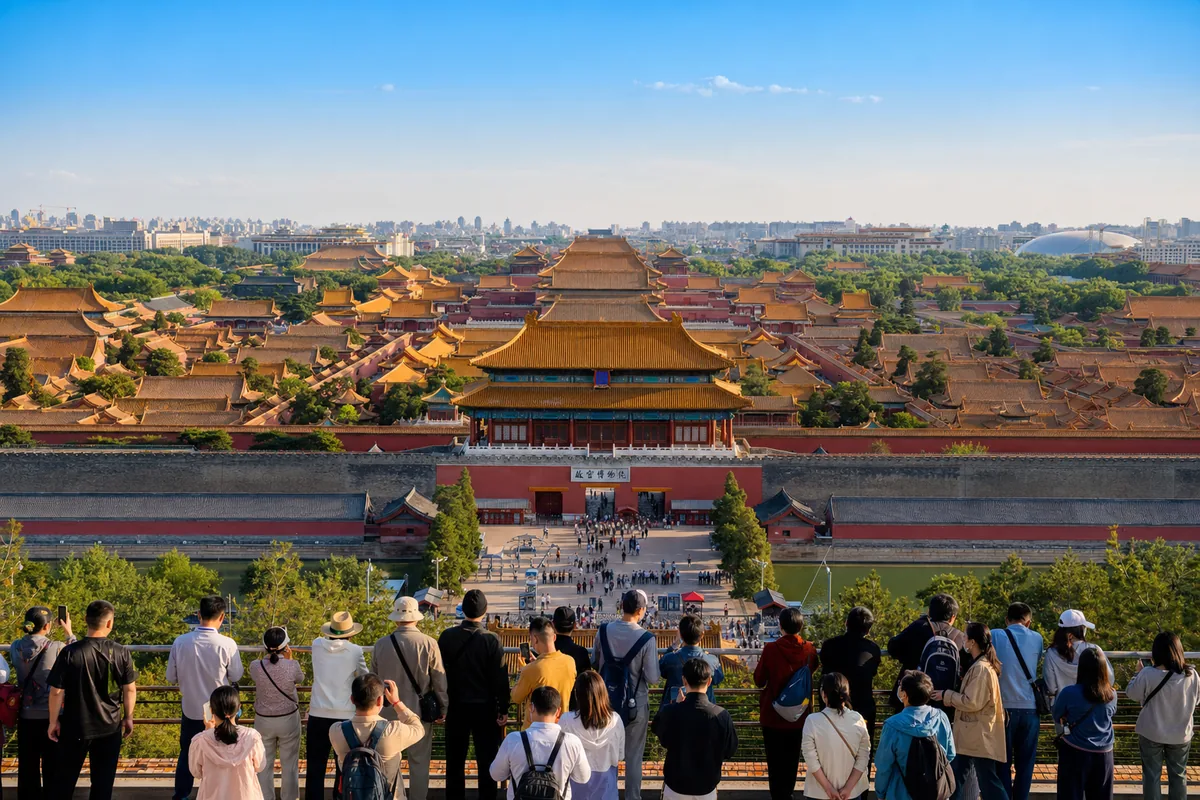
Start early at the Forbidden City (故宫, Gùgōng) — you must book tickets online in advance with your passport, and they often sell out days ahead. Enter from the south (Meridian Gate) and exit north, then climb Jingshan Park across the road for the classic view back over the golden rooftops. Spend the afternoon at the Temple of Heaven.
Day 3: The Great Wall
Dedicate a full day to the Great Wall (长城, Chángchéng). Mutianyu is the best balance of restored sections, cable car access, and manageable crowds — about 1.5 hours from the city. Badaling is closer but far busier. For a wilder, partly-unrestored experience, Jinshanling is worth the longer drive. A private car or a small-group day tour is the easiest way to go.
Day 4: Summer Palace, then train to Xi'an
Spend the morning at the Summer Palace, then head to Beijing West or Beijing South station for your afternoon train. For a deeper dive into the capital, see our 3-Day Beijing Itinerary and Beijing Complete Guide.
Days 4–6: Xi'an
The high-speed train from Beijing to Xi'an takes about 4.5–6 hours depending on the service. Arrive in the evening, check in near the Bell Tower or inside the city wall, and grab dinner in the Muslim Quarter.
Day 5: Terracotta Army
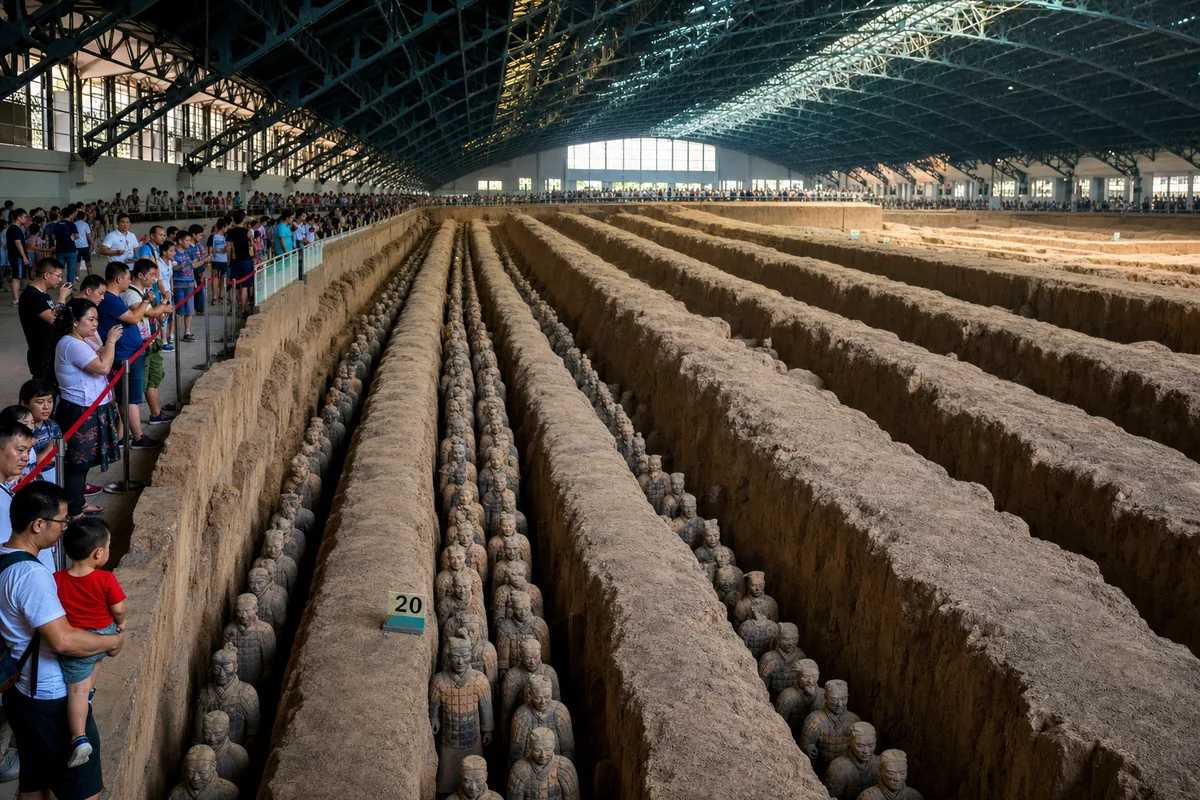
The Terracotta Army (兵马俑, Bīngmǎyǒng) sits about an hour east of the city. Go in the morning before the tour buses peak. Visit the pits in order 1 → 3 → 2 (Pit 1 is the famous one and gets crowded fastest). Back in town, walk or cycle the top of the 14th-century city wall (城墙, chéngqiáng) in the late afternoon — renting a bike up there is one of the most enjoyable hours in Xi'an.
Day 6: Morning in Xi'an, fly to Chengdu
See the Big Wild Goose Pagoda or the Shaanxi History Museum (book ahead) in the morning. Xi'an to Chengdu works either by high-speed train (about 3–4 hours) or a short flight. The train is the more reliable choice and drops you right in the city. See the Xi'an Complete Guide and 2-Day Xi'an Itinerary for more detail.
Days 6–9: Chengdu
Chengdu is the relaxed heart of the trip — pandas, spicy food, and teahouses where locals play mahjong for hours.
Day 7: Giant pandas
Go early to the Chengdu Research Base of Giant Panda Breeding (大熊猫繁育研究基地) — pandas are most active in the cool morning hours, roughly 8:30–10:00am, and become sleepy lumps by midday. Spend the afternoon wandering Jinli Ancient Street or the People's Park teahouse, where you can get a cup of tea and an ear-cleaning if you're brave.
Day 8: Sichuan flavor or a day trip
Option one: stay in the city for a Sichuan cooking class and explore the Wuhou Shrine and Wenshu Monastery. Option two: take a day trip to the Leshan Giant Buddha (the world's largest stone Buddha) or the sacred mountain of Emeishan. Both are doable in a day by high-speed train. See Chengdu Day Trips for the logistics.

Day 9: Travel to Guilin
This is the one leg where flying makes clear sense. The high-speed train from Chengdu to Guilin runs long (10+ hours), so a direct flight (about 1.5 hours) is worth it. Book a morning flight to keep your afternoon in Guilin. Compare fares on Trip.com — domestic routes between these cities are frequent and usually affordable if you book a week or two out.
Days 9–12: Guilin and Yangshuo
This is the landscape postcard of southern China: limestone karst peaks rising straight out of green rice fields and slow rivers.
Day 10: Li River cruise
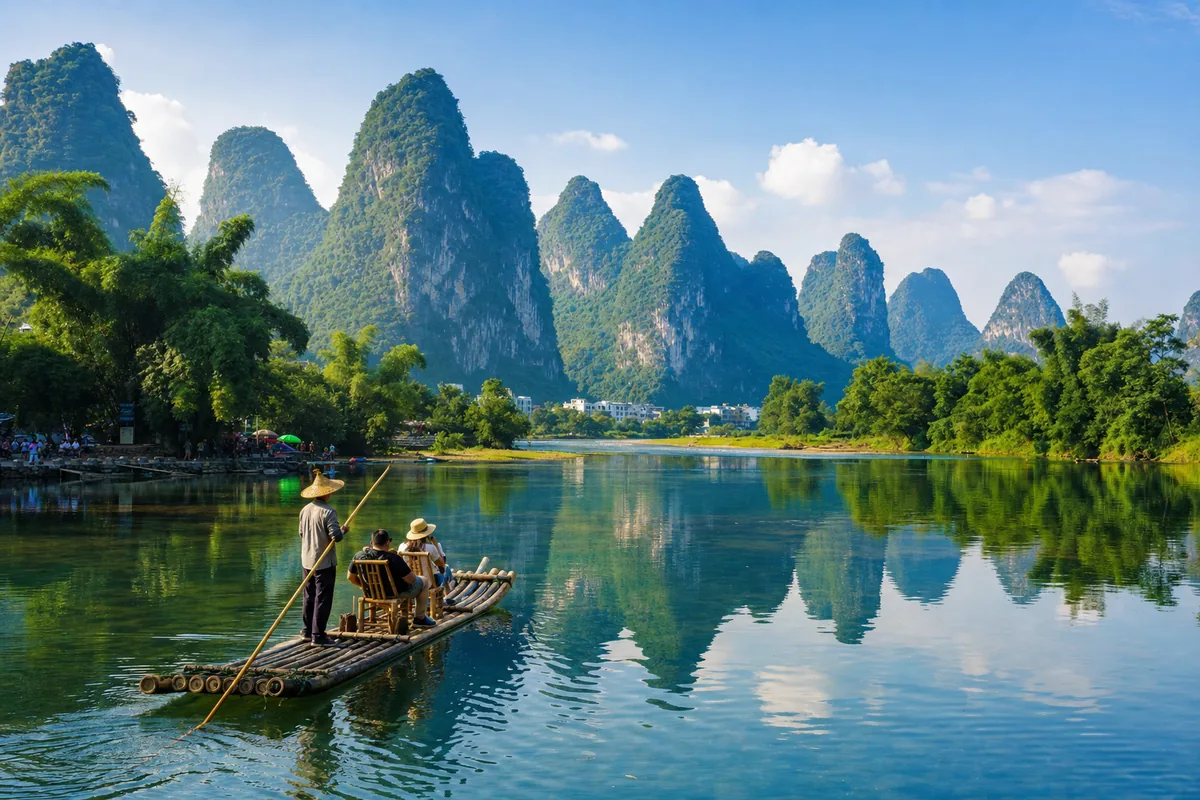
The headline experience is the Li River (漓江, Líjiāng) cruise from Guilin to Yangshuo — roughly 4 hours drifting past the karst peaks that appear on the back of the 20-yuan note. Disembark in Yangshuo and check in there; it's a more relaxed base than Guilin city. Spend the evening on West Street.
Day 11: Cycling and countryside
Rent a bike or e-bike and ride out along the Yulong River, through villages and rice paddies. Bamboo rafting on the Yulong is gentle and scenic. In the evening, many visitors catch the large outdoor light show directed by Zhang Yimou on the river.
Day 12: Rice terraces or back to Guilin, then to Shanghai
If you have the morning, the Longji (Dragon's Backbone) rice terraces are spectacular but a 2+ hour drive each way — better suited if you skipped a day trip earlier. Otherwise, return to Guilin and fly to Shanghai (about 2 hours), since there's no fast direct train. The Guilin/Yangshuo Guide has detailed options.
Days 12–14: Shanghai
End the trip on the coast. Shanghai is the easiest city in China for foreign visitors — international food, English signage, and a slick metro.
Day 13: The Bund and the old city
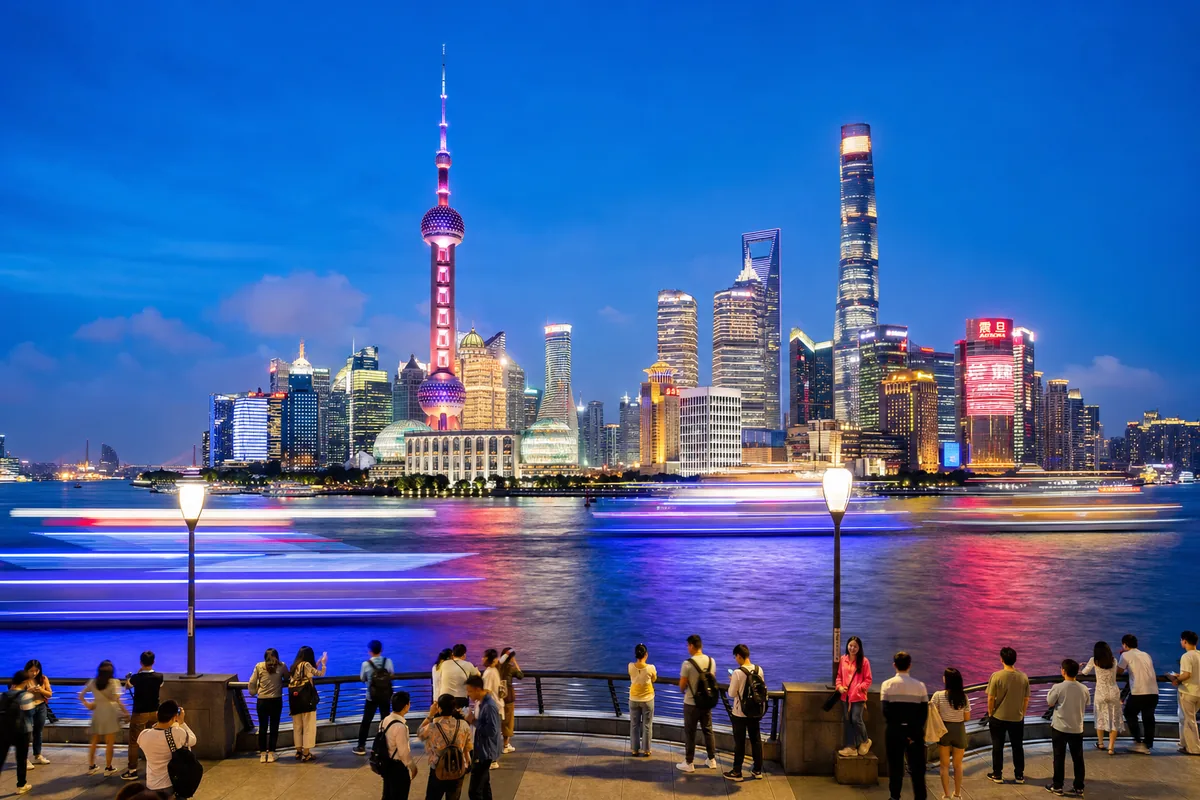
Walk the Bund (外滩, Wàitān) in the morning for the colonial-era waterfront, then cross to Pudong for the view back and, if you like, an observation deck (Shanghai Tower or the Pearl Tower). In the afternoon, see Yu Garden and the surrounding bazaar, then wander the tree-lined streets of the former French Concession for coffee and shopping.
Day 14: Last morning and departure
Depending on your flight, fit in a museum (the Shanghai Museum or the Power Station of Art) or a quick trip to a nearby water town like Zhujiajiao. Shanghai has two airports — Pudong (PVG) for most international flights and Hongqiao (SHA) mainly for domestic. The maglev train from Pudong is a fun, fast way to the airport. See the 3-Day Shanghai Itinerary if you can extend.
Getting Between Cities
Three of the five legs work best by high-speed rail; two are better by air.
| Leg | Best mode | Duration | Notes |
|---|---|---|---|
| Beijing → Xi'an | High-speed train | 4.5–6 hrs | Frequent departures from Beijing West/South |
| Xi'an → Chengdu | High-speed train | 3–4 hrs | Scenic mountain route |
| Chengdu → Guilin | Flight | ~1.5 hrs | Train is 10+ hrs — fly instead |
| Guilin → Shanghai | Flight | ~2 hrs | No fast direct train |
For the train legs, book through the official 12306 platform or an English-language reseller. Tickets open about 15 days ahead and popular times sell out, so book early. You can buy via Trip.com if you'd rather have an English interface and easier payment. Bring your passport — it's your ticket and ID at the gates. For the full process, see our guide to booking train tickets and the High-Speed Train Complete Guide.
Budget Reference
Costs vary a lot by travel style. Here's a realistic per-person estimate for the full 14 days, excluding international flights to and from China. Figures are in approximate USD and will shift with exchange rates and season — treat them as a planning baseline, not a quote.
| Category | Budget | Mid-range | Comfort |
|---|---|---|---|
| Accommodation (13 nights) | $260–390 | $650–1,040 | $1,560+ |
| Intercity transport (2 flights + 2 trains) | $280–400 | $350–500 | $500+ |
| Food | $140–210 | $280–420 | $560+ |
| Attractions & activities | $120–180 | $200–320 | $400+ |
| City transport & incidentals | $70–100 | $100–150 | $200+ |
| Total (approx.) | $870–1,280 | $1,580–2,430 | $3,200+ |
For a fuller breakdown of daily costs and money-saving tactics, see our China Travel Budget Guide.
Where to Stay
In each city, stay central to cut down on transit time. In Beijing, base yourself near the metro between Tiananmen and the Lama Temple. In Xi'an, inside or just outside the city wall near the Bell Tower. In Chengdu, around Jinli or Tianfu Square. In Yangshuo rather than Guilin city for the river atmosphere. In Shanghai, near People's Square or in the former French Concession for walkability. You can compare and book most of these on Trip Com Hotel, which tends to have strong coverage and Chinese hotels that don't always appear on Western platforms. See Booking Hotels & Registration Rules for the police-registration requirement that applies to all foreign guests.
Adjusting the Route
This itinerary is a framework, not a rulebook. A few common variations:
- Tight on time? Drop Guilin and you have a clean 10-day loop. Our 10-Day China Trip Plan lays this out.
- Love nature over cities? Swap Xi'an for an extra two days in Guilin/Yangshuo, or add the Longji rice terraces.
- Foodie focus? Give Chengdu an extra day — it's arguably China's best eating city — and trim Shanghai to one full day.
- Slower pace? Cut one city entirely. Five cities in 14 days is comfortable but not leisurely; four cities feels relaxed.
If you'd rather not handle the bookings and connections yourself, a customized private itinerary through China Highlights can package the trains, hotels, and guides into one plan.
Final Thoughts
Two weeks across Beijing, Xi'an, Chengdu, Guilin, and Shanghai gives you the headline sights — the Wall, the warriors, the pandas, the karst, the skyline — without rushing. The keys to making it smooth: book the Forbidden City and Great Wall tickets in advance, set up mobile payments before you arrive, reserve train tickets early, and fly the two long southern legs instead of taking marathon trains. Build in a buffer day or two if your pace runs slower. Start with the route above, then bend it toward whatever you came for — history, food, or landscape — and you'll have a trip that fits you rather than a checklist.
Last updated: June 2026
Read in other languages
Last train times for 10 Chinese metro systems
Every line and station, checked by hand — the same data behind our offline route planner.
Get the WaysChina App
Offline guides, currency converter, essential phrases, and more — all in your pocket.

Related Articles
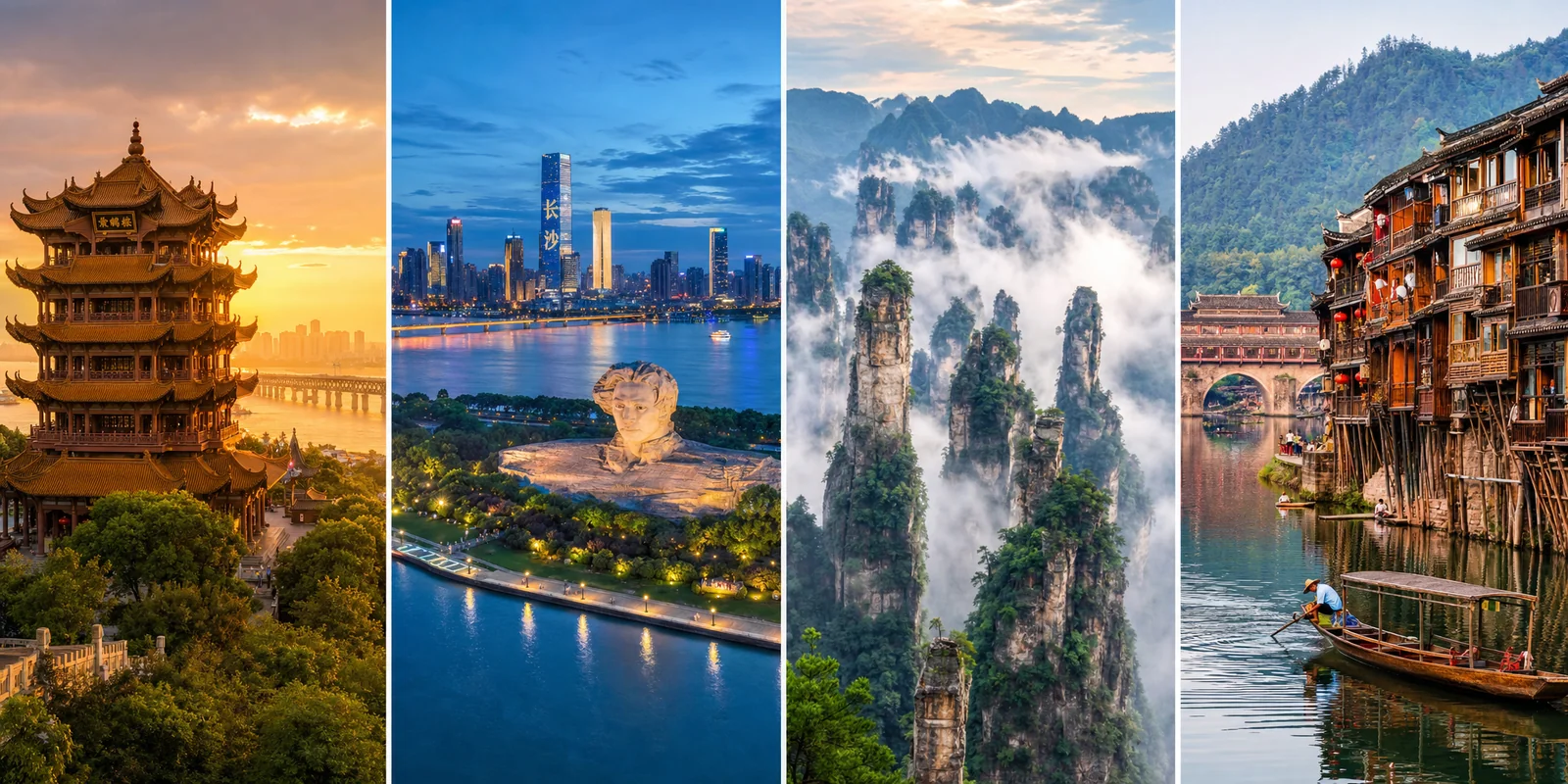
Central China Route: Wuhan-Changsha-Zhangjiajie
A practical 7-8 day Central China itinerary linking Wuhan, Changsha, Zhangjiajie, and Fenghuang by high-speed rail,...

Northeast China Route: Harbin-Changbaishan-Dalian
A 7-8 day route through Northeast China linking Harbin, Changbaishan, and Dalian, with separate winter and summer...

Jiangnan Water Towns Route: Shanghai, Suzhou, Wuzhen and Hangzhou in 5 to 7 Days
Shanghai → Suzhou → a night in Wuzhen or Xitang → Hangzhou: the order, nights per stop, which water town to pick,...
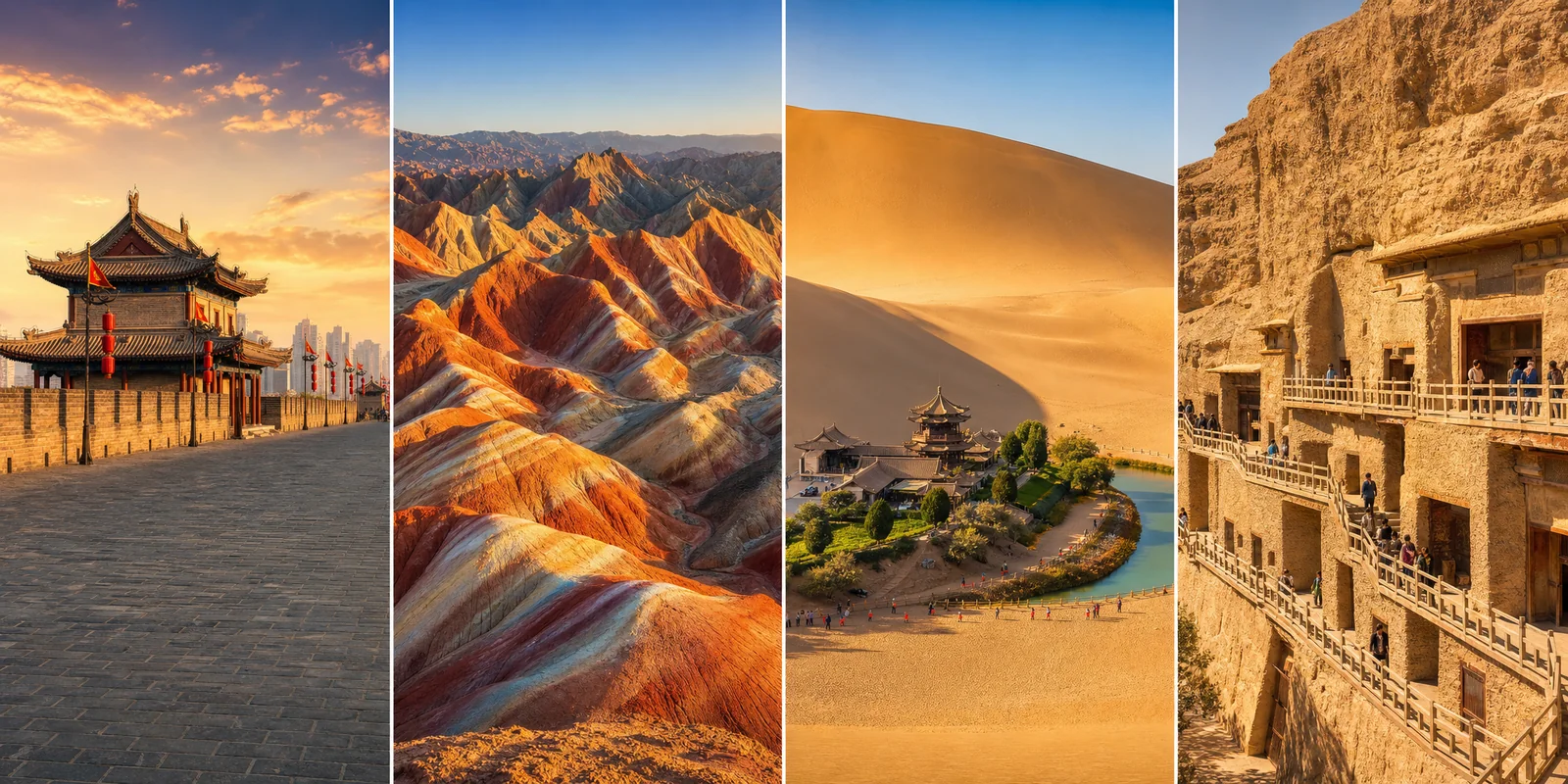
Silk Road Route: Xi'an to Dunhuang
A practical 7-8 day Silk Road itinerary from Xi'an through Lanzhou and Zhangye to Dunhuang, with day-by-day plans,...