
This article contains affiliate links. If you make a purchase through these links, we may earn a small commission at no extra cost to you. This helps support our work in creating free travel guides.
Dali and Lijiang are the two stops that built Yunnan's reputation with backpackers, and they still hold up. Both are old towns with cobbled lanes and tiled roofs, but they feel different: Dali is laid-back, lake-facing, and a bit scruffy in a good way, while Lijiang is more polished and touristy, with snow mountains an hour north. Most travelers do them together over 5-7 days, often as part of a longer Yunnan loop. This guide covers how to get between them, what's actually worth your time at each major sight, where to eat and sleep, and how to string it all into a sensible route.
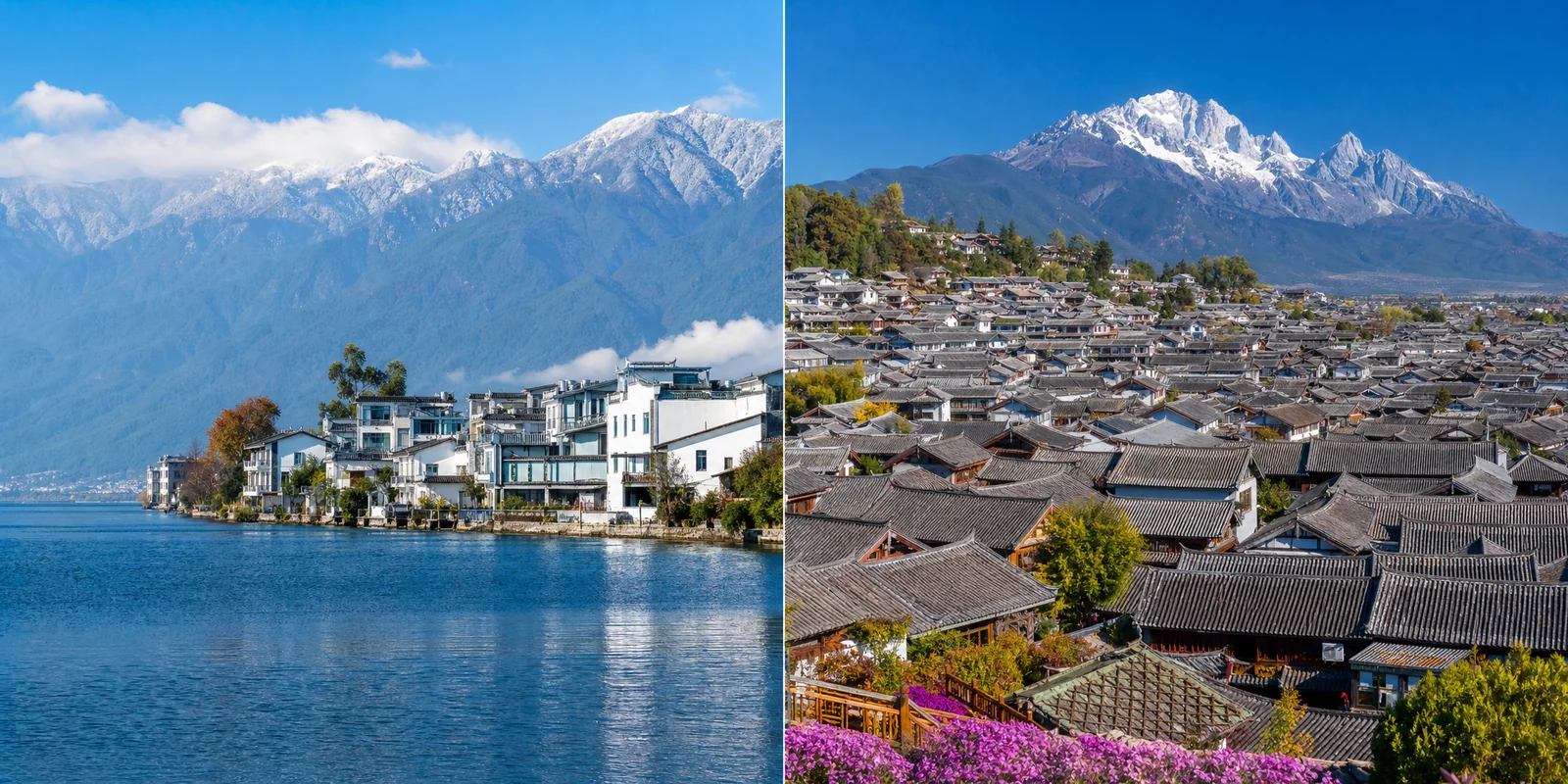
Dali & Lijiang at a Glance
Both towns sit at altitude — Dali around 1,900m, Lijiang around 2,400m — so days are mild and nights are cool even in summer. The sun is strong; you'll want sunscreen and a layer for evenings year-round. The best windows are spring (March-May) and autumn (September-November), when skies are clear and rain is rare. Winter (December-February) is dry, sunny, and quiet, with the best odds of seeing the snow mountain unobscured, though nights get cold. Summer is the rainy season — green and dramatic, but with afternoon downpours and more cloud cover on the peaks.
Geographically, Dali is a county-sized area, not just one town. When people say "Dali" they usually mean Dali Old Town (大理古城, Dàlǐ Gǔchéng), which sits between the Cangshan mountains and Erhai Lake. The modern city of Xiaguan (下关), where the high-speed trains and airport are, is about 30 minutes south — don't book a hotel there by accident expecting the old-town atmosphere.
Getting There and Getting Around
Reaching Dali and Lijiang
Most people arrive through Kunming (昆明), Yunnan's capital and main air hub. From Kunming you have two good options:
- High-speed train: Kunming to Dali takes about 2 hours; Kunming to Lijiang about 3.5 hours. Trains run frequently and are the easiest, most reliable choice. Dali to Lijiang by train is roughly 1.5-2 hours.
- Flights: Both Dali and Lijiang have airports with direct flights from Kunming and other major Chinese cities. Worth it if you're coming from far away, but for the Kunming-Dali-Lijiang corridor the train usually wins on convenience.
You can book trains in advance through the official 12306 platform, or use an English-language service like Trip Com Train if you'd rather avoid the Chinese-only interface. Either way, book a day or two ahead in peak season — popular departures sell out.
Heading further north, Shangri-La (香格里拉) is about 3-3.5 hours by bus or shared car from Lijiang, climbing to 3,200m. It's a natural next leg if you want Tibetan-plateau scenery, but altitude hits harder there, so build in a slow first day.

Within the towns
Inside both old towns you walk — vehicles are mostly banned in the historic cores. For getting around the wider Dali area (old town, lakeshore villages, Cangshan), the easiest tools are Didi (滴滴, China's main ride-hailing app) and the local buses. Many travelers rent an electric scooter or bicycle to circle parts of Erhai Lake. In Lijiang, you'll mostly walk the old town and take Didi or a chartered car for day trips to the snow mountain or Shuhe.
Dali Old Town
Dali Old Town is a walled grid of stone streets dating back over a thousand years, once the center of the Bai (白族) kingdom of Nanzhao and later Dali. The walls and gates have been rebuilt, but the layout is original, and the pace is genuinely relaxed compared to most Chinese tourist towns. You can spend a morning just wandering — courtyard cafes, tie-dye workshops (a Bai craft, using indigo), little galleries, and street stalls selling rose-flavored snacks and fresh yogurt.
The main drag, Renmin Lu (人民路), runs downhill toward the lake and fills up in the evening with buskers, hand-made jewelry sellers, and bars. Foreigner Street (洋人街, Yángrénjiē) earned its name in the backpacker era of the 1990s; it's more commercial now but still has a few decent cafes and craft beer spots. Climb to the South Gate (南门) for a view back over the tiled roofs toward the mountains.
Just outside town, the Three Pagodas (崇圣寺三塔, Chóngshèngsì Sāntǎ) are Dali's iconic image — three white Buddhist towers, the tallest from the 9th century, reflected in a pair of ponds with Cangshan behind. The full Chongsheng Temple complex behind the pagodas is large and mostly modern reconstruction; budget travelers often just photograph the pagodas from the free viewpoint near the ponds rather than paying the full entry.
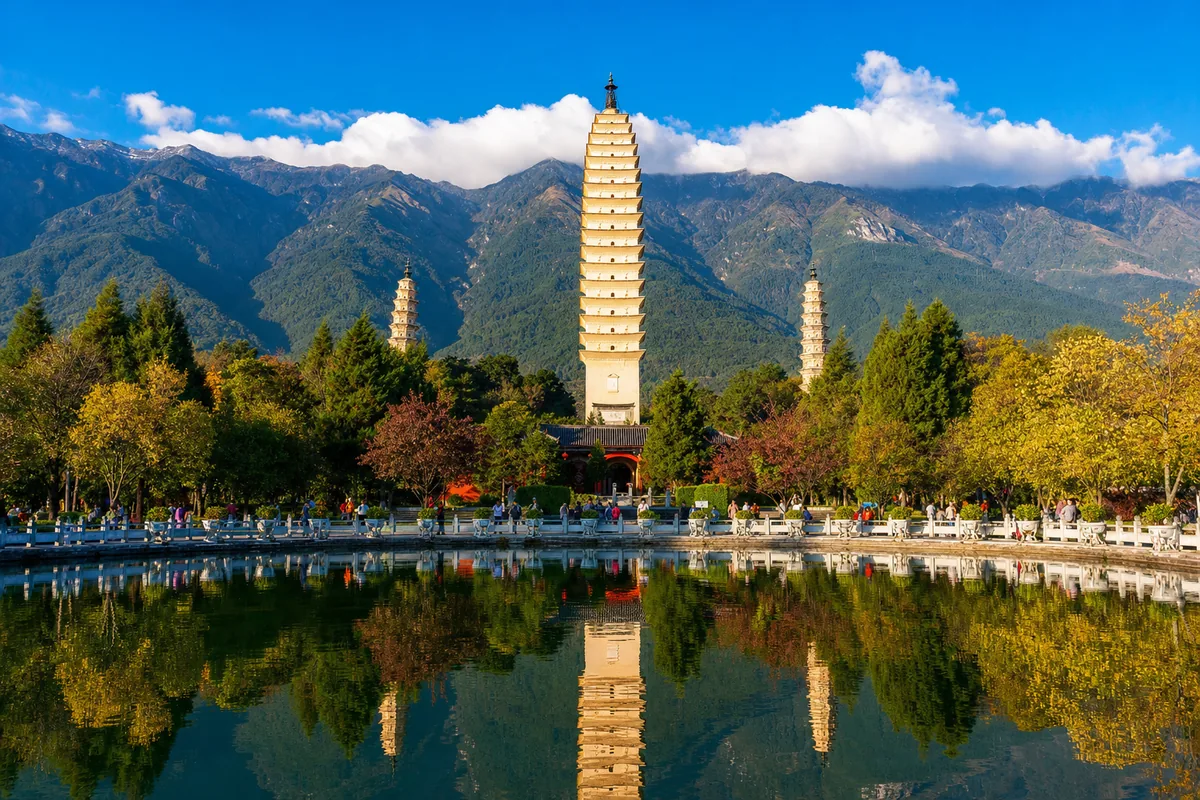
Erhai Lake
Erhai (洱海, "ear-shaped sea") is the reason Dali feels the way it does — a long freshwater lake with mountains on the far shore, dotted with old Bai fishing villages. The classic thing to do is circle it, and the loop is about 120km. You have a few ways to do it:
- Electric scooter or bike: Rent in the old town or a lakeshore village. Doing the full loop on a scooter is a full day; many people just ride the scenic western and eastern shores.
- Chartered car or day tour: The most comfortable option, with stops at viewpoints and villages. Easy to arrange locally or book ahead.
- Sightseeing bus / boat: A tourist bus circles the lake with hop-on stops; boat cruises run from the docks.
The villages are the highlight. Xizhou (喜洲) on the north-west shore is the best preserved, with grand Bai courtyard mansions and the famous Xizhou baba (a savory flatbread) cooked fresh at street stalls. Shuanglang (双廊) on the east shore is the boutique-guesthouse and cafe hub, with the best straight-on views of the mountains across the water. Sunrise and the hour before sunset are when the lake looks its best.
If you'd rather not sort out logistics yourself, you can book a guided Erhai loop or a cycling day through a platform like Klook, which lists English-language options with set pickup points.

Cangshan Mountain
Behind Dali Old Town, the Cangshan (苍山) range rises to nearly 4,000m, often capped with snow into early summer. Three cable cars carry you up to walking trails along the mid-slopes, where you get the postcard view: the old town below, Erhai Lake beyond, and the patchwork of fields between. The Gantong and Ximatan cableways reach the higher trails; the Zhonghe route is the classic one closest to town. A walkway called the Cloud-Touring Path (玉带云游路) links sections of the slope and makes for an easy half-day if the weather is clear.
Lijiang Old Town
An hour and a half north of Dali, Lijiang Old Town (丽江古城, Lìjiāng Gǔchéng) is a UNESCO World Heritage Site and the home of the Naxi (纳西族) people, whose Dongba script is one of the world's last living pictographic writing systems. The town's signature feature is water: snowmelt channels run alongside nearly every lane, crossed by hundreds of small stone bridges, so you're rarely out of earshot of running water.
The old town is beautiful and also very busy — it's one of the most visited towns in China, and the central area around Sifang Street (四方街) is wall-to-wall shops and bars by evening. The trick is to walk early or late, and to climb. Lion Hill (狮子山) and the Wangu Tower at the top give you the famous sea-of-rooftops view, and the further you wander from the center, the quieter and more residential it gets. The official UNESCO World Heritage listing has background on why the town's layout and water system are protected.
Note that Lijiang charges an old town maintenance fee (古城维护费), traditionally collected at certain attractions and checkpoints rather than at the town gates. Keep the receipt if you pay it, as you may be asked for it when buying tickets to sites like Black Dragon Pool.
Just north of the old town, Black Dragon Pool Park (黑龙潭) frames the single most reproduced view in Yunnan: Jade Dragon Snow Mountain reflected in a clear pond behind a marble bridge and pavilion. Go in the morning for the best chance of a clear reflection.

Shuhe Ancient Town
About 4km north-west of Lijiang Old Town, Shuhe (束河古镇, Shùhé Gǔzhèn) is an older, smaller, and noticeably calmer cousin. It was a stop on the ancient Tea Horse Road (茶马古道), the caravan route that carried Yunnan tea to Tibet, and it has the same Naxi architecture and water channels as Lijiang without the same density of crowds. Many travelers now base themselves in Shuhe and visit Lijiang on day trips, precisely because evenings here are quieter. It's an easy 15-minute taxi from Lijiang, and a good place to slow down for a day with a teahouse and a walk along the canals to the old market square.
Jade Dragon Snow Mountain
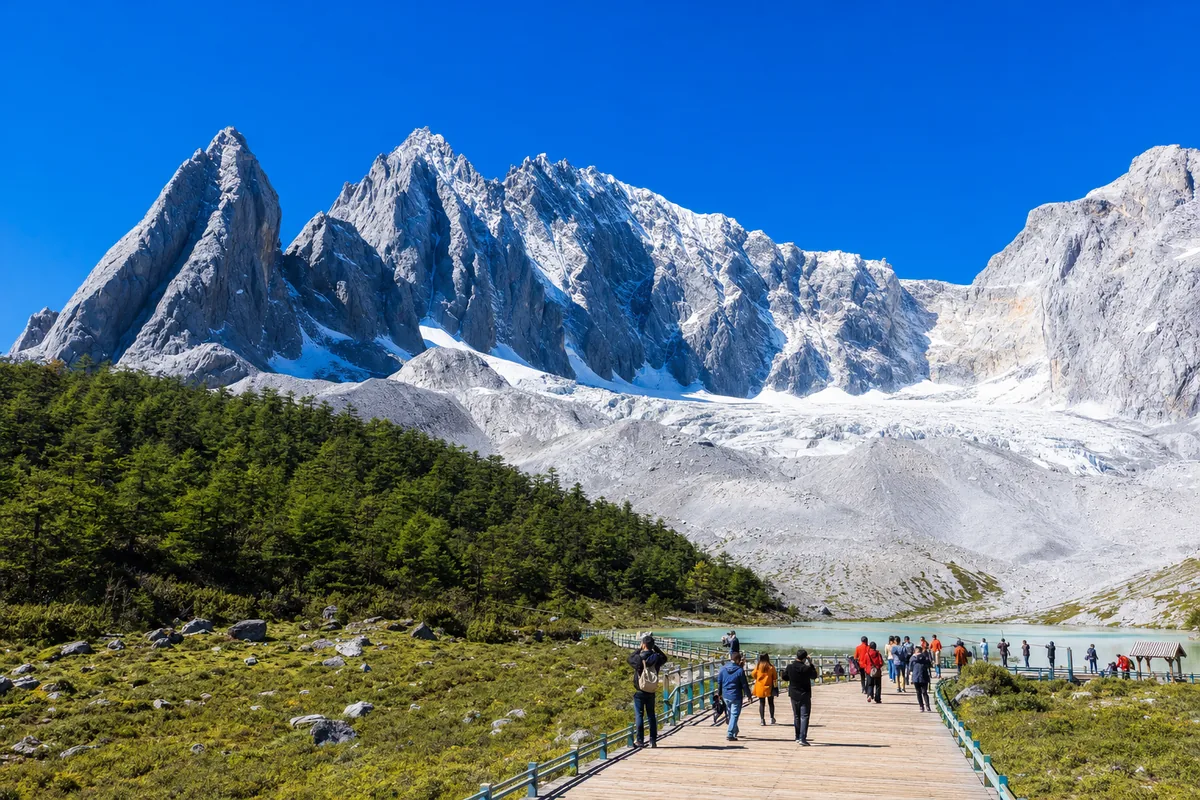
Jade Dragon Snow Mountain (玉龙雪山, Yùlóng Xuěshān) is the dramatic glaciated massif north of Lijiang, with its highest peak at 5,596m. You don't climb it — the summit has never been officially summited — but cable cars take you high onto its flanks. There are three cableways:
- Glacier Park cableway (大索道): The big one, reaching about 4,500m, where a boardwalk lets you walk up toward the glacier. This is the headline experience and the most crowded.
- Spruce Meadow cableway (云杉坪): Lower, to an alpine meadow ringed by spruce forest with the peak above.
- Yak Meadow cableway (牦牛坪): The quietest, with grazing yaks and wide views.
At the foot of the mountain, the outdoor show Impression Lijiang (印象丽江), directed by Zhang Yimou, runs in daylight with hundreds of local performers; Blue Moon Valley (蓝月谷) has a string of vivid turquoise pools fed by glacial melt.
Tickets are a layered system: a park entry fee, the cableway, the eco-bus inside the park, and often the Impression Lijiang show, sometimes bundled. Cableway tickets — especially the Glacier Park one — are capped daily and sell out, so this is one place where booking ahead genuinely matters. You can reserve the cableway and a transfer through Getyourguide or arrange it with your Lijiang guesthouse, which can often handle the timed-entry booking for you.
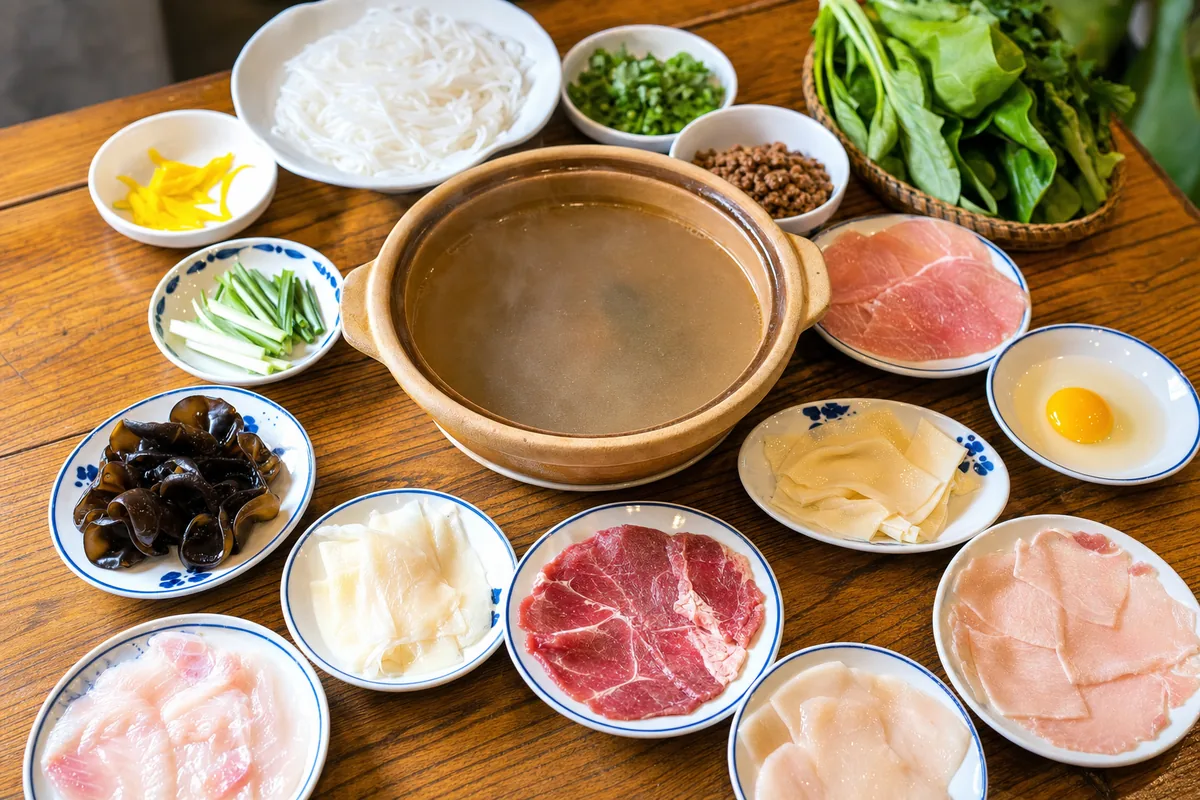
Food in Dali and Lijiang
Yunnan food is one of China's most distinctive regional cuisines — herb-heavy, mildly spicy, with mushrooms, flowers, and goat cheese that you won't find elsewhere in the country. A few things to seek out:
- Crossing-the-bridge noodles (过桥米线, guòqiáo mǐxiàn): The signature Yunnan dish — a bowl of scalding broth that arrives separately from raw-thin meat, vegetables, and rice noodles you cook tableside.
- Xizhou baba (喜洲粑粑): A flaky savory or sweet flatbread, best straight off the griddle in Xizhou village.
- Erkuai (饵块): Pressed rice cakes, grilled and wrapped around fillings or stir-fried.
- Rushan (乳扇): Bai "fan cheese," a stretched goat's-milk cheese grilled and brushed with rose syrup — sold all over Dali Old Town.
- Wild mushrooms (野生菌): A summer obsession across Yunnan; restaurants serve dozens of varieties in hotpot.
- Naxi dishes in Lijiang: Naxi grilled fish, baba flatbread, and chicken stewed with herbs.
In Dali, the lanes off Renmin Lu and the area near Foreigner Street have the most variety, including plenty of vegetarian-friendly and Western options aimed at the long-term traveler crowd. In Lijiang, eat slightly away from Sifang Street for better value, and try the small Naxi family restaurants. For more on regional Chinese food in general, see our guide to Chinese cuisine by region.
Where to Stay
Both towns are famous for their kèzhàn (客栈) — courtyard guesthouses converted from traditional homes. These are part of the experience, and a well-run one with a central garden is worth choosing over a generic chain hotel.
In Dali
Stay either inside the old town for atmosphere and walkability, or in a lakeside village like Shuanglang or near Xizhou if water views are your priority. The old town suits first-timers; the lake suits those who want to slow down and don't mind being away from the nightlife.
In Lijiang
You can stay in the old town itself (atmospheric but noisy near the center — pick a guesthouse on a quieter outer lane), or base yourself in Shuhe for calmer evenings and visit Lijiang by day. Either works.
Guesthouses and hotels across both towns are listed on the major booking platforms; comparing options on Booking Com Hotel is the simplest way to filter by location, reviews, and whether a place is actually inside the old town or out in Xiaguan. Read the location notes carefully — "Dali" in a listing title doesn't always mean the old town.
One practical note: all hotels and guesthouses in China must register foreign guests with the police at check-in (住宿登记, zhùsù dēngjì). Reputable kèzhàn handle this routinely, but a few very small family places aren't set up for foreign registration — confirm when you book. More on this in our hotel booking and registration guide.
Suggested 5-7 Day Itinerary
Here's a realistic route that does both towns justice without rushing.
| Day | Base | Plan |
|---|---|---|
| 1 | Dali | Arrive from Kunming. Settle into the old town, walk Renmin Lu, evening at the South Gate. |
| 2 | Dali | Three Pagodas in the morning, Cangshan cable car and slope walk in the afternoon. |
| 3 | Dali | Erhai Lake loop — Xizhou for lunch and baba, Shuanglang for sunset views. |
| 4 | Lijiang / Shuhe | Train to Lijiang. Afternoon in Shuhe; quieter evening. |
| 5 | Lijiang | Jade Dragon Snow Mountain (book cableway ahead), Blue Moon Valley, Impression Lijiang. |
| 6 | Lijiang | Lijiang Old Town early, Lion Hill view, Black Dragon Pool, evening to explore. |
| 7 | Onward | Depart, or continue to Shangri-La (3-3.5 hrs north) for the Tibetan-plateau leg. |
If you only have five days, drop one Dali day and the Shangri-La extension. If you have more time, Shangri-La and Tiger Leaping Gorge between Lijiang and Shangri-La are the natural additions — covered in our Kunming-Dali-Lijiang-Shangri-La circuit route plan.
Practical Notes
- Altitude: Lijiang and the snow mountain are high enough to feel. Drink water, go easy the first day, and skip the highest cableway if you're unwell.
- Sun and weather: The high-altitude sun is intense even when it's cool. Sunscreen, a hat, and a layer for evenings, every season.
- Payments: Mobile payment (Alipay / WeChat Pay) is universal; set one up before you arrive. Carry a little cash for tiny village stalls.
- Crowds: Avoid the early-October Golden Week and Chinese New Year if you can — Lijiang in particular gets packed. See our Golden Week survival guide if your dates can't move.
- Ethical note: Bai and Naxi culture is living, not a theme park. Ask before photographing people, and support the family-run workshops and restaurants over the mass-produced souvenir chains.
Final Thoughts
Dali and Lijiang reward a slower pace. Dali is the place to settle in — lake, mountains, courtyard cafes, and a low-key rhythm that's easy to extend by a day or two. Lijiang is more of a set piece, best enjoyed early in the morning and from a quieter base like Shuhe, with the snow mountain as its big-ticket day trip. Five days covers the essentials; seven lets you breathe and adds Shangri-La. Book your snow-mountain cableway and peak-season trains ahead, set up mobile payments before you land, and otherwise let these two towns slow you down. From here, the obvious next step is north to Shangri-La, or back to Kunming to continue exploring the rest of Yunnan.
Last updated: June 2026
Read in other languages
Last train times for 10 Chinese metro systems
Every line and station, checked by hand — the same data behind our offline route planner.
Get the WaysChina App
Offline guides, currency converter, essential phrases, and more — all in your pocket.

Related Articles

3-Day Chengdu Itinerary
A practical 3-day Chengdu plan covering the Panda Base, Wuhou Shrine, Jinli, People's Park, and a day trip to Leshan...
Chengdu Day Trips
The best day trips from Chengdu: the Leshan Giant Buddha, Mount Emei, Dujiangyan, and Qingcheng Mountain — plus...
Chengdu Food Guide
Chengdu is China's spice capital and a UNESCO City of Gastronomy. Here's what to eat, where to find it, and how to...

Lhasa & Tibet Guide
Foreign tourists can visit Tibet, but only with a Tibet Travel Permit and a booked tour — no independent travel...