
This article contains affiliate links. If you make a purchase through these links, we may earn a small commission at no extra cost to you. This helps support our work in creating free travel guides.
Getting around Chinese cities is easier than most visitors expect. Major cities have huge, modern metro systems with English signage, taxis are cheap and metered, and ride-hailing through DiDi works in English. The one thing that used to trip people up — payment — has largely been solved: since around 2024, you can link an international Visa or Mastercard to Alipay or WeChat Pay and use it for the metro, buses, and DiDi without a Chinese bank account or phone number. A handful of cities now even let you tap a foreign contactless card straight at the metro gate.
This guide covers your four main options for moving around within a city, how to pay for each, roughly what they cost, and when to use which. For deeper how-to detail, we link to dedicated guides along the way.
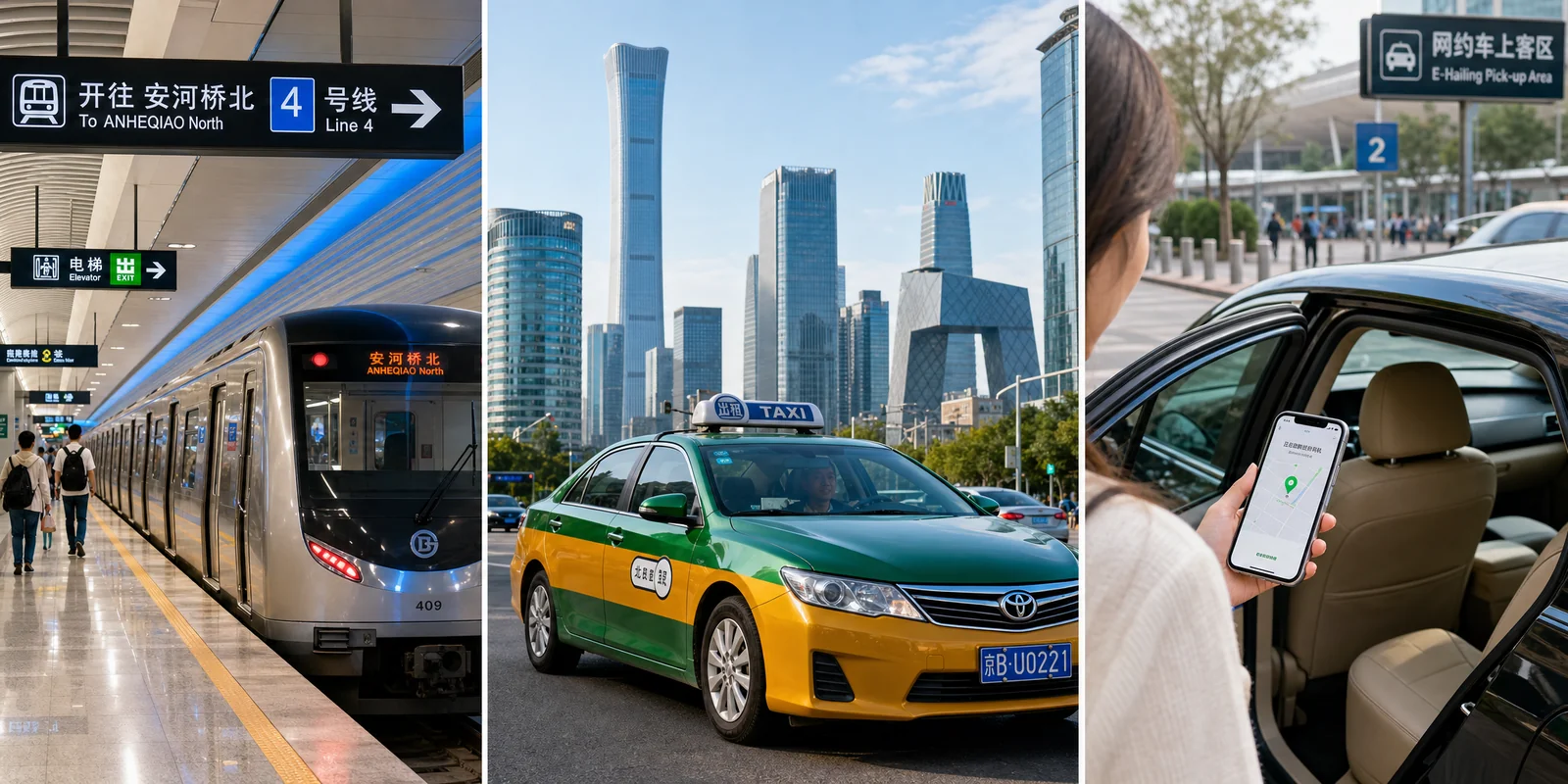
The four ways to get around a Chinese city
Within any large Chinese city, your realistic choices come down to four:
- Metro / subway — fast, cheap, predictable, and immune to traffic. Your default in any city that has one.
- Taxi — metered, widely available, no app required, but drivers rarely speak English.
- Ride-hailing (DiDi) — like Uber, with an English app and in-app translation. Great when you can't explain your destination out loud.
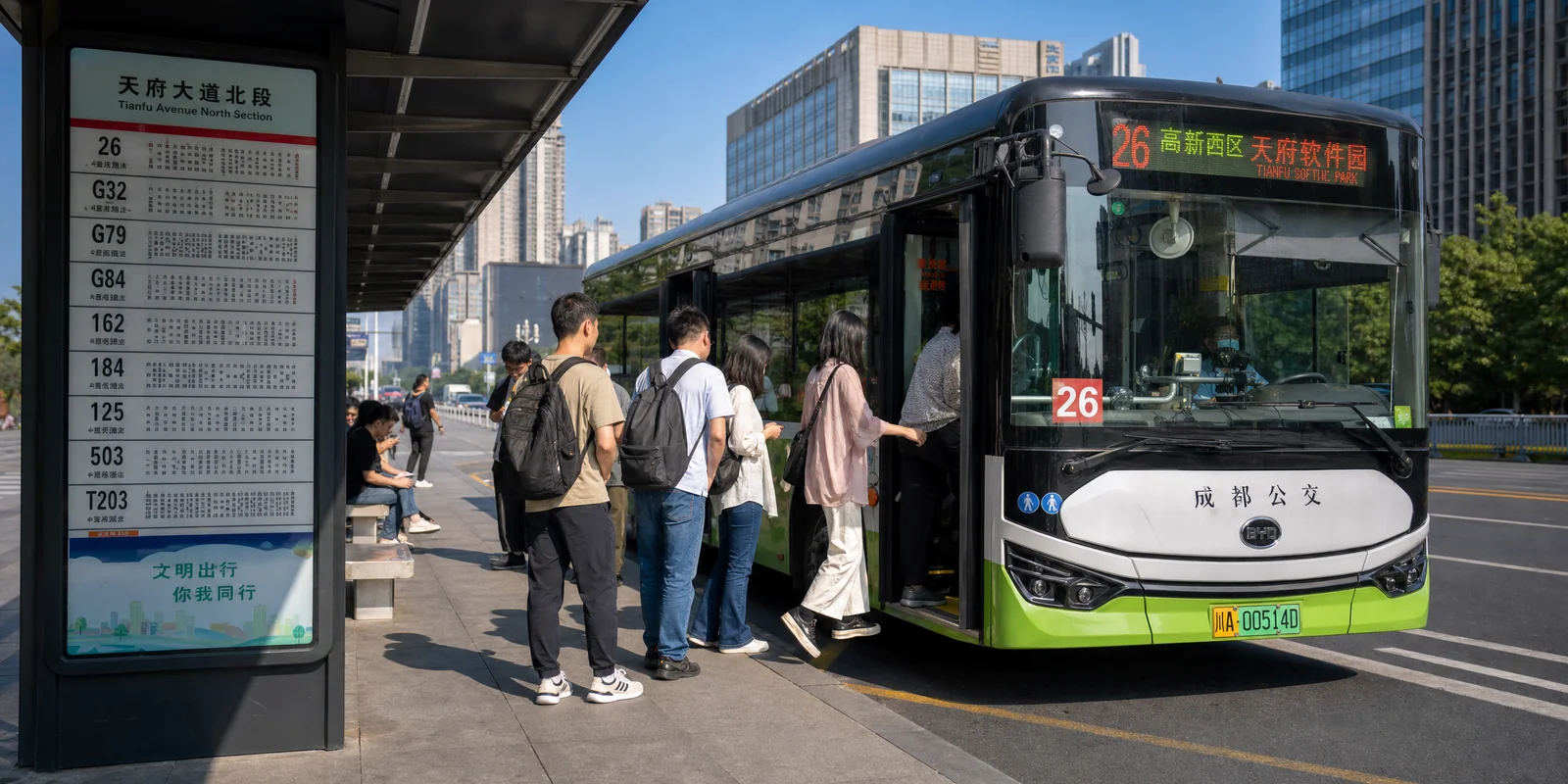
- Public bus — the cheapest option and great for short hops, but harder to navigate without Chinese.
Most travelers end up using a mix: the metro for longer crosstown trips, and a taxi or DiDi for the last stretch to a hotel or restaurant that isn't near a station. For a broader look at moving between cities (high-speed rail, flights, long-distance buses), see our Transportation Overview.
Paying for transport as a foreign visitor
This is the part worth getting right before you arrive, because it unlocks almost everything else.
Mobile payment is the backbone
Alipay (支付宝, Zhīfùbǎo) and WeChat Pay (微信支付, Wēixìn Zhīfù) are the two apps that run daily life in China. Both now let foreign users register and link an international card such as Visa or Mastercard. According to the Chinese government's payment guide for overseas visitors, single transactions are capped at US$5,000 and your annual total at US$50,000, with small transactions exempt from identity verification.
On fees: small purchases are effectively free. Alipay and WeChat absorb the foreign-card processing fee on transactions up to about 200 RMB (roughly US$28), and charge around 3% above that threshold — convenient news for transport, where almost every fare is well under 200 RMB. These thresholds can change, so confirm the current terms inside the app before you travel.
Using the metro with a payment app
To ride the metro with Alipay, you open a "Transport" QR code for each city you visit: tap the Transport (出行) tab, choose your city, tap Get now, and accept the terms. You then scan the code at the gate on the way in and again on the way out. Note that each city is separate — and in some cities the metro and bus codes need to be activated individually.
Tap a foreign card straight at the gate
A growing number of cities now skip the app entirely and let you tap an international contactless card at the fare gate, just like in London or Singapore:
- Beijing was the first, enabling Visa and Mastercard tap-to-pay across nearly the whole network. The official announcement covers 27 lines and 490 stations, charged at the same rates as local riders. (See the government's notice on Beijing's tap-and-go payment.)
- Shanghai rolled "Tap to Ride" out across its entire network, accepting UnionPay, Visa, Mastercard, American Express, JCB contactless cards and compliant digital-yuan hardware wallets. You need small-amount password-free payment enabled on the card. The Shanghai government's announcement has the details.
- Chengdu became the third major city to support foreign-card tapping network-wide, including buying single tickets at the machines.
In other cities, the picture varies — Shenzhen, for example, has smart POS machines accepting foreign cards at eight major interchange stations and supports foreign cards through its metro mini-program. When in doubt, the mobile-payment QR code is the most universal fallback.
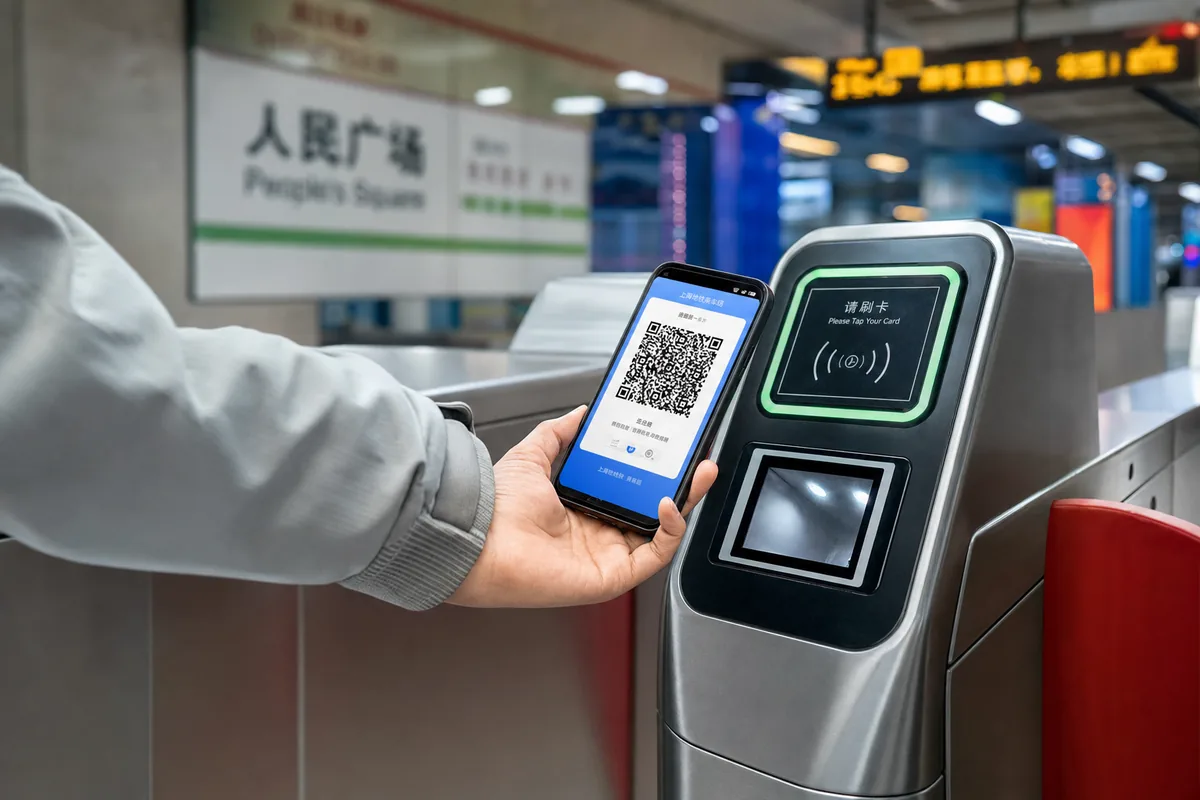
The metro: your default option
If a city has a metro, it's almost always your best bet for getting around. Trains are frequent (typically every 2–5 minutes at peak), stations are clean and modern, signage and announcements are bilingual, and you never sit in traffic. Beijing, Shanghai, Guangzhou, Shenzhen, Chengdu, Wuhan, Xi'an, Nanjing and many more all have extensive networks.
What it costs
Metro fares are distance-based and very affordable. A couple of real examples:
- Beijing: 3 RMB for the first 6 km, rising in steps — 4 RMB to 12 km, 5 RMB to 22 km, 6 RMB to 32 km, then 1 RMB per additional 20 km, with no cap. You can stay inside the paid area for up to 4 hours per trip. (The two airport lines are priced separately — the Capital Airport Express is a flat 25 RMB.)
- Shanghai: 3 RMB for 0–6 km, 4 RMB to 16 km, 5 RMB to 26 km, then 1 RMB per additional 10 km, capped at 15 RMB across the network. A 3 RMB surcharge applies if you stay inside more than 4 hours.
Beijing also sells electronic day passes — 20 RMB for one day, 30 for two, 40 for three, 70 for five and 90 for seven days — giving unlimited rides (airport lines excluded) within the validity period. If you'll be hopping on and off the metro all day, these can pay for themselves.
How to pay at the metro
You have several routes, depending on the city:
- Payment-app QR code (Alipay / WeChat) — works almost everywhere, scan in and out.
- Tap a foreign contactless card — in Beijing, Shanghai, Chengdu and a growing list of cities.
- Single-journey tickets from machines — buy with cash or, increasingly, a foreign card; machines have English menus. Staff at the service window can help if you're stuck.
- A stored-value transit card — bought at a station window (in Beijing, a 20 RMB deposit, refundable). Useful if you'd rather not rely on your phone, and usable on buses and ferries too.
Shanghai is a good example of how many options coexist: foreign-card tapping at 500-plus stations, the Suishenxing (SH MaaS) app with a universal QR code for metro, bus and ferry, the Metro Daduhui app supporting WeChat, Alipay and international cards, plus staffed windows for single tickets. The city's official metro access guide lays these out.
For a full walkthrough — reading line maps, transfers, security checks, and city-by-city payment notes — see our Metro Systems Guide.
Taxis: metered and everywhere
Taxis are plentiful in Chinese cities, properly metered, and cheap by Western standards. You don't need an app or a phone to hail one — just flag a cab with its roof light on. The catch is that most drivers speak little or no English, so you'll want your destination written in Chinese characters (a hotel card, a screenshot, or a map pin).
What it costs
Starting fares vary by city — roughly 13 RMB in Beijing, 15 in Shanghai, 12 in Guangzhou, 9 in Chengdu, with per-kilometer rates around 2–3 RMB. In Beijing, for example, the meter starts at 13 RMB covering the first 3 km, then runs 2.30 RMB/km during the day and 2.76 RMB/km at night (23:00–05:00), with a 1 RMB fuel surcharge on non-electric cabs. These figures shift over time and by city, so treat them as ballpark and check the posted rates in the cab.
How to pay
Most metered taxis take Alipay or WeChat — the driver shows a QR code or scans yours — and cash is always accepted. Have some smaller bills handy for cash payment, as drivers don't always carry much change.
Ride-hailing with DiDi
DiDi (滴滴, Dīdī) is China's dominant ride-hailing app, and it's genuinely usable for foreign visitors. According to its official app listing, it offers an English interface, lets you register with an overseas phone number, provides Chinese–English translation between you and the driver, accepts international cards, and has 24/7 English support. The app shows the route and an upfront fare estimate, which removes a lot of the uncertainty of a language-barrier taxi ride.
DiDi shines when you can't pronounce or explain your destination — you set the pin on the map, and the translation feature bridges any chat with the driver. Fares are comparable to taxis, sometimes a touch higher at peak times, and you avoid haggling entirely.
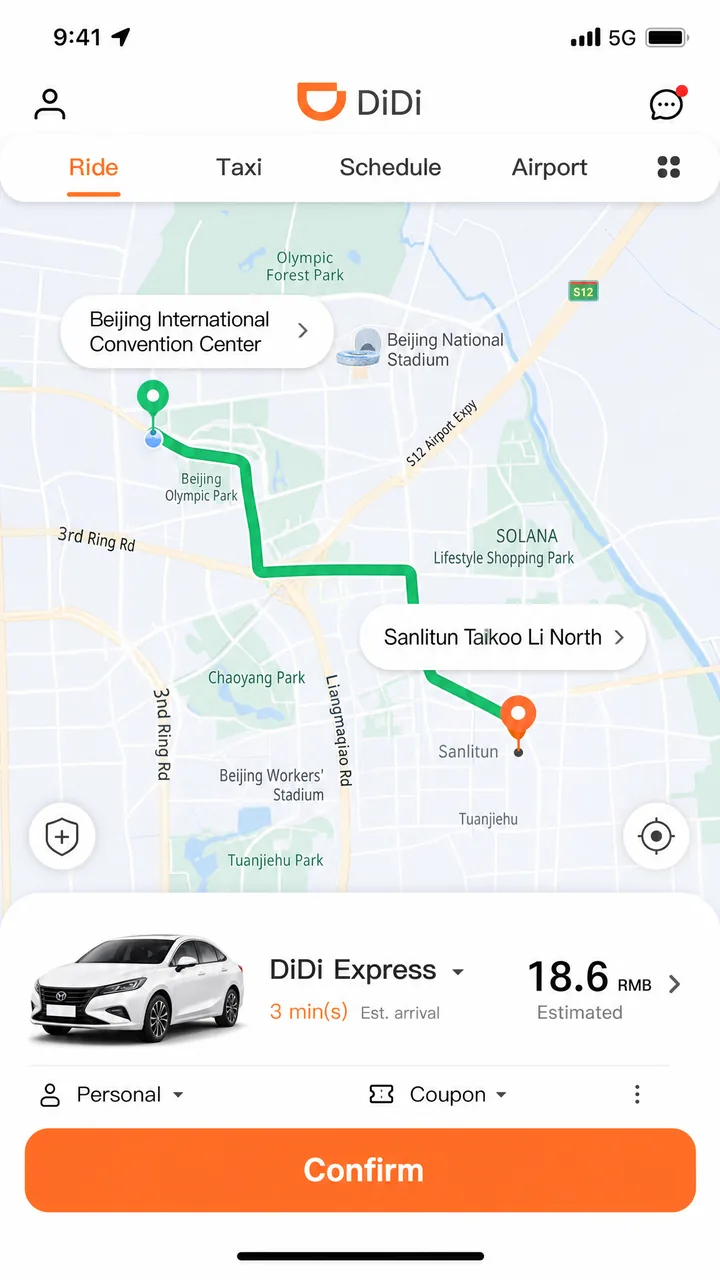
You'll need a working data connection to use DiDi and the payment apps reliably while out and about. A travel eSIM you set up before arrival is the simplest way to stay connected from the moment you land — providers like Airalo offer China-ready data plans you can install in advance. For the full picture on staying online, see our China SIM Card & eSIM Guide and the dedicated DiDi Guide.
Public buses
City buses are the cheapest way to get around and reach corners the metro doesn't. The trade-off is navigation: stop names and route boards are often in Chinese only, and you need to know where to get off. A map app makes this manageable, but buses are best once you've found your feet in a city.
Fares are low and usually flat or distance-based. In Beijing, for instance, buses cost 2 RMB for the first 10 km, then 1 RMB per additional 5 km — and because the fare is distance-based, you scan your code or card both when boarding and again before getting off. You pay with the same Alipay/WeChat transport QR code, a transit card, or exact-change cash (bus fareboxes don't give change). Whether a given city's buses accept foreign-card payment apps varies, so check locally.
Our Public Buses Guide covers reading routes, the scan-on/scan-off system, and tips for using buses without Chinese.
Navigation: which map app to use
Google Maps doesn't work well in mainland China. Local apps like Amap (高德地图, Gāodé Dìtú) and Baidu Maps (百度地图, Bǎidù Dìtú) are far more accurate for transit — they show transfer stations, which exit to use, station-to-station times and live train arrivals. Their English support for foreign users can be patchy, so test them early. Our Map Apps Guide compares the options.
the WaysChina app is also handy here: it bundles offline metro maps for major cities with route planning and a day-by-day trip planner, which is useful for sketching out your routes in advance — think of it as an offline metro-and-itinerary helper rather than a live navigation app.
Comparing your options
Here's how the four options stack up for a typical visitor:
| Option | Cost | Speed | English-friendly? | Best for |
|---|---|---|---|---|
| Metro | Very low (3–15 RMB) | Fast, no traffic | Yes — bilingual signs | Crosstown trips, rush hour |
| Taxi | Low–moderate | Fast off-peak, slow in traffic | Limited — bring Chinese address | Door-to-door, late night, luggage |
| DiDi | Similar to taxi | Same as taxi | Yes — English app + translation | When you can't explain the destination |
| Bus | Cheapest (1–3 RMB) | Slow, stops often | Harder — mostly Chinese | Short hops, areas off the metro |
Our recommendation
For most visitors, the simplest playbook is this: set up Alipay or WeChat Pay with your card before you arrive, then lean on the metro as your default for getting around any major city. When the metro doesn't reach your door — late at night, with luggage, or to somewhere awkward to explain — use DiDi for its English interface, or flag a metered taxi with your destination written in Chinese. Save buses for once you're comfortable in a city and want to save a few yuan.
You don't need a Chinese bank account or phone number to do any of this. With a payment app linked and a map app installed, you'll move around Chinese cities about as easily as you do at home — and a good deal more cheaply.
Related reading
- Metro Systems Guide — line maps, transfers, and city-by-city payment
- Taxis & Ride-Hailing in China — fares, etiquette, and avoiding problems
- Public Buses Guide — routes, scan-on/scan-off, and tips
- Understanding Chinese Payment Systems — how Alipay and WeChat Pay work
- Transportation Overview — getting between cities by rail, air, and bus
Last updated: June 2026
Read in other languages
Last train times for 10 Chinese metro systems
Every line and station, checked by hand — the same data behind our offline route planner.
Get the WaysChina App
Offline guides, currency converter, essential phrases, and more — all in your pocket.

Related Articles
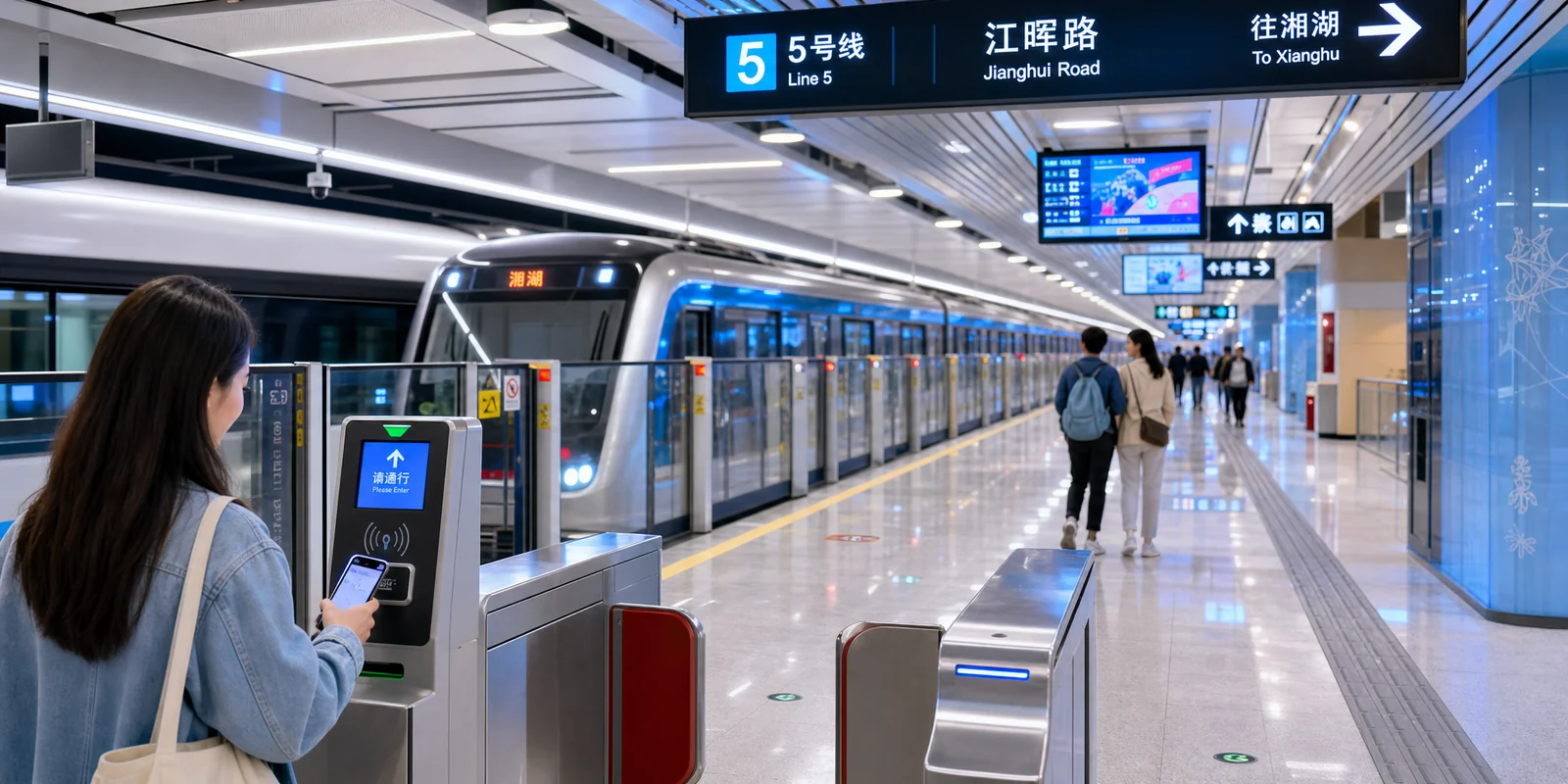
China Metro Guide: How to Use the Subway in Any City
A practical guide to using China's metro systems as a foreign traveler — payment with foreign cards, fares, tickets,...
Public Buses Guide
How to ride city buses in China as a foreign visitor: payment options, boarding rules, fares, English support, and...

Taxis & Ride-Hailing in China
How to use street taxis and ride-hailing apps like DiDi in China, what fares to expect, and how to avoid the few...