
This article contains affiliate links. If you make a purchase through these links, we may earn a small commission at no extra cost to you. This helps support our work in creating free travel guides.
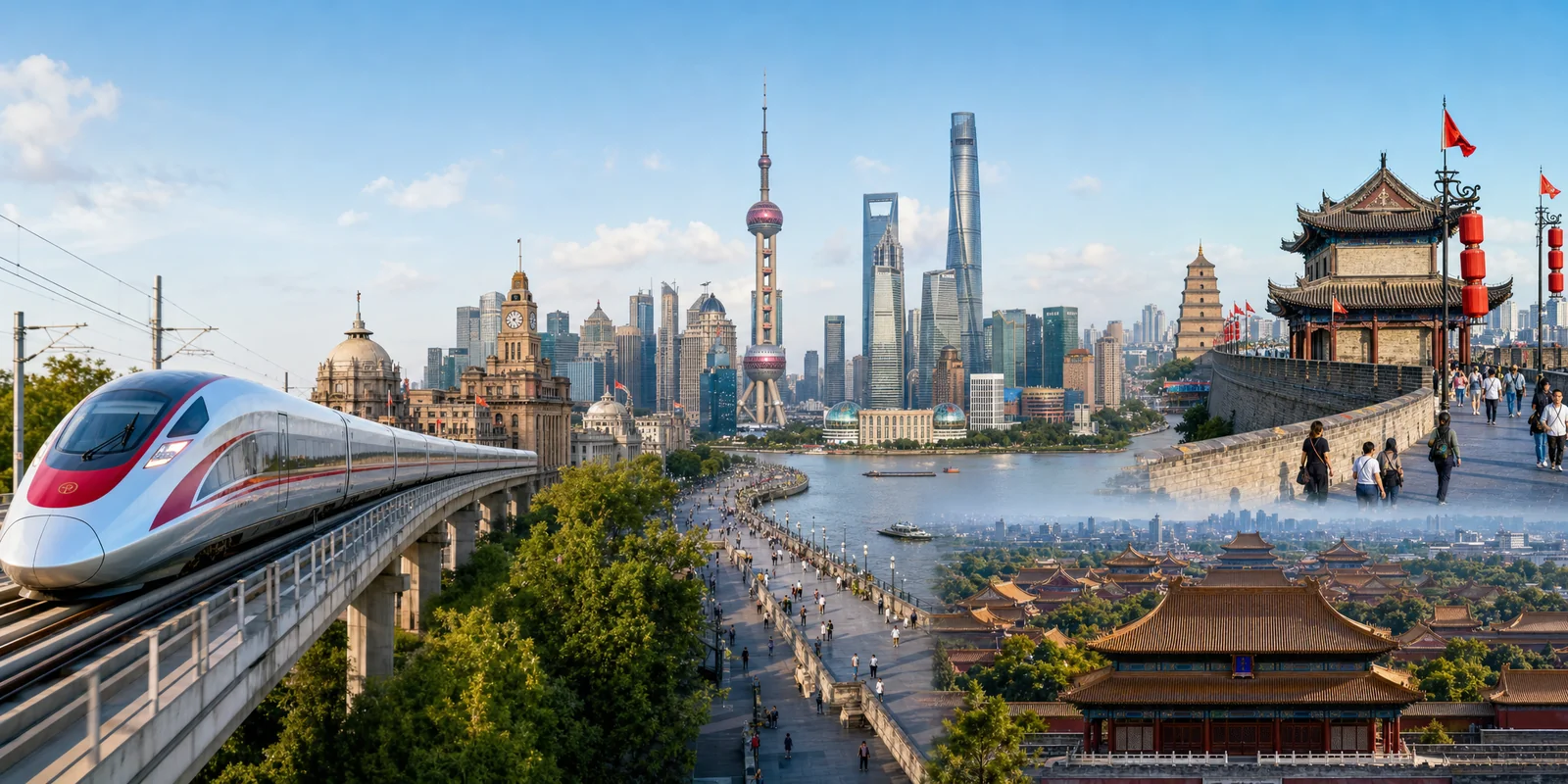
China's high-speed rail network is the largest on earth, and for visitors it's often the most comfortable way to move between cities. Trains run on time, the seats are spacious, and city-center stations save you the airport hassle. The question most travelers actually have isn't whether to take the train — it's which routes are worth building a trip around.
This guide covers the most popular and most scenic high-speed train journeys in China, with real journey times, fare ranges, and how each one fits into a wider itinerary. Fares on most routes now float with demand, so treat the numbers here as a guide and confirm live prices when you book.
How to read this guide
A quick note on train codes, because they tell you what kind of journey you're getting. G and C trains are the fastest high-speed services (高铁, gāotiě). D trains are slightly slower bullet trains. Z, T, and K trains are conventional services — slower and cheaper, often with sleeper berths. For the routes below we focus on G and C trains, which are what most visitors want.
Seat classes also matter for budgeting. Second class (二等座) is a comfortable 3+2 layout and the default choice. First class (一等座) is 2+2 with more legroom. Business class (商务座) reclines flat and is the priciest. If you're not sure which to pick, second class is genuinely fine for most journeys under five hours.
1. Beijing–Shanghai: the flagship route
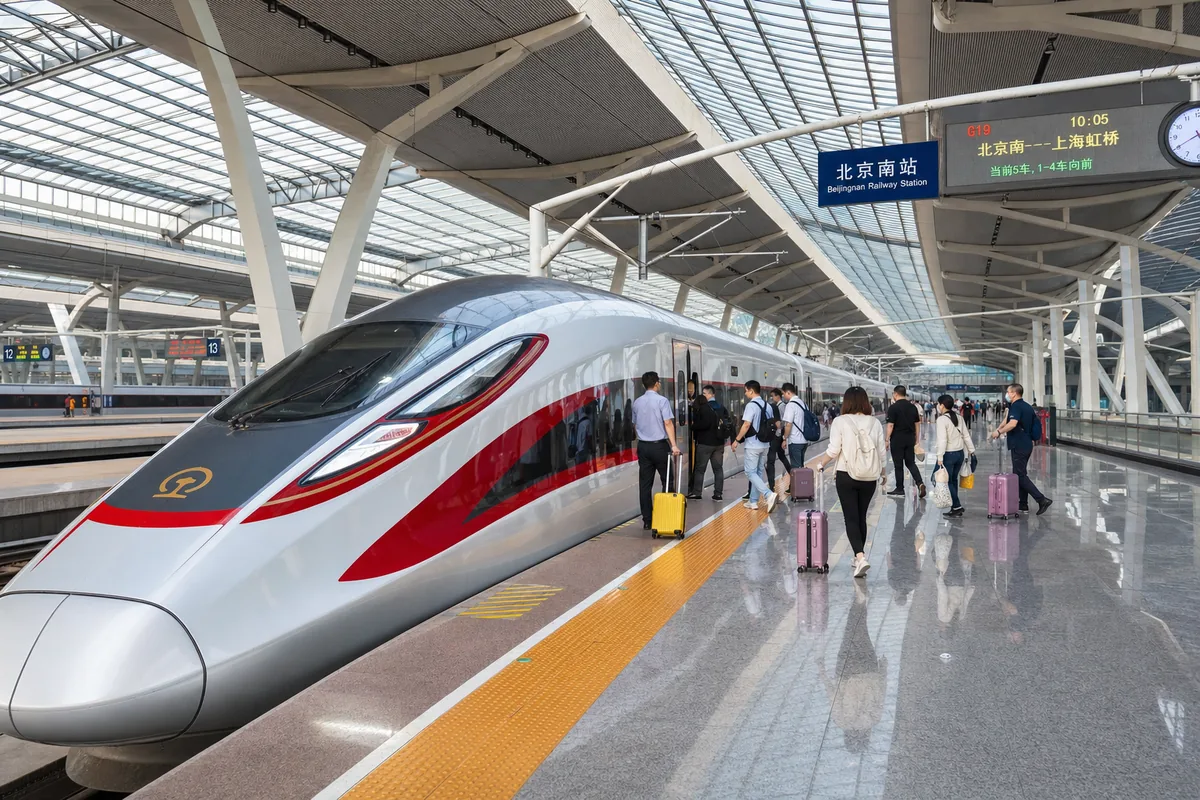
If there's one route that defines Chinese high-speed rail, it's this one. The line connects the political capital and the financial capital across roughly 1,318 km, and the fastest Fuxing (复兴号) trains cover it in about 4 hours 28 minutes. That's competitive with flying once you factor in airport transfers and security lines.
Trains depart from Beijing South (北京南) and arrive at Shanghai Hongqiao (上海虹桥), with dozens of services daily. Second-class fares typically run around ¥553–712, first class around ¥929–1,138, and business class from roughly ¥1,744 upward depending on the train and demand. Some trains offer a "premium first class" (优选一等座) in between.
This is the backbone of the classic first-timer itinerary. Many travelers split the journey at Nanjing or pair it with Xi'an for a Beijing–Xi'an–Shanghai loop that hits the Great Wall, the Terracotta Army, and the Bund in one trip.
2. Beijing–Xi'an: history at speed
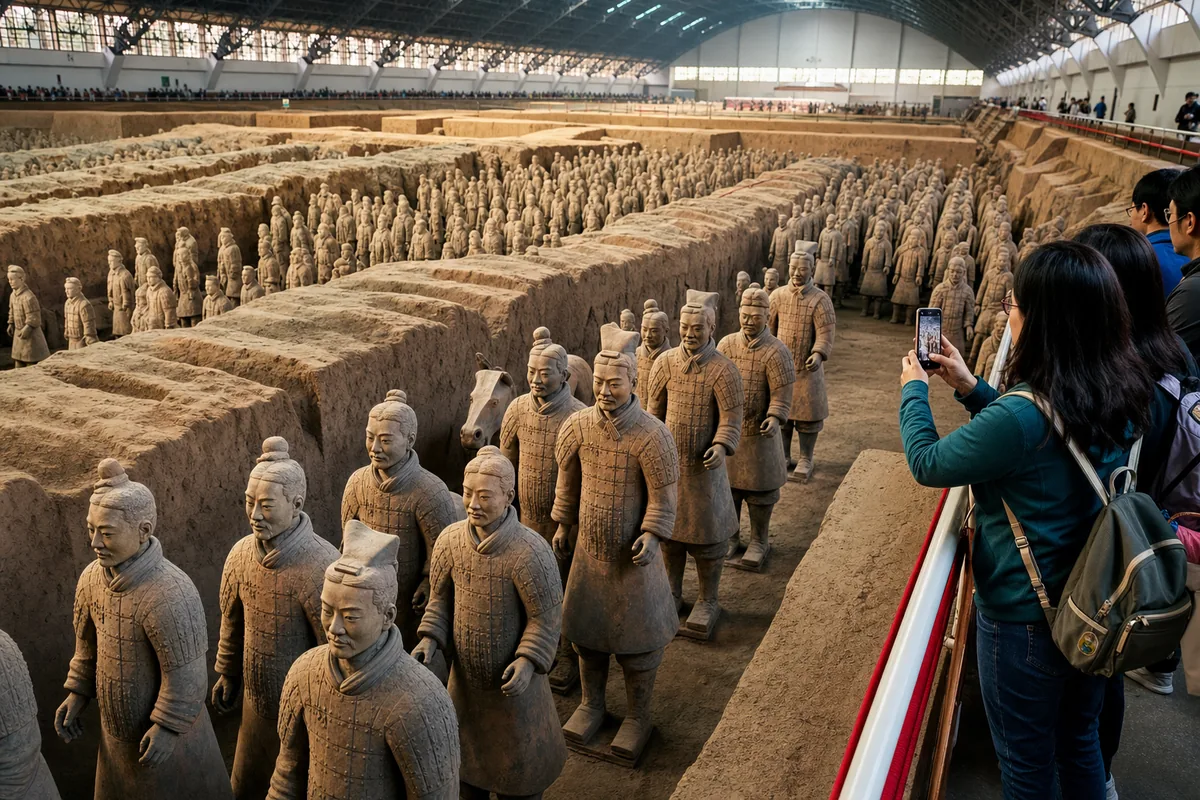
Xi'an is home to the Terracotta Army and the start of the ancient Silk Road, and the high-speed line from Beijing makes it an easy addition to any northern itinerary. Trains run from Beijing West (北京西) to Xi'an North (西安北), covering around 566 km.
The fastest trains do it in about 4 hours 10 minutes, though most take five to six hours. Second-class fares sit around ¥513–593, first class around ¥822–948, and business class around ¥1,623–1,818. There are roughly 38–39 services a day, with the first leaving around 06:38 and the last around 20:42.
Pairing Beijing and Xi'an gives you two of China's most important historical cities back to back. From Xi'an you can also continue west toward Dunhuang and the Silk Road if you have more time.
3. Shanghai–Hangzhou: the Jiangnan quick hop

This is one of the busiest short routes in the country, and one of the easiest day-trip or onward connections you'll make. Trains link Shanghai Hongqiao with Hangzhou East (杭州东) across about 159 km, and the fastest run takes just 45 minutes — most are around 55 minutes to an hour.
Fares are cheap: second class around ¥87, first class around ¥140, and premium/business seats around ¥306, with some trains in the ¥78–120 range. There are well over a hundred departures a day, so you rarely need to plan far ahead outside of holidays.
Hangzhou's West Lake is the headline attraction, and this route is the spine of the Jiangnan water-towns circuit that also takes in Suzhou. With trains this frequent, you can travel almost on a whim.
4. Guangzhou–Shenzhen: the southern commuter line
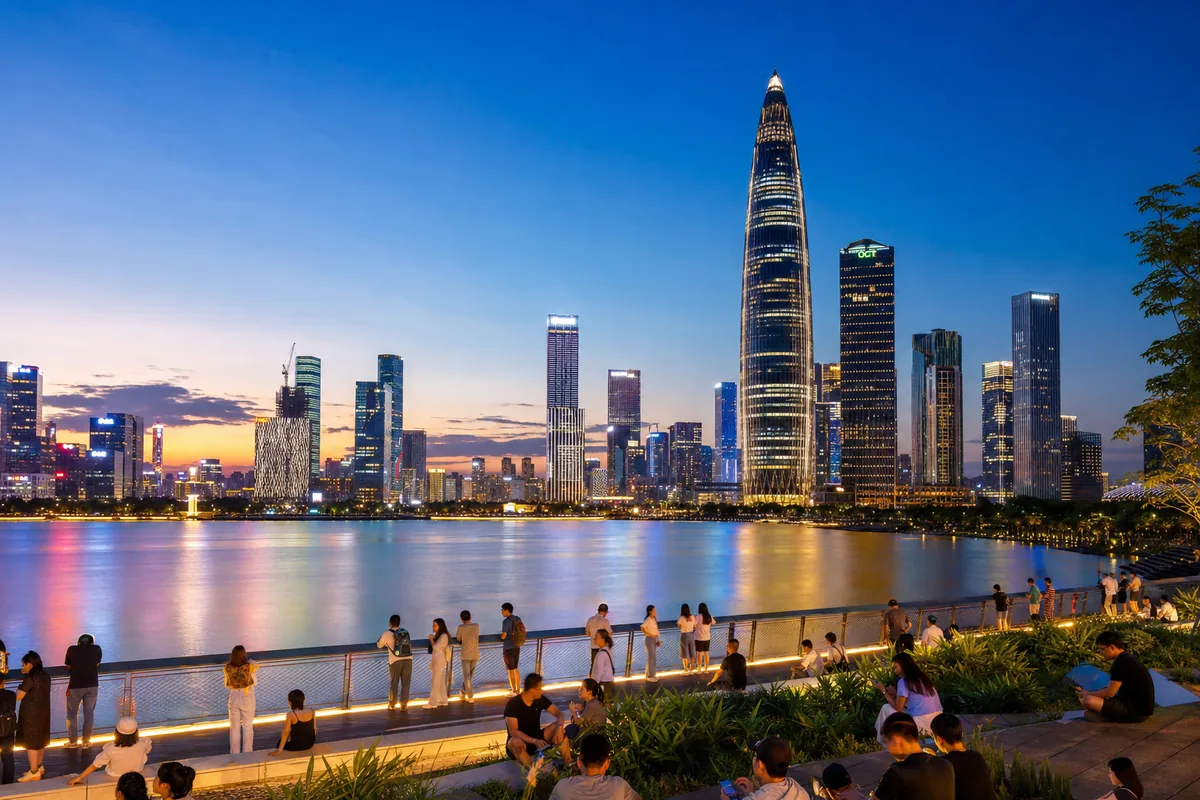
In the Pearl River Delta, the Guangzhou–Shenzhen corridor runs trains almost like a metro. High-speed services connect Guangzhou South (广州南) with Shenzhen North (深圳北) in about 37 minutes, with an extremely high frequency throughout the day.
Fares are low: second class around ¥74.5, first class around ¥99.5, and business class around ¥199.5. There are also intercity C-trains running between Guangzhou East and Shenzhen/Futian — second class around ¥72, first class around ¥90 — which can drop you closer to central Shenzhen. A fare discount policy introduced on this corridor means published prices on some services run at a discount, so check live fares when you book.
This route is the natural link if you're combining Guangzhou's food scene with Shenzhen's modern skyline, and it connects onward to Hong Kong via the high-speed line.
Booking your tickets
Foreign passport holders book through the official 12306 English website and app. The process has a few steps that are worth knowing in advance:
- Register with your name exactly as it appears on your passport, in passport order.
- Verify your identity by uploading a photo of your passport's info page plus a photo of you holding it. You can only book once your verification status shows as approved — a pending or failed status means you'll need to handle it at a station ticket window with your original document.
- Search and book your route, then pay. The English platform only lets you add passengers traveling on foreign passports.
If your preferred train is sold out, 12306 has a waitlist (候补) system: you join a queue and the system automatically assigns you a ticket if one is released, refunding your deposit if it doesn't come through. This works well during busy periods.
Some travelers prefer a third-party platform like Trip Com Train for its fully English interface, support for international credit cards, and 24-hour multilingual customer service. It charges a small service fee per ticket, and you'll usually still need to complete 12306 identity verification. Either way, never buy China rail tickets from unofficial resellers — China Railway won't help with problems on tickets purchased outside its official channels.
Refunds and changes
Plans shift, and the rules here are straightforward. Refund fees are tiered: no fee if you cancel more than 8 days before departure; 5% of the fare between 48 hours and 8 days out; 10% between 24 and 48 hours; and 20% under 24 hours, with a minimum fee.
You can change a ticket once for free in most windows — more than 48 hours ahead, or to an earlier/same-day train under the standard rules. Changing to a later train closer to departure carries a fee. Note that each ticket can only be changed once, and a changed ticket can't then be refunded. Full details are on the official China Railway fee notice.
At the station
Arrive at least 30 minutes before departure — more if you have heavy luggage or it's a holiday peak. Everyone and all bags go through security screening, and you may be asked to take a sip of any liquids you're carrying. Foreign passport holders complete identity and ticket checks at a staffed lane, where your passport is scanned.
If you ever lose your passport or forget it, the railway police office at the station can issue a temporary travel ID so you can still board. It's a hassle, but it's not a dead end.
Route comparison at a glance
| Route | Fastest time | 2nd class fare | Distance | Best for |
|---|---|---|---|---|
| Beijing South–Shanghai Hongqiao | ~4h 28m | ~¥553–712 | ~1,318 km | Classic first-timer route |
| Beijing West–Xi'an North | ~4h 10m | ~¥513–593 | ~566 km | History & Terracotta Army |
| Shanghai Hongqiao–Hangzhou East | ~45 min | ~¥87 | ~159 km | Jiangnan day trips |
| Guangzhou South–Shenzhen North | ~37 min | ~¥74.5 | Short | Pearl River Delta hop |
Fares float with demand and rules change, so always confirm the latest times and prices on 12306 before you travel.
Building these routes into a trip
The four routes above aren't isolated journeys — they're the connective tissue of most China itineraries. The Beijing–Xi'an–Shanghai chain is the standard two-week first trip. The Shanghai–Hangzhou–Suzhou triangle makes a relaxed Jiangnan loop. And Guangzhou–Shenzhen plugs into a southern circuit that can extend to Hong Kong.
When you sit down to plan, map out which cities you want and let the train timetable shape the order. For booking metro routes once you arrive and laying out a day-by-day plan across these cities, the WaysChina app has offline metro maps and a built-in trip planner.
If you'd rather not handle station logistics and identity verification yourself, organized rail-based tours can bundle tickets, transfers, and guides into a single package — useful for tighter schedules or first-time visitors.
The bottom line
For city-to-city travel in eastern and central China, high-speed rail usually beats flying on convenience. Beijing–Shanghai is the flagship at under four and a half hours; Beijing–Xi'an opens up the country's history; Shanghai–Hangzhou is a quick, cheap hop; and Guangzhou–Shenzhen runs like clockwork in the south. Book through official 12306 (or a reputable platform with an English interface), complete your identity verification early, arrive 30 minutes ahead, and confirm live fares and times before you travel. Get those basics right and the trains are the easy part of any China trip.
Last updated: June 2026
Read in other languages
Last train times for 10 Chinese metro systems
Every line and station, checked by hand — the same data behind our offline route planner.
Get the WaysChina App
Offline guides, currency converter, essential phrases, and more — all in your pocket.

Related Articles

China High-Speed Trains: The Complete First-Timer's Guide
How China's high-speed trains work for a first-time visitor: booking with a passport, choosing a seat class, the...

How to Book China Train Tickets with a Foreign Passport: 12306 vs Trip.com
12306 or Trip.com? Both work with a foreign passport. Here's the whole process from registering and passport...

China Train Seat Classes Explained: Second, First, Business and Sleepers
What second class, first class, business class and the sleeper berths on Chinese trains are actually like, how child...

How to Navigate a Chinese Train Station with a Foreign Passport
The six steps at every Chinese high-speed station — security, the passport lane, the board, the gate, the platform,...