
This article contains affiliate links. If you make a purchase through these links, we may earn a small commission at no extra cost to you. This helps support our work in creating free travel guides.
China covers nearly the same land area as the entire United States, and its landscapes range from tropical karst rivers in the south to glacier-fed lakes on the Tibetan Plateau. That variety is the real draw. You can stand among forested sandstone towers one week and hike past turquoise terraced pools the next. This guide covers the natural attractions worth planning a trip around — what makes each one distinct, the best season to visit, and the practical details on getting there. Several are UNESCO World Heritage Sites, which usually means good infrastructure and clear visitor management.
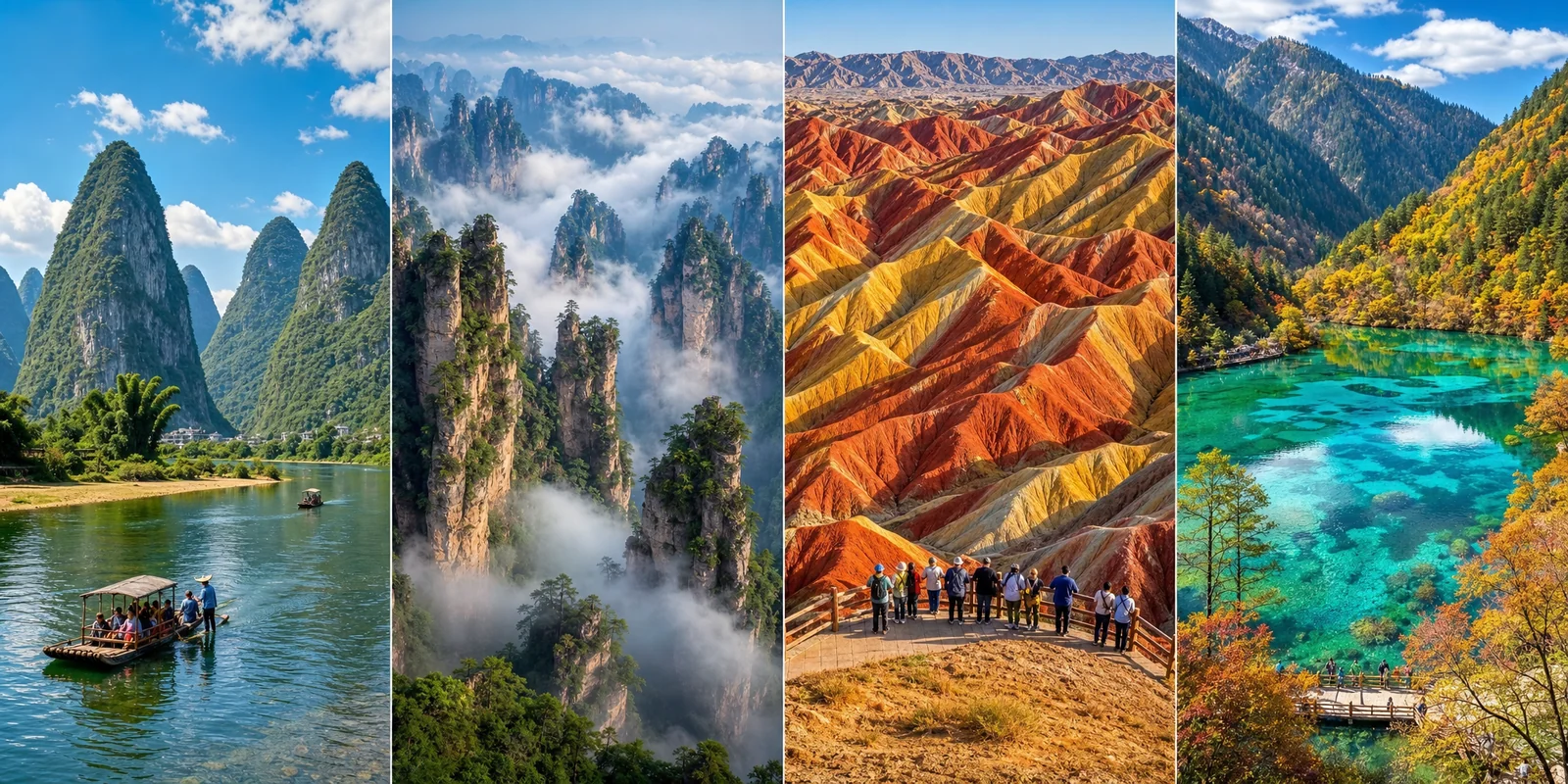
Karst Landscapes: Rivers and Limestone Peaks
Karst is the eroded limestone terrain that gives southern China its iconic rounded peaks rising straight out of flat plains and rivers. It's the scenery you've probably seen on the back of the 20-yuan note.
Guilin and Yangshuo (Guangxi)
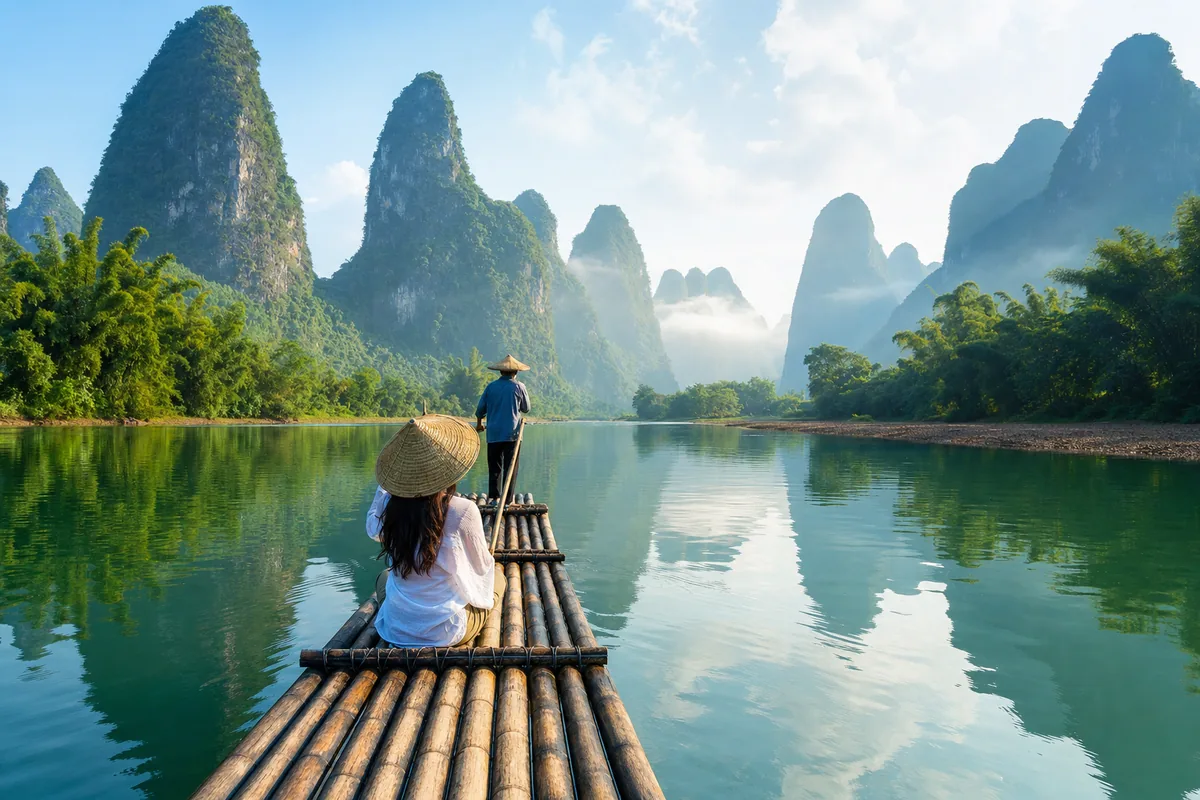
The Li River (漓江, Líjiāng) between Guilin and Yangshuo is the classic karst experience. The standard way to see it is a four-to-five-hour cruise downriver, passing peaks with names like Nine Horses Fresco Hill. Yangshuo itself is a small town surrounded by peaks, popular with cyclists and rock climbers. The bamboo raft trips on the smaller Yulong River are cheaper and more relaxed than the main cruise.
Best time: April to October for greenery, though spring mist can be atmospheric. Summer is hot and humid. Getting there: High-speed trains reach Guilin from Guangzhou (about 2.5 hours) and Nanning. From Guilin, it's roughly 1.5 hours by bus or car to Yangshuo.
Zhangjiajie (Hunan)
Zhangjiajie National Forest Park is a different kind of karst — thousands of narrow quartz-sandstone pillars covered in pine, often half-hidden in cloud. The floating mountains in the film Avatar were inspired by them. The park is large, and you'll rely on its internal buses, elevators, and cable cars to move between viewing areas like Yuanjiajie and Tianzi Mountain. The glass-bottomed Bailong Elevator climbs over 300 meters up a cliff face.
Best time: Spring and autumn. Summer brings the most dramatic cloud but also the biggest crowds. Getting there: Zhangjiajie has its own airport and a high-speed rail station. The park entrance is about 40 minutes from the city.
Colorful and Mineral Landscapes
Jiuzhaigou (Sichuan)
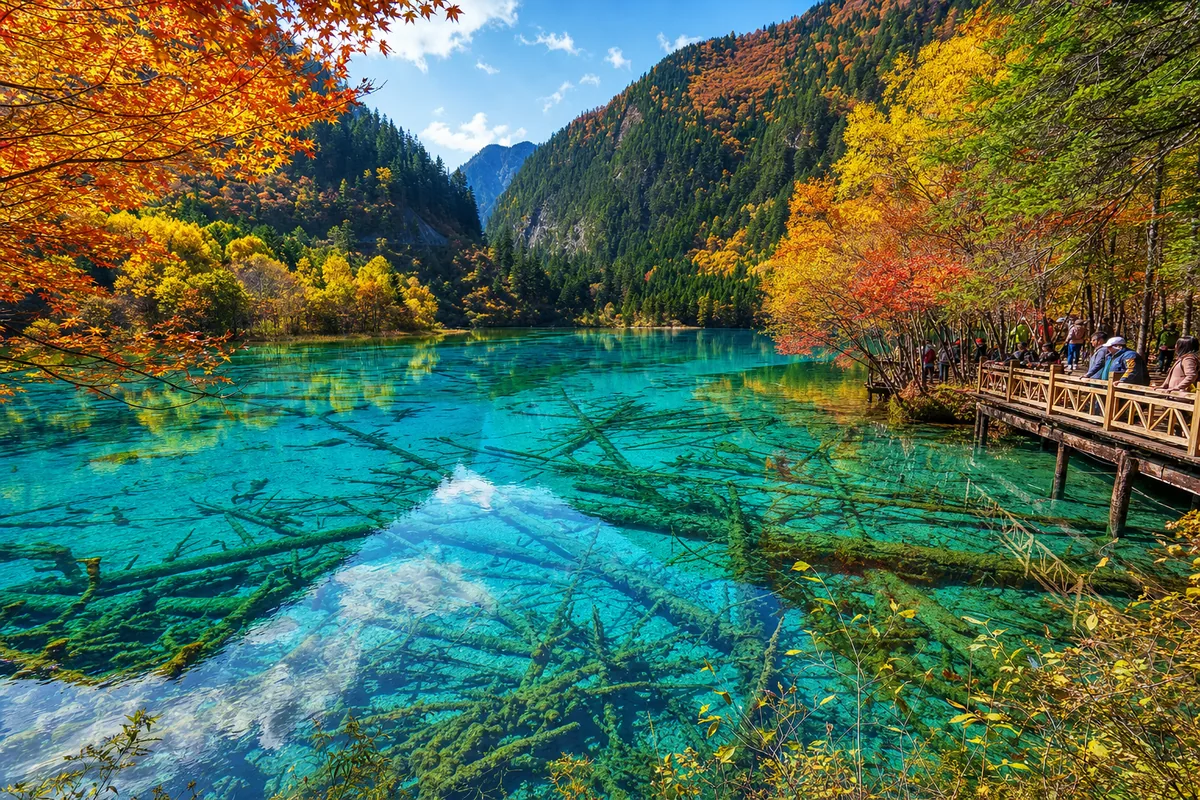
Jiuzhaigou (九寨沟, Jiǔzhàigōu) is a Y-shaped valley of multicolored lakes, waterfalls, and travertine pools on the edge of the Tibetan Plateau. The water gets its blues and greens from mineral deposits and underwater algae, and it's startlingly clear — you can see fallen tree trunks resting metres below the surface. A shuttle bus system runs along the valley floor, and you hop on and off at boardwalk stops.
Best time: Late September to early November, when autumn colors frame the lakes. The park sits above 2,000 meters, so it's cold and can close in winter. Getting there: Jiuzhai Huanglong Airport is the fastest option; many visitors also drive from Chengdu (a long day on mountain roads).
Zhangye Danxia (Gansu)
The Zhangye Danxia landform is a series of low hills banded in red, orange, yellow, and even green and blue — the result of layered sandstone and mineral deposits laid down over millions of years and then tilted and eroded. Boardwalks and viewing platforms connect by shuttle bus, and the colors are most vivid in late afternoon light or just after rain.
Best time: June to September. Aim for late afternoon for the strongest color. Getting there: Zhangye is a stop on the Lanzhou–Xinjiang high-speed line, making it a natural addition to a Silk Road trip. See our Zhangye Danxia guide for timing and platform details.
Sacred and Granite Mountains
Huangshan / Yellow Mountain (Anhui)
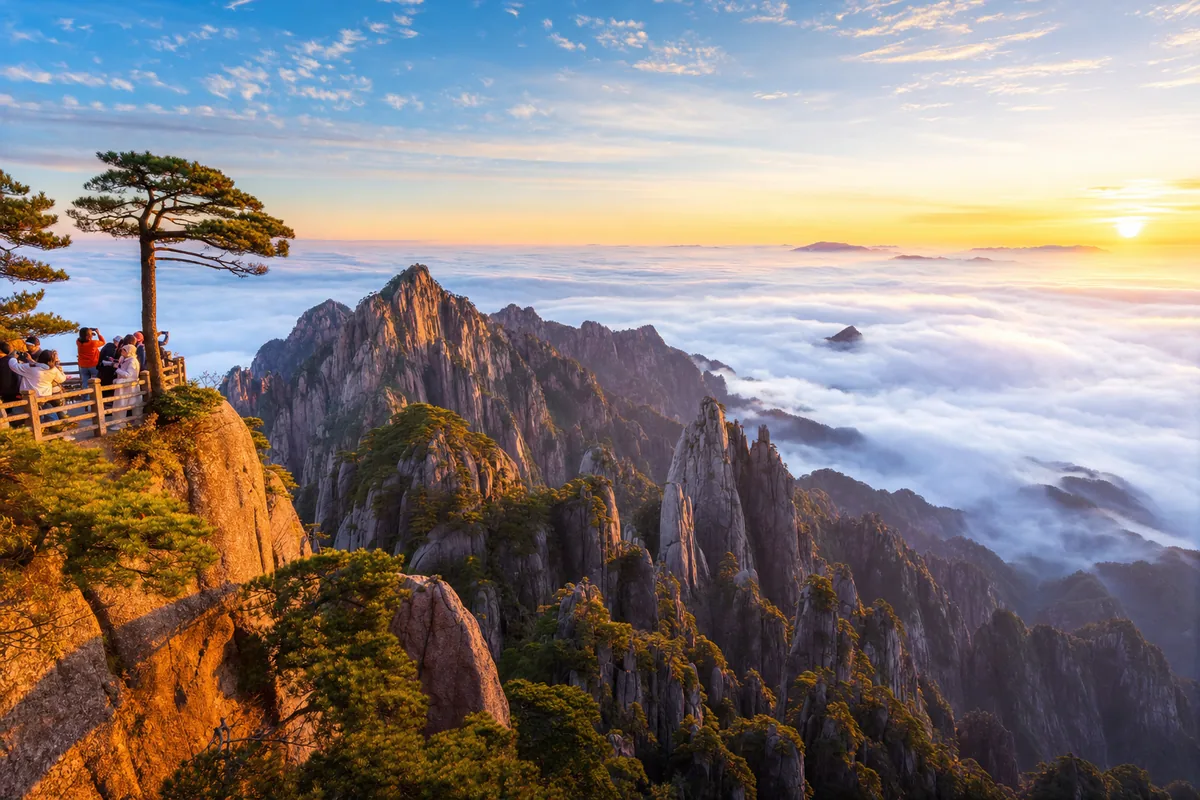
Huangshan is the mountain that shaped centuries of Chinese landscape painting — jagged granite peaks, twisted pines growing out of bare rock, and seas of cloud that pool in the valleys below the summit. It's a hiking destination with paved stone paths, cable cars, and summit hotels. Many people stay overnight on the mountain to catch sunrise above the clouds.
Best time: Spring and autumn for clear skies and cloud seas; winter brings snow and rime ice for those who don't mind the cold. Getting there: High-speed trains stop at Huangshan North station, with shuttle buses to the cable car base. Full details in our Huangshan guide.
Plateaus, Lakes, and Grasslands
Qinghai Lake (Qinghai)
Qinghai Lake is the largest saltwater lake in China, sitting at over 3,000 meters on the Tibetan Plateau. In summer the surrounding fields turn yellow with blooming rapeseed, set against deep blue water and distant snow peaks. It's a popular cycling loop and a major bird habitat. Pair it with the city of Xining as your base — see the Xining & Qinghai Lake guide.
Best time: July to August for the rapeseed bloom. Getting there: Xining is on the high-speed network; the lake is a 2-3 hour drive from the city.
Tibet's High Lakes (Tibet Autonomous Region)
Lakes like Yamdrok and Namtso are among the highest in the world, with an intense turquoise color set against barren mountains. They require more planning: foreign visitors need a Tibet Travel Permit and must usually travel through an organized tour. The altitude here is serious — most points sit above 4,000 meters. Our Lhasa & Tibet guide covers permits and acclimatization.
Terraced and Cultural Landscapes
Yunnan: Terraces, Snow Mountains, and Gorges
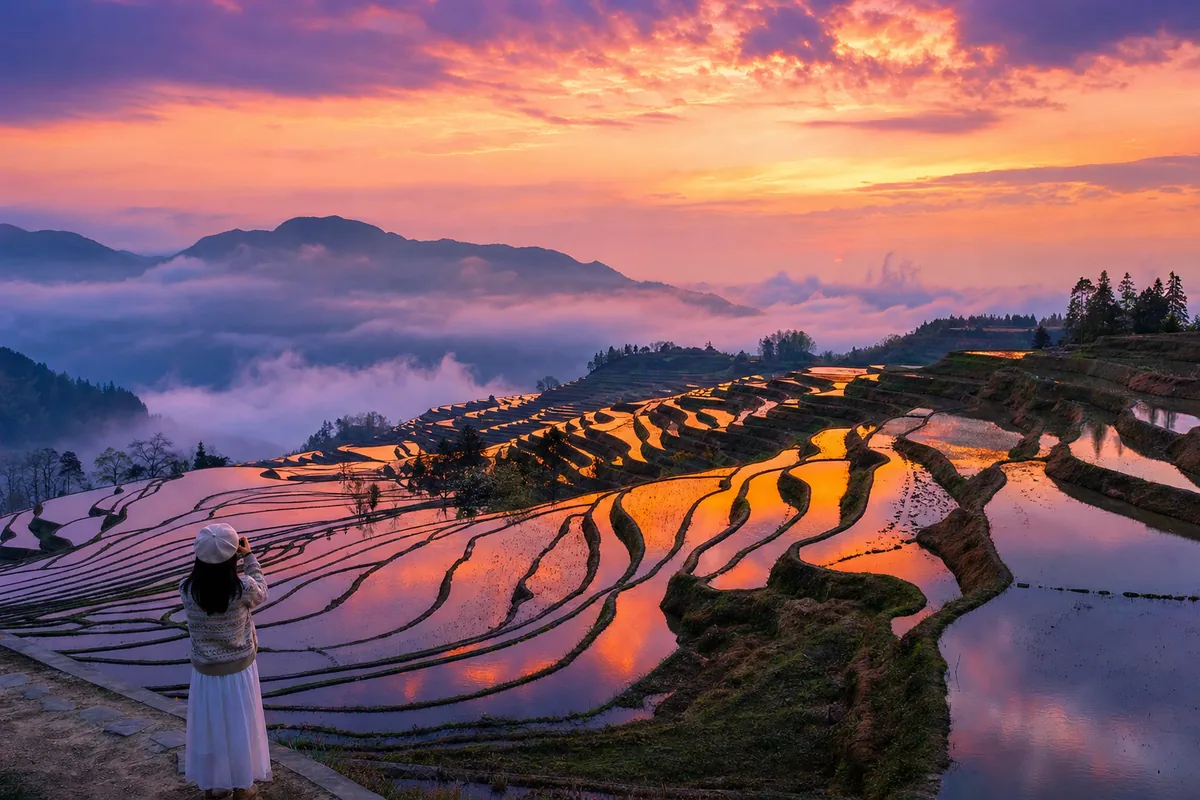
Yunnan packs an unusual amount of variety into one province. The Yuanyang Rice Terraces in the south are carved into hillsides by the Hani people and flood into mirrored steps in winter and early spring. Up north, Jade Dragon Snow Mountain rises above Lijiang, and Tiger Leaping Gorge is one of the deepest river canyons in the world, with a popular two-day trekking route. Shangri-La sits at the edge of the Tibetan cultural region. The Yunnan complete guide and Dali & Lijiang guide map out how to string these together.
Changbaishan (Jilin)
On the border with North Korea, Changbaishan (长白山, Chángbáishān) is a volcanic mountain crowned by Heaven Lake (天池, Tiānchí), a crater lake of deep blue water. The peak is often shrouded in cloud and wind, so a clear view isn't guaranteed. The surrounding area has hot springs and waterfalls, and it's a winter ski destination too. See the Changbaishan nature guide for access routes.
Quick Comparison
| Destination | Landscape type | Best season | Getting there |
|---|---|---|---|
| Guilin / Yangshuo | Karst river & peaks | Apr–Oct | HSR + bus |
| Zhangjiajie | Sandstone pillars | Spring / autumn | Airport / HSR |
| Jiuzhaigou | Multicolored lakes | Sep–Nov | Airport / long drive |
| Zhangye Danxia | Rainbow rock hills | Jun–Sep | HSR (Silk Road line) |
| Huangshan | Granite peaks & cloud | Spring / autumn | HSR + cable car |
| Qinghai Lake | High plateau lake | Jul–Aug | HSR to Xining + drive |
| Yunnan terraces | Rice terraces & peaks | Winter–spring (terraces) | Flights + road |
| Changbaishan | Volcanic crater lake | Summer / winter ski | Regional flights / drive |
Planning Your Visit
A few practical notes that apply across most of these sites:
- Buy tickets in advance. Major national parks (国家公园 / scenic areas, 风景区, fēngjǐngqū) use timed entry and online booking, often through WeChat mini-programs. During Chinese public holidays — especially the early-October Golden Week — popular sites cap daily visitors and sell out.
- Budget for internal transport. Big parks like Zhangjiajie and Jiuzhaigou charge separately for shuttle buses, cable cars, and elevators on top of the entry ticket. Expect a full day per park.
- Mind the altitude. Jiuzhaigou, Qinghai, Tibet, and parts of Yunnan sit high enough that altitude affects most visitors. Acclimatize gradually.
- Many are remote. The best natural sites are rarely in big cities. Combine them with a regional route rather than treating each as a day trip.
For guided cruises, treks, and park entry packages, booking platforms like Klook list options for most of these destinations, which can save the hassle of navigating Chinese-only booking systems.
Where to Start
If you want one classic, accessible introduction to China's natural scenery, choose Guilin/Yangshuo or Huangshan — both are well-connected by high-speed rail and need no special permits. For dramatic, otherworldly landscapes worth building a trip around, Zhangjiajie and Jiuzhaigou deliver, though they take more travel time. Yunnan rewards those who want variety in one region, and Tibet and Qinghai are for travelers ready to handle altitude and extra paperwork. Whatever you pick, match the season to the site — the same valley can look completely different in autumn than in summer — and book entry tickets before you arrive. Check current opening hours, ticket prices, and any seasonal closures on each park's official channel before you travel.
Related Reading
- Historical Sites — pair natural wonders with China's landmark heritage sites.
- Best Time to Visit China — season-by-season guidance for timing your trip.
- Central China Route: Wuhan–Changsha–Zhangjiajie — a ready-made route that includes Zhangjiajie.
- High-Speed Train Complete Guide — how to reach most of these destinations by rail.
Last updated: June 2026
Read in other languages
Last train times for 10 Chinese metro systems
Every line and station, checked by hand — the same data behind our offline route planner.
Get the WaysChina App
Offline guides, currency converter, essential phrases, and more — all in your pocket.

Related Articles
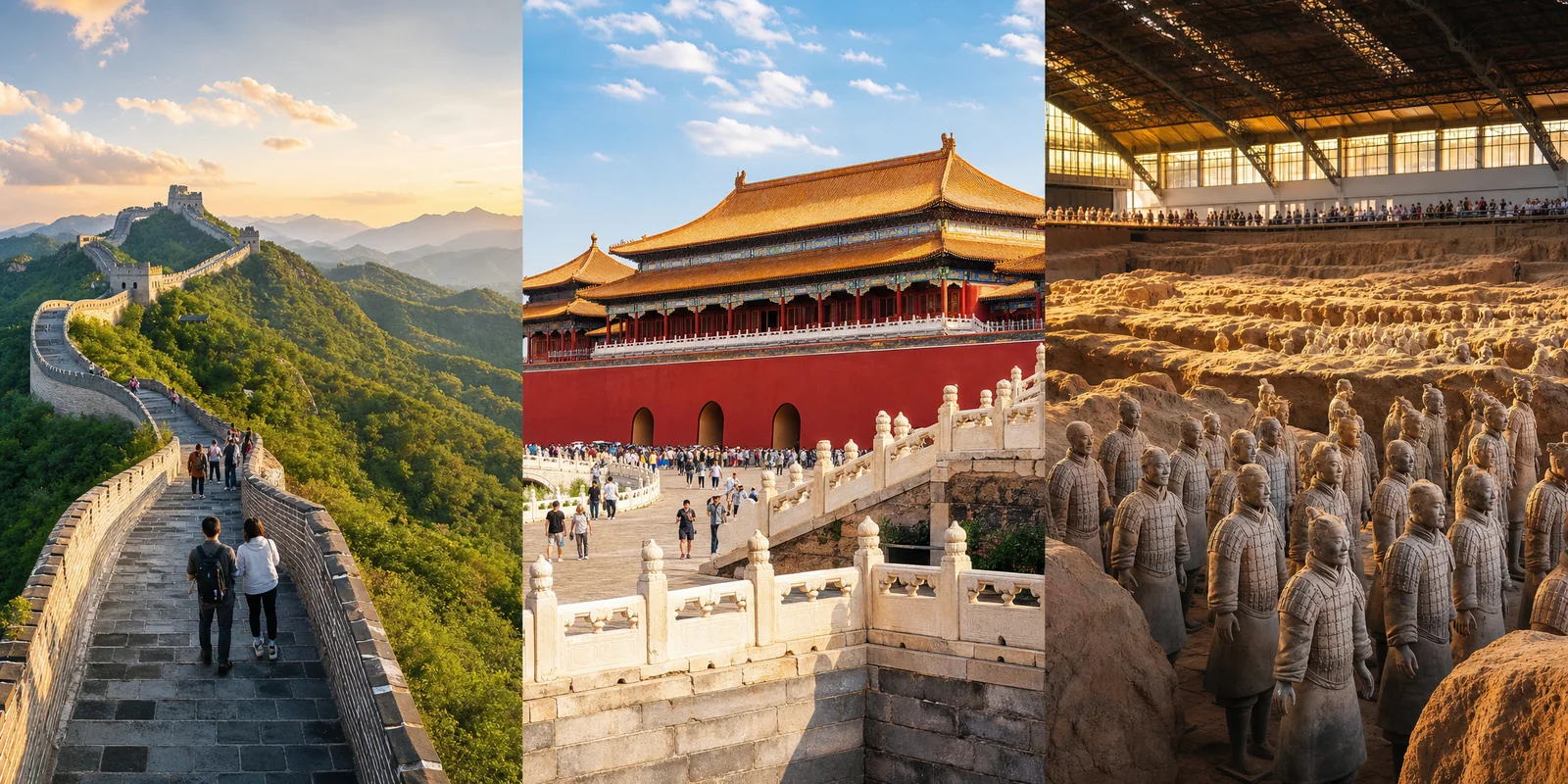
China's Historical Sites: 12 Ancient Landmarks Worth Your Time
From the Great Wall to the Terracotta Army, here are the historical sites in China that actually live up to their...
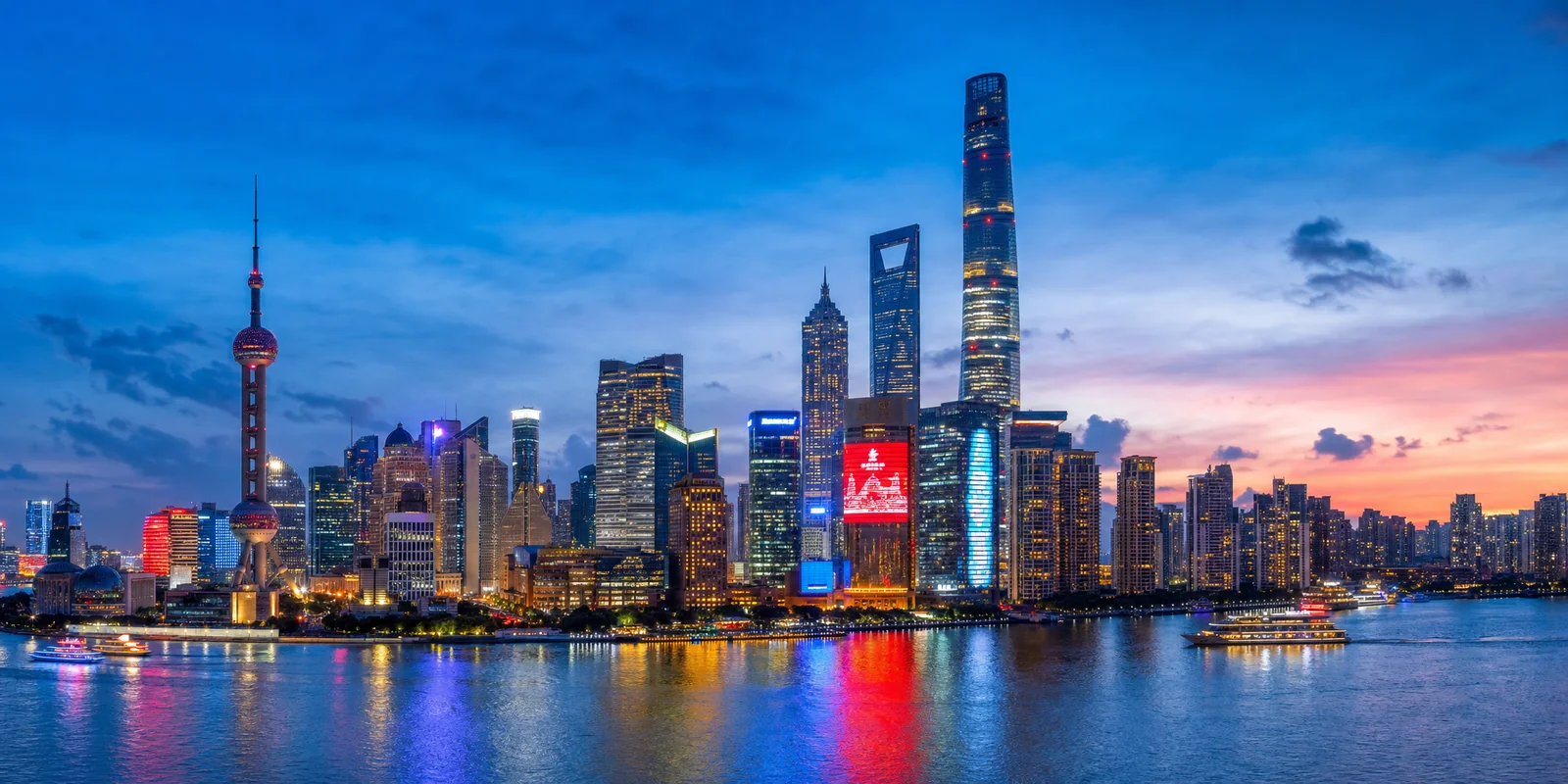
Modern Landmarks: China's Skyscrapers, Skylines & Observation Decks
From the Shanghai skyline to the world's second-tallest tower, here are China's best modern landmarks — what to see,...
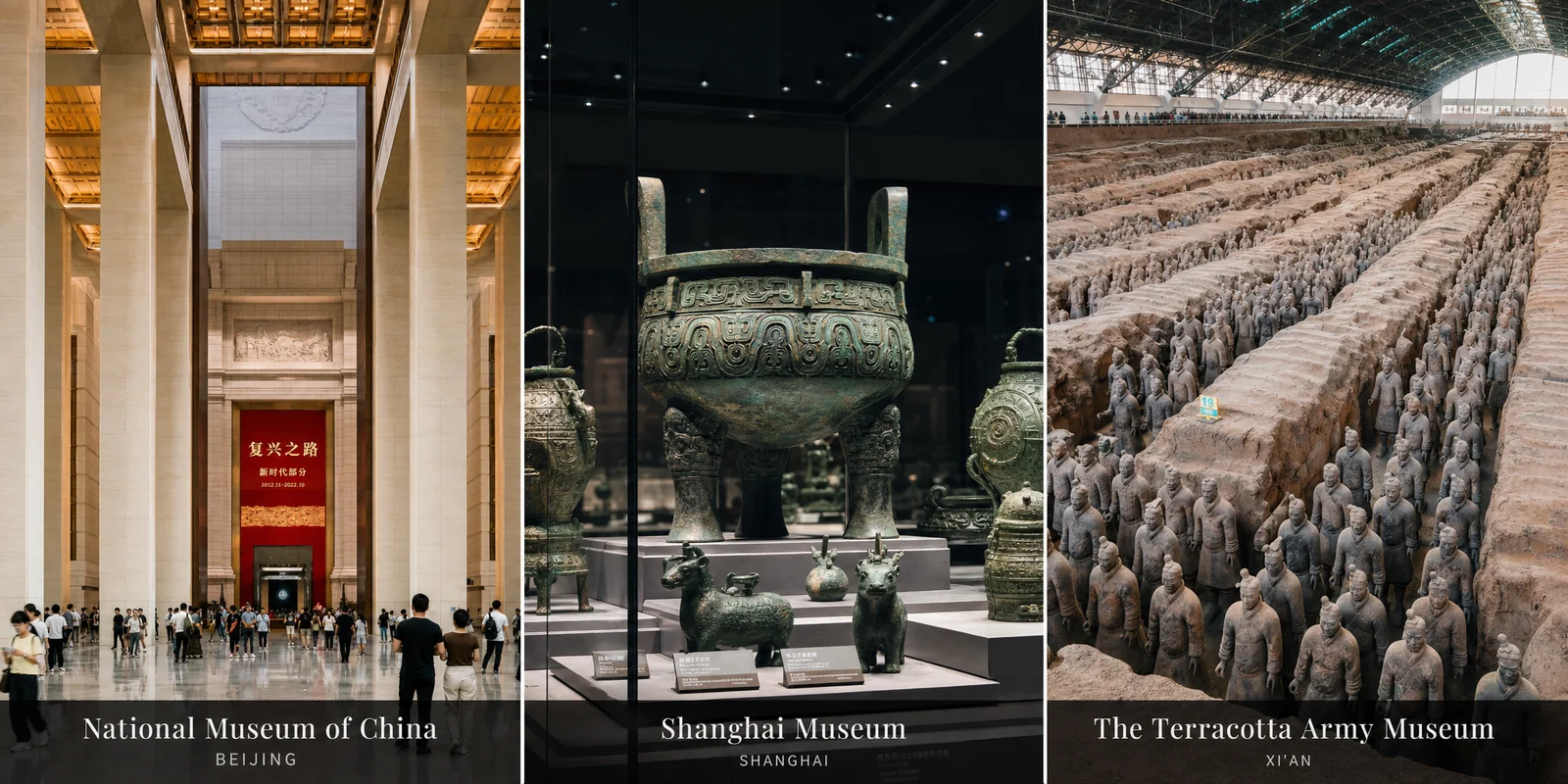
Best Museums in China: A Visitor's Guide
China's top museums hold thousands of years of art, history, and discovery — and most are free. Here's where to go,...
Religious Sites in China: Temples, Monasteries & Etiquette
A practical guide to China's most rewarding temples, monasteries, and mosques — what to see, how to behave, and the...