
This article contains affiliate links. If you make a purchase through these links, we may earn a small commission at no extra cost to you. This helps support our work in creating free travel guides.
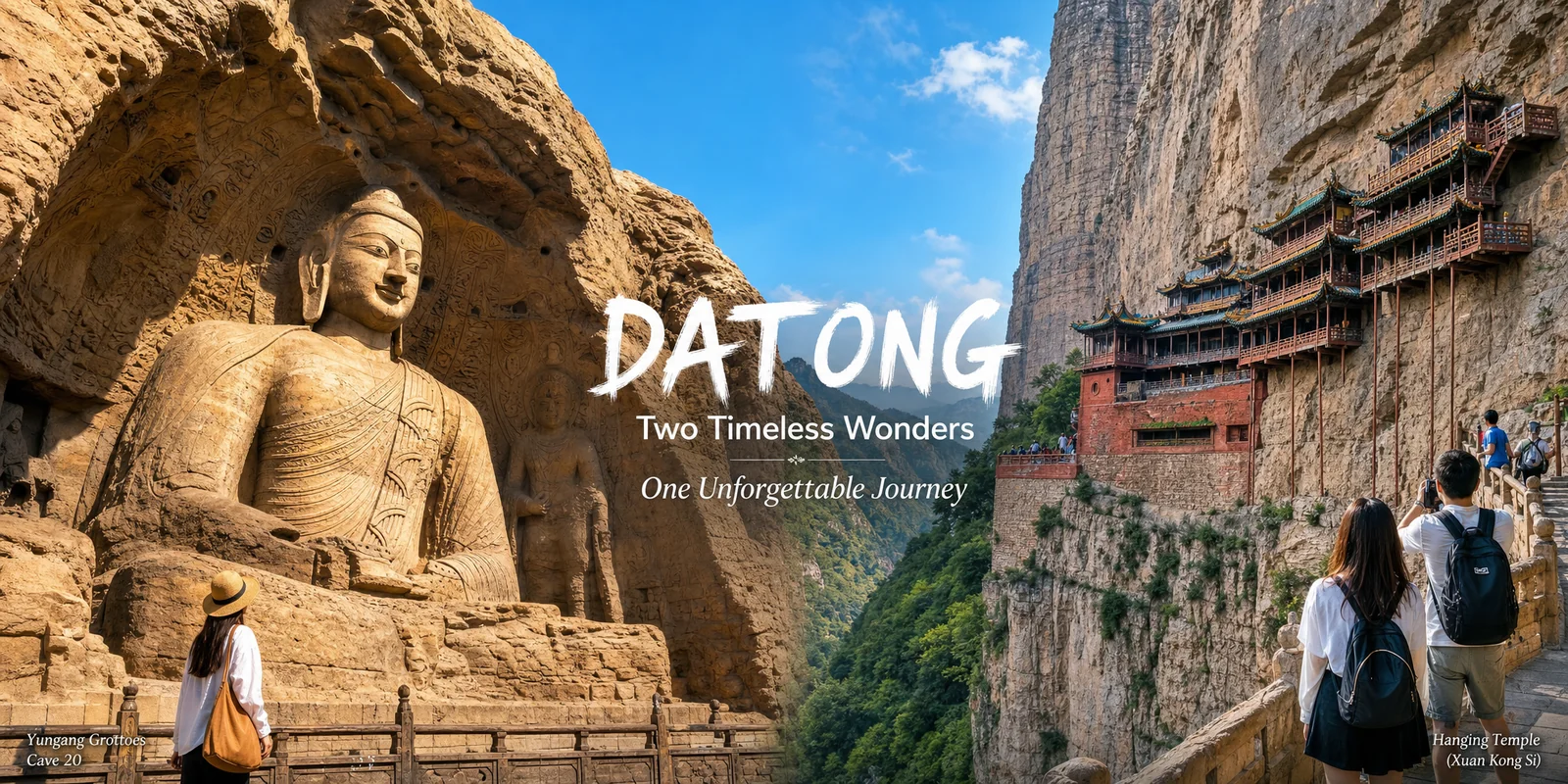
Datong (大同, Dàtóng) sits in the far north of Shanxi province, a few hours from Beijing by high-speed rail. For most travelers it comes down to one main reason: the Yungang Grottoes, a sprawling complex of Buddhist cave carvings that earned UNESCO World Heritage status. But there's more here than the caves. Datong was the capital of the Northern Wei dynasty roughly 1,500 years ago, and the old city has been heavily rebuilt with a walkable, fully restored city wall. Add the gravity-defying Hanging Temple an hour out of town, and you have a compact destination that rewards two or three days.
This guide covers how to get to Datong, the attractions worth your time, where to eat and sleep, and how to fit it all together — including using Datong as a stop between Beijing and Pingyao.
Why Visit Datong
For about a century, Datong was the political heart of northern China under the Northern Wei (386–534 CE), a dynasty founded by the Xianbei people who adopted Buddhism with enormous enthusiasm. That history is carved directly into the cliffs at Yungang. After the capital moved south, Datong faded into a frontier town, then spent the 20th century as one of China's biggest coal producers — locals still call it the "coal capital."
In the last fifteen years the city has pivoted hard toward tourism. The old town's walls, gate towers, and several temples have been reconstructed, which divides opinion: some find it impressively complete, others feel it's a bit too new. Either way, the core sights — Yungang and the Hanging Temple — are genuinely ancient and genuinely remarkable. Datong is also notably less crowded than Xi'an or Beijing, which makes it a pleasant change of pace.
How to Get to Datong
From Beijing
The high-speed train (高铁, gāotiě) is the easiest option. Trains run from Beijing North (Qinghe) and Beijing Station to Datong South in about 1.5 to 2 hours. This is by far the most common approach for travelers — fast, frequent, and comfortable. Slower conventional trains and overnight services also exist and cost less, but the high-speed line makes a day trip or short stay effortless.
You can check schedules and book through the official rail operator at 12306.cn, though the interface can be awkward for foreign cards. Many travelers find it simpler to book through an English-language platform like Trip Com Train, which handles passport details and payment in a more familiar format.
From Pingyao and Taiyuan
Pingyao and Taiyuan are both south of Datong in the same province, which makes a Shanxi loop natural. Taiyuan, the provincial capital, connects to Datong by high-speed rail in around 1.5 hours. Pingyao is a little further; you'll usually route through Taiyuan, with total travel time of roughly 2.5 to 3.5 hours depending on connections. A common itinerary chains Beijing → Datong → Pingyao → back toward Xi'an or Beijing.
By Air
Datong Yungang Airport has limited domestic connections (Beijing, Shanghai, Xi'an, and a handful of others). For most travelers the train is more convenient than flying, but check fares if you're coming from further afield.

Yungang Grottoes
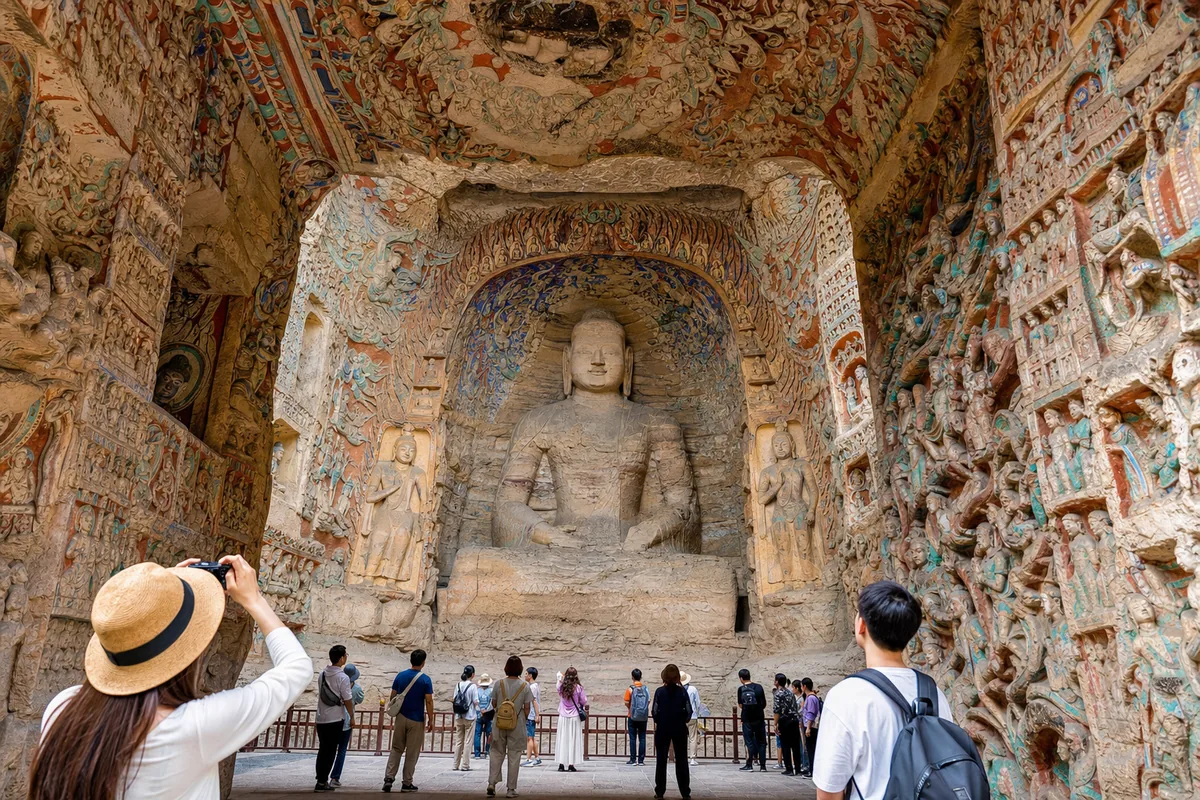
The Yungang Grottoes (云冈石窟, Yúngāng Shíkū) are the reason most people come to Datong, and they live up to it. Carved into a sandstone ridge starting in the 460s CE, the complex holds 45 main caves and more than 50,000 statues, ranging from towering Buddhas over 15 meters tall to intricate panels of flying apsaras, musicians, and miniature pagodas covering entire cave walls.
The early caves were commissioned by the Northern Wei court partly as an act of atonement after an earlier persecution of Buddhism, and you can see the artistic influences flowing along the Silk Road — Indian, Central Asian, and Greek elements blend with emerging Chinese styles. Caves 5 and 6 are among the most overwhelming, packed floor to ceiling with painted and gilded carving. Cave 20, where the front wall collapsed long ago, leaves a seated Buddha sitting fully exposed to the open air — it's the image you'll see on most postcards.
Plan on at least two to three hours. The site is large, with a long landscaped approach before you reach the caves themselves. Audio guides and English signage are available, and the official site of UNESCO World Heritage has background worth skimming before you go. For a deeper visit, a guided tour helps decode the iconography — you can book a Yungang Grottoes tour through Klook if you'd rather have context than wander on your own.
The Hanging Temple
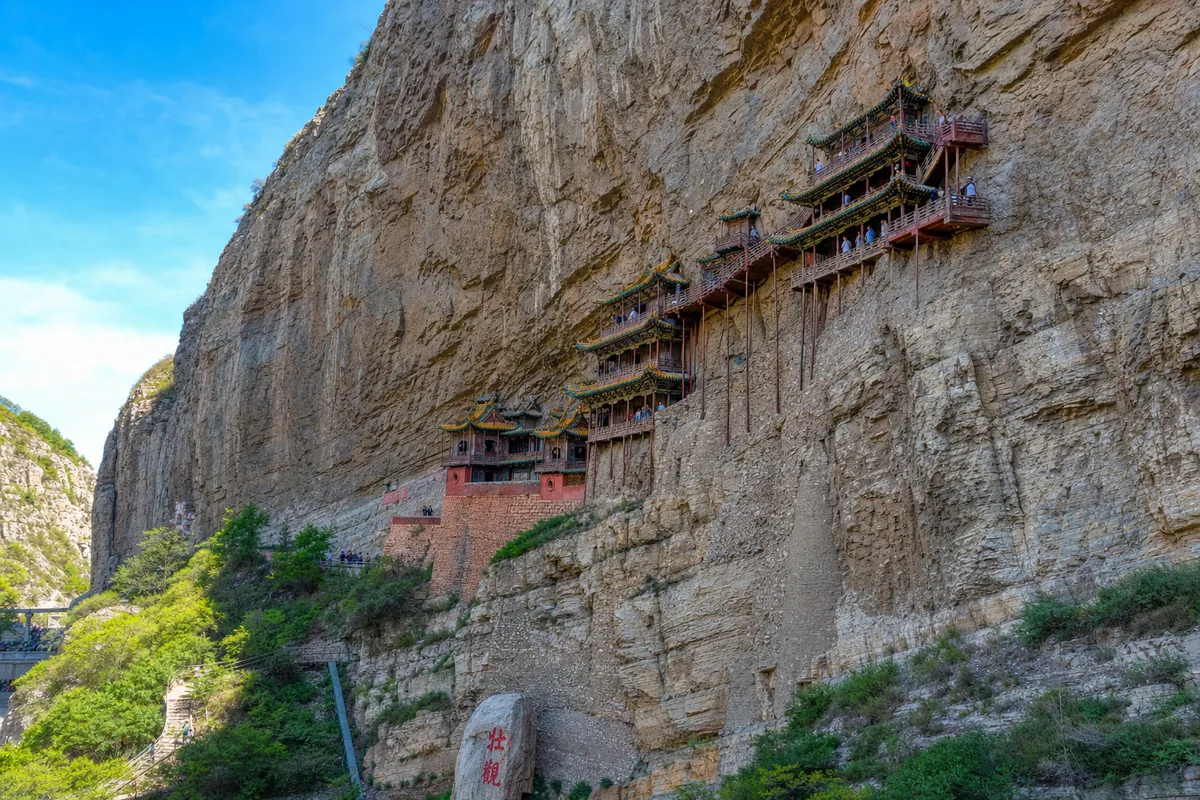
About 65km southeast of Datong, near Mount Heng, the Hanging Temple (悬空寺, Xuánkōng Sì) clings to a vertical cliff face roughly 50 meters above a gorge. Built more than 1,500 years ago and rebuilt over the centuries, it's supported by wooden beams inserted into the rock, with slender vertical poles underneath that look load-bearing but mostly aren't — the real weight sits on the cantilevered beams anchored deep in the cliff.
What makes it unusual beyond the engineering is that it honors three faiths at once: Buddhism, Taoism, and Confucianism share the same complex, with halls dedicated to figures from all three. Inside, narrow walkways and steep wooden stairs link some 40 small rooms. It's compact — you'll spend perhaps 45 minutes to an hour on the structure itself.
Getting there without a car is the main hassle. Tourist buses run from Datong in season, often combined with Yungang or the nearby Yingxian Wooden Pagoda, but schedules are limited. Many travelers join a half- or full-day tour, or hire a car with driver, to link the Hanging Temple efficiently with other sights.
Datong City Wall
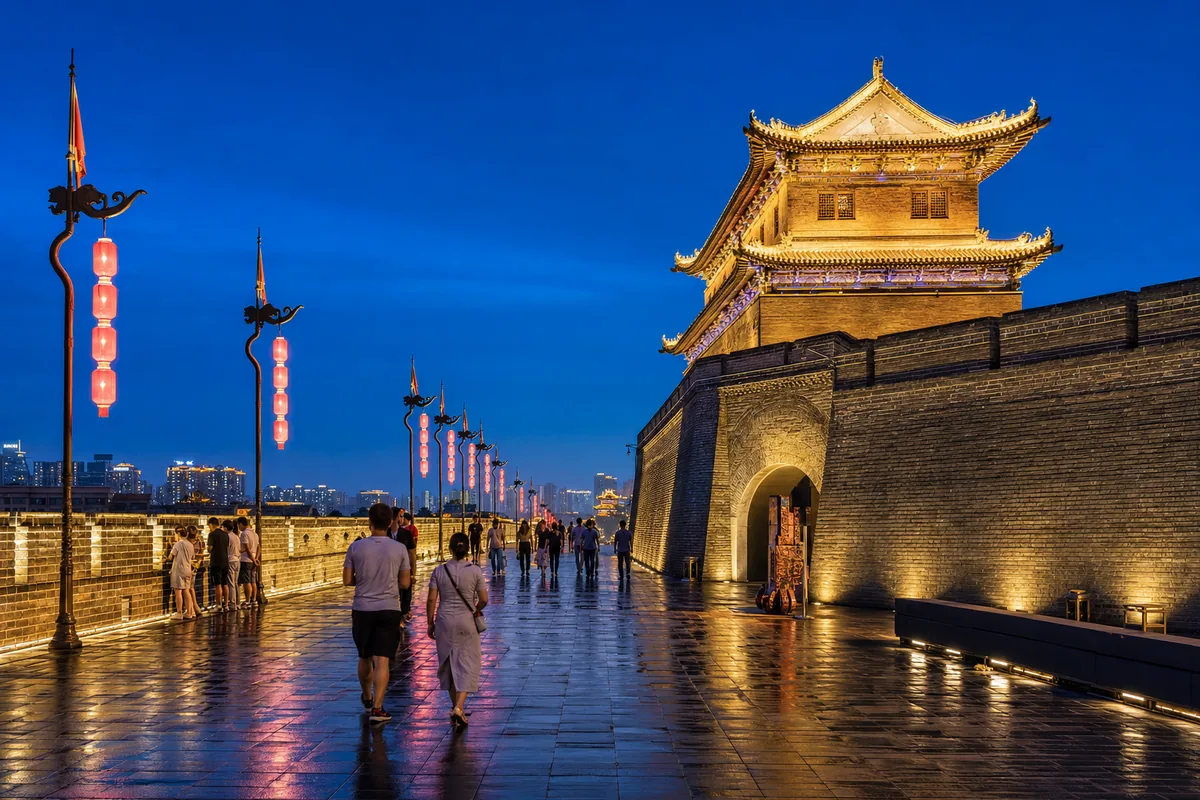
The Datong City Wall (大同城墙, Dàtóng Chéngqiáng) is the centerpiece of the rebuilt old town. The original Ming-era walls were largely lost, and what stands today is a thorough modern reconstruction on the historic footprint — roughly 7.2km around, broad enough to walk or cycle along the top, with restored gate towers at the cardinal points.
It's a good way to orient yourself and get a sense of the city's scale. You can rent a bike up top or simply walk a section. The wall is especially worth seeing after dark, when it's lit up and the gate towers glow against the night sky. Inside the walls you'll find the reconstructed grid of the old city, with temples, the Nine Dragon Screen, and pedestrian streets.
Nine Dragon Screen
Tucked inside the old city, the Nine Dragon Screen (九龙壁, Jiǔlóng Bì) is a glazed-tile spirit wall built in the early Ming dynasty — and it's the real thing, around 600 years old. Standing about 8 meters tall and 45 meters long, it depicts nine writhing dragons in colored ceramic against a backdrop of waves and clouds. It once shielded the entrance to a prince's mansion that has since vanished, leaving the screen as the main survivor.
It's a quick stop, maybe 20 minutes, but worth it as one of the oldest and largest dragon screens in China — larger than the more famous one in Beijing's Forbidden City. The craftsmanship in the ceramic detail rewards a close look.
Huayan Temple
Huayan Temple (华严寺, Huáyán Sì) is the largest and best-preserved Buddhist temple complex in Datong, with roots in the Liao and Jin dynasties (10th–12th centuries). It's split into an upper and lower temple. The upper temple's Mahavira Hall is one of the largest surviving Buddhist halls from that era in China, with a vast timber roof and a row of serene Buddha statues inside.
The lower temple is known for its Liao-dynasty sutra cabinets and, especially, a set of painted clay bodhisattva figures — one in particular, often called the "Oriental Venus," is celebrated for her gentle, lifelike expression and slightly tilted head. Unusually, the main halls here face east rather than south, reflecting the sun-worshipping traditions of the Khitan people who built it. Allow an hour or so to take it in properly.
What to Eat in Datong
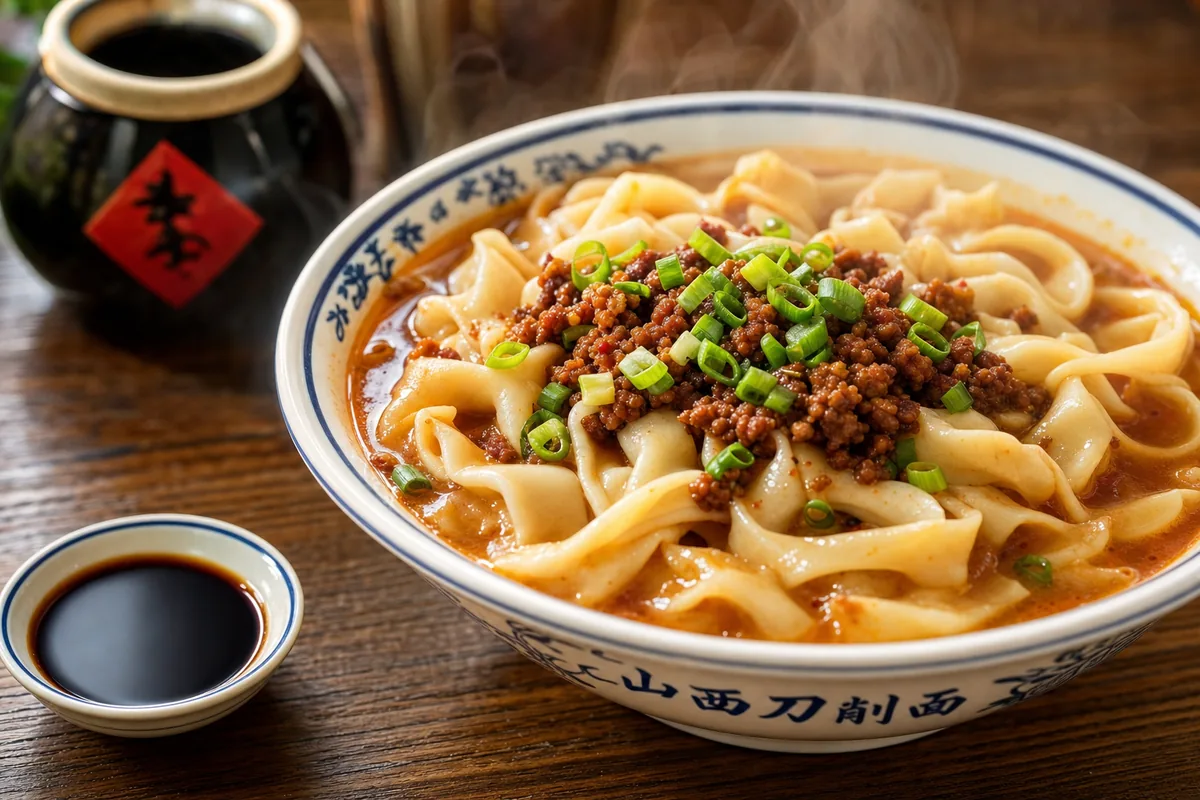
Shanxi is China's noodle heartland, and Datong eats accordingly. The signature dish is knife-cut noodles (刀削面, dāoxiāo miàn), where dough is shaved straight off a block into boiling water with a curved blade, producing thick, chewy ribbons served in a meaty or tomato-and-egg broth. It's everywhere and cheap.
Other things to look for:
- Yellow cake (黄糕, huánggāo) — a dense, sticky steamed cake made from millet flour, a local staple that's more savory companion than dessert.
- Sliced lamb and mutton dishes — northern Shanxi does lamb well, often in hot pot or stir-fried form, reflecting the region's frontier mix of cultures.
- Shanxi aged vinegar (老陈醋, lǎochéncù) — you'll find it on every table; locals add it generously to noodles. Shanxi vinegar is famous across China.
- Wǎn tuō (碗托) — a chilled buckwheat jelly served with chili oil and vinegar, a regional snack.
For a concentrated dose of local food, the streets inside the old town near the Drum Tower have plenty of noodle shops and snack stalls. Point-and-order works fine at most places, and a translation app smooths over menus without pictures.
Where to Stay
Staying inside or near the old town puts you within walking distance of the city wall, Huayan Temple, and the Nine Dragon Screen, and it's the most atmospheric base — especially with the wall lit up at night. The area around the high-speed station is convenient only if you're passing through quickly.
Datong has the full range, from budget guesthouses and chain hotels (Hanting, Jinjiang Inn, and similar) to a few higher-end options. Prices are generally lower than in Beijing for comparable quality. If you're comparing options, Booking.com lists most hotels inside and around the old town with English reviews, which helps gauge location and quietness before you commit.
Suggested Itinerary
Two full days cover the essentials comfortably; three lets you slow down.
Day 1 — Yungang and the old town
Head to the Yungang Grottoes in the morning when light is good and crowds are thinner; spend two to three hours. Return to the old town in the afternoon for the city wall, the Nine Dragon Screen, and Huayan Temple, then eat knife-cut noodles in the evening and walk the lit-up wall.
Day 2 — Hanging Temple
Take a tour or hired car to the Hanging Temple, ideally combined with the Yingxian Wooden Pagoda (a remarkable 900-year-old all-timber tower) on the way. This is mostly a travel-and-sights day given the distances.
Day 3 — slow morning or onward
Use a third day for a museum visit (the Datong Museum is large and well done), revisiting a favorite, or moving on toward Pingyao or back to Beijing.
Practical Notes
- Getting around town: Ride-hailing (Didi, through the app or via WeChat/Alipay mini-programs) is cheap and easy. Taxis are plentiful. Distances within the old town are walkable.
- Payments: Mobile payment via Alipay or WeChat Pay is standard everywhere. Set one up before your trip; cash still works at hotels and larger venues but is increasingly rare for small purchases.
- Tickets: Major sights use timed entry and may require booking through WeChat mini-programs or at the gate. Bring your passport — it's often needed to claim tickets and enter.
- Language: English is limited outside major hotels and the main sights. A translation app and a few basic phrases go a long way.
The Bottom Line
Datong is a focused, rewarding stop: the Yungang Grottoes alone justify the trip, and the Hanging Temple, the city wall, the Nine Dragon Screen, and Huayan Temple round out a solid two or three days. It pairs naturally with Beijing thanks to the fast train, and slots neatly into a wider Shanxi route through Pingyao and Taiyuan. Book your Yungang and Hanging Temple logistics ahead in peak season, bring your passport for check-in and tickets, and set up mobile payments before you arrive. Do that, and the rest is straightforward.
Next, decide how Datong fits your wider plans — whether as a day-trip-style add-on from Beijing or one leg of a Shanxi loop.
Last updated: June 2026
Read in other languages
Last train times for 10 Chinese metro systems
Every line and station, checked by hand — the same data behind our offline route planner.
Get the WaysChina App
Offline guides, currency converter, essential phrases, and more — all in your pocket.

Related Articles
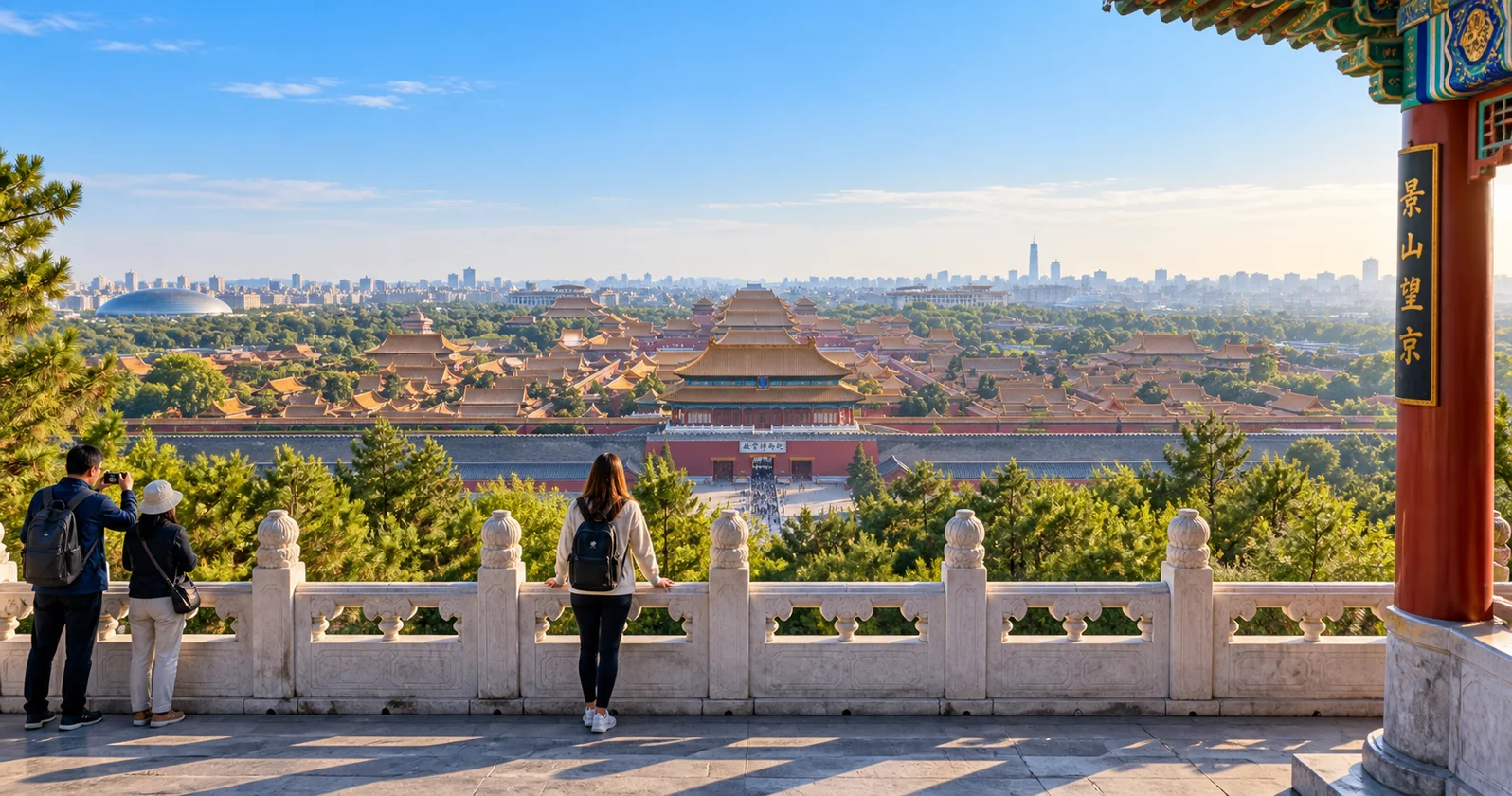
3 Days in Beijing: A Day-by-Day Itinerary Built Around the Bookings
A three-day Beijing route in metro order — imperial axis, Great Wall, Temple of Heaven and hutongs — with the...

Day Trips from Beijing: Which Great Wall Section, Plus the Ming Tombs, Tianjin and Chengde
Which Great Wall section fits you — Mutianyu, Badaling, Jinshanling or Simatai with Gubei — plus the Ming Tombs,...
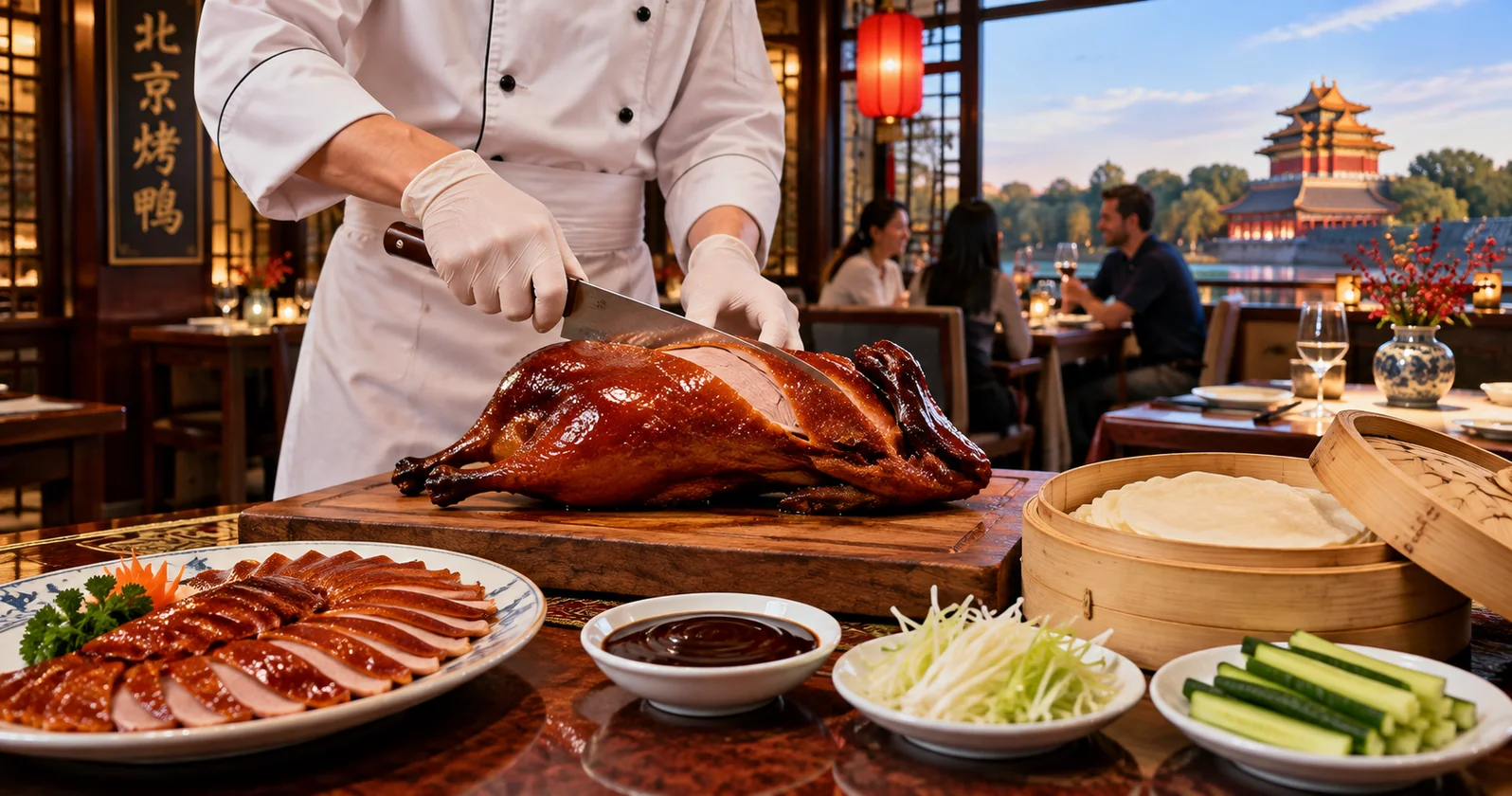
Beijing Food Guide: What to Eat, Where to Eat It, and What to Skip
Peking duck the right way, zhajiangmian, copper-pot lamb hotpot and which old-Beijing snacks are worth it, plus...
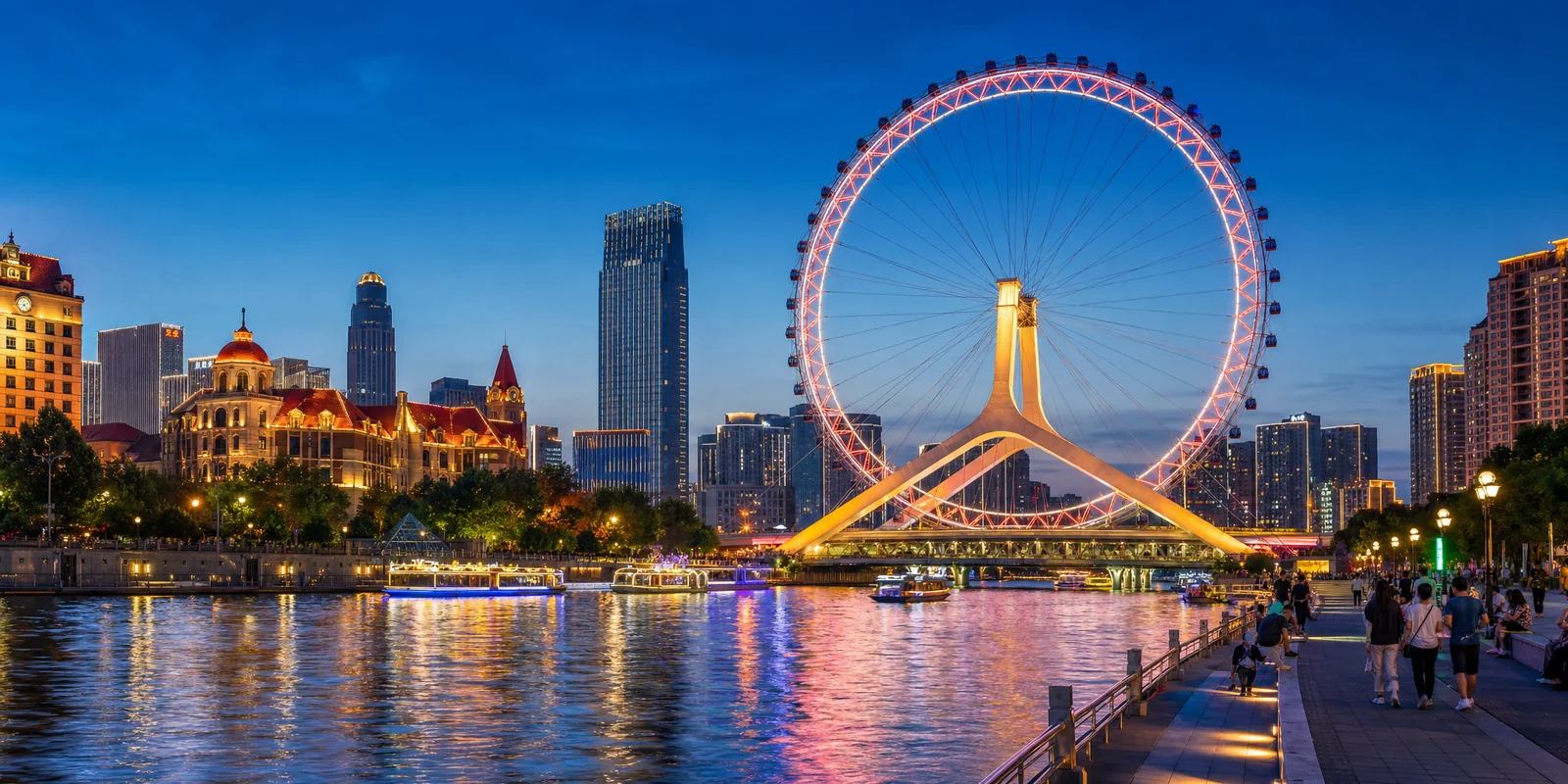
Tianjin Complete Guide
Tianjin sits 30 minutes from Beijing by high-speed rail, with European architecture, a giant Ferris wheel over the...