
This article contains affiliate links. If you make a purchase through these links, we may earn a small commission at no extra cost to you. This helps support our work in creating free travel guides.
Xiamen sits on China's southeast coast in Fujian province, and it has a different pace from most big Chinese cities. The air is salty, the streets are walkable, and the historic island of Gulangyu has no cars at all. People come here for the seafood, the laid-back beaches, and as a base for visiting the UNESCO-listed tulou (土楼, tǔlóu) earth buildings inland. This guide covers what to see in Xiamen itself, where the food is worth your time, how to get around, and how to fit in nearby Quanzhou and Fuzhou. Three to four days is enough for the city plus one tulou day trip.
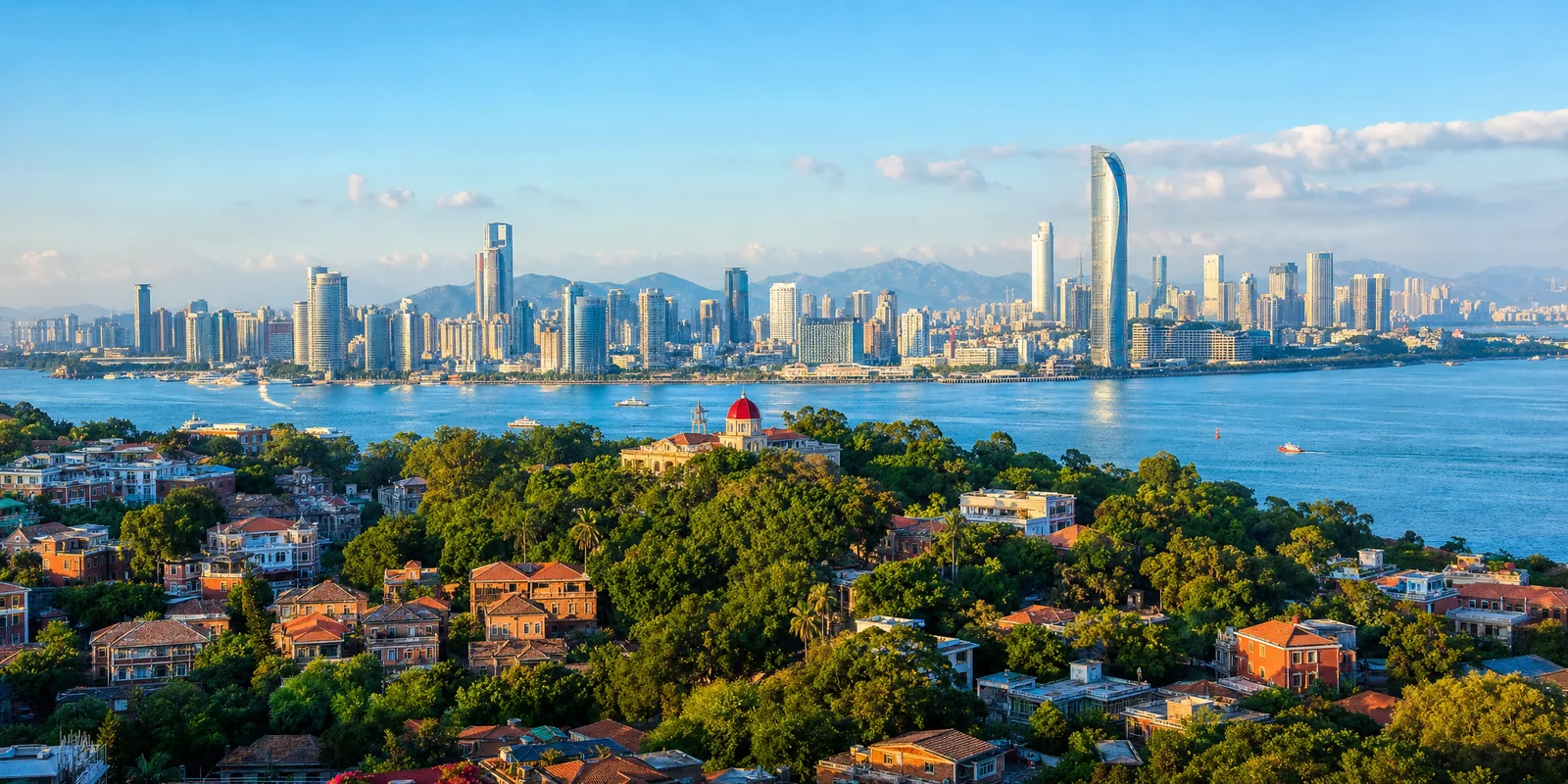
Xiamen Overview: What to Expect
Xiamen is built across the main island (Xiamen Island, where most hotels and the old town are) and the mainland districts connected by bridges and a metro. It's a former treaty port, which is why Gulangyu is covered in early-1900s European-style villas. The local language is Minnan (闽南话, Mǐnnánhuà, also called Hokkien), the same dialect family spoken in Taiwan and across Southeast Asian Chinese communities — which is part of why Xiamen feels connected to that wider region.
The city is compact and easy. English signage is decent in tourist areas, the metro is clean and simple, and the climate is subtropical — mild winters and hot, humid summers. The best months are spring (March–May) and autumn (September–November). Winter (December–February) is also pleasant and far less crowded, just bring a light jacket. Avoid the worst of summer if you can: July to September is typhoon season, and a direct hit can shut down ferries and flights for a day or two.
Core Attractions
Gulangyu Island (鼓浪屿, Gǔlàngyǔ)
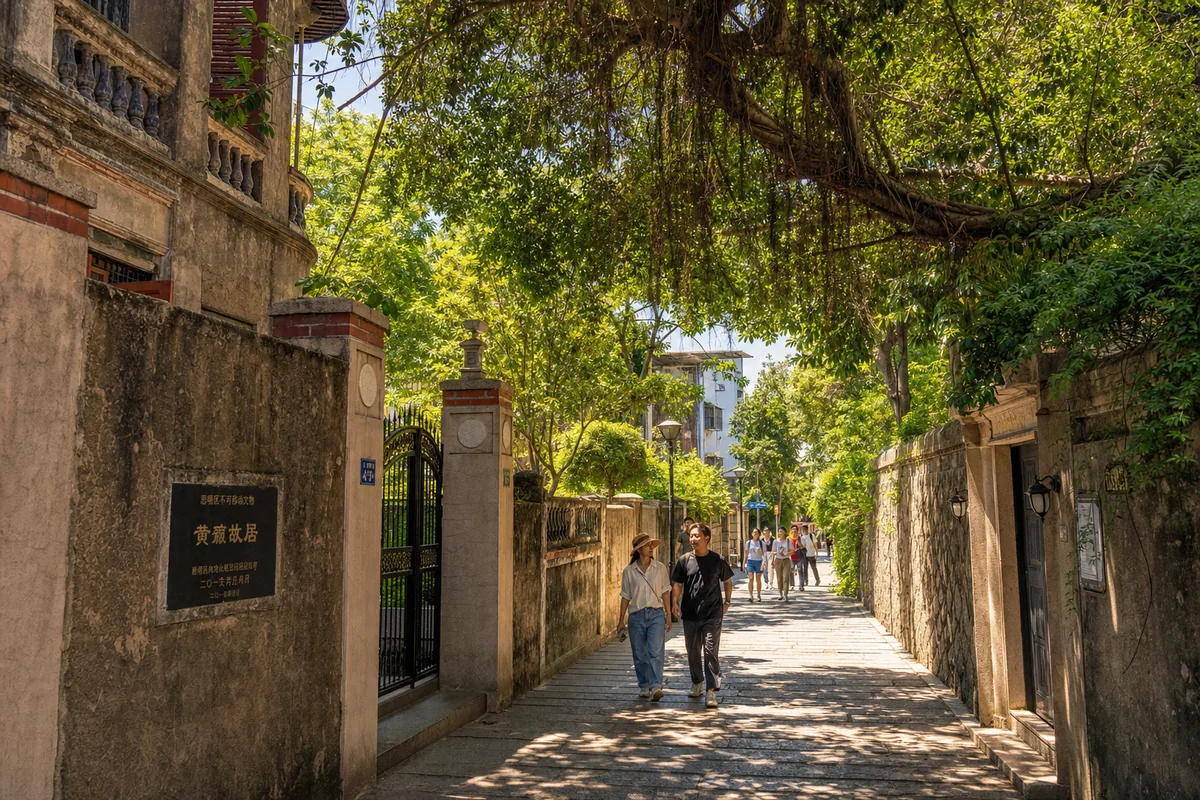
This small island just off Xiamen is the main reason most people visit, and it earned UNESCO World Heritage status for its collection of more than 900 historic buildings — a mix of colonial consulates, missionary churches, merchant mansions, and Minnan-style homes built when Gulangyu was an international settlement. There are no cars or bikes; you walk everywhere, which is the whole appeal. The lanes wind past banyan trees, faded villas, and small museums, and it's easy to lose an afternoon just wandering.
Worth seeking out: Shuzhuang Garden (菽庄花园), a seaside garden built into the rocks, which also houses the Piano Museum — Gulangyu has a long musical tradition and is sometimes called "Piano Island." Sunlight Rock (日光岩, Rìguāngyán) is the island's high point; climb it for a view over the rooftops and back across the water to the Xiamen skyline. Go early or late to avoid the midday crush.
You reach Gulangyu only by ferry, and this trips people up: tourists do not use the central downtown ferry pier. You depart from Dongdu International Cruise Terminal (邮轮中心厦鼓码头), a few kilometres from the old town. Buy tickets in advance through the official booking system, because same-day tickets often sell out. The crossing takes about 20 minutes.
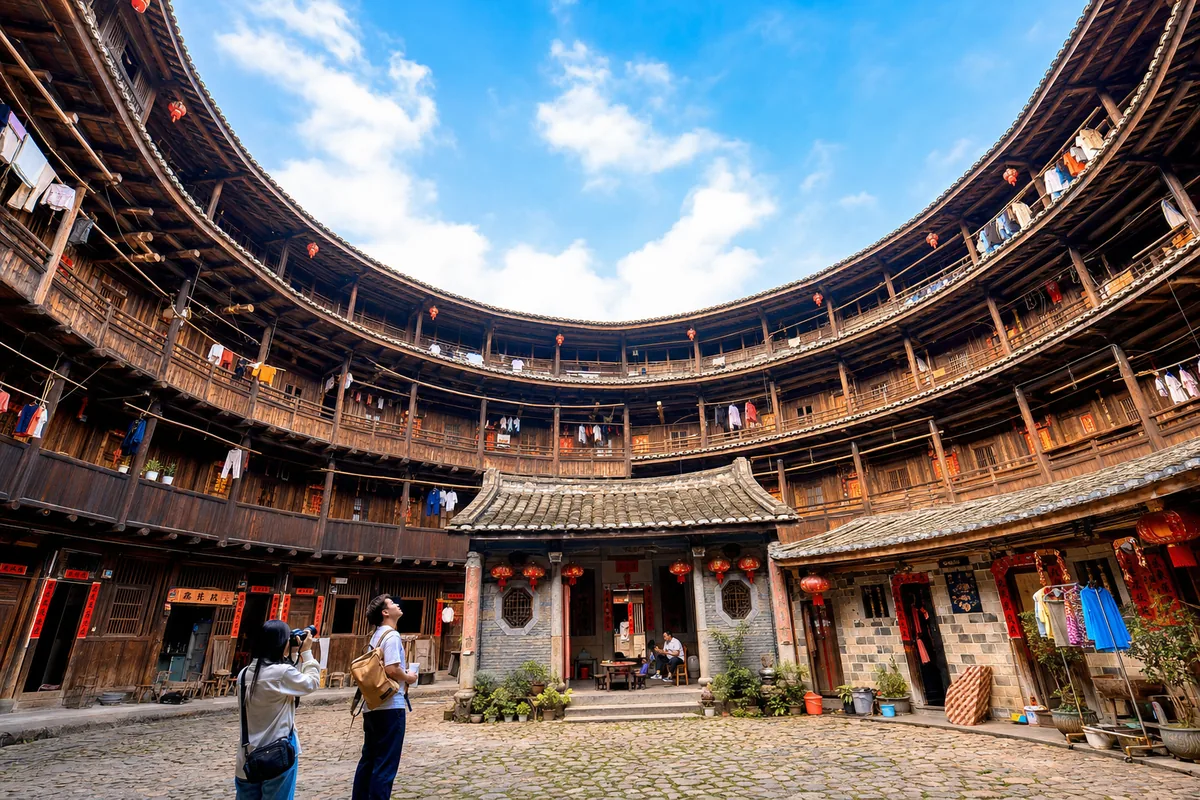
Fujian Tulou (福建土楼)
The tulou are the other UNESCO site in the region and, for many visitors, the highlight of the whole trip. These are massive communal dwellings — some round, some square — built of rammed earth by the Hakka and Minnan people, with thick outer walls enclosing an entire village's worth of homes, kitchens, and storerooms around a central courtyard. Some are several centuries old and still lived in. The largest can house dozens of families. Standing inside one, looking up at the wooden balconies rising four or five storeys around you, gives a real sense of how these were designed as self-contained, defensible communities.
The catch is location: the main tulou clusters (Yongding and Nanjing counties) are 3–4 hours from Xiamen by road, so this is a long but very doable day trip — or an overnight if you want to stay in a tulou guesthouse. The most visited clusters are Hongkeng and Chuxi in Yongding, and Tianluokeng in Nanjing (the famous "four small dishes around one" cluster you've probably seen in photos).
Because public transport out there is slow and involves multiple changes, most travelers join an organised day tour or hire a private driver. A guided tour handles the long drive, gets you into the right buildings, and explains the history — worth it for a site this remote. You can compare tulou day trips on book through Klook, which lists several departing from Xiamen.
Nanputuo Temple (南普陀寺, Nánpǔtuó Sì)
This active Buddhist temple sits at the foot of Wulao Peak, right next to Xiamen University, and it's one of the most atmospheric spots in the city. Founded over a thousand years ago, it's a working temple with monks, incense, and crowds of worshippers, not just a museum. The halls climb up the hillside, and you can keep going past the temple onto a short hiking trail up the peak for a view over the campus and sea. The temple's vegetarian restaurant is well known and a good lunch stop.
Entry is free, but you'll need to reserve a time slot online in advance — like many popular sites in China, it uses a reservation system to manage crowds. Dress modestly and keep your voice down inside the halls; this is a place of worship first.
Zhongshan Road (中山路, Zhōngshān Lù)
Zhongshan Road is Xiamen's historic main street and pedestrian shopping area, lined with restored arcade buildings (骑楼, qílóu) — colonnaded shopfronts built so you can walk under cover during rain or sun. It runs down toward the waterfront and is packed with snack stalls, bakeries, tea shops, and souvenir stores. It's touristy and busy, but it's also the easiest place to graze through a lot of Xiamen street food in one go, especially in the evening when it's lit up. Duck into the smaller side lanes off the main strip for less crowded, often better, local eats.
Xiamen Food Guide
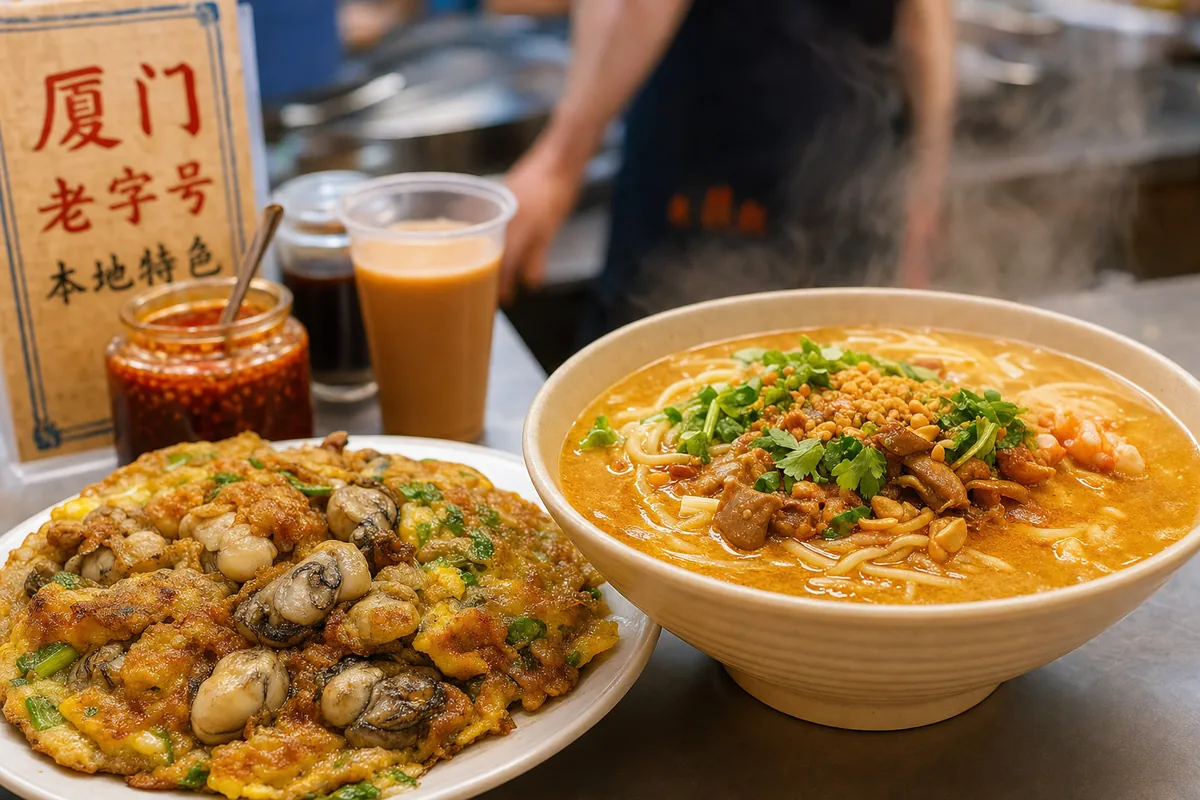
Minnan cuisine is built around seafood and a knack for snacks, and Xiamen is one of the better eating cities in China. A few things to track down:
- Oyster omelette (海蛎煎, hǎilì jiān) — small fresh oysters fried into a sweet-potato-starch egg pancake, crispy at the edges. A Minnan and Taiwanese classic.
- Satay noodles (沙茶面, shāchá miàn) — noodles in a rich, mildly spicy peanut-and-spice satay broth, a Xiamen signature with roots in the city's Southeast Asian connections. You pick your toppings.
- Worm jelly (土笋冻, tǔsǔn dòng) — a cold savoury jelly made from a type of marine worm. It tastes far better than it sounds (clean, briny, like a seafood aspic), and locals love it. Try it once.
- Ginger duck (姜母鸭, jiāngmǔ yā) — duck braised with old ginger and sesame oil, warming and aromatic, especially good in cooler months.
- Peanut soup (花生汤, huāshēng tāng) — sweet soup of soft-cooked peanuts, often eaten for breakfast with a fried dough stick.
- Spring rolls (薄饼, bóbǐng) — thin wheat wrappers filled with a stir-fry of vegetables, peanuts, and seaweed; a Xiamen take on the fresh spring roll.
The Bashi (八市) wet market near the old town is the best place to see the seafood culture up close — point at what you want, and many nearby stalls and small restaurants will cook it for you. For a sit-down meal, Xiamen does fresh seafood by weight: pick from the tank, agree the cooking style, and pay by the catty.
Beaches in Xiamen
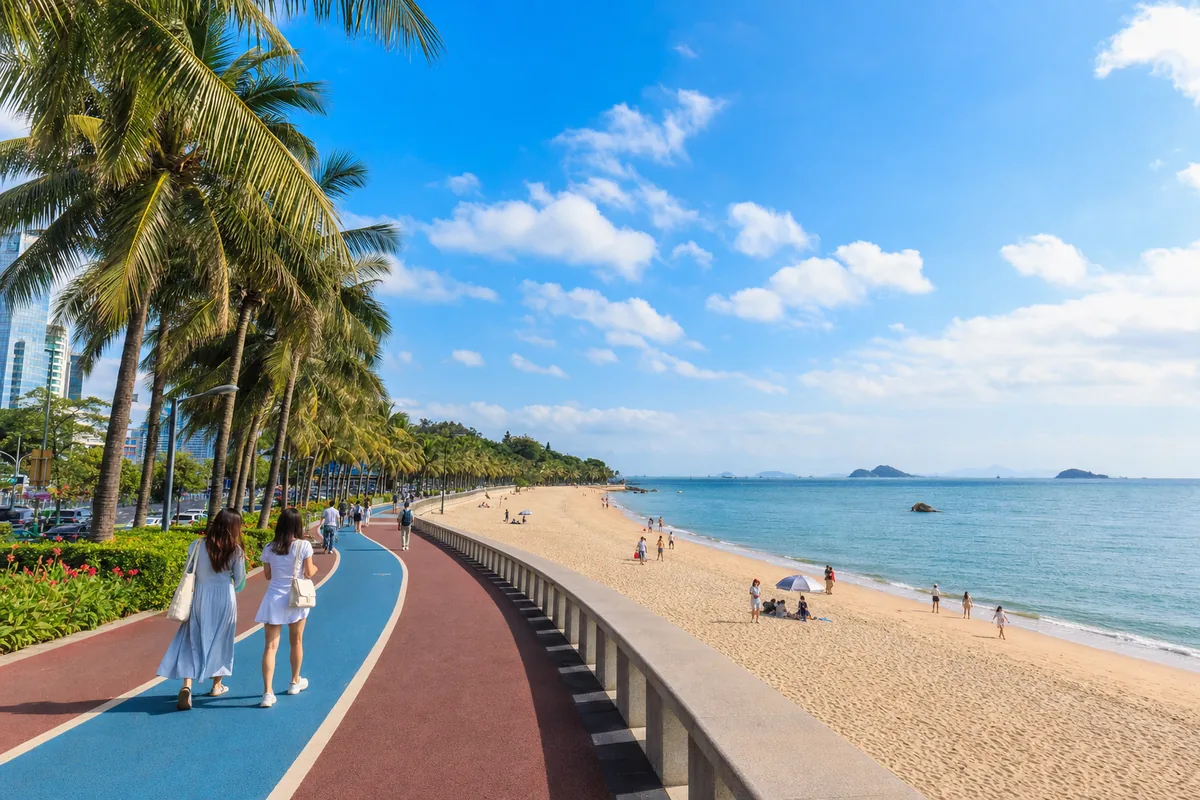
Xiamen's beaches aren't tropical-island-grade, but they're clean, walkable, and a nice break from sightseeing. The best stretch is along Huandao Road (环岛路, Huándǎo Lù), the scenic coastal road that loops the southeast of Xiamen Island. Baicheng Beach, near Xiamen University, and the beaches around Zengcuo'an (曾厝垵) are the most accessible — Zengcuo'an is also a popular "urban village" full of guesthouses, cafés, and snack stalls right by the sand.
The coastal path along Huandao Road is great for cycling or just walking; on a clear day you can look across the strait toward the smaller islands. Swimming is fine in the warmer months, but check conditions in summer typhoon season.
Getting Around Xiamen
Within the city, your main options are the metro, buses, the BRT (a bus rapid transit line on dedicated tracks), and ride-hailing.
- Metro — clean, cheap, and signed in English. Useful for getting between the airport area, the railway stations, and parts of the island. Pay by scanning a QR code in Alipay or WeChat.
- Ride-hailing (Didi) — the easiest way to cover door-to-door trips, including out to the cruise terminal for the Gulangyu ferry. You can use Didi inside Alipay or WeChat without a separate app.
- Buses and BRT — extensive and cheap, but more useful once you're comfortable with the routes.
Set up mobile payments before you arrive — almost everything here runs on Alipay or WeChat QR codes, from metro gates to market stalls. Cash still works at hotels but is awkward for small purchases.
Where to Stay
Three areas suit most visitors:
- Old town / Zhongshan Road area — central, walkable to the waterfront and the Gulangyu ferry terminal area, and surrounded by food. Best for first-timers.
- Zengcuo'an / Huandao Road — near the beaches, more relaxed, lots of small guesthouses and cafés. Good if you want a holiday feel.
- Gulangyu Island itself — staying overnight on the island lets you experience it after the day-trippers leave, when it's quiet and atmospheric. Rooms are in restored historic villas, often charming but pricier, and you'll be carrying your luggage on foot (no cars). Book early.
Xiamen has a strong range of boutique guesthouses and design hotels, plus the usual international chains near the business districts. For the historic villa guesthouses on Gulangyu in particular, it's worth booking well ahead — they're small and sell out. You can compare options and prices on book through Booking.com.
Day Trips: Quanzhou and Fuzhou
Two nearby cities are easy add-ons by high-speed rail, both worth a day if you have time.
| City | What it's for | From Xiamen by train |
|---|---|---|
| Quanzhou (泉州) | UNESCO-listed historic port — once one of the world's largest, the start of the Maritime Silk Road. Old mosques, temples, and a beautifully preserved old town. | ~30–60 min |
| Fuzhou (福州) | Fujian's provincial capital. The restored Three Lanes and Seven Alleys (三坊七巷) historic quarter, hot springs, and its own food scene (fish ball soup, Buddha Jumps Over the Wall). | ~1.5–2 hrs |
Quanzhou in particular is underrated and very close — if you only add one, make it Quanzhou. Book train tickets in advance through the official rail system, especially around holidays.
Suggested 3–4 Day Itinerary
- Day 1 — Xiamen Island: Nanputuo Temple and the Xiamen University area in the morning, the Huandao Road coast and beaches in the afternoon, Zhongshan Road for street food in the evening.
- Day 2 — Gulangyu: Take the morning ferry, spend the day walking the island — Shuzhuang Garden, Sunlight Rock, and the lanes. Stay overnight on the island or return for dinner at the Bashi market area.
- Day 3 — Fujian Tulou: A full day trip to the Yongding or Nanjing tulou clusters, usually on a guided tour given the distance.
- Day 4 (optional) — Quanzhou: A relaxed day trip by high-speed train to the old port city, back to Xiamen in the evening.
Final Tips
Xiamen is one of the more forgiving Chinese cities for first-timers: compact, walkable, easy to navigate, and not overwhelming. The two things that catch people out are Gulangyu ferry logistics (book ahead, board at the cruise terminal) and the distance to the tulou (plan a full day, ideally on a tour). Set up Alipay or WeChat Pay before you arrive, reserve time slots for Nanputuo Temple and the Gulangyu ferry online, and avoid the Golden Weeks if you can. With three to four days you can comfortably see the city, the island, and one inland or coastal day trip.
Related Reading
- How to Book Train Tickets — for your day trips to Quanzhou and Fuzhou.
- How to Use Alipay with Foreign Cards — set this up before you arrive.
- Guide to Chinese Cuisine by Region — where Minnan food fits in the bigger picture.
- Shanghai Complete Guide — if you're combining Xiamen with other East China stops.
- Best Time to Visit China — to time your trip around weather and crowds.
Last updated: June 2026
Read in other languages
Last train times for 10 Chinese metro systems
Every line and station, checked by hand — the same data behind our offline route planner.
Get the WaysChina App
Offline guides, currency converter, essential phrases, and more — all in your pocket.

Related Articles

3 Days in Shanghai: An Itinerary You Can Follow As Written
A day-by-day Shanghai route built on metro logic: museum and Bund on day one, towers and old town on day two, a flex...
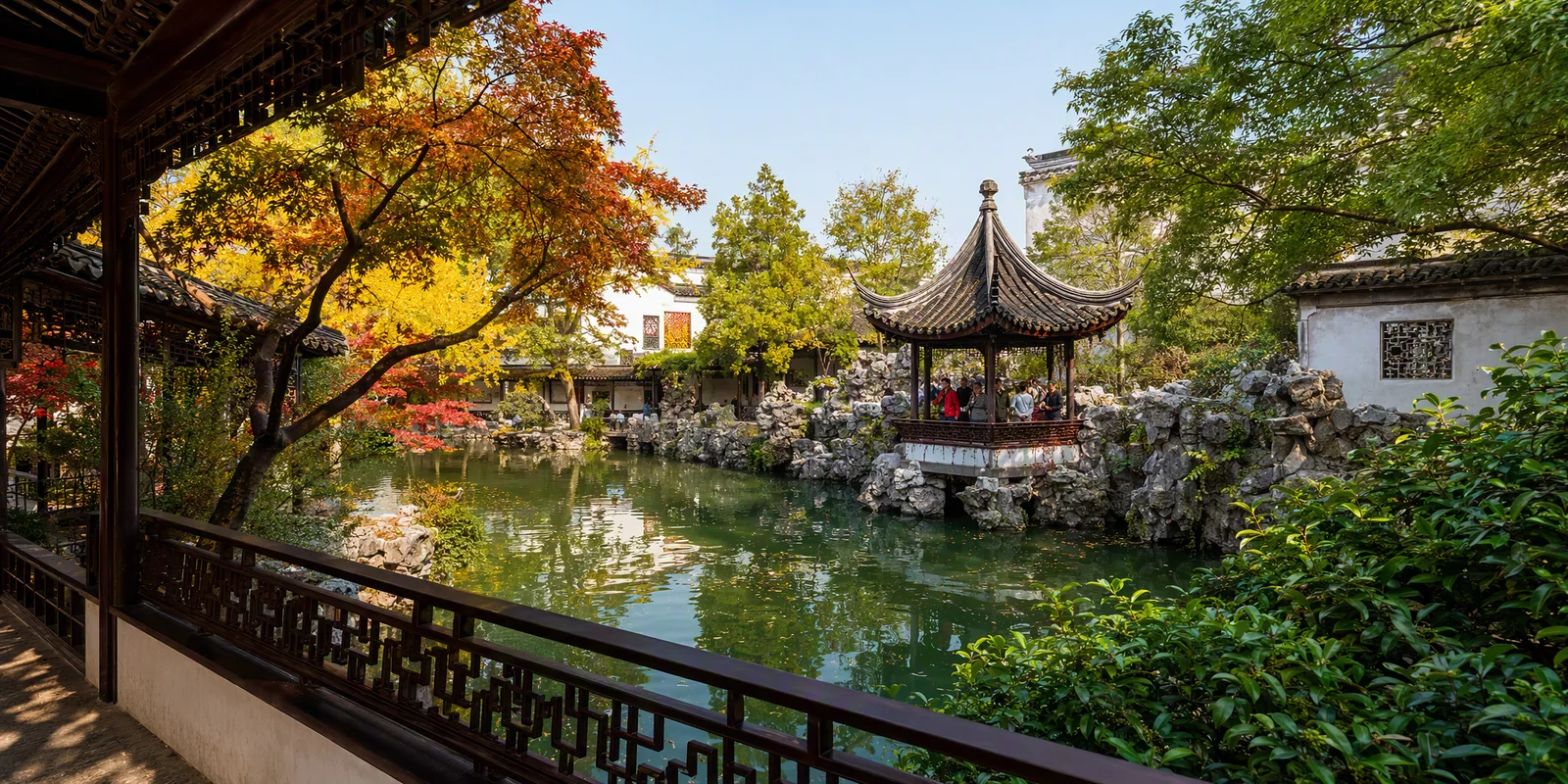
Day Trips from Shanghai: Water Towns, Suzhou and Hangzhou, Honestly Compared
Which Shanghai day trip fits you: metro-reach Zhujiajiao, Suzhou's real-name garden tickets, free West Lake, or an...
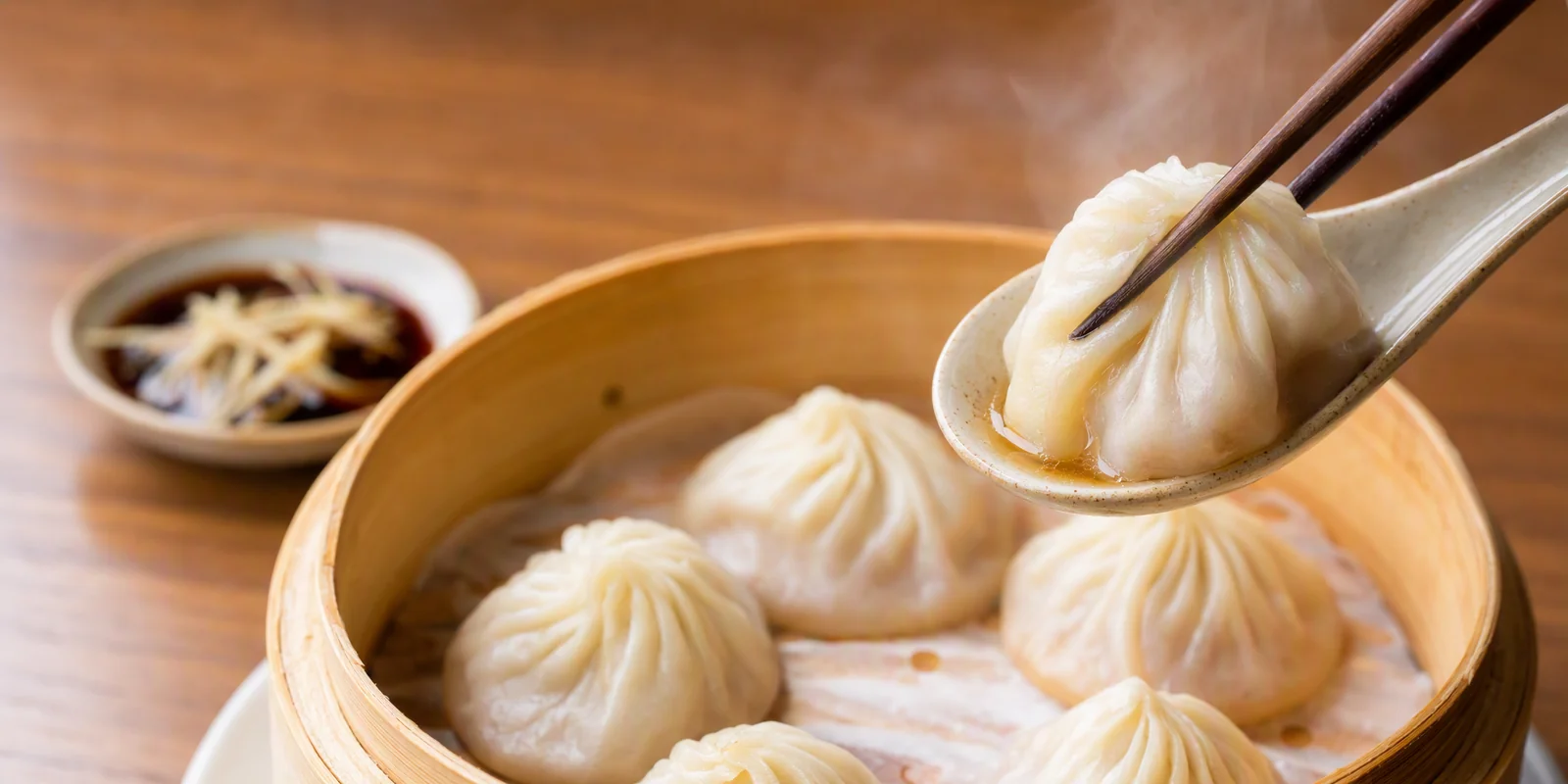
Shanghai Food Guide: What to Eat, Where to Eat It, and How to Order
Beyond soup dumplings: how to eat xiaolongbao without scalding yourself, where locals actually eat, halal and...

Huangshan Guide
How to plan a trip to Mount Huangshan: choosing your route up and down, catching the sunrise, where to sleep on the...